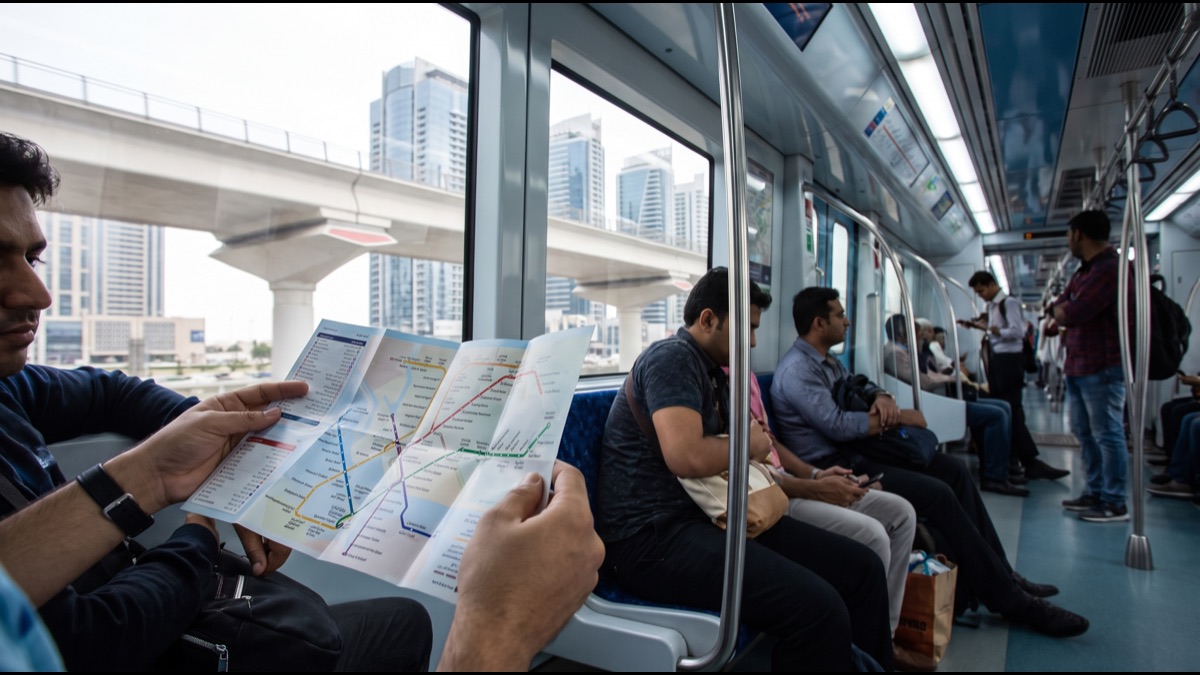
Dubai Metro Facts: Your Complete Guide to the Driverless Transport System
The Dubai Metro has no driver. No hidden control room. No emergency manual override that requires a human to grab a wheel. The trains run on software, sensors, and a level of precision that would make a Swiss watchmaker nervous. Since 2009, this dubai metro facts system has carried over one billion passengers without a single human hand on the controls. That is not automation. That is replacement.
If you are visiting Dubai or living here, this dubai metro facts guide covers everything. From how to use dubai metro to the engineering details, we have got it.
Dubai Metro Lines: The Network Explained
Dubai metro lines currently consist of two operational lines: the Red Line and the Green Line. Two more lines are planned—the Blue Line and the Purple Line—but we will focus on what is running today.
The Red Line
The Red Line runs from Rashidiya (near Dubai International Airport) to UAE Exchange (Jebel Ali), with a branch to Expo 2020 station. It is 67 kilometers long with 35 stations. Key stops include BurJuman and Union (transfer to Green Line), Burj Khalifa / Dubai Mall, Mall of the Emirates, and Dubai Internet City.
The Green Line
The Green Line runs from Etisalat to Creek, passing through older Dubai. It is 23 kilometers with 20 stations. It connects to the Red Line at Union and BurJuman. Key stops include Al Fahidi (historic area), Al Ghubaiba (bus and dhow wharf), and Dubai Healthcare City.
The two lines form a network of roughly 90 kilometers and 55 stations. The Red Line is mostly elevated; the Green Line has more underground sections in the historic center.
How to Use Dubai Metro: A Practical Guide
How to use dubai metro is one of the most common questions from visitors. The system is clean and efficient, but there are rules you should know.
The Nol Card: Your Ticket to Everything
The Dubai metro nol card is a rechargeable smart card that works on the metro, buses, trams, water taxis, and some parking meters. You cannot buy a single paper ticket. You must use a Nol card.
| Nol Card Type | Best For | Cost | Notes |
|--------------|----------|------|-------|
| Red | Tourists, short visits | AED 2 + credit | Limited to 10 trips. |
| Silver | Most visitors | AED 25 (includes AED 19 credit) | Standard rechargeable card. |
| Gold | Frequent travelers | AED 25 (includes AED 19 credit) | Access to Gold Class cabins. |
| Blue | UAE residents | AED 70 (includes AED 20 credit) | Personalized, balance-protected. |
Buy and top up Nol cards at any metro station ticket machine, RTA center, or through the RTA Dubai app. The minimum top-up is AED 5.
Fares and Zones
The metro uses a zone-based fare system. A single trip ranges from roughly AED 3 to AED 7.50 for Silver class. Gold Class costs roughly double. Children under 5 and people with disabilities travel free. Students get a 50% discount with a registered Blue Nol card.
First and Last Trains
Metro trains run from approximately 5:00 AM to midnight (Saturday to Wednesday). On Thursday, until 1:00 AM. On Friday, service starts at 10:00 AM and runs until 1:00 AM. Hours shift during Ramadan and public holidays, so check the RTA website before traveling.
Metro Rules You Should Know
- No eating or drinking on trains or platforms. Fines apply.
- No chewing gum. This is a specific fine.
- Gold Class has its own cabin at the front. Do not enter without a Gold Nol card.
- Women and children have dedicated cabins. Men can be fined for entering.
- No luggage over 81cm x 58cm x 30cm during peak hours (7:00–9:00 AM, 6:00–8:00 PM).
- No alcohol, even sealed bottles, on the metro.
The metro is aggressively air-conditioned. Bring a light jacket, even in summer.
The Engineering Behind the World's Longest Driverless Metro
The Dubai Metro is a Grade 4 fully automated system, meaning it operates without any human intervention in normal conditions. The trains are controlled by the Urbalis 400 CBTC system from Alstom, the same company that supplies systems in Paris, Shanghai, and Singapore.
The trains are Kinki Sharyo models from Japan, designed for desert conditions. Each train is 75 meters long and carries up to 643 passengers. The fleet handles temperatures up to 50°C (122°F) outside while keeping the interior at 20°C (68°F). The trains run on rubber tires, not steel wheels, chosen for noise reduction and comfort. This system is also used in Paris and Montreal, but Dubai's implementation is the largest in a desert climate.
The first phase opened on September 9, 2009, at 9:09 PM. The total cost was approximately AED 28 billion (USD 7.6 billion), built by a consortium led by Mitsubishi Heavy Industries with involvement from over 30 countries.
The automated system includes platform screen doors at every station, automatic train protection that prevents collisions even if the central system fails, and CCTV coverage of every train and platform. Since opening, the system has maintained a 99.7% on-time performance rate.
Dubai Metro Stations: What to Expect
Dubai metro stations are designed as architectural landmarks with exteriors resembling sea creature shells, a nod to the region's pearl diving heritage. Interiors feature glass panels, LED lighting, elevators, prayer rooms at major stations, and retail outlets. Major stations like Burj Khalifa / Dubai Mall, Mall of the Emirates, and Union have direct pedestrian walkways or connecting shuttles to their destinations. The Burj Khalifa station connects to the mall via a travellator over 800 meters long.
The Future: Blue Line and Beyond
The Blue Line is planned as a 30-kilometer route connecting Dubai International Airport to Maktoum International Airport at Dubai South, with extensions to the Expo site and new developments like Dubai Creek Harbour. The Purple Line remains in planning as a coastal line.
Why the Dubai Metro Matters
In a city built for cars, the Dubai Metro is an alternative that works. It is faster than driving during rush hour. It is cheaper than taxis. It is cleaner than buses. And it is one of the few places in Dubai where you see every social class, every nationality, and every profession sitting in the same cabin, going to different versions of the same future.
When Dubai announced it would build a driverless metro in the desert, critics called it a vanity project. Over a billion rides later, those critics are quieter. The Dubai Metro is proof that infrastructure can change a city's behavior, not just its skyline. These dubai metro facts show what happens when a city decides the future is worth building for.
Sources
- RTA Dubai Official - Metro - Official Dubai Metro maps, fares, and schedules
- Dubai Metro Official Map and Timetables - Route information and Nol card details
- Nol Card Official Portal - Nol card registration, balance, and fare rules
- Mitsubishi Heavy Industries - Dubai Metro Project - Technical details on train construction and automation systems
- Alstom Urbalis 400 - Dubai Metro Signaling - Signaling and automation technology details
- Transport Engineering Publications - Automated Metro Systems - Academic coverage of driverless metro networks
Frequently Asked Questions
Q: How much does a Dubai Metro ride cost?
A single metro ride costs between AED 3 and AED 7.50 for Silver class, depending on how many zones you travel through. Gold class costs roughly double. Children under 5 and people with disabilities travel free.
Q: Is the Dubai Metro fully driverless?
Yes. The Dubai Metro is a Grade 4 fully automated system, meaning trains operate without any human driver or control room operator in normal conditions. The system is monitored by central controllers but trains accelerate, brake, and stop at stations automatically.
Q: Can tourists use the Dubai Metro easily?
Absolutely. All station signage and announcements are in English and Arabic. Nol card machines have English interfaces. Major tourist destinations—Burj Khalifa, Dubai Mall, Mall of the Emirates, Dubai Airport—are directly connected to metro stations.
Q: How early and late does the Dubai Metro run?
The metro runs from approximately 5:00 AM to midnight Saturday through Wednesday. On Thursday it runs until 1:00 AM. On Friday, service starts at 10:00 AM and runs until 1:00 AM. Hours change during Ramadan and public holidays.
Q: Are there any restrictions on what I can bring on the metro?
Yes. You cannot bring large luggage during peak hours (over 81cm x 58cm x 30cm). Eating, drinking, and chewing gum are prohibited. Alcohol is not allowed, even sealed. Pets are not allowed except guide dogs. Bicycles are allowed only folded and covered.
About the author: The doyouknow.app editorial team lives in Dubai and uses the metro daily. We write about what we know—and what we wish we'd known sooner.
📱 Share this with someone visiting Dubai: Share on WhatsApp
📬 Get more UAE guides. Subscribe to our newsletter for practical tips and surprising facts every week.