Introduction
Board games represent one of humanity's oldest continuous forms of structured entertainment, with archaeological evidence of board game play extending back roughly 5,000 years, making organized game-playing one of the more remarkably persistent human cultural activities across essentially every documented civilization and historical period.
This long, continuous history suggests board games satisfy genuinely fundamental human psychological needs around strategic thinking, social interaction, and structured competition, needs that have remained essentially consistent despite dramatic changes in technology, culture, and society across the millennia separating ancient game-players from modern ones.
The Earliest Known Board Games
The oldest confirmed board game is Senet, played in ancient Egypt as early as 3100 BCE, with game boards discovered in tombs dating to Egypt's First Dynasty, and depictions of Senet gameplay appearing in tomb paintings throughout subsequent Egyptian history, suggesting the game held genuine cultural and possibly religious or symbolic significance beyond pure entertainment, since Senet boards were specifically included among burial items intended to accompany the deceased into the afterlife.
Other ancient board games with substantial archaeological evidence include the Royal Game of Ur, discovered in royal tombs in ancient Mesopotamia dating to around 2600 BCE, and early forms of games recognizably related to modern backgammon, which similarly trace back thousands of years across various ancient Middle Eastern and Mediterranean civilizations, illustrating how board game traditions developed and spread across multiple independent ancient civilizations rather than originating from a single identifiable historical source.
The Development of Strategic War and Territory Games
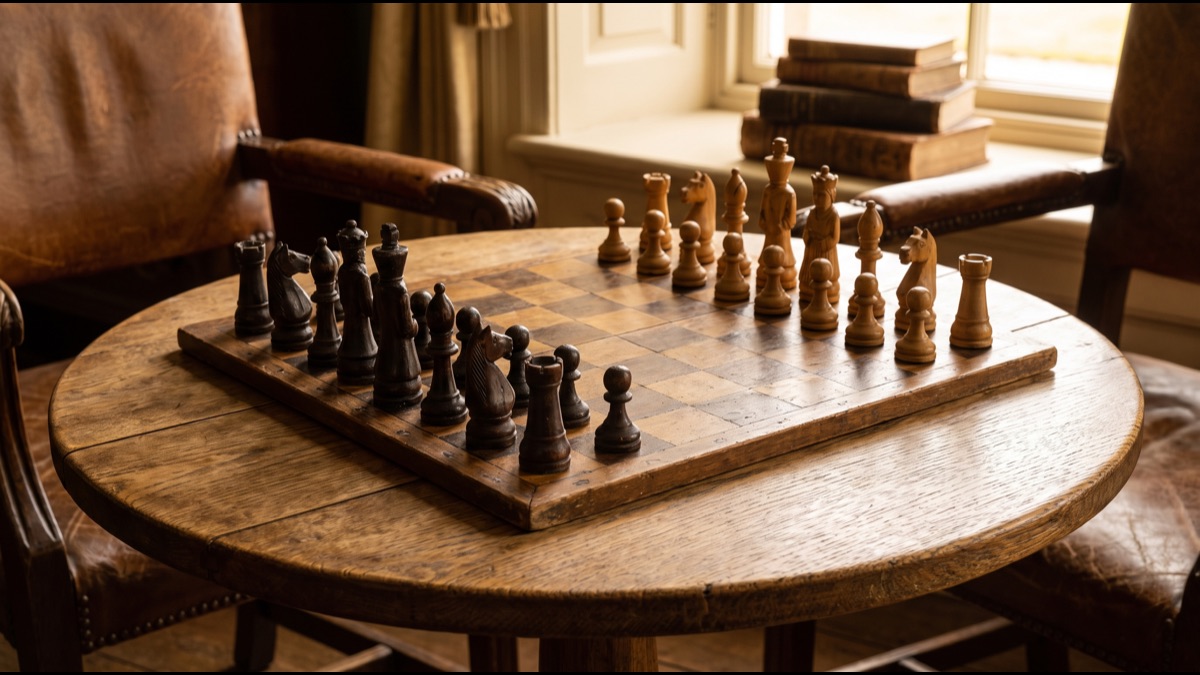
Strategic games specifically simulating military conflict or territorial control developed across multiple independent civilizations: chess traces its origins to 6th-century India as chaturanga before spreading through Persia and the Islamic world to Europe, while Go, one of the oldest continuously played strategy games still popular today, developed in ancient China over 2,500 years ago and remains particularly prominent in East Asian gaming culture.
These strategic games, distinguished from earlier race-based or luck-dependent games by requiring genuine tactical and strategic thinking rather than relying primarily on chance elements like dice, represented a significant conceptual development in game design, and their continued widespread popularity across many centuries and cultures demonstrates their genuinely enduring appeal as vehicles for developing and displaying strategic thinking skill.
The Rise of Commercial Board Games
The modern commercial board game industry developed substantially during the 19th and 20th centuries, aided significantly by industrial-era advances in printing and mass manufacturing that made producing and distributing games at scale economically practical for the first time, with games like Monopoly, patented in 1935 by Charles Darrow (though based substantially on an earlier, less commercially successful 1904 game called The Landlord's Game designed by Lizzie Magie), becoming enormously commercially successful mass-market products.
The mid-to-late 20th century saw continued diversification into distinct game genres, including cooperative games, party games, and increasingly complex strategy games, while the German board game industry specifically developed a particularly influential design tradition, often called 'Eurogames,' emphasizing strategic depth, indirect player interaction, and shorter playing times compared to some earlier American-style board game design traditions.
The Contemporary Board Game Renaissance
Despite predictions in earlier decades that video games and digital entertainment would substantially displace traditional board games, the industry has instead experienced a genuine and well-documented renaissance since roughly the early 2000s, driven partly by the crowdfunding platform Kickstarter enabling smaller, independent game designers to fund and produce ambitious projects without traditional publisher backing, and partly by dedicated board game café culture and organized gaming events creating new social spaces specifically built around tabletop gaming.
Industry data shows continued substantial growth in the global board game market in recent years, with modern game design increasingly incorporating sophisticated mechanics previously more associated with video games, narrative campaign structures, and legacy games (which permanently change based on previous play sessions), demonstrating that this ancient entertainment form continues actively evolving and innovating rather than existing as a static historical relic.
Sources
- The British Museum — Archaeological reference on ancient board games including Senet and the Royal Game of Ur
- Smithsonian Magazine — Historical coverage of board game evolution and the commercial board game industry
- Encyclopaedia Britannica — Overview of board game history and major game categories
FAQ
What is the oldest known board game?
Senet, played in ancient Egypt as early as 3100 BCE, is the oldest confirmed board game, with boards discovered in tombs dating to Egypt's First Dynasty and depictions appearing in tomb paintings throughout Egyptian history.
Where did chess originally come from?
Chess traces its origins to 6th-century India as a game called chaturanga, before spreading through Persia and the Islamic world to Europe, eventually evolving into the modern game.
Who invented Monopoly?
Monopoly was patented in 1935 by Charles Darrow, though it was based substantially on an earlier, less commercially successful 1904 game called The Landlord's Game designed by Lizzie Magie.
What are 'Eurogames'?
Eurogames refers to a particularly influential board game design tradition developed by the German board game industry, emphasizing strategic depth, indirect player interaction, and shorter playing times.
Is the board game industry declining because of video games?
No, quite the opposite. The industry has experienced a genuine renaissance since roughly the early 2000s, driven partly by crowdfunding platforms like Kickstarter and dedicated board game café culture.
About the Author
doyouknow.app Editorial Team — We reference archaeological museum collections and game industry history sources to trace board games' 5,000-year evolution.
Loved This Article?
Share it on WhatsApp → Share on WhatsApp
Get more guides in your inbox — Subscribe to our newsletter for weekly surprising stories from Egypt, Saudi Arabia, Dubai, and beyond.