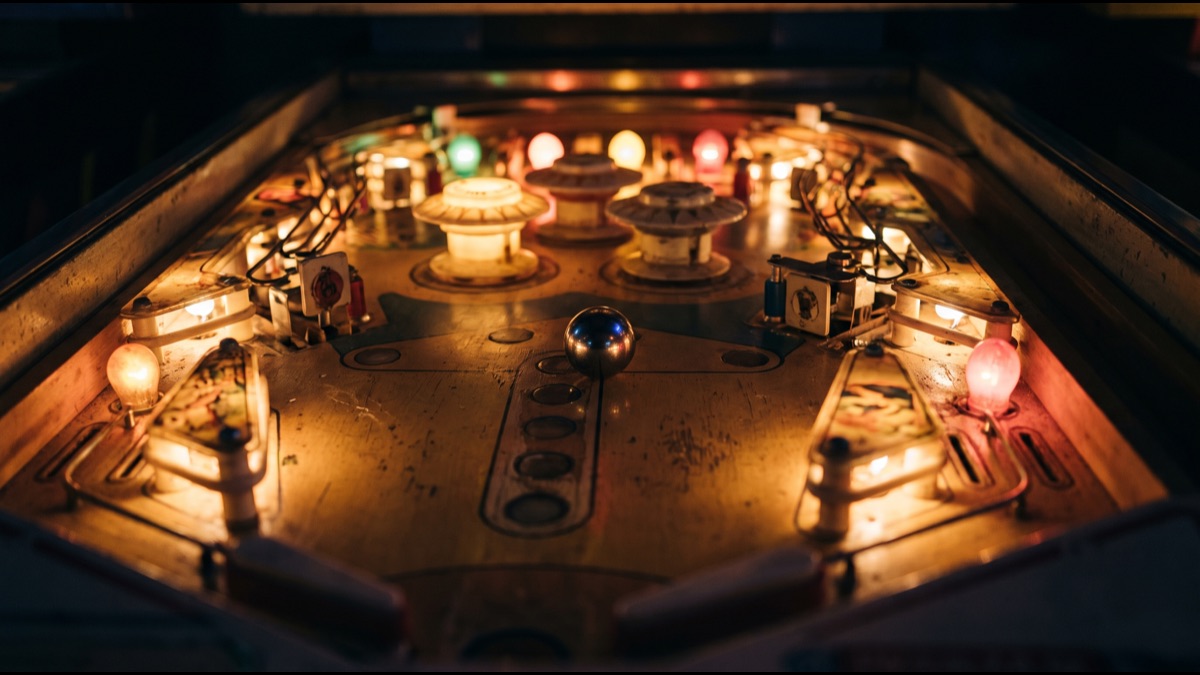
Pinball traces back to bagatelle, a French tabletop game from the 1700s where players used a cue to shoot small balls up a sloped board studded with pins and scoring holes. The coin-operated version that Americans would recognize arrived in 1931 with Baffle Ball, a countertop machine that cost a nickel to play and sold in the hundreds of thousands during the Depression, when a cheap five-minute distraction was in high demand.
Those early machines had no flippers at all. Players simply pulled back a spring-loaded plunger to launch the ball and then hoped gravity and luck sent it into a high-scoring hole, which made the outcome almost entirely a matter of chance rather than skill.
From Bagatelle to a Coin-Operated Novelty
Banned as Gambling, Saved by Flippers
That resemblance to gambling got pinball banned outright in New York City in 1942, and in several other major US cities soon after, on the grounds that it was a game of pure chance being used to take nickels from children. Machines were seized and smashed by police in raids that made local news for years.
The turning point came in 1947, when the game Humpty Dumpty introduced flipper bumpers that let players actively bat the ball back into play. In 1976, a Music and Amusement Association lawyer demonstrated skillful flipper control to the New York City Council, proving pinball rewarded practiced technique rather than luck alone, and the city lifted its ban that same year.
Sources
- Wikipedia — history of pinball from bagatelle to modern machines
- Smithsonian Magazine — coverage of New York City's pinball ban and its repeal
- Pinball Hall of Fame — archive of pinball machine history and design evolution
FAQ
When were flippers added to pinball machines?
Flippers first appeared in 1947 on a machine called Humpty Dumpty, giving players a way to actively control the ball instead of just launching it and watching what happened.
Why was pinball banned in some cities?
City officials in the 1940s classified it as a game of chance similar to slot machines, and banned it to prevent what they saw as gambling aimed at children and teenagers.
Is pinball still popular today?
Yes — competitive pinball leagues, tournaments, and new machine releases have kept the game alive well into the digital age, with dedicated communities in cities worldwide.
About the Author
We reference Wikipedia, Smithsonian Magazine, and Pinball Hall of Fame to explain the background and current understanding of this topic.
Loved This Article?
Share it on WhatsApp → Share it on WhatsApp
Get more guides in your inbox — Subscribe to our newsletter for weekly surprising stories from Egypt, Saudi Arabia, Dubai, and beyond.