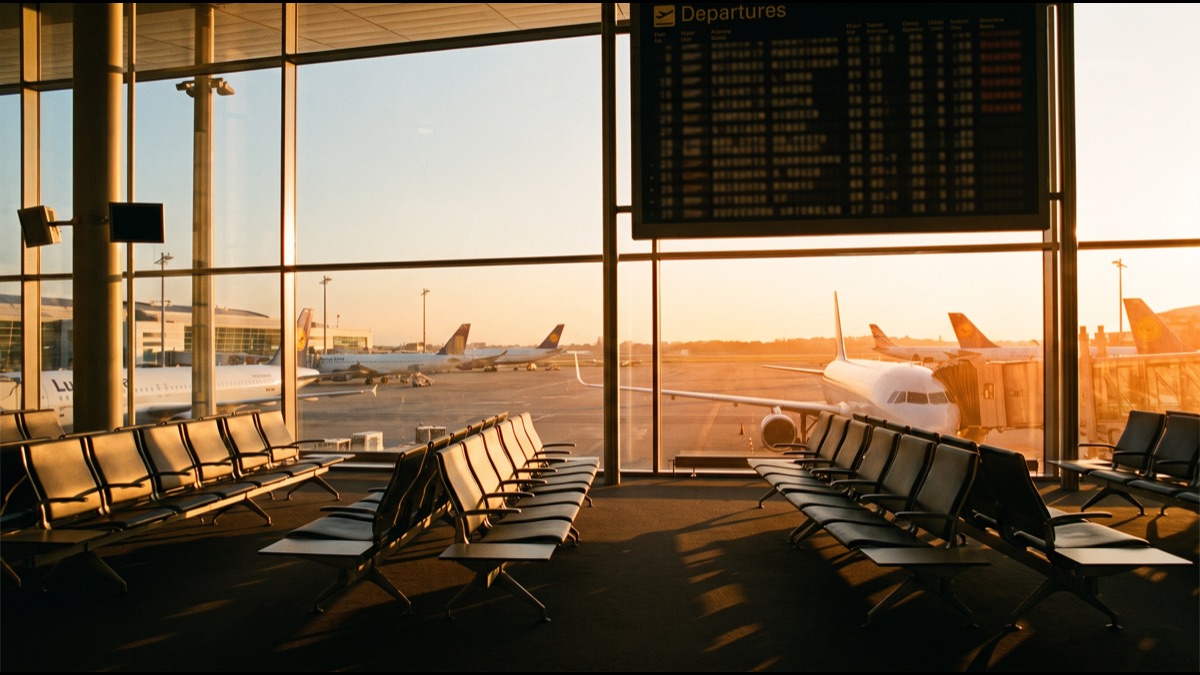
Two passengers can sit next to each other on the exact same delayed flight, and one can be legally owed several hundred euros in compensation while the other is owed nothing at all, purely because of where their journey started, where it ended, and which specific airline actually operated the flight. Flight-delay compensation is not a single universal rule but a patchwork of regional regulations, each with its own specific triggers, exceptions, and payment tiers, and most travelers only ever learn how any of it actually works after they have already been sitting in a delayed airport terminal for several hours.
The most well-known and comprehensive framework, commonly known by its regulation number EU261, applies across the European Union and covers a surprisingly broad range of flights, including many that neither depart from nor land in Europe, provided certain specific conditions about the airline and route are actually met.
Understanding how compensation actually gets calculated means looking at several distinct decision points working together: whether the delay is even eligible for compensation at all, how long the delay actually has to be before a fixed payment threshold kicks in, how flight distance changes the compensation amount, and, critically, the specific list of circumstances airlines can legally cite to avoid paying anything at all.
It also explains why some passengers who feel genuinely inconvenienced by a delay end up entitled to nothing under the letter of the actual rule, while others who experienced a comparatively minor delay walk away with a meaningful cash payment simply because their specific flight happened to fall on the correct side of a strict legal boundary.
Why EU261 Became the Global Reference Standard
EU261 is a European Union regulation establishing specific passenger rights around flight delays, cancellations, and denied boarding, and it has become the de facto global reference point for flight-delay compensation discussions specifically because of how broadly and clearly it defines exactly when compensation is legally owed.
The regulation applies to any flight departing from an airport within the European Union regardless of which airline operates it, and also applies to flights arriving into the EU specifically when operated by an EU-based airline, a scope that captures a genuinely significant share of global air travel well beyond flights that are purely domestic to Europe itself.
Because EU261 sets out clear, specific, numerically defined thresholds rather than vague or broadly discretionary standards, it has become the model that consumer advocacy groups and, increasingly, other regulatory bodies in different regions point to when arguing for similarly clear and enforceable passenger compensation frameworks elsewhere in the world.
How Long a Delay Actually Has to Be Before Compensation Applies
Under EU261, compensation eligibility is specifically triggered by arrival delay, not departure delay, meaning what actually matters legally is how late a flight actually lands at its final destination compared to its originally scheduled arrival time, not how late it happened to leave the departure gate.
The regulation specifically requires an arrival delay of at least three hours before any compensation becomes owed at all, meaning a flight that departs quite late but still manages to make up time in the air and lands less than three hours behind its original schedule generally triggers no compensation obligation whatsoever under the rule.
This three-hour threshold is a hard legal cutoff rather than a sliding scale, which is precisely why a flight delayed by two hours and fifty-five minutes and a flight delayed by three hours and five minutes can be treated completely differently under the regulation despite the actual difference in passenger inconvenience between them being genuinely minimal.
How Flight Distance Changes the Actual Compensation Amount
Once the three-hour delay threshold is met, EU261 sets specific fixed compensation amounts based on flight distance rather than on how long the actual delay itself turned out to be, meaning a five-hour delay and an eight-hour delay on the identical route generally trigger the exact same fixed compensation payment.
Compensation amounts are tiered by distance, with shorter flights under roughly 1,500 kilometres qualifying for a lower fixed payment, medium-distance flights qualifying for a higher amount, and longer flights, generally over 3,500 kilometres, qualifying for the highest fixed tier, reflecting an assumption that longer-haul travel disruption generally causes more significant knock-on inconvenience for affected passengers.
For certain longer flights experiencing a delay of at least three but less than four hours specifically, the regulation actually permits airlines to reduce the compensation owed by fifty percent, a specific partial-reduction provision that catches many passengers by surprise when their calculated payment turns out to be meaningfully lower than the standard full compensation tier for their particular route distance.
Why "Extraordinary Circumstances" Can Eliminate Compensation Entirely
EU261 includes a specific and genuinely significant exception: airlines are not required to pay compensation at all if a delay was caused by extraordinary circumstances that could not have been avoided even if the airline had taken every reasonable measure available to prevent it, a legal standard considerably higher than simply proving the delay was not the airline's direct fault.
Recognized extraordinary circumstances typically include severe weather, air traffic control restrictions, security threats, and political instability, situations genuinely outside an airline's direct operational control, whereas circumstances like technical faults with the aircraft are generally not automatically considered extraordinary since regular maintenance is considered a normal, foreseeable part of an airline's core operational responsibility.
This distinction, between genuinely extraordinary external circumstances and ordinary operational problems an airline is expected to reasonably manage, has been the subject of extensive litigation and clarifying court rulings over the years, since airlines have a clear financial incentive to classify as many delays as possible as extraordinary specifically to avoid the resulting compensation obligation.
How Airlines Actually Determine the Cause of a Given Delay
When a flight is delayed, airlines maintain internal documentation specifically identifying the delay's stated cause, information that directly determines whether that particular passenger is likely legally entitled to compensation at all under the applicable regulation and its extraordinary-circumstances exception.
Passengers seeking compensation generally do not need to independently prove the cause of their own delay; rather, the airline bears the actual legal burden of demonstrating that extraordinary circumstances genuinely applied if it wants to avoid paying compensation, a burden-of-proof structure specifically designed to favor the passenger in cases of genuine ambiguity about a delay's actual cause.
This is exactly why third-party compensation claim services and, in some cases, small-claims courts frequently see disputes specifically over an airline's stated delay justification, since an airline's initial internal classification of a delay's cause is not automatically treated as final, legally binding, or beyond formal challenge.
Why Connecting Flights Make the Calculation Considerably More Complex
For itineraries involving connecting flights booked together under a single reservation, EU261 compensation eligibility is generally determined by the total overall delay to final arrival at the passenger's ultimate destination, not by the delay experienced on any single individual segment of the broader journey.
This means a passenger can experience only a minor delay on their actual first flight but still qualify for full compensation if a subsequent missed connection, directly caused by that first flight's initial delay, results in an overall arrival delay at final destination of three hours or more compared to the entire original itinerary's scheduled arrival time.
Compensation amount calculation for connecting itineraries is generally based on the total distance of the entire journey rather than just the specific delayed segment, meaning a short delayed first flight connecting to a considerably longer second flight can actually trigger the higher, longer-distance compensation tier despite the initial delay itself occurring on what was, in isolation, a genuinely short-haul flight segment.
How Compensation Actually Differs From Duty-of-Care Obligations
Separate from and in addition to any financial compensation ultimately owed, EU261 also establishes duty-of-care obligations requiring airlines to provide meals, refreshments, and, when a delay extends overnight, hotel accommodation and related transport, obligations that generally apply regardless of a delay's actual underlying cause, including delays caused by extraordinary circumstances.
This distinction matters considerably in practice, since an airline citing extraordinary circumstances to avoid the separate financial compensation payment is still typically required to provide these ongoing duty-of-care provisions for as long as the delay actually continues, meaning passengers denied cash compensation may nonetheless still be entitled to meals and accommodation during a lengthy delay.
Airlines that fail to provide these required duty-of-care provisions during a qualifying delay can face separate legal and reputational consequences distinct from any compensation dispute itself, since duty-of-care obligations are treated under the regulation as a genuinely separate passenger right from the financial compensation question entirely.
Why Claiming Compensation Is Often Harder Than the Rule Itself Suggests
Despite EU261's specific, seemingly clear-cut and numerically well-defined rules, actually obtaining owed compensation in practice frequently requires a passenger to formally submit a claim directly to the airline, and many airlines have historically been documented as slow, resistant, or reluctant to proactively pay out compensation without a passenger specifically and persistently pursuing the claim themselves.
This practical enforcement gap has driven the emergence and rapid growth of specialized third-party compensation claim companies, which handle the claims process on a passenger's behalf in exchange for keeping a percentage, often a substantial one, of any compensation ultimately successfully recovered from the airline.
Consumer advocates specifically note that a meaningful number of passengers who are legally entitled to compensation under the regulation never actually claim it at all, either because they remain genuinely unaware the specific right exists in their particular case or because they find the formal claims process itself too time-consuming or confusing to be worth pursuing on their own.
How Other Regions Handle Flight-Delay Compensation Differently
The United States notably has no equivalent federal law directly requiring cash compensation specifically for flight delays, though airlines operating within the US do maintain their own individual customer service commitments and can face separate penalties specifically for lengthy tarmac delays under a different, unrelated set of regulations governing that particular situation.
Several other countries and regions, including parts of the Gulf and broader Middle East, have developed their own distinct passenger rights frameworks, some closely modelled on the EU261 approach and others considerably more limited in the specific scope and generosity of compensation they actually provide to affected passengers.
This considerable global regulatory patchwork means the exact same flight delay can potentially trigger meaningfully different passenger rights depending on precisely which specific regulatory framework legally applies, based on where the flight departed from, where it was actually headed, and which specific airline operated the aircraft.
Why Cancellations Are Calculated Somewhat Differently From Delays
Flight cancellations under EU261 trigger a somewhat different, though clearly related, set of compensation rules compared to delays, generally depending heavily on how much advance notice the airline actually provided before the cancellation and whether the airline was able to offer the passenger a reasonably comparable alternative flight in its place.
Cancellations announced with sufficient advance notice, and paired with a suitable rebooked alternative flight arriving reasonably close to the original scheduled arrival time, may trigger reduced compensation or, in certain specific cases, no compensation obligation at all, whereas a genuinely last-minute cancellation offering no comparable practical alternative flight typically triggers the full compensation amount.
This cancellation-specific framework reflects the same underlying regulatory logic running throughout EU261 more broadly: compensation obligations scale directly with the actual severity of the disruption and inconvenience genuinely experienced by the passenger, rather than applying as a single flat penalty uniformly regardless of the airline's specific circumstances or how much advance warning it was actually able to provide.
What Actually Happens When a Compensation Dispute Goes to Court
When an airline formally denies a compensation claim, typically by citing extraordinary circumstances, and a passenger genuinely disagrees with that specific determination, disputes can ultimately be escalated to national aviation regulators or, in many jurisdictions, resolved through relatively accessible small-claims court processes specifically designed for exactly this kind of lower-value consumer dispute.
Court rulings across various EU member states over the years have progressively refined and narrowed exactly what legally counts as an extraordinary circumstance, generally trending toward interpretations more favorable to passengers over time as accumulated case law has steadily closed some of the broader loopholes airlines had previously used to deny otherwise valid compensation claims.
This accumulated body of case law is precisely why compensation-claim specialists and dedicated consumer advocacy organizations track aviation-related court decisions so closely, since a single significant, precedent-setting ruling can meaningfully shift how a specific category of common delay causes gets treated across an entire industry going forward.
Why Understanding These Rules Actually Matters for Travelers
Knowing the actual specific rules in advance, including the hard three-hour arrival-delay threshold, the distance-based compensation tiers, and the genuinely narrow, legally specific definition of extraordinary circumstances, allows a delayed passenger to reasonably assess in real time whether they likely have a genuine, legitimate compensation claim before investing significant time and effort into formally pursuing one.
This practical knowledge also helps travelers recognize precisely when an airline's initial claim denial might actually be worth formally challenging or escalating further, since airlines do sometimes incorrectly, or overly broadly, cite extraordinary circumstances for delays that would not actually meet the regulation's genuinely narrow legal standard for that specific exception if the claim were properly and rigorously scrutinized.
Ultimately, flight-delay compensation exists as a genuinely calculable, rules-based system rather than a matter of discretionary airline goodwill, but actually exercising that legal right in practice still requires travelers to understand precisely how the underlying calculation works and to be genuinely willing to pursue a claim through the correct, sometimes admittedly persistent, formal process required to actually receive it.
How Gulf Travelers Specifically Navigate Cross-Border Compensation Claims
Travelers departing from or heading to Gulf airports face a specific additional complication: a flight departing Dubai or Riyadh bound for Europe, even when operated by a non-European airline, may not automatically fall under EU261's umbrella unless it meets specific, precise conditions relating to the operating airline's nationality and the flight's exact final destination.
By contrast, a return flight from Europe to the Gulf operated by a European airline typically falls fully under the regulation, meaning the same traveler can hold meaningfully different compensation rights on the outbound and return legs of what is otherwise the exact same overall trip, a distinction that frequently surprises travelers who assume identical rules apply in both directions.
Regional travel experts specifically advise travelers to verify the actual operating airline, not merely the airline they booked their ticket through, since codeshare flights common in the region can sometimes shift the applicable legal framework entirely without the traveler ever realizing it at all.
Sources
- Wikipedia — overview of EU261 flight compensation regulation and its provisions
- European Commission — official EU passenger rights guidance for flight delays and cancellations
- UK Civil Aviation Authority — regulatory guidance on passenger compensation rights and claims processes
- International Air Transport Association — industry background on global passenger rights frameworks and regulatory variation
FAQ
How long does a flight delay need to be to qualify for EU261 compensation?
Compensation is triggered by arrival delay of at least three hours at the final destination compared to the original scheduled arrival time, not by how late the flight actually departed.
Does a longer delay mean more compensation?
Not directly; once the three-hour threshold is met, compensation amount is based on flight distance rather than the exact length of the delay, so a five-hour and an eight-hour delay on the same route typically pay the same amount.
What are extraordinary circumstances and why do they matter?
Extraordinary circumstances are situations genuinely outside an airline’s control, like severe weather or air traffic control restrictions, and airlines are not required to pay compensation if a delay was caused by them, though ordinary technical faults usually do not qualify.
Do passengers still get meals and hotels if compensation is denied?
Yes, duty-of-care obligations covering meals, refreshments, and overnight accommodation generally apply regardless of a delay’s cause, separately from whether financial compensation itself is actually owed.
Does the United States have a rule like EU261?
No, the US has no equivalent federal law requiring cash compensation specifically for flight delays, though airlines maintain their own customer service commitments and face separate rules for lengthy tarmac delays.
How does a delayed connecting flight affect compensation?
Eligibility is generally based on the total delay to final arrival at the ultimate destination, so a minor delay on an early flight that causes a missed connection can still trigger full compensation if the overall journey arrives three or more hours late.
About the Author
We reference Wikipedia and other authoritative sources to explain the background and current understanding of this topic.
Loved This Article?
Share it on WhatsApp → Share it on WhatsApp
Get more guides in your inbox — Subscribe to our newsletter for weekly surprising stories from Egypt, Saudi Arabia, Dubai, and beyond.