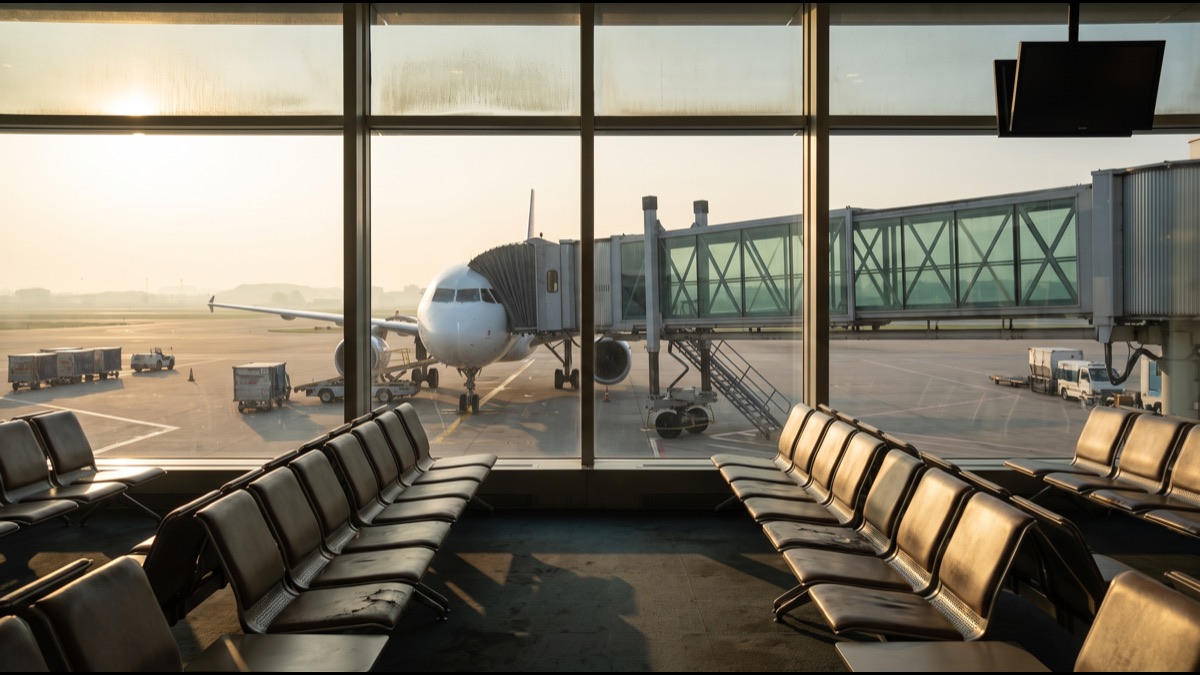
The boarding group printed on a ticket looks like a simple queue number, but it is actually the output of a system airlines have spent decades studying, testing, and defending against genuine science suggesting a better method exists. Every group assignment reflects a specific, deliberate trade-off between loyalty program economics, passenger psychology, and the hard physics of how quickly people can actually stow a bag and sit down.
Academic researchers and airline operations teams alike have run extensive simulations and real-world trials testing different boarding sequences, and the results consistently point toward faster methods than the ones most airlines actually use, which raises a genuinely interesting question: if a faster boarding method is well documented, why do so many airlines keep boarding the way they do?
The answer lies in understanding that boarding time is only one variable airlines are optimizing for, and often not even the most important one once loyalty program economics and passenger experience are factored into the full picture.
Why Boarding Feels Random But Almost Never Is
Every major airline maintains a documented, deliberate boarding sequence policy, reviewed and adjusted periodically based on operational data from actual flights, meaning the specific order groups get called is a designed system rather than an improvised decision made fresh by gate staff each time a flight boards.
What varies between airlines is not whether a deliberate system exists but which priorities that system is actually built to serve, since an airline heavily focused on loyalty program retention will structure boarding differently than one prioritizing pure operational speed or a low-cost carrier optimizing primarily for minimizing total turnaround time at the gate.
The Loyalty Hierarchy Sitting Behind Every Group Number
For full-service airlines, boarding order functions as a visible, semi-public status signal within the loyalty program hierarchy, letting elite frequent flyers, premium cabin passengers, and co-branded credit card holders board ahead of the general economy cabin as a tangible, repeatedly experienced perk that reinforces the value of maintaining or upgrading their loyalty tier.
This status-signaling function genuinely competes with pure boarding-speed optimization, since a system built purely around minimizing total boarding time would likely ignore loyalty tier entirely in favor of seat location alone, but airlines generally accept some efficiency cost in exchange for preserving a boarding hierarchy that reinforces the perceived value of program membership.
Why Back-to-Front Boarding Mostly Failed
Intuitively, boarding the back rows of the aircraft first seems like it should reduce aisle congestion, since front-row passengers would not need to walk past rear-seated passengers already settled in, but extensive testing found this method performs poorly in practice because passengers in the same boarding group still cluster in the aisle simultaneously while stowing luggage in adjacent rows.
Because back-to-front boarding does not actually solve the fundamental bottleneck, multiple passengers needing to use the same narrow aisle space at the same moment to stow bags and take their seats, most airlines that experimented with strict back-to-front sequencing eventually abandoned it in favor of methods that more directly address that specific congestion point.
What the Research Actually Found About Window-Middle-Aisle
Independent research, including widely cited simulations and real-world trials, has repeatedly found that boarding by seat type, filling all window seats first regardless of row, then middle seats, then aisle seats, significantly reduces total boarding time compared to the group-based, front-to-back or back-to-front systems most airlines actually use.
The efficiency gain comes from a straightforward mechanical reason: when window-seat passengers board first, no one needs to awkwardly climb over an already-seated aisle or middle passenger later, eliminating one of the single biggest sources of delay during the boarding process, small individual holdups that compound significantly across a full aircraft of passengers.
Why Airlines Still Do Not Use the Fastest Known Method
Despite this well-documented research, few airlines have adopted strict window-middle-aisle boarding as their primary system, largely because it would require splitting up traveling companions, families and couples who deliberately book seats together, into different boarding groups based purely on which specific seat each person happens to occupy.
Airlines have generally judged that the modest time savings from a strictly optimized seat-type system are not worth the passenger frustration and complaints generated by separating groups traveling together, illustrating precisely the trade-off between measured operational efficiency and passenger experience that shapes essentially every boarding policy decision airlines actually make.
How Overhead Bin Space Quietly Drives Boarding Order
Overhead bin capacity, which has not grown proportionally as aircraft have been reconfigured with more seats over the years, creates a genuine incentive for airlines to get passengers boarding and stowing bags in a sequence that reduces the odds of bins filling up before later boarding groups reach their assigned seats.
This is part of why many airlines have introduced boarding-priority perks tied specifically to guaranteed overhead bin space, since bin space scarcity has become enough of an operational and customer-satisfaction issue that some airlines now sell or bundle priority boarding specifically as a bin-space guarantee rather than purely as a status or speed benefit.
Why Families and Special Assistance Board First Anyway
Nearly every airline, regardless of its overall boarding philosophy, boards passengers needing additional time or assistance, families traveling with young children, and passengers with disabilities before the main sequence begins, a practice driven by genuine accessibility and customer service considerations that generally take priority over pure boarding-speed optimization.
This pre-boarding group is typically small enough relative to total passenger volume that its impact on overall boarding time is limited, allowing airlines to accommodate these passengers' needs without materially undermining whatever broader boarding-speed strategy the rest of the sequence is designed to achieve.
What Basic Economy Boarding Actually Signals
Airlines that sell a restricted, lower-cost basic economy fare class frequently place those passengers in the very last boarding group deliberately, a policy that serves as much to reinforce the value gap between fare classes as it does to manage actual boarding logistics, since basic economy passengers are functionally similar in boarding needs to standard economy passengers.
This deliberate last-group placement functions as a visible reminder of what a passenger gave up by choosing the cheapest fare tier, part of a broader industry pattern where fare class differences are reinforced through experience design at multiple touchpoints, boarding order among them, rather than purely through price alone.
How Codeshare and Alliance Status Complicates Grouping
Airlines operating within a global alliance or extensive codeshare partnership network have to reconcile their own boarding priority system with elite status earned on partner airlines, a genuinely complex mapping exercise since different airlines within the same alliance often use different numbers of elite tiers with different specific named benefits.
This reconciliation generally happens through formal, negotiated alliance-wide status matching agreements that specify exactly which partner airline tier corresponds to which boarding priority level on a given flight, agreements that get renegotiated periodically as individual airlines adjust their own loyalty program structures.
Why Budget Airlines Handle Boarding So Differently
Low-cost carriers frequently use open or lightly structured boarding, minimal or no assigned boarding groups at all in some cases, because their business model generally does not center on loyalty tier status the way full-service airlines do, and because open boarding tends to actually reduce total turnaround time at the gate for shorter-haul flights with simpler cabin configurations.
Some budget carriers do sell priority boarding as a standalone paid add-on, a model that reflects the same fundamental trade-off full-service carriers navigate, extracting additional revenue and offering a genuine convenience perk, but without the deeper loyalty-tier hierarchy layered underneath that full-service airline boarding systems typically carry.
The Gate Agent's Real-Time Judgment Calls
Despite detailed documented boarding policies, gate agents retain meaningful real-time discretion to adjust sequencing based on actual conditions at a specific gate on a specific day, such as a connecting flight running late, an unusually large number of passengers needing extra boarding time, or a tight overall schedule requiring a faster-than-standard process.
This human judgment layer exists precisely because no fixed written policy can anticipate every real-world combination of circumstances a gate might face, which is why the announced boarding sequence sometimes visibly deviates from the airline's official documented policy without that deviation representing any actual error or oversight.
How Boarding Groups Interact With Aircraft Door Configuration
Aircraft with multiple usable boarding doors, common at some airports for wide-body aircraft using both a front and rear jet bridge or stairs simultaneously, allow airlines to board different groups through different doors at the same time, a configuration that can meaningfully cut total boarding time independent of whatever seat-based sequencing policy is otherwise in effect.
Not every airport gate supports this dual-door configuration, which is part of why the same airline's boarding process can look meaningfully different, faster and more parallel at one hub airport, slower and more strictly sequential at a smaller regional airport lacking the same jet bridge infrastructure.
What Gulf Carriers Do Differently at Their Hub Airports
Major Gulf carriers operating extensive long-haul wide-body fleets from hub airports built specifically around efficient large-aircraft turnaround have generally invested heavily in dual-door boarding infrastructure and detailed, multi-tier boarding sequences reflecting both extensive premium cabin configurations and large, diverse loyalty program memberships spanning many different elite tiers.
These carriers also manage particularly complex connecting passenger flows given their hub position between multiple continents, which adds an additional layer of real-time gate agent coordination beyond the published boarding sequence, since a late-arriving connecting flight's passengers frequently need to be integrated into an already-underway boarding process without disrupting it entirely.
How Self-Boarding Gates Are Changing the Process
Some airlines and airports have introduced self-service boarding gates where passengers scan their own boarding pass at an automated turnstile rather than presenting it to a gate agent, a change that speeds up the physical throughput of each individual passenger but does not eliminate the underlying group sequencing, since the gate software still enforces which boarding group is currently permitted to scan through.
These systems also give airlines granular real-time data on exactly how quickly each boarding group is actually clearing the gate, data that operations teams use to continuously refine boarding group sizing and timing between group calls, treating boarding as an ongoing optimization problem informed by genuine measured performance rather than a policy set once and left unchanged indefinitely.
Why Some Airlines Charge for Priority Boarding Directly
Beyond loyalty-tier-based early boarding, many airlines now sell priority boarding as a standalone paid add-on available to any passenger regardless of fare class or status, a direct monetization of the same overhead-bin-space and psychological convenience value that elite status boarding has traditionally offered for free to top-tier loyalty members.
This paid option effectively lets airlines capture additional ancillary revenue from price-sensitive leisure travelers who value boarding earlier but have not accumulated enough loyalty status to receive it automatically, extending the same underlying boarding-hierarchy logic to passengers willing to pay directly rather than build status over repeated flights.
What Happens When Boarding Runs Behind Schedule
When boarding falls behind the planned schedule, due to a late-arriving aircraft, a mechanical delay, or an unusually slow-moving passenger group, gate agents frequently compress the announced group sequence, calling multiple groups together or shifting to a faster, less strictly sequential process specifically to recover lost time before the flight's scheduled departure slot.
This compressed approach trades some of the orderliness of the normal sequence for raw speed, illustrating once again that the published boarding policy represents a default starting point rather than a rigid rule gate staff cannot deviate from when actual schedule pressure makes strict adherence counterproductive to the airline's larger goal of an on-time departure.
Why Passengers Still Cluster at the Gate Early
Despite airlines actively discouraging it through boarding announcements, a large share of passengers continue gathering near the gate well before their assigned group is called, a behavior researchers attribute to anxiety about overhead bin space, uncertainty about hearing their group announced correctly, and a general desire to feel prepared rather than risk missing the flight.
This clustering behavior itself can slow overall boarding by crowding the gate area and making it harder for gate agents to visually manage the queue by group, an ironic side effect where passenger anxiety about the system actually undermines some of the efficiency the boarding group system is specifically designed to achieve.
What Boarding Music and Announcements Are Actually Designed to Do
The specific wording and tone of boarding announcements, along with any background music or chime patterns some airlines use to signal a new group being called, are deliberately standardized and tested for clarity, since a genuinely large share of boarding delays trace back not to physical bottlenecks but to passengers simply failing to hear or understand which group has been called.
Some airlines have experimented with visual boarding-group displays on gate screens specifically to reduce reliance on audio announcements alone in noisy terminal environments, an accessibility-minded change that also happens to reduce the number of passengers who approach the gate to ask which group is currently boarding, a small but measurable drag on overall boarding speed.
Why a Truly Optimal System May Never Get Adopted
The gap between the fastest boarding method research has actually identified and the boarding systems airlines actually use illustrates a broader truth about airline operations: pure efficiency is only one input into decisions that also have to account for revenue from loyalty programs and premium fares, passenger satisfaction, and the practical reality of keeping traveling groups together.
Until an airline decides the efficiency gain from a strictly optimized system outweighs the loyalty-program and customer-experience costs of implementing it, boarding will likely continue to look, from a passenger's perspective, somewhat arbitrary, even though behind that group number sits a carefully considered, if imperfect, balance of competing business priorities.
Sources
- Wikipedia — overview of airplane boarding methods and research on boarding efficiency
- International Air Transport Association — industry standards and operational data on airport turnaround and boarding
- Emirates — background on a major Gulf hub carrier’s boarding and loyalty tier structure
- U.S. Federal Aviation Administration — background on aircraft door configuration and airport gate operations
FAQ
Is there actually a faster way to board a plane than most airlines use?
Yes — research consistently shows boarding strictly by seat type, window seats first, then middle, then aisle, is measurably faster than most group-based systems, but it requires splitting up traveling companions, which most airlines avoid.
Why do elite frequent flyers board first even if it is not the fastest method?
Early boarding functions as a visible, tangible loyalty program perk that reinforces the value of elite status, a benefit airlines generally judge worth some efficiency trade-off compared to a purely speed-optimized system.
Why are basic economy passengers usually boarded last?
Placing basic economy passengers in the final boarding group reinforces the value difference between fare classes as much as it manages actual boarding logistics, since their boarding needs are otherwise similar to standard economy passengers.
Why does boarding speed differ so much between airports for the same airline?
Some airports support dual-door boarding using both a front and rear jet bridge simultaneously, which can meaningfully cut boarding time, while other airports lack that infrastructure and require a slower, single-door sequential process.
Can gate agents change the boarding order on the day of the flight?
Yes — gate agents retain real-time discretion to adjust sequencing for specific conditions like late connecting passengers or a tight schedule, even though the airline maintains a documented standard boarding policy overall.
About the Author
We reference Wikipedia and other authoritative sources to explain the background and current understanding of this topic.
Loved This Article?
Share it on WhatsApp → Share it on WhatsApp
Get more guides in your inbox — Subscribe to our newsletter for weekly surprising stories from Egypt, Saudi Arabia, Dubai, and beyond.