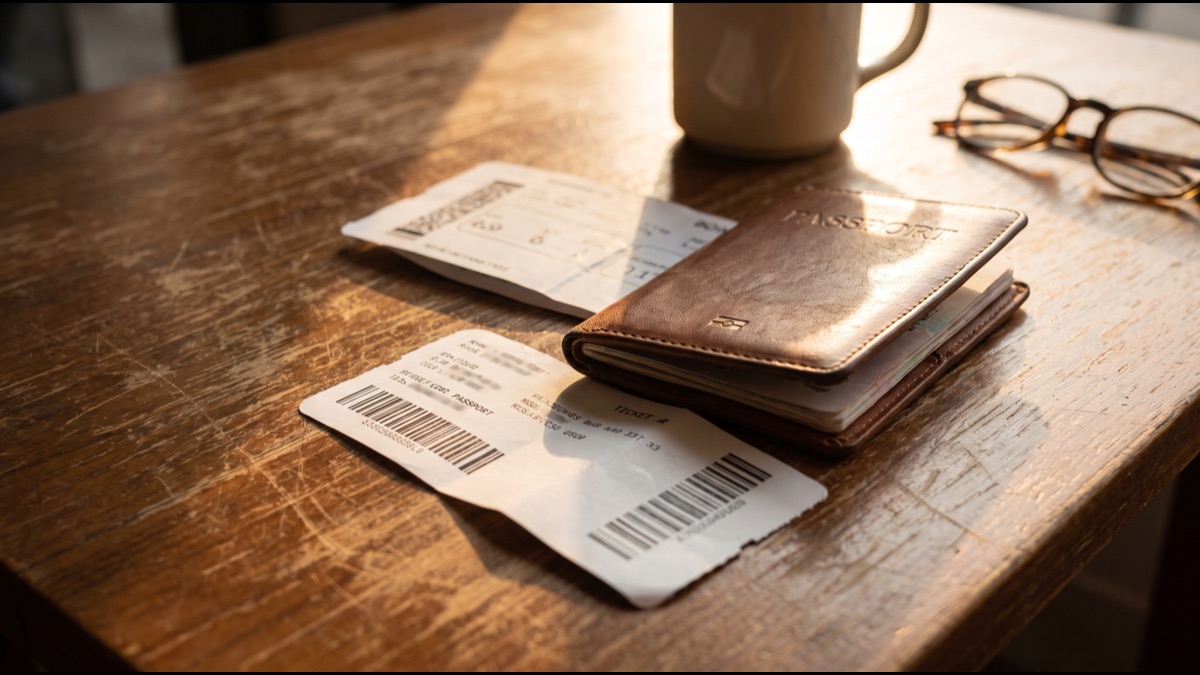
Few pricing systems generate as much everyday frustration as airline fares. Two passengers sitting in adjacent seats on the same flight, receiving identical service and arriving at the same destination at the same moment, can easily have paid fares differing by a factor of several times over, with no obvious explanation available to either of them for why their particular number came out the way it did.
This apparent arbitrariness is not arbitrary at all. It is the visible surface of an intensely sophisticated discipline called revenue management, developed over decades specifically to address the unusual economics of selling a product that becomes completely worthless at a fixed moment in time. Understanding that underlying logic explains most of what feels irrational about buying a plane ticket, including why prices move the way they do, why booking early is not always cheaper, and why the same route can cost dramatically different amounts on different days.
Why Airline Economics Are Genuinely Unusual
An airline seat is what economists describe as a perishable good, meaning it has a hard expiry moment after which it cannot be sold at any price whatsoever. The instant an aircraft door closes, every empty seat on that aircraft becomes permanently worthless, representing revenue that can never be recovered, unlike unsold physical inventory in a shop that can simply be discounted next week or held until the following season.
This perishability combines with an extremely lopsided cost structure that makes the pricing problem considerably harder. The overwhelming majority of the cost of operating a flight, including the aircraft itself, crew wages, fuel for the planned route, airport fees, and maintenance, is incurred regardless of whether the aircraft departs completely full or largely empty, meaning these costs cannot meaningfully be avoided by selling fewer tickets.
The marginal cost of carrying one additional passenger on an already-scheduled flight is genuinely tiny by comparison, amounting to little more than a small increment of fuel to carry the additional weight, some catering, and modest handling costs. This means that almost any revenue above that very low marginal figure improves the financial outcome of a flight that is departing anyway, which fundamentally shapes how airlines think about discounting empty seats.
What Revenue Management Actually Tries to Solve
Revenue management exists to resolve a genuine tension sitting at the heart of airline economics. Selling every seat cheaply would fill the aircraft completely but would fail to capture the substantially higher amounts that certain passengers, particularly those travelling for business on short notice, are genuinely willing and able to pay for the same physical seat.
Conversely, pricing every seat at that higher business-traveller level would capture excellent revenue from the passengers willing to pay it, but would leave a large number of seats empty as price-sensitive leisure travellers simply decline to fly at all, wasting the near-zero marginal cost opportunity those empty seats represent.
The genuine objective is therefore neither maximum load factor nor maximum average fare, but rather maximum total revenue for each individual departure, which requires selling different seats on the same aircraft at meaningfully different prices to different categories of passenger according to what each is willing to pay and how far in advance they commit.
How Fare Buckets Actually Work
Airlines do not typically set a single continuously varying price for a flight. Instead they divide the cabin into a series of fare classes, commonly called buckets, each representing a specific price point with a specific number of seats allocated to it and a specific set of conditions attached regarding changes, refunds, and baggage.
As the cheapest bucket sells out, that price simply becomes unavailable and the next-cheapest bucket becomes the lowest price on offer, which is precisely the mechanism producing the familiar experience of a fare appearing to rise between one search and the next. Nothing has been recalculated in response to the individual searcher; a fixed allocation has simply been exhausted by other buyers.
The number of seats allocated to each bucket is not fixed in advance for the life of the flight either. Revenue management systems continuously adjust these allocations based on how bookings are actually accumulating compared to the historical pattern for that route, day of week, and season, opening more cheap seats when demand is running behind expectation and closing them when it is running ahead.
Why Booking Early Is Not Reliably Cheaper
The widespread belief that booking as far ahead as possible guarantees the lowest fare is only partially true, and understanding why requires seeing the flight from the airline's perspective rather than the passenger's. Very early in the booking window, an airline has abundant unsold inventory and a long period remaining in which to sell it, so it has little reason to release its very cheapest seats immediately.
As the departure date approaches and the booking curve develops, the system continuously compares actual bookings against the expected pattern. If a particular flight is filling more slowly than the historical norm, the system releases additional cheap inventory to stimulate demand, which can genuinely produce lower fares closer to departure than were available months earlier.
If the flight is filling faster than expected, the opposite occurs and cheap buckets close early, pushing prices upward well ahead of departure. This is why the cheapest moment to book varies considerably by route and season rather than following any single universal rule, and why confident advice about a specific optimal booking window should generally be treated with scepticism.
Why Last-Minute Fares Are Usually Expensive
Fares very close to departure are typically high because of who is still buying at that point. Passengers booking within days of travel are disproportionately travelling for business, responding to an urgent obligation, or dealing with a personal emergency, and in all of these cases the trip itself is essentially non-optional and the traveller is comparatively insensitive to price.
Airlines deliberately preserve inventory for these late high-value bookings rather than selling every seat cheaply months in advance, because a seat sold early at a deep discount cannot subsequently be resold to a business traveller willing to pay several times as much for the same physical space.
The occasional genuinely cheap last-minute fare does exist, but it generally reflects a specific flight that has failed to fill according to expectation, leaving the system attempting to recover some revenue from seats that would otherwise depart empty and earn nothing at all, rather than representing any reliable general strategy a traveller can plan around.
How Route Competition Shapes Pricing
The competitive structure of a specific route influences fares at least as heavily as the underlying operating cost of flying it. A route served by several competing carriers with substantial available capacity generally sustains considerably lower fares than a comparable route where a single airline operates most or all of the available service.
This explains why two flights of genuinely similar distance and duration can carry dramatically different typical fares, since the shorter route may connect two cities served by a single carrier while the longer one may be contested by three or four airlines each attempting to fill their own aircraft on the same city pair.
The entry of a new competitor onto a previously uncontested route frequently produces a rapid and substantial fall in fares, a pattern documented consistently enough across aviation markets that regulators examining airline mergers routinely assess the likely fare impact of reducing the number of competitors serving overlapping routes.
Why the Same Seat Costs Different Amounts on Different Days
Demand for air travel varies enormously by day of week, time of day, and season, following patterns that are genuinely predictable in aggregate even though individual bookings are not. Business demand concentrates heavily on weekday mornings and evenings, while leisure demand concentrates on weekends and around school holidays and public holidays.
Revenue management systems incorporate these established patterns directly, allocating fewer cheap seats to departures expected to attract strong demand and more to those expected to be difficult to fill, which produces the substantial fare differences travellers observe between a Tuesday afternoon departure and a Friday evening one on the same route.
Seasonal variation operates on the same principle at a larger scale, with fares to leisure destinations rising sharply during peak holiday periods and falling considerably in shoulder seasons, reflecting predictable shifts in how many people genuinely want to travel to that destination at that particular time of year.
What Ancillary Revenue Has Changed About Pricing
A substantial structural shift over the past two decades has been the separation of services previously included in the ticket price into separately purchased items, including checked baggage, seat selection, priority boarding, meals, and changes to booking, a practice generally described as unbundling.
This shift allows an airline to advertise a genuinely lower headline fare while recovering revenue through subsequent optional purchases, an approach that particularly suits price-comparison websites where the lowest displayed number attracts disproportionate attention regardless of what that number actually includes.
For passengers, the practical consequence is that comparing advertised fares between carriers has become considerably less meaningful without accounting for what each fare actually includes, since a nominally cheaper ticket can readily end up costing more once baggage and seat selection are added for a traveller who genuinely needs both.
How Distribution Channels Affect the Price You See
Airline tickets reach passengers through several distinct channels including the airline's own website, global distribution systems used by travel agents, online travel agencies, and corporate booking tools, and the fare available can genuinely differ between these channels because each carries different costs for the airline.
Airlines generally prefer direct booking through their own channels because it avoids the fees payable to intermediary distribution systems and because it provides a direct customer relationship enabling subsequent marketing, which is why some carriers offer fares or benefits exclusively through their own website.
Online travel agencies can nonetheless sometimes display lower prices, either because they hold negotiated allocations purchased in bulk or because they reduce their own margin to win the booking, though these tickets frequently carry more restrictive change conditions and can complicate resolution when a disruption occurs.
Why Overbooking Exists and How It Is Managed
Airlines routinely sell more tickets than there are seats on an aircraft, a practice that sounds indefensible until the underlying statistics are considered. A predictable proportion of booked passengers do not appear for their flight, whether through missed connections, changed plans, or simple failure to travel, and those empty seats represent unrecoverable lost revenue.
Revenue management systems forecast this no-show rate using historical data specific to the route, fare type, day of week, and time of year, then deliberately oversell by approximately that forecast amount so that the aircraft departs genuinely full rather than with a predictable number of paid-for but unoccupied seats.
When the forecast proves too aggressive and more passengers appear than there are seats available, airlines must deny boarding to some passengers, generally first seeking volunteers through escalating compensation offers before resorting to involuntary denial, a process now governed by specific passenger-rights regulation in many jurisdictions.
How Fuel Costs Feed Into Fares
Fuel represents one of the single largest operating costs for most airlines, and its price is genuinely volatile in ways that are largely outside any individual carrier's control, driven by global energy markets, geopolitical events, and currency movements rather than by anything happening within the aviation industry itself.
Airlines commonly manage this exposure through hedging, entering financial contracts that lock in a fuel price for a future period, which provides valuable cost certainty for planning but which can also work against a carrier that has hedged at a high price when market prices subsequently fall substantially.
The relationship between fuel prices and ticket prices is genuinely less direct than intuition suggests, since hedging positions, competitive pressure, and the substantial lag between cost changes and schedule adjustments all mean that falling fuel prices frequently do not translate into promptly falling fares in the way passengers reasonably expect.
Why Connecting Flights Can Cost Less Than Direct Ones
It frequently costs less to fly a longer itinerary with a connection than to fly directly between the same two cities, an outcome that appears to defy logic until the competitive picture is considered. The direct route may be operated by a single carrier facing little competition, allowing it to sustain higher fares on that specific city pair.
A connecting itinerary, by contrast, routes the passenger through a competitive hub where multiple carriers are actively contesting the same traffic, and the airline offering the connection is genuinely competing for a passenger who has a direct alternative available and must therefore be given a meaningful reason to accept the longer journey.
Airlines also actively use connecting traffic to fill seats on route segments that local demand alone would not support, meaning a passenger connecting through a hub may effectively be occupying inventory the airline was struggling to sell to travellers whose actual origin or destination was that hub city itself.
How Loyalty Programmes Fit Into the Revenue Picture
Frequent flyer programmes have evolved considerably beyond their original purpose of encouraging repeat custom, becoming substantial businesses in their own right that generate significant revenue by selling miles or points in bulk to banks, hotel groups, and retailers who then distribute them to their own customers.
For several major carriers, these loyalty programmes have at times been valued by financial analysts as worth more than the underlying airline operation itself, reflecting the genuinely attractive economics of selling a currency the airline itself issues and controls the redemption terms of.
This dynamic influences seat pricing indirectly, since the airline must reserve some inventory for award redemptions while carefully managing how many seats are made available at what point levels, a calculation using much the same revenue management logic applied to cash fares.
Whether Airlines Track Individual Search Behaviour
A persistent popular belief holds that repeated searching for the same route causes airlines to raise the displayed price specifically for that individual searcher, a claim that airlines have consistently denied and that available independent investigation has generally failed to substantiate as a systematic practice.
The experience underlying the belief is genuine, but the more mundane explanation is usually that inventory in a particular fare bucket has genuinely sold out between searches, or that a cached lower price from an earlier search was displayed after that fare had already become unavailable in the live inventory.
Personalised pricing based on individual browsing history does exist in various other retail contexts and is not technically impossible in aviation, which is why the question continues to attract regulatory attention, but the specific mechanism most travellers believe they are experiencing is generally better explained by ordinary bucket exhaustion.
What Passengers Can Genuinely Do About Fares
Flexibility on travel dates provides the single largest practical lever available to most travellers, since shifting a departure by a day or two, or accepting a less convenient departure time, frequently moves a booking into a fare bucket allocated for weaker demand and priced accordingly.
Comparing the total cost including baggage and seat selection rather than the headline fare has become genuinely essential given the extent of unbundling, as has checking both the airline's own website and third-party sites given that availability and price genuinely differ between distribution channels.
Setting price alerts for a specific route and monitoring over a period is more reliable than attempting to time the market according to any supposed universal rule, since the actual cheapest moment depends on how that specific flight is filling relative to expectation, which no external observer can directly see.
Airline pricing feels irrational largely because passengers reasonably assume they are buying a straightforward product at a straightforward price, when the airline is actually running a continuous optimisation across a fixed quantity of inventory that becomes worthless at a known moment. Every fare reflects that flight's specific booking curve, the competitive structure of that particular route, the day and season, and a forecast of how many more passengers will still want that seat before the door closes. That framing explains most of the frustrations: why the price changed between searches, why booking early is not reliably cheaper, why last-minute fares punish urgency, and why a connection through a competitive hub can undercut a direct flight. It also identifies where genuine leverage exists for travellers, which is overwhelmingly in date flexibility, honest total-cost comparison across unbundled fares, and patient monitoring rather than in any confident rule about the single best moment to book.
Sources
- Wikipedia — overview of revenue management theory and airline application
- International Air Transport Association — global airline industry data on fares, costs, and traffic
- International Civil Aviation Organization — international standards and statistics on air transport
- U.S. Department of Transportation — regulatory data on airfares, overbooking, and passenger rights
- OECD — economic analysis of aviation competition and market structure
FAQ
Do airlines raise prices because I searched the same route repeatedly?
Airlines deny this and independent investigation has generally not substantiated it as systematic practice; the usual explanation is that a cheap fare bucket genuinely sold out between your searches.
Is booking as early as possible always cheapest?
No — airlines hold back their cheapest inventory early, and may release more cheap seats later if a flight is filling behind expectation, so the cheapest moment varies by route and season.
Why are last-minute flights so expensive?
Late bookers are disproportionately business or emergency travellers who are relatively price-insensitive, so airlines deliberately preserve inventory for them rather than discounting it months earlier.
Why can a connecting flight cost less than a direct one?
Direct routes may face little competition, while connecting itineraries route through contested hubs where the airline must offer a genuine reason to accept a longer journey.
Why do airlines overbook flights?
A predictable proportion of passengers never show up, so airlines oversell by roughly the forecast no-show rate to avoid departing with paid-for but empty seats.
About the Author
We reference Wikipedia, International Air Transport Association, International Civil Aviation Organization, U.S. Department of Transportation, and OECD to explain the background and current understanding of this topic.
Loved This Article?
Share it on WhatsApp → Share it on WhatsApp
Get more guides in your inbox — Subscribe to our newsletter for weekly surprising stories from Egypt, Saudi Arabia, Dubai, and beyond.