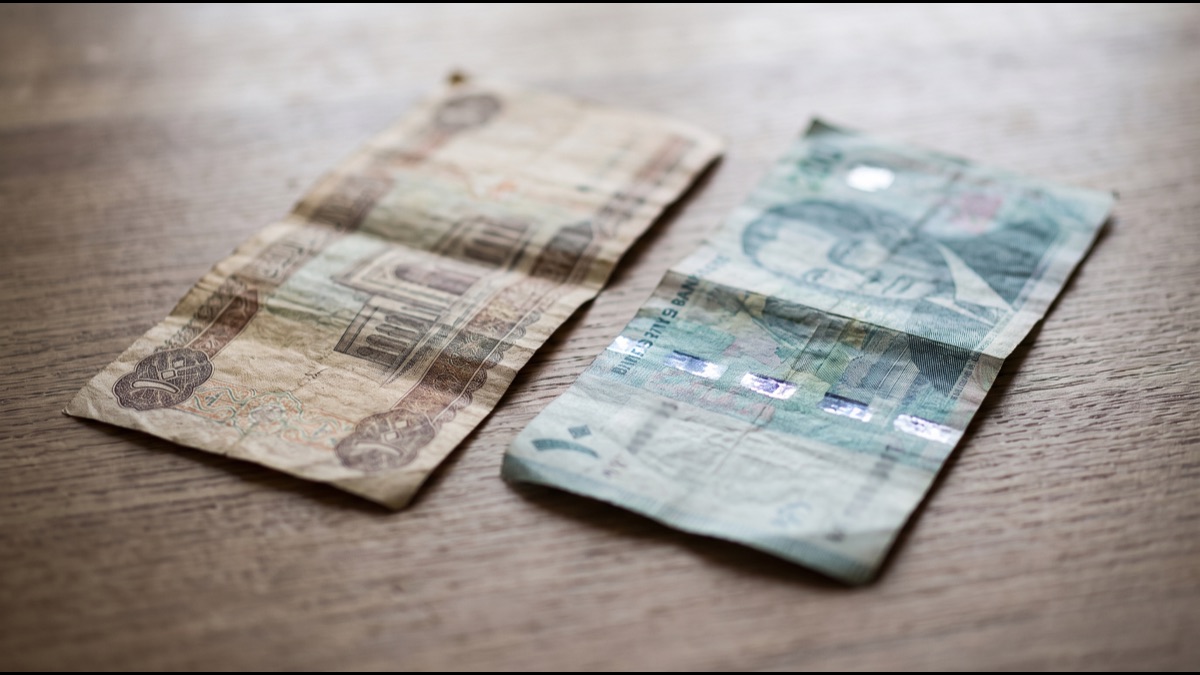
A currency peg is a policy where a country's central bank commits to holding its currency at a fixed exchange rate against another currency, usually the US dollar, instead of letting markets set the rate freely. The UAE dirham has been pegged at 3.6725 to the dollar since 1997, and the Saudi riyal has held close to 3.75 to the dollar since 1986.
For oil-exporting Gulf economies, a dollar peg makes sense because oil itself is priced and sold globally in dollars, so tying the local currency to it removes a layer of exchange-rate uncertainty from government revenue and from businesses that import and export in dollars.
Fixing One Currency's Value to Another
What It Costs to Defend the Peg
To hold the peg in place, a central bank must be ready to buy or sell its own currency in whatever quantity is needed to keep the exchange rate exactly where it promised. That requires large foreign currency reserves, since defending the rate during a period when everyone wants to sell the local currency means the central bank has to buy it all up using dollars from its reserves.
The tradeoff is that a pegged central bank effectively surrenders independent control over its own interest rates — it must largely mirror the US Federal Reserve's rate decisions, because a large enough gap between local and US interest rates would create pressure that a peg would eventually struggle to absorb. That's part of why Gulf central banks tend to move rates in lockstep with the Fed.
Sources
- Wikipedia — overview of how fixed exchange rate systems function
- Investopedia — explanation of currency pegs and how central banks defend them
- Central Bank of the UAE — official source on the UAE dirham's exchange rate policy
FAQ
Why do the UAE and Saudi Arabia peg their currencies to the dollar?
Both economies rely heavily on oil revenue, which is priced in dollars globally, so pegging removes exchange-rate uncertainty from that revenue and from dollar-denominated trade and investment.
Can a currency peg break under pressure?
Yes — if a central bank runs out of reserves while trying to defend a rate the market no longer believes in, it can be forced into a sudden devaluation, as happened to several countries in past currency crises.
Does a peg mean the exchange rate never changes at all?
Not necessarily — some countries adjust a peg's fixed rate occasionally in a controlled way, called a repeg, but the UAE and Saudi pegs have stayed unchanged for decades.
About the Author
We reference Wikipedia, Investopedia, and Central Bank of the UAE to explain the background and current understanding of this topic.
Loved This Article?
Share it on WhatsApp → Share it on WhatsApp
Get more guides in your inbox — Subscribe to our newsletter for weekly surprising stories from Egypt, Saudi Arabia, Dubai, and beyond.