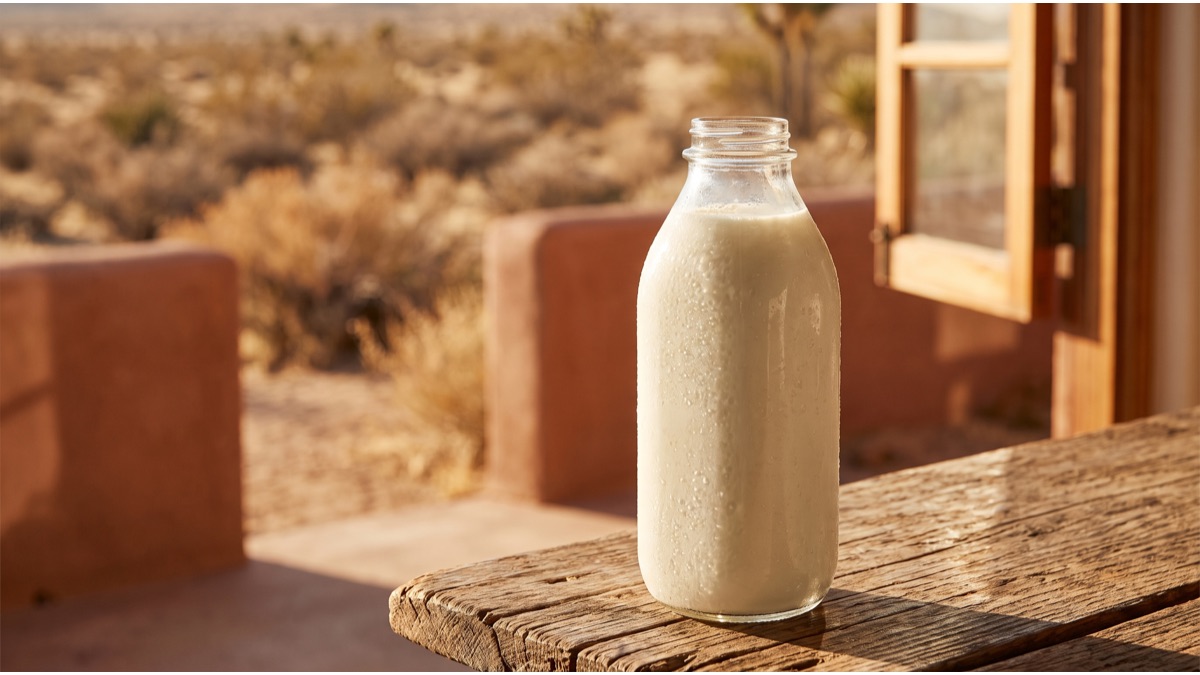
A carton of camel milk sitting on a Gulf supermarket shelf represents the end of a supply chain that had to be substantially rebuilt from the ground up, since almost none of the equipment, techniques, or processing timelines developed over a century for cow milk actually transfer directly to camel milk. The animal at the center of Bedouin desert life for thousands of years has become the foundation of a genuinely modern commercial dairy industry, but getting there required solving problems the global dairy industry had never previously needed to address.
Understanding how camel milk actually gets from a desert farm to a supermarket carton, a chocolate bar, or an export shipment reveals why this industry remained a niche curiosity for so long despite the milk's long traditional use, and why the UAE in particular has invested heavily in solving the specific technical challenges that kept camel dairy from becoming a mainstream commercial product for most of the twentieth century.
It also explains why camel milk products now carry a price premium considerably higher than equivalent cow milk products, a premium rooted in genuine cost differences throughout the production chain rather than pure marketing positioning alone.
A Traditional Drink Becomes a Modern Industry
Camel milk has been a dietary staple for Bedouin and other desert communities across the Arabian Peninsula for thousands of years, valued historically for its availability in exactly the harsh, arid environments where cattle struggle to survive, long before any commercial dairy industry existed to package and distribute it at scale.
The shift from a household and community-level traditional food source to a packaged commercial product sold in supermarkets, specialty stores, and increasingly international export markets required solving a series of genuinely novel technical problems that the established cow dairy industry had never needed to address.
Why Camel Milk Behaves Differently From Cow Milk
Camel milk has a meaningfully different fat and protein structure compared to cow milk, including a different casein protein profile that affects how it curdles, how it responds to heat treatment, and how it behaves during processing steps that were originally engineered and optimized entirely around cow milk's specific chemistry.
This chemical difference means processing equipment and techniques cannot simply be borrowed wholesale from the conventional dairy industry, since a process step that works reliably on cow milk can behave unpredictably, curdling improperly or separating in unwanted ways, when applied directly to camel milk without meaningful adaptation.
How a Modern Camel Dairy Farm Actually Operates
Commercial camel dairy farms in the UAE and broader Gulf combine traditional camel husbandry knowledge with modern dairy farm infrastructure, including climate-controlled housing to manage the intense summer heat, carefully formulated feed programs, and structured milking schedules designed around camel-specific biology rather than simply adapted from cattle farming practice.
Unlike cattle, which have been selectively bred for dairy production over many centuries, most camels used in commercial milk production are genetically closer to their traditional working and racing counterparts, meaning farms have had to develop camel-specific animal husbandry expertise essentially from scratch rather than drawing on centuries of established dairy-breeding knowledge.
Why Standard Pasteurization Equipment Does Not Work
Camel milk's distinct protein structure causes it to react differently to the heat exposure used in standard pasteurization, and equipment calibrated for cow milk's specific heat tolerance can cause camel milk proteins to denature or separate in ways that damage the milk's quality, consistency, and nutritional profile.
Camel dairy processors have had to develop and calibrate modified heat treatment protocols specifically suited to camel milk's chemistry, a genuinely significant engineering investment that smaller or less well-capitalized producers historically struggled to justify, which partly explains why large-scale commercial camel dairy remained rare until dedicated Gulf investment made the necessary process development economically viable.
How Milking Camels Is Genuinely Harder Than Milking Cows
Camels have a notably different milk let-down reflex compared to cows, generally requiring the presence of their calf, or convincing simulated conditions mimicking that presence, to release milk fully, a behavioral quirk that complicates the kind of large-scale, calf-independent automated milking systems standard in modern cattle dairy operations.
Commercial camel farms have developed specific management techniques, including carefully timed calf proximity during milking sessions, to work around this biological reality, adding a layer of operational complexity and specialized animal handling knowledge that cattle dairy farms simply do not need to manage in the same way.
What Happens Between the Farm and the Carton
After milking, camel milk moves through chilling, filtration, heat treatment, and packaging steps similar in broad structure to conventional dairy processing but calibrated at each stage specifically for camel milk's distinct properties, with quality control checks at multiple points to catch any processing inconsistency before the product reaches retail shelves.
This multi-stage processing chain, while conceptually similar to cow milk processing, requires camel-specific calibration and testing at nearly every step, which is part of why camel dairy processing facilities represent a genuinely distinct capital investment rather than a simple retrofit of existing cow milk processing infrastructure.
Why Shelf Life Became the Industry's Central Problem
Fresh camel milk has historically had a notably short natural shelf life even under refrigeration, a genuine commercial obstacle for any product intended for supermarket distribution and export, since retailers and international buyers require products that remain stable and safe well beyond what fresh, minimally processed camel milk could originally guarantee.
Solving this shelf-life constraint became one of the central technical challenges the modern camel dairy industry had to address before the product could move beyond small local and regional sales into the broader retail and export markets it occupies today.
How UHT Treatment Extended Camel Milk's Reach
Ultra-high-temperature processing, which briefly heats milk to a higher temperature than standard pasteurization before rapid cooling and sterile packaging, has become the dominant solution for extending camel milk's shelf life to months rather than days, enabling the kind of long-distance distribution and export that a short-shelf-life fresh product could never support.
Adapting UHT processing specifically for camel milk's distinct chemistry required considerable calibration to avoid the same protein degradation issues that affect standard pasteurization, representing one of the more significant technical achievements underlying the industry's shift from a purely local product to one capable of international export.
The Nutritional Claims and What Research Actually Supports
Camel milk has attracted considerable marketing attention around claims of lower lactose content, different fat composition, and various health benefits, and while some peer-reviewed research does support genuine compositional differences from cow milk, including generally lower fat content and a different vitamin and mineral profile, many of the more ambitious health claims circulating commercially remain less definitively established in rigorous clinical research.
Responsible marketing in the more established segments of the industry has increasingly emphasized the genuinely documented compositional differences rather than the more speculative health claims, reflecting growing awareness that overstated marketing claims risk undermining the credibility of the industry's genuinely legitimate nutritional distinctions.
Why Camel Milk Chocolate Became a Genuine Export Product
Camel milk chocolate, produced by several UAE-based companies, has become one of the more commercially successful and internationally recognized camel dairy products, combining a genuinely novel ingredient story with a product format, chocolate, that travels and stores considerably more easily than liquid milk itself.
This product diversification strategy reflects broader thinking across the industry: rather than competing purely on liquid milk sales against an entrenched global cow dairy industry, camel dairy producers have found stronger commercial footing in specialty and novelty product categories where the ingredient's uniqueness itself becomes the primary selling point.
How Pricing Reflects the Cost of This Complexity
Camel milk products typically carry a retail price several times higher than equivalent cow milk products, a premium that traces directly back to genuine cost differences throughout the production chain, including lower milk yield per animal, more complex and specialized processing requirements, and a smaller-scale industry that has not yet achieved the production efficiencies cattle dairy built up over generations.
This pricing reality positions camel milk products firmly in a premium or specialty market segment rather than as a mainstream dairy alternative competing directly on price, a positioning that has shaped marketing strategy across the industry toward health-conscious and premium consumer segments rather than broad mass-market distribution.
Why the UAE Invested Heavily in This Specific Industry
The UAE government and private investors have backed camel dairy development as part of a broader food security and agricultural diversification strategy, recognizing that camels, uniquely adapted to thrive in desert conditions unsuitable for most conventional livestock, represent a genuinely sustainable domestic food production option in an environment where importing most food remains the default alternative.
This strategic backing has funded the research, farm infrastructure, and processing technology development that individual smaller producers likely could not have justified independently, illustrating how deliberate government investment can accelerate an entire industry past technical barriers that market forces alone might have taken considerably longer to overcome.
How Quality Control Actually Works on a Camel Farm
Commercial camel dairies maintain quality control protocols covering animal health monitoring, feed quality, milking hygiene, and laboratory testing of milk composition at multiple points in the production chain, standards generally aligned with international food safety frameworks despite the industry's comparative youth relative to conventional dairy.
This rigorous quality control regime reflects the reality that camel dairy products, particularly those intended for export, must meet the same international food safety standards as any other dairy product, meaning the industry could not simply rely on traditional small-scale production practices once it began targeting formal retail and export markets.
What International Buyers Actually Look For
Export-focused camel dairy buyers generally prioritize consistent product quality, verified food safety certification, and reliable supply volume over the more romanticized cultural story that often accompanies camel milk marketing, treating it as a genuine commercial dairy commodity requiring the same due diligence as any other food import.
This commercial pragmatism has pushed leading Gulf camel dairy producers to invest heavily in the kind of formal certification and quality documentation international food distributors require, a maturation process that has meaningfully professionalized what began as a much smaller, less formally structured local industry.
Why Camel Dairy Farming Cannot Simply Scale Like Cattle
Camels produce meaningfully less milk per animal than dairy cattle and have a longer reproductive cycle, structural biological constraints that limit how quickly the industry can scale production volume even with substantial capital investment, unlike cattle dairy where centuries of selective breeding have optimized cows specifically for high milk yield.
These biological limits mean camel dairy is likely to remain a smaller-volume, premium-positioned industry rather than growing into a true mass-market alternative to cow dairy, a structural reality that has shaped realistic long-term growth expectations across the sector rather than assuming camel milk could simply replicate cow dairy's production scale.
How Cultural Heritage and Commercial Ambition Intersect Here
Camel dairy marketing across the Gulf consistently emphasizes the animal's deep cultural and historical significance to Bedouin heritage, a genuine, authentic connection rather than an invented marketing narrative, since camels have shaped desert life, transportation, and diet across the region for millennia before any commercial dairy industry existed.
This authentic heritage angle gives Gulf camel dairy producers a genuinely distinctive market position internationally that would be difficult for a producer elsewhere in the world to credibly replicate, since the cultural depth underlying the product cannot simply be manufactured through marketing alone.
How Restaurants and Cafes Have Started Using Camel Milk
Beyond retail cartons and packaged chocolate, a growing number of specialty cafes across the UAE and wider Gulf now offer camel milk lattes and other prepared beverages, a category that requires its own set of adaptations since camel milk froths and steams differently than cow milk due to its distinct fat and protein content.
Baristas working with camel milk have had to develop specific technique adjustments to achieve an acceptable foam texture, and several camel dairy producers now sell a barista-formulated version of their milk specifically optimized for espresso-based drinks, illustrating how far downstream the industry's technical adaptation work has had to extend beyond the processing plant itself.
Why Export Markets Outside the Gulf Remain a Work in Progress
While camel milk products have found genuine success within Gulf domestic markets and among diaspora and health-conscious consumers abroad, broader mainstream international grocery adoption remains limited, constrained by both the premium price point and the simple fact that most international consumers have no established cultural familiarity with camel milk as a food category at all.
Producers pursuing international growth have generally focused on specialty health food retailers, e-commerce direct-to-consumer channels, and diaspora community markets rather than attempting to compete directly on supermarket shelves against entrenched conventional dairy brands, a realistic go-to-market strategy suited to a genuinely premium, still-niche product category.
How Camel Cheese and Other Derivatives Pose Their Own Challenges
Producing camel cheese has proven considerably harder than producing camel milk chocolate or UHT liquid milk, since camel milk's distinct casein structure resists the standard rennet-based coagulation process cheesemakers rely on for cow and goat milk, requiring specialized enzyme formulations and adapted techniques that took years of dedicated research to develop into a commercially viable product.
A small number of specialty producers have successfully brought camel cheese to market, but it remains a considerably more niche and expensive product than camel milk chocolate, illustrating how unevenly the industry's technical breakthroughs have been distributed across different product categories rather than solving camel milk's processing challenges uniformly all at once.
Why This Industry Still Has Real Room to Grow
Despite the technical progress already achieved, camel dairy remains a comparatively young commercial industry with meaningful room for further process refinement, cost reduction, and product innovation, particularly as research continues into camel-specific processing techniques that could further improve shelf life, taste consistency, and production efficiency beyond current levels.
Whatever specific direction that continued development takes, the underlying story remains a genuinely rare case of an ancient traditional food source being successfully, if gradually and expensively, rebuilt into a modern commercial industry rather than simply fading into a niche cultural curiosity as many other traditional foods eventually have.
For an industry still measured in decades rather than centuries of formal commercial development, the progress achieved so far, from a fresh product with a shelf life measured in hours to internationally exported chocolate bars and shelf-stable cartons, represents a genuinely significant achievement that few outside the Gulf dairy sector fully appreciate.
Sources
- Wikipedia — overview of camel milk composition, processing, and commercial production
- Food and Agriculture Organization — background on camel dairy development and food security research
- Camelicious — background on a major UAE commercial camel dairy operation
- UAE Ministry of Climate Change and Environment — regulatory and agricultural context for UAE dairy industry development
FAQ
Why can’t camel milk be processed on regular cow milk dairy equipment?
Camel milk has a different protein and fat structure that reacts differently to standard heat treatment, causing potential curdling or separation issues, so processors have had to develop and calibrate modified equipment and protocols specifically for camel milk.
Why is camel milk so much more expensive than cow milk?
The premium reflects genuine cost differences including lower milk yield per animal, more complex specialized processing requirements, and a smaller-scale industry that has not yet achieved the production efficiencies cattle dairy built up over generations.
Is camel milk actually lower in lactose than cow milk?
Some peer-reviewed research supports genuine compositional differences including a different fat and protein profile, though many of the more ambitious health claims circulating commercially remain less definitively established in rigorous clinical research.
Why did camel milk chocolate become so commercially successful?
Chocolate travels and stores considerably more easily than liquid milk, letting producers capture the novelty and cultural appeal of camel milk as an ingredient without needing to solve liquid milk’s more difficult shelf-life and distribution challenges.
Can camel dairy farming ever scale to match cow dairy production?
Unlikely at the same scale — camels produce meaningfully less milk per animal and have a longer reproductive cycle than dairy cattle, structural biological constraints that limit how quickly the industry can grow production volume even with heavy investment.
About the Author
We reference Wikipedia and other authoritative sources to explain the background and current understanding of this topic.
Loved This Article?
Share it on WhatsApp → Share it on WhatsApp
Get more guides in your inbox — Subscribe to our newsletter for weekly surprising stories from Egypt, Saudi Arabia, Dubai, and beyond.