A contact lens prescription is a genuinely different measurement from a glasses prescription, because a contact lens sits directly on the eye's surface and must match the cornea's specific curvature, not just correct the same refractive error a glasses lens would. Getting that curvature match wrong is not simply a comfort issue; a poorly fitted lens can restrict oxygen flow to the cornea or shift unpredictably on the eye, both genuine clinical concerns rather than minor inconveniences.
This is why an eye care professional cannot simply convert an existing glasses prescription into a contact lens prescription on the spot, and why understanding the manufacturing and fitting process explains several rules patients are given, including strict wear-time limits and why swapping lens brands without professional guidance carries real risk.
Why Corneal Curvature Measurement Comes First
Fitting begins with keratometry or corneal topography, techniques that map the cornea's precise curvature across its entire surface, since human corneas vary meaningfully in shape and even a lens with the correct vision-correcting power will not sit properly if its base curve does not match that individual curvature.
This mapping step is why two people with an identical glasses prescription can require completely different contact lens specifications, and why a contact lens fitting appointment involves measurements a standard glasses eye exam does not.
Soft Lenses: Hydrogel and Silicone Hydrogel Materials
Most modern soft contact lenses are made from either hydrogel or silicone hydrogel polymers, water-absorbing plastic materials that remain flexible and conform to the eye's surface, with silicone hydrogel specifically engineered to let significantly more oxygen pass through to the cornea than older hydrogel-only materials.
This oxygen permeability matters directly for corneal health, since the cornea has no blood vessels of its own and relies on oxygen diffusing in from the surrounding air and tear film, meaning a lens material that blocks too much oxygen can genuinely stress corneal tissue over extended wear.
Rigid Gas-Permeable Lenses and Why Some Patients Need Them
Rigid gas-permeable lenses, made from firmer plastic materials than soft lenses, hold their shape more precisely on the eye and can correct certain vision problems, particularly irregular corneal shapes like keratoconus, more effectively than a flexible soft lens can.
Because they do not conform to the eye's exact surface the way a soft lens does, rigid lenses instead float on a thin layer of tears, which is precisely why they typically require a longer initial adaptation period before wear feels comfortable compared with soft lenses.
How Manufacturing Actually Shapes a Lens
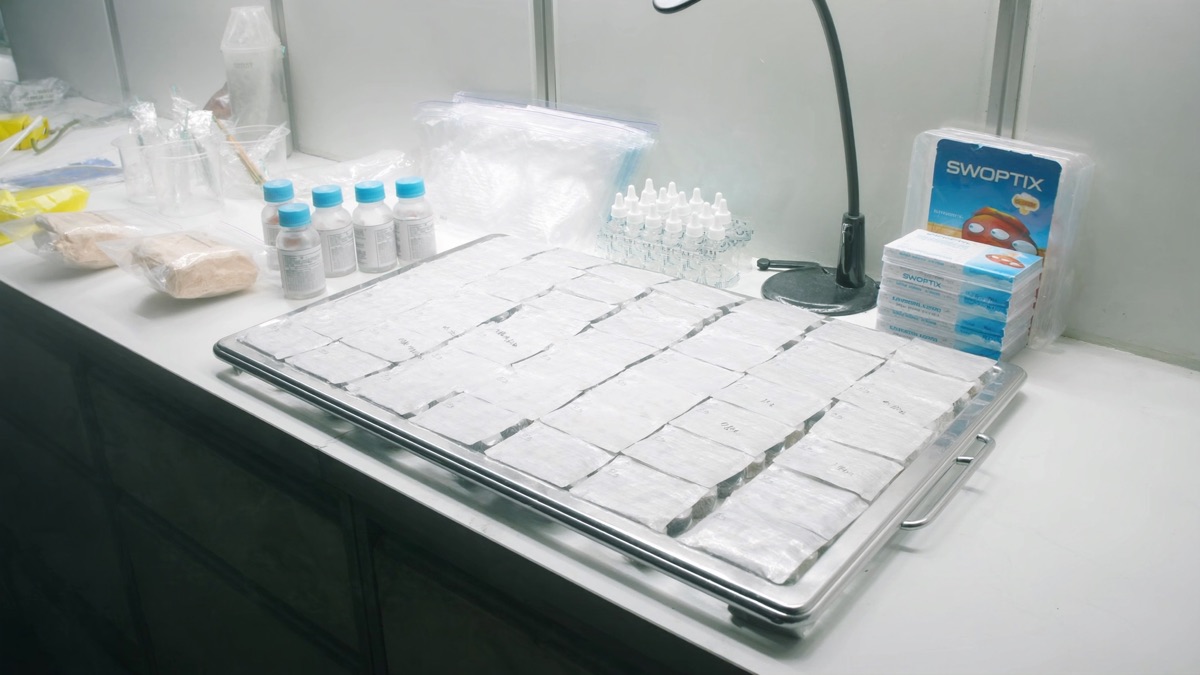
Most modern soft contact lenses are manufactured using a technique called cast molding, injecting liquid polymer into precisely shaped molds and then curing it, a high-volume manufacturing process that allows consistent, mass-produced lenses at the specific curvature and power values a prescription requires.
Specialty and custom lenses, particularly rigid gas-permeable lenses or highly irregular prescriptions, are more often lathe-cut, precisely machined from a solid plastic disc, a slower but more individually adjustable process better suited to unusual or highly specific prescriptions.
Why the Base Curve Number Actually Matters
A contact lens's base curve, the specific curvature radius of its inner surface, must closely match the cornea's own curvature; too flat a fit lets the lens move excessively and decenter over the eye, while too steep a fit can restrict tear exchange beneath the lens and reduce oxygen flow to the cornea.
This is why contact lens boxes explicitly list a base curve number alongside prescription power, and why switching to a different lens brand or design without professional guidance can result in a genuinely poor fit even when the vision-correction power itself stays identical.
Toric Lenses for Astigmatism
Standard spherical contact lenses correct simple nearsightedness or farsightedness, but astigmatism, caused by an irregularly shaped cornea rather than a perfectly round one, requires a specialized toric lens with different optical power at different points around the lens.
Because a toric lens must remain rotationally stable in a specific orientation to correct astigmatism properly, these lenses include a weighting or design feature that resists rotation on the eye, a manufacturing detail spherical lenses do not need at all.
Daily, Bi-Weekly, and Monthly: Why Replacement Schedules Differ
Different lens materials and manufacturing costs support different safe wear-and-replacement schedules, and daily disposable lenses, discarded after a single use, generally carry the lowest infection risk since they never accumulate the protein deposits and bacterial buildup that occur on lenses reused across multiple days.
Longer-wear lenses require regular cleaning with specific solutions to manage that buildup, and eye care professionals generally match a patient's recommended replacement schedule to both their specific ocular health profile and how consistently they are likely to follow proper cleaning routines.
Why Sleeping in the Wrong Lenses Carries Real Risk
Sleeping while wearing lenses not specifically approved for extended overnight wear meaningfully raises infection risk, since closed eyelids during sleep already reduce the oxygen and tear exchange a cornea normally receives, and an unsuitable lens compounds that reduction further.
This is a genuine, well-documented clinical risk rather than an overly cautious general guideline, since corneal infections linked to improper extended lens wear can, in serious cases, threaten vision permanently, which is why eye care professionals are specific and consistent about which lenses, if any, are approved for overnight use.
Why Custom Fitting Cannot Be Skipped for Colored or Cosmetic Lenses
Cosmetic and colored contact lenses, even those sold purely for appearance without any vision correction, still sit directly on the eye's surface and require the same curvature fitting and material safety considerations as vision-correcting lenses, which is why eye care professionals and regulators generally require a proper fitting and prescription even for purely cosmetic lenses.
Unregulated cosmetic lenses purchased without a proper fitting, sometimes available through informal retail channels, have been directly linked to corneal infections and abrasions precisely because they skip the individualized curvature-matching process a genuine fitting provides.
Emerging Technology: Smart and Extended-Function Lenses
Ongoing contact lens research includes smart lenses embedded with sensors capable of monitoring physiological indicators like glucose levels in tears, and multifocal lenses that correct vision at multiple distances simultaneously, both requiring more complex manufacturing than standard single-power lenses.
These emerging categories still rely on the same fundamental fitting principles, accurate corneal curvature matching and appropriate oxygen permeability, layered underneath additional functional or sensing technology built into the lens material itself.
How Multipurpose Solutions Actually Disinfect a Lens
Multipurpose contact lens solutions, the type sold as an all-in-one cleaning, rinsing, and storage liquid, work by combining a mild surfactant that lifts protein and lipid deposits off the lens surface with a low-concentration antimicrobial agent, usually polyhexamethylene biguanide or a similar polymeric disinfectant, that remains gentle enough for direct eye contact while still killing most common bacteria and some fungi over a soaking period of several hours.
The soaking time listed on a solution's packaging is not a marketing suggestion but a measured disinfection window; manufacturers determine it through standardized microbial challenge testing, exposing the solution to known concentrations of bacteria and fungi and confirming the required log-reduction in live organisms is actually reached within that specific soak duration, which is why cutting a soak short or topping off old solution instead of fully replacing it meaningfully undermines disinfection.
Hydrogen peroxide-based systems represent the other major disinfection category, using a genuinely stronger 3% peroxide solution that requires a specific neutralizing case or catalytic disc to convert the peroxide into harmless saline before the lens can be safely worn again; because unneutralized peroxide would cause significant eye irritation, patients using this system must never skip the neutralization step or transfer lenses directly from an open peroxide bottle into the eye.
Eye care professionals still generally advise manually rubbing a lens with solution for several seconds before soaking, even with "no-rub" formulations on the market, because independent studies have repeatedly found that mechanical rubbing removes measurably more surface deposits and microorganisms than soaking chemistry alone, meaning the rub step functions as a genuine mechanical disinfection layer rather than an optional convenience.
The Real Cost and Environmental Trade-Offs of Contact Lens Wear
Daily disposable lenses carry the highest per-lens material cost of any replacement schedule, since a new lens, blister pack, and sealed foil lid are manufactured for every single day of wear, but they also eliminate the ongoing cost of cleaning solution entirely, meaning the true cost comparison against monthly lenses depends heavily on how much a wearer would otherwise spend on solution, storage cases, and lens-loss replacements over the same period.
Monthly and bi-weekly lenses generally have a lower total material cost over a year of wear, but that comparison only holds if a wearer consistently replaces lenses on schedule and does not extend wear beyond the manufacturer's recommendation to save money, a common but genuinely risky cost-cutting habit that measurably raises infection risk without meaningfully lowering total spend once care solution and eventual lens-related treatment costs are factored in.
The environmental footprint of contact lens wear has drawn growing scrutiny because most municipal wastewater treatment systems are not designed to fully break down the flexible plastic polymers used in lenses, and studies tracking wastewater have found that lenses flushed down sinks or toilets, rather than disposed of in household trash, can fragment into microplastics that persist in waterways; several lens manufacturers have responded by launching dedicated blister-pack and lens recycling programs that accept used material through participating opticians rather than general recycling streams.
Compared against glasses or permanent vision-correction surgery, contact lenses still generally represent a lower upfront cost than laser vision correction and a comparable or lower ongoing cost than replacing prescription eyewear on a typical multi-year cycle, though the calculation shifts considerably for wearers with prescriptions that change frequently or astigmatism requiring the more expensive toric lens category.
Why Contact Lens Prescriptions Expire
Unlike a glasses prescription, which many jurisdictions allow to remain valid for years, a contact lens prescription typically expires after just one year, a shorter window that reflects the fact that contact lenses sit directly on living eye tissue and can gradually alter the cornea's shape or oxygen tolerance in ways that would not affect a glasses wearer at all, meaning a lens fit that was safe and comfortable a year ago is not automatically still correct today.
This yearly expiration is also why opticians insist on an annual follow-up exam rather than simply refilling an existing order indefinitely; that visit checks for early signs of corneal swelling, unusual blood vessel growth at the edge of the cornea signaling oxygen deprivation, or dry-eye changes that would not necessarily be obvious to the wearer but are easily visible under a slit-lamp examination, and catching any of these early is precisely why the shorter renewal cycle exists rather than being an arbitrary administrative rule.
Buying replacement lenses without a current, valid prescription, something several online retailers have historically made easier than they should, bypasses this annual safety check entirely, and eye care professionals consistently flag this as one of the more avoidable causes of preventable corneal complications precisely because the underlying lens itself may be identical to a properly prescribed one — the missing step is the examination confirming it still fits and suits that specific eye.
Recognizing a Poor Fit Before It Becomes a Problem
A well-fitted lens should be essentially unnoticeable within a few minutes of insertion, so persistent awareness of the lens on the eye past that initial adjustment window, whether that feels like grittiness, a foreign-body sensation, or a lens that seems to shift with every blink, is a genuine sign that the fit or lens type does not match that individual eye and is not something to simply tolerate through habituation.
Excessive lens movement is one of the more visually obvious warning signs and can often be checked at home in front of a mirror: a properly fitted soft lens should recenter itself smoothly and quickly after a blink, while a lens that visibly decenters toward the white of the eye, takes several blinks to resettle, or occasionally slides off the colored part of the eye entirely usually indicates either too flat a base curve or a diameter mismatched to that eye's specific measurements.
Redness that develops gradually over hours of wear, rather than being present immediately upon insertion, points toward oxygen restriction rather than a mechanical irritant, since the underlying mechanism is the cornea signaling metabolic stress from insufficient oxygen diffusion, a distinction eye care professionals use to separate a genuine material or fit problem from a simple case of a lens inserted with debris or a small tear.
Blurred vision that fluctuates through the day, sharpest right after insertion and progressively hazier by evening, often reflects either progressive dryness beneath the lens as tear film quality declines with extended wear, or a lens that has begun to warp slightly out of its molded shape, both conditions that a same-day at-home fix, such as rewetting drops, may mask temporarily without addressing the underlying fit issue an optician needs to re-evaluate.
Sources
- American Academy of Ophthalmology — clinical guidance on contact lens fitting and eye health
- Wikipedia — overview of contact lens materials, manufacturing, and types
- Food and Drug Administration — regulatory guidance on cosmetic and corrective contact lens safety
FAQ
Can I use my glasses prescription to order contact lenses?
No; contact lenses require a separate measurement of your cornea's specific curvature and fit, which a standard glasses prescription does not include.
Why does the base curve number on a contact lens box matter?
It must closely match your cornea's curvature; an ill-fitting base curve can cause excessive lens movement or restrict oxygen flow to the eye even with correct vision power.
Why do daily disposable lenses carry lower infection risk?
They are discarded after a single use, so they never accumulate the protein deposits and bacterial buildup that occur on lenses reused across multiple days.
Is it dangerous to sleep in regular contact lenses?
Yes, unless a lens is specifically approved for extended overnight wear; closed eyelids already reduce oxygen and tear exchange, and an unsuitable lens compounds that risk of infection.
Do purely cosmetic colored lenses need a proper fitting too?
Yes; they sit directly on the eye's surface just like vision-correcting lenses, and unregulated cosmetic lenses bought without fitting have been linked to corneal infections and abrasions.
Why do some patients need rigid lenses instead of soft ones?
Rigid gas-permeable lenses hold their shape more precisely and can correct irregular corneal shapes like keratoconus more effectively than a flexible soft lens.
About the Author
We reference Wikipedia and other authoritative sources to explain the background and current understanding of this topic.
Loved This Article?
Share it on WhatsApp → Share it on WhatsApp
Get more guides in your inbox — Subscribe to our newsletter for weekly surprising stories from Egypt, Saudi Arabia, Dubai, and beyond.