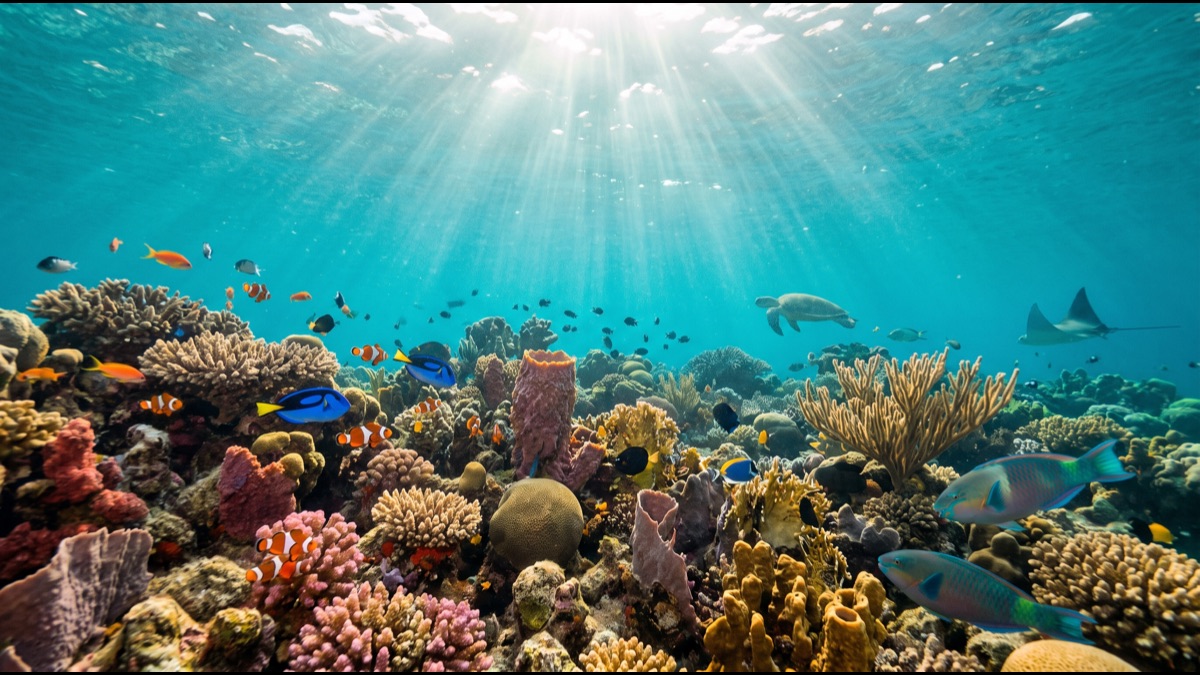
Coral reefs are built by tiny animals called coral polyps, which secrete calcium carbonate skeletons that accumulate over thousands of years into massive limestone structures.
Some, like Australia's Great Barrier Reef, are visible from space and represent one of the largest structures ever built by living organisms.
How a Reef Actually Grows
Individual coral polyps live in colonies, each secreting a hard exoskeleton beneath itself. When polyps die, their skeletons remain as a foundation for new polyps to grow on top of.
This gradually builds the reef structure layer by layer, a process that can take thousands to millions of years depending on the reef type — fringing, barrier, or atoll.
The Algae Partnership That Makes It Possible
Coral polyps host microscopic algae called zooxanthellae living inside their tissue in a symbiotic relationship — the algae photosynthesize and provide the coral with up to 90% of its energy, while the coral provides the algae shelter and compounds for photosynthesis.
This partnership is also why reefs need shallow, sunlit, clear water, and why rising ocean temperatures causing algae expulsion — known as coral bleaching — threaten reefs worldwide.
Sources
- Wikipedia — overview of coral reef formation
- NOAA Coral Reef Conservation Program — reef biology and conservation background
- Encyclopaedia Britannica — science background on coral reefs
FAQ
How long does it take for a coral reef to form?
Individual reef structures can take thousands of years to build, and some of the largest reef systems have been growing for millions of years.
Why do coral reefs need clear, shallow water?
Because the algae living inside coral polyps need sunlight for photosynthesis, which supplies most of the coral's energy.
What is coral bleaching?
It's when stressed coral, often from heat, expels its symbiotic algae, turning white and losing its main energy source, which can lead to coral death if conditions don't improve.
About the Author
We reference Wikipedia and the NOAA Coral Reef Conservation Program and Encyclopaedia Britannica to explain the background and current understanding of this topic.
Loved This Article?
Share it on WhatsApp → Share it on WhatsApp
Get more guides in your inbox — Subscribe to our newsletter for weekly surprising stories from Egypt, Saudi Arabia, Dubai, and beyond.