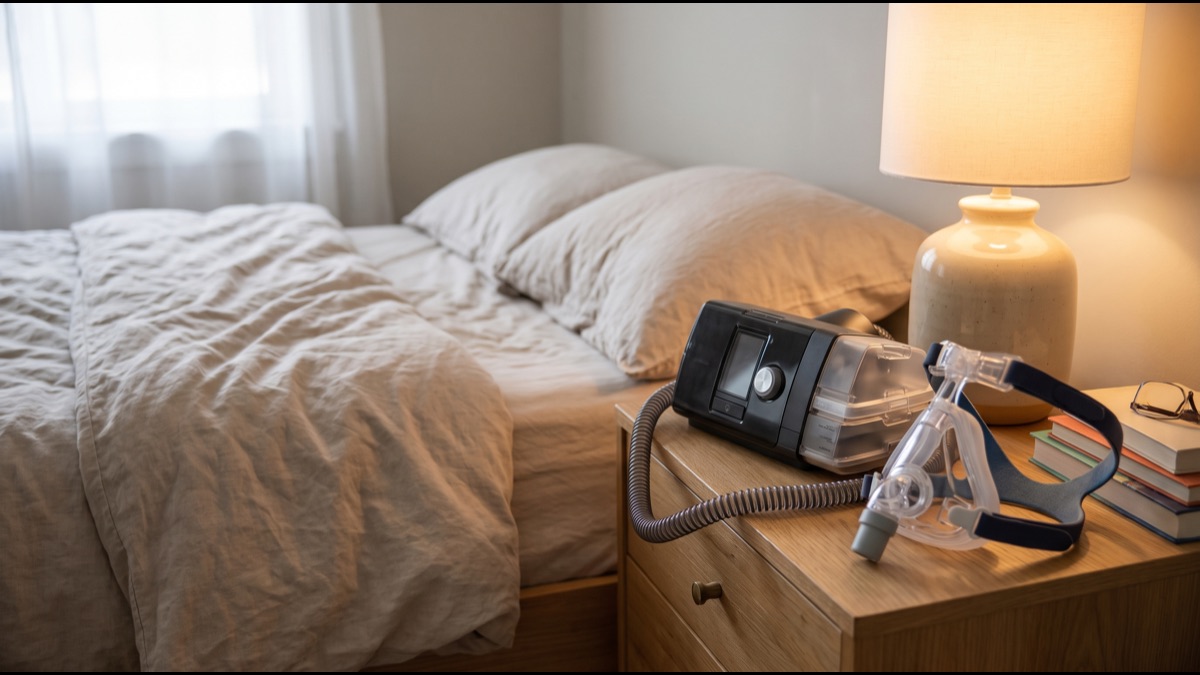
A CPAP machine does not breathe for anyone, push extra oxygen into the lungs, or force air in against a person's will. Its entire therapeutic effect comes from something considerably simpler and more mechanical: a steady stream of pressurized room air delivered through a mask, using continuous air pressure to physically hold open an airway that would otherwise repeatedly collapse and briefly block breathing dozens or even hundreds of times over a single night's sleep.
Understanding how CPAP therapy actually works, from the specific physical collapse it prevents to why getting the pressure setting and mask fit right matters so much for whether the device actually helps, reveals a genuinely elegant mechanical solution to a problem that, left untreated, carries meaningfully serious long-term cardiovascular and metabolic health risk.
It also explains why so many new CPAP users struggle in the first weeks of treatment despite the device working exactly as intended, and why the Gulf region in particular has seen rising rates of diagnosed sleep apnea tied to broader regional patterns in obesity and related metabolic health conditions.
Why a CPAP Machine Is Not Actually a Breathing Machine
Continuous positive airway pressure therapy, universally shortened to CPAP, is frequently misunderstood as some form of mechanical ventilation actively breathing for the patient, when in reality the device simply delivers a steady stream of pressurized ordinary room air through a mask, doing nothing more than maintaining constant air pressure inside the airway throughout the entire breathing cycle.
This distinction matters clinically because CPAP does not add supplemental oxygen or take over the mechanical work of breathing the way a ventilator does for critically ill patients; a CPAP user is doing all their own breathing exactly as they normally would, with the device's sole job being to keep their airway physically open enough that their own natural breathing can proceed uninterrupted.
What Actually Collapses During an Apnea Event
Obstructive sleep apnea, the most common form of the condition CPAP treats, occurs when the soft tissues at the back of the throat, including the tongue base and soft palate, relax during sleep enough to partially or completely collapse and block the airway, physically preventing air from passing through despite the person's chest and diaphragm continuing to attempt breathing.
This repeated collapse-and-block cycle can happen dozens or even hundreds of times over a single night in more severe cases, each event typically lasting ten seconds or longer and ending with a brief, often unremembered partial awakening as the brain responds to falling oxygen levels and re-engages the airway muscles enough to reopen the passage.
How Continuous Positive Pressure Actually Props the Airway Open
CPAP therapy works on a straightforward physical principle: delivering a constant, mild positive air pressure into the airway acts like an invisible pneumatic splint, physically pushing outward against the soft tissue walls of the throat with enough force to prevent them from collapsing inward the way they otherwise would during the muscle relaxation that naturally occurs during sleep.
This mechanical support is continuous throughout the entire night rather than reactive, meaning the pressure is maintained constantly rather than only being applied after a collapse has already begun, which is precisely why properly fitted and correctly pressured CPAP therapy can prevent the vast majority of apnea events from occurring at all rather than simply responding to them after the fact.
Why the Mask Seal Matters More Than Most Users Realize
Because the entire therapeutic mechanism depends on maintaining a specific, consistent air pressure inside the airway, any meaningful air leak around an poorly fitted mask directly undermines treatment effectiveness, since pressure escaping around the mask edges reduces the actual pressure reaching the airway below the level a sleep physician calculated as necessary for that specific patient.
This is why proper mask fitting, sizing, and regular replacement as seals naturally wear down over months of use represents a genuinely clinically significant part of CPAP therapy rather than a minor comfort consideration, and why sleep medicine clinics generally spend considerable time helping patients find a mask style and fit that both seals properly and remains tolerable for extended nightly use.
How a Sleep Study Determines the Right Pressure Setting
Before CPAP therapy begins, patients typically undergo a diagnostic sleep study, either in a dedicated sleep laboratory or increasingly through validated home testing devices, that measures breathing patterns, oxygen levels, and the frequency and severity of airway collapse events throughout a night's sleep to confirm the diagnosis and establish its severity.
A follow-up titration study, either as a separate session or using an auto-adjusting device that records data for later physician review, then determines the specific minimum air pressure level needed to prevent airway collapse for that individual patient, since the required pressure varies considerably from person to person based on individual anatomy and condition severity.
What Auto-Adjusting CPAP Machines Actually Do Differently
Standard fixed-pressure CPAP machines deliver one constant pressure level throughout the night, while auto-adjusting devices, sometimes called APAP machines, continuously monitor breathing patterns in real time and automatically adjust pressure moment to moment, increasing it when airway resistance suggests an impending collapse and reducing it during periods of stable, unobstructed breathing.
This dynamic adjustment can improve comfort for patients whose required pressure genuinely varies meaningfully between different sleep positions or sleep stages throughout the night, though clinical outcomes between fixed-pressure and auto-adjusting devices are generally considered comparable for most patients once an appropriate pressure range has been properly established.
Why Humidification Is Not Just a Comfort Feature
The continuous flow of pressurized air CPAP delivers can dry out the nasal passages and throat considerably compared to normal unassisted breathing, a side effect significant enough that most modern machines include an integrated heated humidifier specifically to add moisture back into the delivered air stream and reduce the dryness, congestion, and nosebleeds that untreated dryness can otherwise cause.
This humidification feature genuinely affects treatment adherence rather than being purely optional comfort, since patients experiencing uncomfortable dryness are measurably more likely to reduce usage or abandon therapy entirely, meaning proper humidifier settings represent a genuine clinical adherence tool rather than a minor added convenience feature.
How Modern Machines Actually Track Treatment Effectiveness
Contemporary CPAP devices include onboard data recording tracking nightly usage hours, mask seal quality, residual apnea events still occurring despite treatment, and other detailed metrics, data that treating physicians review remotely or during follow-up appointments to assess whether the current pressure setting and mask configuration are actually working effectively for that specific patient.
This data-driven monitoring capability represents a significant advance over earlier generations of CPAP technology, letting physicians make evidence-based adjustments to pressure settings or mask recommendations based on objective usage and effectiveness data rather than relying purely on a patient's subjective, often unreliable self-reported sense of how well they slept.
Why So Many Users Struggle With Adherence Early On
New CPAP users frequently report initial discomfort, feelings of claustrophobia from wearing a mask, difficulty falling asleep with the sensation of pressurized air, and general unfamiliarity with sleeping attached to equipment, adjustment challenges that lead a meaningful percentage of new patients to reduce usage or abandon therapy within the first weeks or months of treatment.
Sleep medicine specialists generally treat this early adherence period as a genuine clinical challenge requiring active management, including mask refitting, pressure adjustment, and behavioral support, rather than assuming patients will simply adapt naturally over time without any additional clinical intervention or follow-up support.
What Happens Physiologically When Treatment Actually Works
Patients using effective, well-fitted CPAP therapy typically experience a dramatic reduction in nightly airway collapse events, allowing considerably more uninterrupted, restorative sleep than their untreated condition previously permitted, which frequently produces noticeable improvements in daytime alertness, mood, and cognitive function within days to weeks of beginning consistent treatment.
This rapid, often subjectively dramatic improvement is part of why physicians emphasize consistent nightly use during the challenging adjustment period, since patients who push through initial discomfort long enough to experience these genuine quality-of-life improvements become considerably more likely to maintain long-term treatment adherence afterward.
Why Untreated Sleep Apnea Carries Serious Health Risk
Beyond the immediate daytime fatigue and impaired cognitive function untreated sleep apnea causes, the condition is strongly associated with meaningfully elevated long-term risk of high blood pressure, heart disease, stroke, and type 2 diabetes, risks researchers link to the repeated oxygen deprivation and disrupted sleep architecture that untreated apnea events cause night after night over years of exposure.
This serious long-term health risk is precisely why sleep medicine physicians treat consistent CPAP adherence as a genuinely important health intervention rather than simply a comfort or fatigue-management treatment, since effectively treating sleep apnea carries measurable benefit for reducing these broader cardiovascular and metabolic health risks over time.
How BiPAP Differs From Standard CPAP
Bilevel positive airway pressure therapy, commonly called BiPAP, delivers two distinct pressure levels, a higher pressure during inhalation and a lower pressure during exhalation, rather than the single constant pressure standard CPAP maintains throughout the entire breathing cycle, a difference that can make breathing against the device feel more natural for certain patients.
BiPAP is generally reserved for patients who find standard CPAP's constant pressure difficult to exhale against comfortably, or for patients with certain coexisting respiratory conditions requiring more sophisticated pressure support than standard single-level CPAP therapy can adequately provide, making it a specialized alternative rather than a universal upgrade over standard CPAP for most sleep apnea patients.
Why the Gulf Sees Notably High Rates of Diagnosed Sleep Apnea
Regional health data across the UAE and wider Gulf has documented notably high rates of diagnosed obstructive sleep apnea, a pattern researchers connect to regionally elevated rates of obesity, a well-established major risk factor for the condition since excess soft tissue around the neck and throat increases the likelihood of airway collapse during sleep.
This regional health pattern has prompted increased investment in dedicated sleep medicine clinics and diagnostic capacity across major Gulf cities in recent years, reflecting growing medical and public health recognition of sleep apnea as a genuinely significant, underdiagnosed regional health concern rather than a minor or rare condition affecting only a small population subset.
How Weight Loss and Lifestyle Changes Fit Into Overall Treatment
Because excess soft tissue around the neck and throat is a well-established major contributing factor to airway collapse during sleep, meaningful weight loss can genuinely reduce sleep apnea severity for many patients, sometimes reducing the required CPAP pressure setting or, in milder cases, occasionally reducing symptoms enough that ongoing CPAP dependence lessens over time.
Sleep physicians generally present weight management as a complementary long-term strategy alongside CPAP therapy rather than a replacement for it, since achieving and sustaining meaningful weight loss typically takes considerably longer than the immediate, reliable symptom control CPAP provides from the very first night of properly fitted use.
Additional lifestyle factors, including avoiding alcohol and sedatives before bed, which further relax throat muscles and worsen airway collapse risk, and sleeping on one's side rather than on the back, which reduces gravity's contribution to airway collapse, are commonly recommended alongside CPAP as supportive measures rather than standalone treatments capable of replacing it entirely for most diagnosed patients.
Why Travel and Air Pressure Changes Complicate CPAP Use
CPAP users flying internationally, a genuinely common concern for patients across the Gulf's heavily connected long-haul travel hubs, generally need to carry their device as cabin baggage rather than checked luggage given its medical necessity and fragility, and many modern machines include a battery or DC power option specifically to support use during long flights or in destinations with unreliable electricity access.
Airlines generally accommodate CPAP equipment as a medical device exempt from standard cabin baggage allowances, though patients traveling internationally are generally advised to carry supporting medical documentation and confirm specific airline policies in advance, since requirements and accommodation processes can vary meaningfully between different carriers and destination countries.
Altitude and cabin pressure changes during flight do not meaningfully affect standard CPAP therapy itself, though patients are generally advised against attempting to use their device improperly as a general wellness or altitude-sickness aid outside its specifically prescribed sleep apnea treatment purpose.
What Alternatives Exist for Patients Who Cannot Tolerate CPAP
For patients who genuinely cannot adapt to CPAP therapy despite proper mask fitting, pressure adjustment, and clinical support, alternative treatments include oral appliances that reposition the jaw and tongue to help keep the airway open, positional therapy for patients whose apnea occurs predominantly in certain sleep positions, and in more severe or anatomically specific cases, surgical intervention.
Sleep physicians generally still consider properly fitted CPAP therapy the most consistently effective treatment option for moderate to severe obstructive sleep apnea across the broader patient population, reserving these alternative approaches specifically for patients who have made genuine, documented efforts to tolerate CPAP without achieving adequate treatment adherence or benefit.
Whatever specific treatment path a patient and their sleep physician ultimately settle on, the underlying goal remains the same: reliably preventing the repeated nightly airway collapse that untreated sleep apnea causes, restoring genuinely restorative sleep, and reducing the meaningful long-term cardiovascular and metabolic health risk that years of untreated apnea events would otherwise continue accumulating night after night. A properly fitted CPAP machine, however unglamorous it might look sitting quietly on a nightstand every single night, remains the single most reliable, well-studied, and widely available tool modern medicine currently has for achieving that goal consistently, safely, and affordably across the widest possible range of diagnosed patients worldwide today, from major specialized sleep clinics to small quiet home bedrooms found everywhere across the whole wide world alike.
Sources
- Wikipedia — overview of CPAP therapy mechanism and clinical use for sleep apnea
- Sleep Foundation — background on sleep apnea diagnosis and CPAP treatment adherence
- National Heart, Lung, and Blood Institute — clinical background on sleep apnea health risks and treatment options
- American Academy of Sleep Medicine — clinical standards for sleep study diagnosis and CPAP titration
FAQ
Does a CPAP machine breathe for the patient like a ventilator?
No — CPAP simply delivers pressurized room air through a mask to keep the airway physically open, while the patient does all their own breathing normally, unlike a ventilator which mechanically takes over the breathing process itself entirely.
Why does mask fit matter so much for CPAP treatment to work?
The entire therapy depends on maintaining a specific air pressure inside the airway, so any significant leak around a poorly fitted mask reduces the actual pressure reaching the airway below the level a sleep physician calculated as necessary to prevent collapse.
Why do so many new CPAP users struggle in the first few weeks?
Common early challenges include claustrophobia from the mask, difficulty falling asleep with pressurized air, and general unfamiliarity with sleeping attached to equipment, which sleep specialists treat as a genuine clinical adjustment period requiring active support.
What is the difference between CPAP and BiPAP?
Standard CPAP delivers one constant pressure throughout the breathing cycle, while BiPAP delivers a higher pressure during inhalation and a lower pressure during exhalation, which some patients find noticeably more comfortable to breathe against overall.
Are there treatment options for people who genuinely cannot tolerate CPAP?
Yes — alternatives include oral appliances that reposition the jaw and tongue, positional therapy for position-dependent apnea, and surgical options in more severe or anatomically specific cases, though CPAP remains the most consistently effective option overall for most diagnosed patients.
About the Author
We reference Wikipedia and other authoritative sources to explain the background and current understanding of this topic.
Loved This Article?
Share it on WhatsApp → Share it on WhatsApp
Get more guides in your inbox — Subscribe to our newsletter for weekly surprising stories from Egypt, Saudi Arabia, Dubai, and beyond.