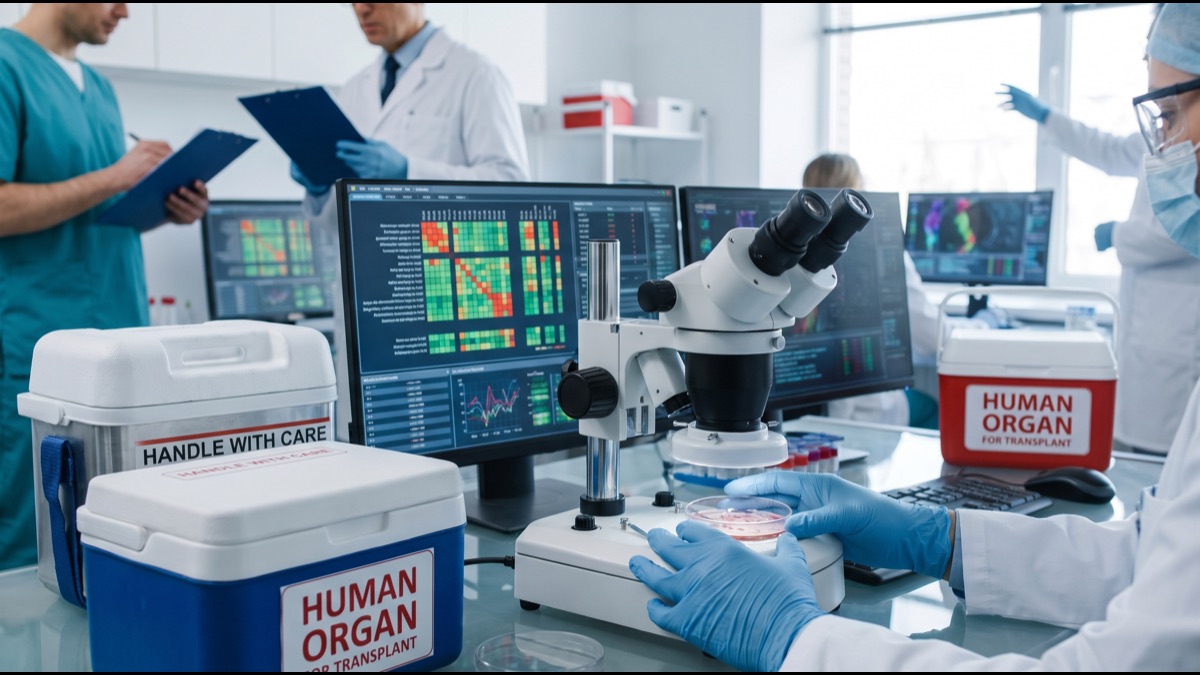
Organ transplantation is among the more remarkable achievements of modern medicine, and among the more logistically complex. A donated organ remains viable for only a limited number of hours, must be matched to a recipient whose immune system will not immediately destroy it, and must be allocated according to rules balancing medical urgency, likely benefit, waiting time, and fairness across a population of people who all genuinely need it.
Public understanding of this process is generally limited to the idea that blood types must match, which is true but represents only the first and simplest of several compatibility layers. Understanding the actual immunology, the allocation frameworks, and the reasons waiting lists behave as they do clarifies both why transplantation works at all and why the shortage of organs remains such an intractable problem.
Why the Immune System Attacks Transplants
The immune system's core function is distinguishing the body's own cells from foreign material, a discrimination it performs by recognising protein markers displayed on the surface of essentially every cell, which serve as a molecular identity signature.
When tissue from another person is introduced, these markers differ from the recipient's own, and the immune system recognises the transplanted organ as foreign in precisely the way it would recognise an invading pathogen, mounting a response intended to destroy it.
This rejection response is not a malfunction but the immune system operating exactly as designed, which is why transplantation requires either finding donors whose markers closely resemble the recipient's or suppressing the immune response with medication, and in practice generally requires both.
What Blood Type Compatibility Actually Involves
Blood type is the first compatibility barrier because the relevant markers appear not only on red blood cells but on the lining of blood vessels throughout every organ, meaning an incompatible organ would be attacked immediately by antibodies already circulating in the recipient.
This form of rejection is described as hyperacute because it can begin within minutes of blood flow being restored to the transplanted organ, destroying it so rapidly that no medication can intervene, which is why blood type matching is treated as absolute rather than preferential.
The compatibility rules follow the same logic as blood transfusion, with certain types able to donate more broadly and others able to receive more broadly, a pattern that has genuine consequences for how long different patients wait depending on which type they happen to have.
The Tissue Typing System That Matters More
Beyond blood type, the more consequential matching involves a set of genes producing the markers the immune system uses to identify cells, a system present in every person but existing in an enormous number of variants across the population.
Each person inherits a combination of these variants from their parents, and because so many variants exist, the probability of two unrelated people sharing a close match is genuinely low, which is why siblings frequently make better donors than strangers.
Matching quality is assessed by counting how many of these markers the donor and recipient share, with better matches associated with longer graft survival and lower rejection risk, though the importance of matching varies considerably between different organs.
Why Matching Matters More for Some Organs
Kidney transplantation places substantial weight on tissue matching because kidneys are frequently available from living donors, allowing time for careful matching, and because a failed kidney transplant is survivable since the patient can return to dialysis.
Heart, lung, and liver transplantation prioritise matching considerably less, primarily because these organs come from deceased donors with severe time constraints and because failure is immediately life-threatening, making a rapid imperfect match preferable to waiting for a better one.
The liver is notably more tolerant immunologically than other organs for reasons still being investigated, requiring less aggressive immune suppression and in rare documented cases eventually tolerating withdrawal of medication altogether.
What the Crossmatch Test Does
Before a transplant proceeds, a crossmatch test combines the recipient's blood serum with donor cells to determine directly whether the recipient already carries antibodies that would attack the donor tissue, a check performed regardless of how good the tissue match appears.
A positive crossmatch indicates preformed antibodies are present and generally rules out that particular donor, since proceeding would risk immediate rejection despite otherwise favourable compatibility on paper.
These antibodies develop through previous exposure to foreign tissue, principally through pregnancy, blood transfusion, or a previous transplant, which is why patients with such histories are frequently harder to match and wait considerably longer.
Why Some Patients Are Highly Sensitised
Patients who have developed antibodies against a wide range of tissue types are described as highly sensitised, and their situation is genuinely difficult because a large proportion of potential donors will produce a positive crossmatch.
The degree of sensitisation is quantified as the percentage of the donor population against which a patient carries antibodies, and patients at the upper end of this scale may be incompatible with the overwhelming majority of available organs.
Allocation systems generally grant substantial priority to highly sensitised patients precisely because their opportunities are so limited, on the reasoning that when a compatible organ does appear it should go to the patient who may otherwise never receive one.
How Deceased Donor Allocation Works
When a deceased donor organ becomes available, allocation follows established rules rather than individual clinical judgement, with computerised systems generating a ranked list of potential recipients according to criteria agreed through public and professional consultation.
These criteria typically combine medical urgency, expected benefit, compatibility quality, time already spent waiting, and geographic proximity, weighted differently for different organs according to what matters most clinically for each.
Geography matters because organs deteriorate rapidly outside the body, with hearts and lungs viable for only a few hours while kidneys tolerate considerably longer, which is why heart allocation is more geographically constrained than kidney allocation.
The Tension Between Urgency and Benefit
Allocation systems face a genuine ethical tension between prioritising the sickest patients, who will die soonest without transplantation, and prioritising those likely to gain the most years of life, who are frequently less critically ill.
Prioritising urgency alone can direct organs toward patients so unwell that transplant outcomes are poor, meaning a scarce organ produces limited benefit, while prioritising benefit alone effectively abandons the sickest patients entirely.
Different systems resolve this differently and have revised their approaches repeatedly over time, which is a genuine reflection of the difficulty rather than indecision, since no allocation rule can satisfy every reasonable notion of fairness simultaneously.
How Living Donation Changes the Picture
Kidneys and portions of liver can be donated by living people, which fundamentally improves outcomes because the organ is never subjected to the physiological stress of donor death and because surgery can be scheduled rather than performed urgently.
Living donor kidney transplants consistently show better long-term survival than deceased donor transplants, a difference substantial enough that living donation is generally preferred wherever a suitable and genuinely willing donor exists.
Living donation raises its own ethical considerations, since it involves performing major surgery on a healthy person for someone else's benefit, which is why donor assessment includes independent evaluation to confirm the decision is genuinely voluntary and properly informed.
What Paired Exchange Solves
A frequent frustration is a willing living donor who is incompatible with their intended recipient, a situation that once simply ended the possibility of donation despite genuine willingness on both sides.
Paired exchange addresses this by matching incompatible pairs with other incompatible pairs, so that each donor gives to a compatible stranger while their own intended recipient receives from someone else, converting two blocked donations into two successful ones.
These arrangements have expanded into longer chains involving many pairs simultaneously, sometimes initiated by an altruistic donor with no intended recipient, and computerised matching algorithms now identify optimal chains across large pools of registered pairs.
How Immunosuppression Actually Works
Because even well-matched organs would eventually be rejected, recipients take immunosuppressive medication indefinitely, drugs that dampen the immune response sufficiently to protect the graft while ideally preserving enough function to fight infection.
Modern regimens typically combine several medications acting through different mechanisms, an approach allowing lower doses of each and therefore fewer side effects than would result from relying heavily on any single drug.
The fundamental tradeoff is unavoidable, since suppressing immunity enough to protect the transplant necessarily increases vulnerability to infection and, over years, to certain cancers, which is why finding the minimum effective dose is a continuous clinical balancing act.
Why Rejection Is Not All the Same
Rejection occurs in several distinct forms with genuinely different timing and mechanisms, ranging from the hyperacute response occurring within minutes to acute rejection developing over days or weeks and chronic rejection unfolding over years.
Acute rejection is frequently reversible if detected early and treated with intensified immunosuppression, which is why transplant recipients undergo frequent monitoring including blood tests and sometimes biopsies during the period when risk is highest.
Chronic rejection is considerably more difficult, involving gradual scarring and vascular changes that progressively impair function, and it remains a principal reason transplanted organs eventually fail even when the early period went entirely smoothly.
Why Organ Shortage Persists
The central constraint in transplantation is that far more people need organs than there are organs available, a gap that has persisted despite decades of effort and which results in substantial numbers of people dying while waiting.
Only a small fraction of deaths occur in circumstances permitting donation, since organs require continued blood flow until recovery, which generally means death must occur in an intensive care setting under specific conditions.
This means expanding donation is constrained less by public willingness than by the medical circumstances of death, which is why efforts have focused on identifying every potential donor and on extending criteria to include organs previously considered marginal.
How Consent Systems Differ
Countries take fundamentally different approaches to donation consent, with some requiring explicit registration to donate while others presume consent unless a person has actively opted out, a distinction frequently presented as decisive for donation rates.
The evidence is more nuanced than the framing suggests, since countries with presumed consent generally also invest heavily in transplant coordination infrastructure, making it genuinely difficult to attribute their higher rates to the consent system alone.
In practice, most systems consult families regardless of the legal framework, meaning family refusal remains a substantial factor everywhere, which is why campaigns increasingly emphasise discussing wishes with relatives rather than merely registering a decision.
What Might Ease the Shortage
Several research directions aim at the underlying scarcity, including machine perfusion technology that maintains organs outside the body in a functioning state, extending viable time and allowing assessment of organs that would previously have been discarded.
Xenotransplantation, meaning transplantation from genetically modified animals, has progressed considerably with gene editing used to remove markers triggering the most severe rejection, though substantial immunological and infectious risk questions remain unresolved.
Longer-term work on growing organs from a patient's own cells would eliminate rejection entirely, but the complexity of replicating functional organ structure means this remains genuinely distant despite periodic optimistic coverage.
What Recipients Actually Live With Afterward
Transplantation is frequently described as a cure, which understates what recipients genuinely take on, since a transplant replaces organ failure with a lifelong medical regimen requiring daily medication, regular monitoring, and vigilance about infection that never entirely relaxes.
Immunosuppressive medication carries side effects that recipients manage indefinitely, potentially including elevated blood pressure, altered glucose metabolism, kidney strain from the drugs themselves, tremor, and increased susceptibility to infections that a normally functioning immune system would clear without notice.
Adherence to medication is genuinely critical and genuinely difficult, since missing doses risks rejection that may be irreversible, and studies examining graft loss consistently find that inconsistent medication use is among the more significant contributors, particularly among younger recipients navigating the transition to managing their own care.
How Long Transplanted Organs Actually Last
Transplanted organs have finite lifespans rather than lasting indefinitely, with typical survival varying considerably by organ type, donor source, recipient age, and how well the early period went, meaning many recipients will eventually need a second transplant.
Kidney transplants from living donors generally last longer than those from deceased donors, and both substantially outperform dialysis in terms of both survival and quality of life, which is why transplantation remains the preferred treatment despite the burdens it carries.
Because repeat transplantation is common, and because each transplant exposes the recipient to foreign tissue that generates new antibodies, patients receiving a second or third organ are frequently more sensitised and therefore considerably harder to match than they were the first time.
Why Transplant Tourism Raises Serious Concerns
The gap between demand and supply has produced a genuine international market in which patients travel abroad seeking organs outside established allocation systems, a practice raising acute ethical concerns about how those organs were obtained and whether donors genuinely consented.
International bodies have repeatedly condemned commercial organ trading on the grounds that it systematically exploits economically vulnerable people, who may consent under financial pressure amounting to coercion and who frequently receive inadequate follow-up care after donating.
Beyond the ethical dimension, outcomes for patients receiving transplants through these channels are generally documented as worse, reflecting inadequate donor screening, poor matching, limited infection control, and the absence of continuity when the patient returns home requiring lifelong specialist management.
How Donation After Circulatory Death Expanded the Pool
For much of transplantation's history, deceased donation depended almost entirely on donors declared dead by neurological criteria while circulation continued artificially, a narrow category accounting for only a small fraction of hospital deaths and therefore severely limiting supply.
Donation after circulatory death expanded this considerably by permitting donation following the cessation of heartbeat, which applies to a much broader range of circumstances, though it introduces a period during which organs receive no blood flow and therefore sustain damage before recovery.
This warm ischaemic period means such organs carry somewhat higher risk of delayed function, but outcomes have improved substantially as protocols tightened and perfusion technology developed, and these donors now represent a meaningful and growing share of the total in several countries.
Why Coordination Infrastructure Matters So Much
The difference between countries with high and low donation rates frequently traces less to public attitudes than to whether hospitals employ dedicated transplant coordinators trained to identify potential donors and to approach families with the necessary skill and timing.
Identifying a potential donor requires clinical staff to recognise the possibility during an acute and distressing situation, and evidence consistently shows that specialist coordinators substantially increase both identification rates and family consent compared to leaving the conversation to treating clinicians already managing the medical crisis.
This has genuine policy implications, since investment in coordination infrastructure appears to yield larger returns than public awareness campaigns alone, indicating that the constraint frequently lies in the systematic identification of opportunities rather than in a general public unwillingness to donate.
Transplant matching is a layered problem rather than a single test. Blood type compatibility comes first and is absolute, because incompatible tissue is destroyed within minutes by antibodies already present. Tissue typing follows, comparing the genetic markers the immune system uses to identify foreign cells, though how much this matters varies considerably between organs. A crossmatch then checks directly whether the recipient already carries antibodies against that specific donor. Allocation adds a further layer that is ethical rather than immunological, balancing medical urgency against likely benefit, waiting time against geography, with no formulation capable of satisfying every reasonable notion of fairness at once. Underlying all of it is a shortage constrained less by public willingness to donate than by the narrow medical circumstances in which donation is physically possible, which is why paired exchange, extended criteria, and perfusion technology have mattered so much: each extracts more transplants from a donor pool that cannot simply be expanded by persuasion.
Sources
- Wikipedia — overview of transplantation, immunology, and allocation
- World Health Organization — global guiding principles on organ donation and transplantation
- National Institutes of Health — research on transplant immunology and rejection
- Organ Procurement and Transplantation Network — allocation policy and waiting list data
- Nature — peer-reviewed research on xenotransplantation and organ preservation
FAQ
Is blood type the only thing that has to match?
No — blood type is the first and absolute barrier, but tissue typing of immune system markers and a direct crossmatch test for preformed antibodies both matter as well.
Why do siblings often make better donors?
Tissue type markers are inherited, and because so many variants exist across the population, related people are far more likely to share a close match than unrelated strangers.
Why do some patients wait much longer than others?
Highly sensitised patients carry antibodies against a large proportion of potential donors, usually from previous pregnancy, transfusion, or transplant, making compatible organs rare.
Are living donor transplants better?
For kidneys, yes — they consistently show better long-term survival, since the organ avoids the physiological stress of donor death and surgery can be scheduled rather than rushed.
Why is there still an organ shortage?
Only a small fraction of deaths occur in circumstances permitting donation, since organs need continued blood flow until recovery — so the limit is medical circumstance more than public willingness.
About the Author
We reference Wikipedia, World Health Organization, National Institutes of Health, Organ Procurement and Transplantation Network, and Nature to explain the background and current understanding of this topic.
Loved This Article?
Share it on WhatsApp → Share it on WhatsApp
Get more guides in your inbox — Subscribe to our newsletter for weekly surprising stories from Egypt, Saudi Arabia, Dubai, and beyond.