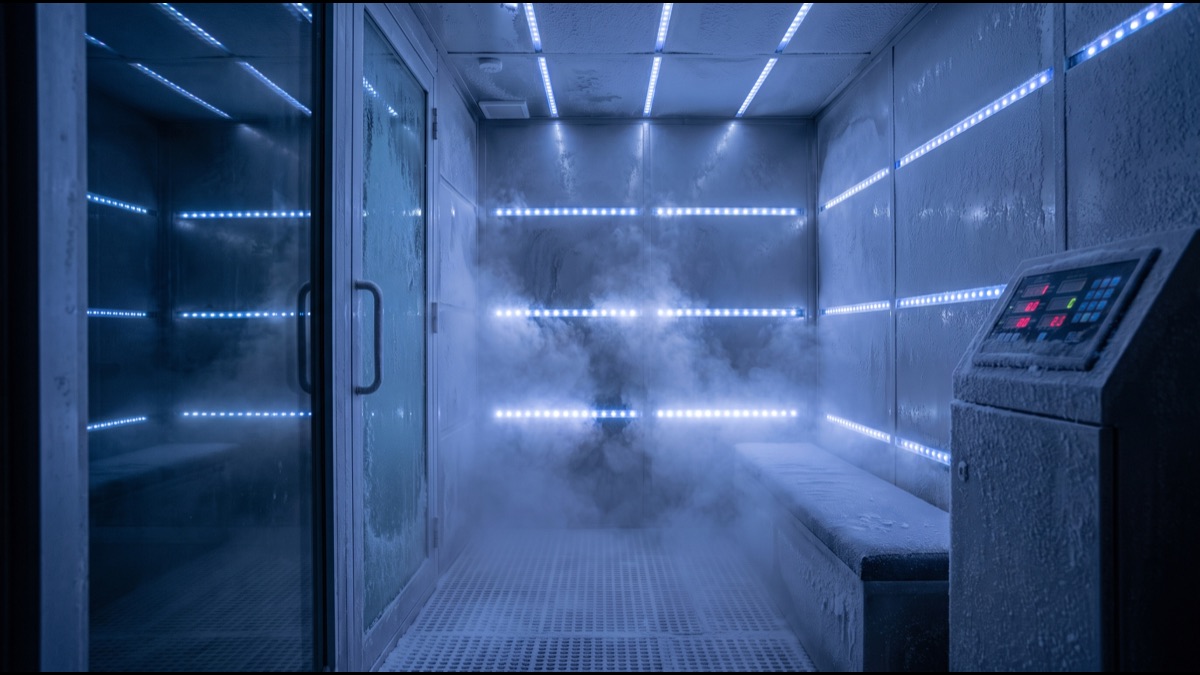
Stepping into a whole-body cryotherapy chamber means standing in air colder than the coldest recorded temperature on Earth, for two to four minutes, wearing nothing but socks, gloves, and underwear. Chambers typically run between minus 110 and minus 140 degrees Celsius, cold enough that the actual physics of how the body loses heat changes, and cold enough that the experience has become a genuine wellness-industry fixture despite a body of clinical evidence considerably thinner than the marketing around it suggests.
The pitch is consistent across gyms, recovery clinics, and professional sports facilities: a few minutes of extreme cold triggers a cascade of physiological responses that reduce inflammation, speed muscle recovery, and even lift mood through an endorphin release. Some of that pitch rests on real, measurable physiology. A meaningful portion of it rests on inference, anecdote, and studies too small or poorly controlled to support the strength of the claims built on top of them.
Separating what cryotherapy chambers demonstrably do to the body from what they are marketed as doing requires looking closely at the actual mechanism, the specific clinical literature behind each claimed benefit, and the real safety considerations that come with intentionally dropping skin surface temperature that far, that fast, in a sealed chamber.
It also means being honest about a genuinely awkward fact for the industry: the treatment remains popular and expanding even though the evidence supporting several of its headline benefits is, by most independent scientific reviews, inconclusive at best.
What Actually Happens Inside a Cryotherapy Chamber
A whole-body cryotherapy session takes place in a small chamber, either a single-person cabin or a walk-in room, cooled with liquid nitrogen vapor or refrigerated air to somewhere between minus 110 and minus 140 degrees Celsius, dramatically colder than any outdoor environment a person could survive being exposed to unprotected for more than a few seconds.
Because the air itself is extremely dry and the exposure is brief, typically capped at two to four minutes by facility protocol, the body's core temperature barely moves during a session; what actually drops fast is skin surface temperature, which can fall by ten degrees Celsius or more within the first minute or two of exposure.
Participants keep extremities covered specifically because fingers, toes, ears, and nose are thin-tissue areas with limited blood flow that are disproportionately vulnerable to cold injury, and facility staff generally monitor the chamber continuously and require participants to keep moving to avoid any single area of skin sitting still against the coldest air pockets.
The Vasoconstriction-Then-Rebound Mechanism Behind the Cold
The body's first response to sudden extreme cold at the skin is vasoconstriction, meaning blood vessels near the surface narrow sharply, redirecting blood flow away from the skin and extremities and toward the body's core organs, a protective reflex that exists specifically to preserve core temperature when the environment threatens serious heat loss.
Once the person exits the chamber and skin temperature begins rising again, the body triggers the opposite reaction: vasodilation, where those same blood vessels widen, often beyond their resting state, producing a rebound surge of blood flow back into the tissue that had just been cold.
Proponents argue this vasoconstriction-then-rebound cycle functions like a pump for the circulatory system, potentially helping flush metabolic waste products from tissue and deliver a fresh supply of oxygenated blood, which is the physiological basis most commonly cited for cryotherapy's claimed recovery benefits, though the actual downstream effects of this cycle on tissue repair remain considerably less settled than the mechanism description alone implies.
Why the Body Reacts So Strongly to Extreme Air Temperature
Extreme cold triggers a genuinely dramatic set of physiological alarm responses well beyond simple vasoconstriction: the body activates brown fat metabolism to generate heat, releases stress hormones including norepinephrine, and can trigger a measurable, if brief, spike in heart rate as the cardiovascular system reacts to the sudden thermal shock.
This is precisely why the experience feels so much more intense than a cold shower or an outdoor winter walk of similar duration; the air temperature in a cryotherapy chamber is simply far beyond anything the human thermoregulatory system evolved to encounter, and the body's alarm response scales accordingly.
Because these acute stress responses are real and measurable, some researchers argue cryotherapy's effects are better understood as a controlled, brief hormetic stressor, similar in category to intense exercise, rather than as a targeted therapeutic treatment with a single, well-defined biological pathway to a specific health outcome.
What the Marketing Claims and What the Evidence Actually Supports
Marketing materials for cryotherapy facilities commonly list a long roster of claimed benefits: reduced inflammation, faster muscle recovery, improved sleep, elevated mood, boosted metabolism, tighter skin, and even general immune support, often presented with the confident tone of settled science.
Independent systematic reviews of the clinical literature paint a considerably more cautious picture. Several benefits have some genuine, if limited, supporting evidence, particularly around short-term inflammation markers and subjective recovery perception, while others, including several metabolic and immune claims, rest on preliminary, small-sample, or animal-model research that has not been convincingly replicated in well-controlled human trials.
This gap between marketing confidence and research caution is not unique to cryotherapy, but it is unusually wide here specifically because whole-body cryotherapy chambers are relatively expensive to install and operate, creating a strong commercial incentive to market the treatment aggressively well ahead of the evidence base actually catching up to those claims.
Reduced Inflammation: What the Research Actually Shows
The strongest evidence for cryotherapy's anti-inflammatory effect comes from studies measuring specific inflammatory blood markers, such as C-reactive protein, immediately following intense exercise, where several small trials have found modestly lower marker levels in cryotherapy-treated groups compared to control groups receiving no cold exposure.
However, sample sizes in most of these studies remain small, typically involving a few dozen participants, and results have not been consistently reproduced across every trial, meaning the effect, while plausible and biologically coherent given the vasoconstriction mechanism, has not been established with the kind of robust, large-scale evidence that would support the sweeping claims made in consumer marketing.
Several reviewers have also specifically noted that reduced inflammatory markers do not automatically translate into meaningfully faster actual tissue healing or improved long-term athletic outcomes, a distinction that matters considerably since a marker moving in a favorable direction is not the same thing as a clinically meaningful recovery benefit for the person experiencing it.
Muscle Recovery Claims and Why Athletes Keep Using It Anyway
Athletes frequently report feeling less muscle soreness after a cryotherapy session, and several studies measuring perceived soreness, using standard self-reported pain scales, have found real reductions compared to control groups, particularly in the 24 to 48 hour window following intense exercise when delayed-onset muscle soreness typically peaks.
Objective measures tell a less consistent story. Studies looking at actual muscle strength recovery, functional performance tests, or biochemical markers of muscle damage have produced considerably more mixed results, with some finding no meaningful difference between cryotherapy and simpler, far cheaper alternatives like an ice bath or even active recovery involving light movement.
This gap between subjective relief and objective recovery data is exactly why many sports scientists describe cryotherapy's muscle-recovery benefit as at least partly psychological or placebo-adjacent, while stopping short of dismissing it entirely, since perceived recovery genuinely does affect an athlete's willingness and confidence to train hard again soon after.
The Endorphin and Mood Claims, and Their Real Evidentiary Basis
The mood-boosting claim rests on the idea that extreme cold exposure triggers a release of endorphins and other neurochemicals associated with feelings of alertness and wellbeing, a mechanism with some real support from broader cold-exposure research beyond cryotherapy chambers specifically.
Several small studies have measured short-term improvements in self-reported mood and reduced anxiety symptoms immediately following cryotherapy sessions, and some clinics have specifically marketed the treatment as a complementary approach for mild depressive symptoms, though these findings come from small trials rarely designed with the rigor required to establish cryotherapy as a genuine standalone mental health intervention.
Mainstream clinical guidance treats these mood effects as a plausible, modest, short-term physiological response rather than as a validated treatment for any diagnosed mental health condition, and no major medical body currently recommends whole-body cryotherapy as a primary or standalone therapy for depression or anxiety disorders.
Whole-Body Chambers vs. Ice Baths and Cold Plunges
Localized cold therapy, meaning ice packs, ice baths, and cold-water plunges, has a much longer and considerably more extensive research history than whole-body cryotherapy chambers, largely because ice baths have been used in sports medicine for decades and are far simpler and cheaper to study at scale.
The key physical difference is that ice baths cool the body through direct contact with cold water, a much more efficient heat-transfer medium than air, meaning an ice bath at a relatively mild 10 to 15 degrees Celsius can achieve a comparable or even greater drop in muscle tissue temperature than a whole-body chamber session at minus 110 degrees Celsius of dry air.
Several head-to-head comparisons have found ice baths perform at least as well as whole-body cryotherapy chambers on several recovery measures, at a small fraction of the equipment and operating cost, a finding that has led some sports scientists to argue cryotherapy chambers sell convenience, speed, and a premium experience more than any clearly superior physiological outcome.
The Real Safety Risks: Frostbite and Cardiovascular Strain
The most serious documented risk of whole-body cryotherapy is frostbite or cold-contact skin injury, which occurs when a specific area of skin, often on extremities or areas of prolonged direct exposure, sits too long against the coldest air currents inside the chamber or comes into direct contact with liquid nitrogen vapor outlets.
Case reports in medical literature describe instances of frostbite, burns, and localized skin injury linked to cryotherapy sessions, generally traced to operator error, malfunctioning equipment, or a participant remaining still rather than following the required continuous movement protocol during the session.
Beyond skin injury, the acute cardiovascular response to extreme cold, including the temporary spike in blood pressure and heart rate that accompanies vasoconstriction, represents a genuine physiological stress event, one that is generally well tolerated by healthy individuals but carries real risk for anyone with an underlying cardiovascular vulnerability.
Why Heart Conditions Are a Specific Contraindication
People with diagnosed heart conditions, uncontrolled high blood pressure, or a history of cardiac events are specifically and consistently advised against whole-body cryotherapy by reputable clinics and medical guidance, precisely because the sudden cold-induced vasoconstriction and associated blood pressure spike can place real, acute strain on a heart that is already compromised.
This is not a theoretical precaution; documented cases exist of cardiovascular events occurring during or shortly after cryotherapy sessions, and it is the single most consistently cited medical contraindication across clinics, professional guidance documents, and the sparse regulatory guidance that does exist for the treatment.
Reputable cryotherapy operators require an intake screening before a first session specifically to flag these risk factors, along with other contraindications including pregnancy, certain skin conditions, uncontrolled seizure disorders, and severe cold sensitivity conditions like Raynaud's phenomenon.
How a Typical Session Is Actually Structured
A typical whole-body cryotherapy session begins with a brief pre-session screening and a change into minimal, dry clothing, since any moisture on the skin dramatically increases the risk of cold injury and moisture-related skin damage inside the chamber.
The participant stands inside the chamber, sometimes alone in a single-person unit with their head remaining outside the cold zone, or standing with several others in a walk-in room, while an operator monitors the session continuously from outside and controls the exact temperature and duration.
Sessions rarely exceed four minutes regardless of chamber temperature, since the actual physiological benefit, to whatever extent it exists, appears to plateau quickly while injury risk continues climbing the longer exposure runs, which is why virtually every reputable facility enforces a hard, non-negotiable time cap regardless of how a participant feels mid-session.
The Regulatory Status Marketing Rarely Mentions
In the United States, the Food and Drug Administration has not cleared or approved whole-body cryotherapy devices for treating, curing, or preventing any specific disease or medical condition, a regulatory status that puts these chambers in a similar category to many wellness devices marketed for general wellbeing rather than as validated medical treatments.
The FDA has specifically warned consumers that claims linking cryotherapy to disease treatment lack adequate supporting evidence, and has documented instances of adverse events, including at least one reported death, associated with unsupervised or improperly monitored cryotherapy chamber use, underscoring that the equipment itself carries genuine operational risk when protocols are not followed correctly.
This regulatory gap means most cryotherapy facilities operate more like wellness or fitness businesses than medical clinics, with oversight, staff training standards, and safety protocols varying considerably by operator, location, and jurisdiction, rather than being governed by a single, consistent, medically enforced safety standard.
Why Elite Athletes Keep Paying for It Despite Mixed Evidence
Despite the genuinely mixed evidence base, elite athletes and major professional sports organizations have continued investing in cryotherapy chambers, both as team facility fixtures and in individual athletes' personal recovery routines, a pattern that is not fully explained by clinical evidence alone.
Part of the explanation is straightforwardly psychological: elite athletes operate in a competitive environment where perceived recovery advantage, confidence, and routine matter enormously, and a treatment that reliably makes an athlete feel recovered and ready to train, even if some of that benefit is subjective, has real practical value regardless of what a strict evidence review concludes.
The other part is convenience and time efficiency: a two to four minute cryotherapy session fits far more easily into a packed training schedule than a 10 to 15 minute ice bath, which matters considerably at the professional level where athlete time is a genuinely scarce and expensive resource, even if the underlying physiological benefit turns out to be roughly comparable between the two approaches.
Sources
- Wikipedia — overview of whole-body cryotherapy mechanisms, use, and research history
- U.S. Food and Drug Administration — consumer safety guidance and regulatory status of cryotherapy devices
- National Institutes of Health — clinical research on cold exposure, inflammation, and recovery physiology
- PubMed Central — peer-reviewed systematic reviews of cryotherapy clinical evidence
FAQ
How cold is a whole-body cryotherapy chamber?
Most chambers run between minus 110 and minus 140 degrees Celsius, using refrigerated air or liquid nitrogen vapor, for a typical exposure of two to four minutes.
Does cryotherapy actually reduce inflammation?
Some small studies show modestly lower inflammatory blood markers after cryotherapy sessions, but sample sizes are limited and results have not been consistently reproduced across all trials.
Is whole-body cryotherapy the same as an ice bath?
No, ice baths use direct contact with cold water, a far more efficient way to cool muscle tissue than the dry air in a cryotherapy chamber, and several studies find ice baths perform comparably on recovery measures.
Who should avoid whole-body cryotherapy?
People with diagnosed heart conditions, uncontrolled high blood pressure, a history of cardiac events, pregnancy, or severe cold-sensitivity conditions are specifically advised against it due to acute cardiovascular and skin-injury risk.
Is cryotherapy FDA-approved as a medical treatment?
No, the FDA has not cleared whole-body cryotherapy devices for treating or curing any specific disease, and has warned that related medical claims lack adequate supporting evidence.
Why do elite athletes still use cryotherapy if the evidence is mixed?
Part of the appeal is genuine, if partly subjective, perceived recovery benefit, and part is simple time efficiency, since a few-minute session fits more easily into a packed training schedule than a longer ice bath.
About the Author
We reference Wikipedia and other authoritative sources to explain the background and current understanding of this topic.
Loved This Article?
Share it on WhatsApp → Share it on WhatsApp
Get more guides in your inbox — Subscribe to our newsletter for weekly surprising stories from Egypt, Saudi Arabia, Dubai, and beyond.