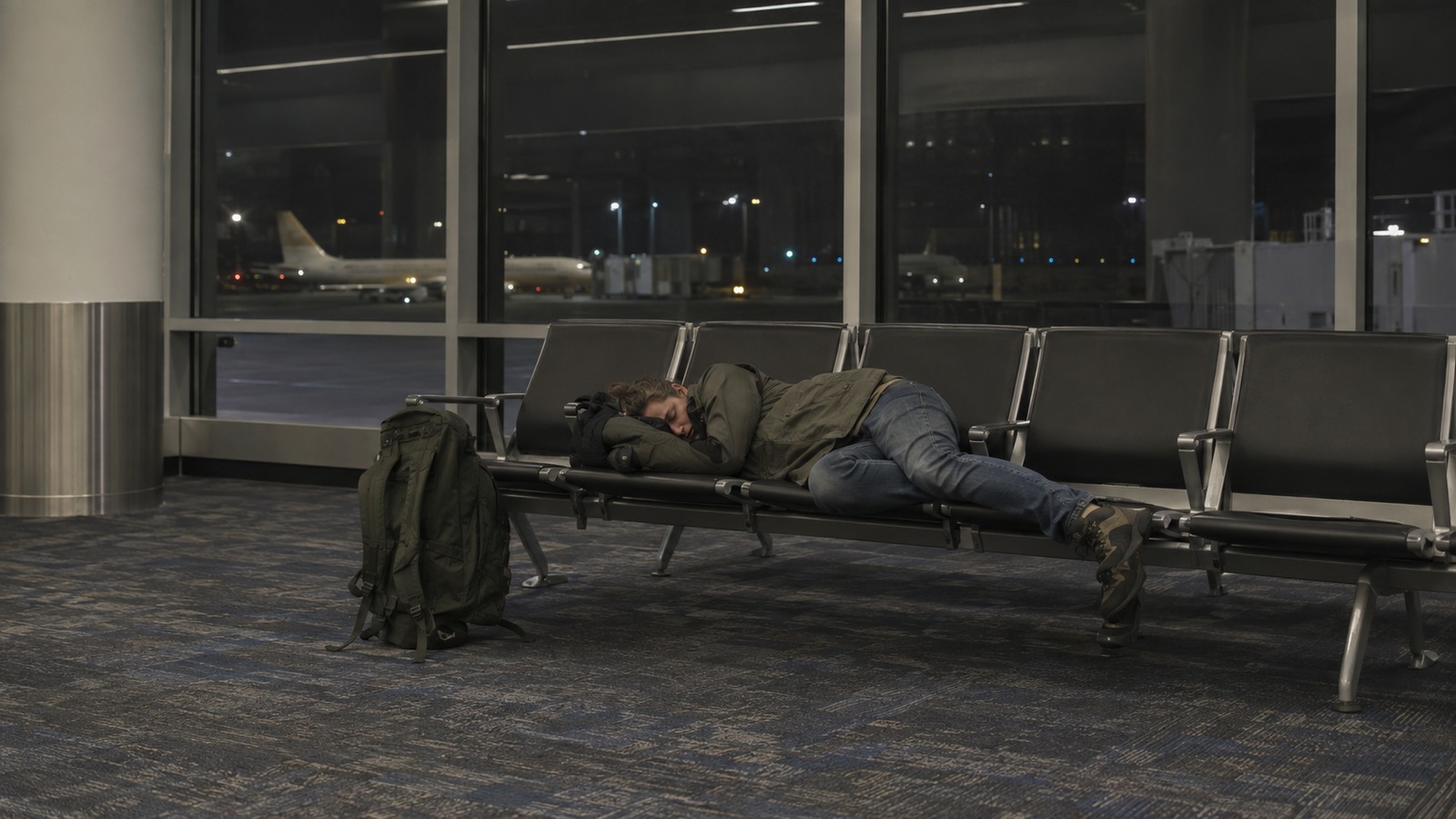
Two passengers can sit next to each other on the same long-haul flight, cross the exact same number of time zones, and land in wildly different states: one is ready to go by the next morning, the other spends the better part of a week feeling foggy, irritable, and wide awake at 3 a.m. Jet lag is not a single, uniform experience, and the reasons some people recover in a day while others take nearly two weeks have less to do with willpower and more to do with the biology of the internal clock that governs nearly every system in the body. Understanding why jet lag hits people so differently explains both why generic advice often falls short and what sleep researchers actually recommend.
What Jet Lag Actually Is
Jet lag is the collection of symptoms — fatigue, disrupted sleep, difficulty concentrating, digestive changes, and mood disturbances — that result when a person's internal circadian clock is out of sync with the actual time at their destination.
The core problem isn't the flight itself or the altitude; it's that the body's master clock, located in a small region of the brain called the suprachiasmatic nucleus, continues operating on the rhythm of the departure time zone for days after arrival, gradually shifting to match local time.
Sleep researchers generally describe this as a mismatch between "internal time" and "external time," and the severity of jet lag largely reflects how large that gap is and how quickly an individual's biology can close it.
The Circadian Clock Behind the Symptoms
The suprachiasmatic nucleus, often abbreviated SCN, acts as the body's master pacemaker, coordinating the timing of sleep, body temperature, hormone release, and digestion based primarily on light signals it receives through the eyes.
Nearly every organ system runs on its own semi-independent clock that takes cues from the SCN, which means different bodily functions can re-synchronize to a new time zone at different speeds — a phenomenon researchers sometimes call "internal desynchronization."
This explains why travelers often report specific, mismatched symptoms, like feeling hungry at odd hours or alert at 3 a.m. despite exhaustion, since digestion and alertness can shift to local time on different schedules within the same traveler.
Why Direction of Travel Changes Everything
Traveling east generally produces worse jet lag than traveling west for most people, because eastward travel requires the body to advance its clock, essentially trying to fall asleep earlier than usual, which most human circadian systems resist more than delaying sleep.
The natural human circadian period is slightly longer than 24 hours for most people, meaning the body's default tendency is to drift later, which aligns more easily with westward travel's requirement to stay awake later and delay sleep rather than advance it.
This directional asymmetry is one of the most consistently replicated findings in circadian research, and it's a major reason two people crossing the same number of time zones can have very different experiences depending on which direction they flew.
Why Some People Are 'Larks' and Others Are 'Owls'
Chronotype — an individual's natural tendency toward earlier or later sleep and wake times, informally described as being a "morning lark" or a "night owl" — has a measurable effect on how jet lag is experienced and how quickly it resolves.
Researchers studying chronotype generally find it has a substantial genetic component, and evening types, who naturally prefer later sleep and wake times, often adapt somewhat more easily to eastward travel's earlier bedtime demands than extreme morning types do.
This effect isn't absolute, though — chronotype interacts with the direction and distance of travel, age, and individual light sensitivity, so it functions as one contributing factor among several rather than a single predictor of jet lag severity.
The Role of Age in Recovery Speed
Circadian rhythms generally become somewhat less flexible with age, and multiple studies on older travelers have found that recovery from jet lag tends to take longer in older adults compared with younger travelers crossing the same number of time zones.
This is thought to relate partly to age-related changes in melatonin production and light sensitivity, both of which play central roles in how quickly the SCN can be reset by new light and darkness cues at the destination.
That said, individual variation within age groups is substantial, and some older travelers adapt faster than some younger ones, meaning age is a statistical tendency across populations rather than a reliable predictor for any single traveler.
Why Frequent Flyers Aren't Always Better Adapted
It might seem intuitive that people who fly frequently would develop some resistance to jet lag, but sleep researchers studying frequent flyers, and particularly airline crew, have generally found the opposite: repeated, irregular time zone crossings can produce cumulative circadian disruption rather than adaptation.
Because frequent travelers often don't stay in a new time zone long enough to fully adjust before flying again, some researchers describe their circadian systems as existing in a near-constant state of partial desynchronization, which is associated with more persistent fatigue over time rather than less.
This is a genuinely different situation from occasional long-haul travel, where the body eventually fully re-synchronizes to a stable new schedule, so findings about frequent flyers shouldn't be assumed to apply to someone taking one or two long trips a year.
How Many Time Zones It Takes to Matter
Sleep medicine specialists generally consider jet lag symptoms unlikely to become noticeable after crossing fewer than roughly three time zones, since the resulting mismatch is small enough that most people's circadian systems absorb it without significant disruption.
Beyond that threshold, symptom severity tends to scale with the number of zones crossed, though not in a strictly linear way — the directional effect described earlier means five zones traveled east can feel considerably worse than five zones traveled west for the same person.
As a rough general guideline drawn from multiple sleep clinics' patient advice, full adaptation is often estimated at roughly one day per time zone crossed, though this figure varies significantly by individual and direction of travel.
The Genetics Behind Circadian Flexibility
Certain gene variants involved in the molecular clock mechanism, including genes in the "period" and "cryptochrome" families that regulate the roughly 24-hour feedback loop inside nearly every cell, have been associated in research studies with individual differences in how quickly circadian rhythms reset.
These genetic differences partly explain why identical twins tend to show more similar jet lag recovery patterns than unrelated travelers of the same age, a pattern that has been used by circadian biology researchers as indirect evidence for a heritable component to jet lag resilience.
This area of research remains active and incomplete — while specific gene variants have been linked to circadian flexibility in lab studies, there's currently no validated genetic test that reliably predicts how badly an individual traveler will experience jet lag.
Light Exposure and Why Timing Matters More Than Amount
Light is the single strongest cue, known as a "zeitgeber" or time-giver, that the SCN uses to reset the body clock, and sleep researchers generally emphasize that the timing of light exposure matters far more than the total amount.
Bright light exposure at the wrong time relative to a traveler's internal clock can actually delay adaptation rather than speed it up, which is why generic advice like "get outside in the sun" can sometimes backfire without knowing the correct timing window for a specific trip.
Circadian researchers have developed light exposure calculators, based on decades of laboratory phase-response curve studies, that estimate the specific hours during which a traveler should seek or avoid light to shift their clock most efficiently in a given direction.
Why Melatonin Helps Some Travelers More Than Others
Melatonin, a hormone naturally released by the pineal gland in response to darkness, plays a central signaling role in circadian timing, and supplemental melatonin is one of the most studied interventions for jet lag.
Clinical trial evidence generally supports melatonin's effectiveness for reducing jet lag symptoms, particularly for eastward travel across five or more time zones, though the effect size and individual response vary considerably between studies and travelers.
Timing is critical to melatonin's effectiveness — taken at the wrong point relative to a traveler's internal clock, it can be ineffective or even counterproductive, which is a major reason self-directed melatonin use produces inconsistent results across different travelers.
Sleep Debt Going Into the Flight
Travelers who board a flight already carrying significant sleep debt from pre-trip stress, packing, or early departure times tend to experience more severe jet lag symptoms than well-rested travelers crossing the same number of zones.
Sleep researchers generally attribute this to the fact that sleep debt and circadian misalignment produce overlapping but distinct categories of impairment, meaning a traveler dealing with both simultaneously experiences a compounded, rather than simply additive, level of fatigue and cognitive impairment.
This is part of why sleep specialists commonly recommend prioritizing adequate sleep in the days immediately before a long-haul flight, treating pre-trip rest as a meaningful factor in recovery time rather than a minor convenience.
How Meal Timing Interacts With the Body Clock
Meal timing acts as a secondary zeitgeber that can either reinforce or conflict with light-based cues, and some circadian researchers have proposed that shifting meal times toward the destination schedule before or during travel can help ease the transition.
Evidence for meal-timing strategies is generally considered weaker and less consistent than the evidence for light and melatonin timing, and researchers caution that meal-based approaches should be treated as a modest supplementary tool rather than a primary jet lag remedy.
Alcohol and caffeine consumption during flights also interacts with the body clock, and sleep medicine guidance generally recommends moderating both, since they can independently disrupt the sleep architecture a traveler needs to help reset their rhythm.
Why Children Often Recover Faster Than Adults
Parents traveling with young children frequently report that kids adjust to new time zones faster than adults do, an observation that has some support in circadian research, though the underlying mechanism isn't fully settled.
Some researchers attribute faster pediatric adaptation partly to children's generally higher light sensitivity and more flexible sleep architecture, while others note that children's schedules are often less constrained by rigid external obligations, allowing more natural, gradual adjustment.
This pattern isn't universal, though, and very young infants in particular can show significant sleep disruption after long-haul travel, so "children adapt faster" functions as a general tendency rather than a rule that applies to every age within childhood.
Common Misconceptions About Beating Jet Lag
A common misconception is that simply staying awake through the flight guarantees faster adaptation, when in fact the correct strategy depends entirely on the direction of travel and the specific timing of the destination's day-night cycle relative to departure.
Another frequent misunderstanding is that jet lag severity depends only on the raw number of time zones crossed, ignoring the well-documented directional asymmetry between eastward and westward travel that can make objectively "shorter" eastward trips feel worse.
Sleep researchers also generally push back on the idea that jet lag is purely psychological or can be willed away through determination, noting that the measurable hormonal and temperature-regulation disruptions involved are physiological, not simply a matter of mindset.
What Chronic Jet Lag Does to Shift Workers and Pilots
Airline pilots and cabin crew, along with rotating shift workers in other industries, experience a chronic version of the circadian disruption that occasional travelers feel temporarily, and this population has been studied extensively because of clear workplace safety implications.
Longitudinal research on aviation crew has found associations between chronic circadian disruption and elevated risks for several health outcomes, including cardiovascular and metabolic issues, prompting many airlines and aviation regulators to implement mandatory rest-period rules based partly on this research.
This body of research is part of why occasional jet lag from a single trip and chronic circadian disruption from repeated irregular scheduling are treated as related but meaningfully different problems by sleep medicine specialists, with different levels of long-term health concern.
What Actually Helps, According to Sleep Researchers
Sleep researchers generally recommend a combination of strategic light exposure timing, carefully timed melatonin use for longer eastward trips, adequate pre-trip sleep, and gradual pre-adjustment of sleep schedule in the days before departure when a trip's schedule allows for it.
Several sleep clinics and circadian researchers have released free online calculators that generate individualized light and melatonin timing schedules based on a traveler's specific itinerary, departure time, and destination, reflecting how personalized effective jet lag management actually needs to be.
The consistent theme across the research is that there's no single universal fix, because jet lag severity and recovery speed depend on a genuinely individual combination of direction of travel, chronotype, age, pre-trip sleep debt, and light exposure timing — which is exactly why the same flight can feel so different to two passengers sitting side by side.
Why Layovers and Connecting Flights Complicate Recovery
Itineraries with layovers add another layer of complexity, since a traveler's circadian system may begin partially adjusting toward the layover city's local time before being interrupted by a second flight to a different destination.
Sleep researchers generally note that short layovers of just a few hours tend not to meaningfully affect adaptation, since there isn't enough time for the body clock to shift significantly, but longer layovers of a day or more can produce a partial adjustment that then has to be at least partly undone.
This is one reason travel medicine specialists sometimes advise travelers on multi-leg itineraries to think in terms of their final destination's time zone from the start of the journey where practical, rather than trying to adapt separately to each stop along the way.
Sources
- Sleep Foundation — Research-based guidance on circadian rhythm and jet lag management.
- National Institutes of Health — Research on circadian biology and the suprachiasmatic nucleus.
- Mayo Clinic — Clinical guidance on jet lag symptoms and melatonin use.
- American Academy of Sleep Medicine — Clinical practice guidelines on circadian rhythm sleep disorders.
FAQ
Why is eastward travel usually worse for jet lag than westward travel?
Eastward travel requires advancing the body clock to fall asleep earlier, which most people's circadian systems resist more than the delaying required by westward travel.
Does age affect how badly jet lag hits you?
Generally yes — circadian rhythms tend to become less flexible with age, and multiple studies have found older travelers often take longer to recover than younger ones.
Do frequent flyers build up resistance to jet lag?
Generally no — research on aviation crew and frequent travelers has found repeated irregular time zone crossings often produce cumulative circadian disruption rather than adaptation.
Does melatonin actually help with jet lag?
Clinical trial evidence generally supports melatonin for reducing jet lag symptoms, especially on eastward trips of five or more time zones, but timing relative to the traveler's internal clock is critical.
How many time zones does it take before jet lag becomes noticeable?
Sleep medicine specialists generally say symptoms are unlikely to be noticeable under about three time zones, with severity increasing beyond that threshold.
About the Author
We reference the Sleep Foundation, the National Institutes of Health, Mayo Clinic, and the American Academy of Sleep Medicine to explain the background and current understanding of this topic.
Loved This Article?
Share it on WhatsApp → Share it on WhatsApp
Get more guides in your inbox — Subscribe to our newsletter for weekly surprising stories from Egypt, Saudi Arabia, Dubai, and beyond.