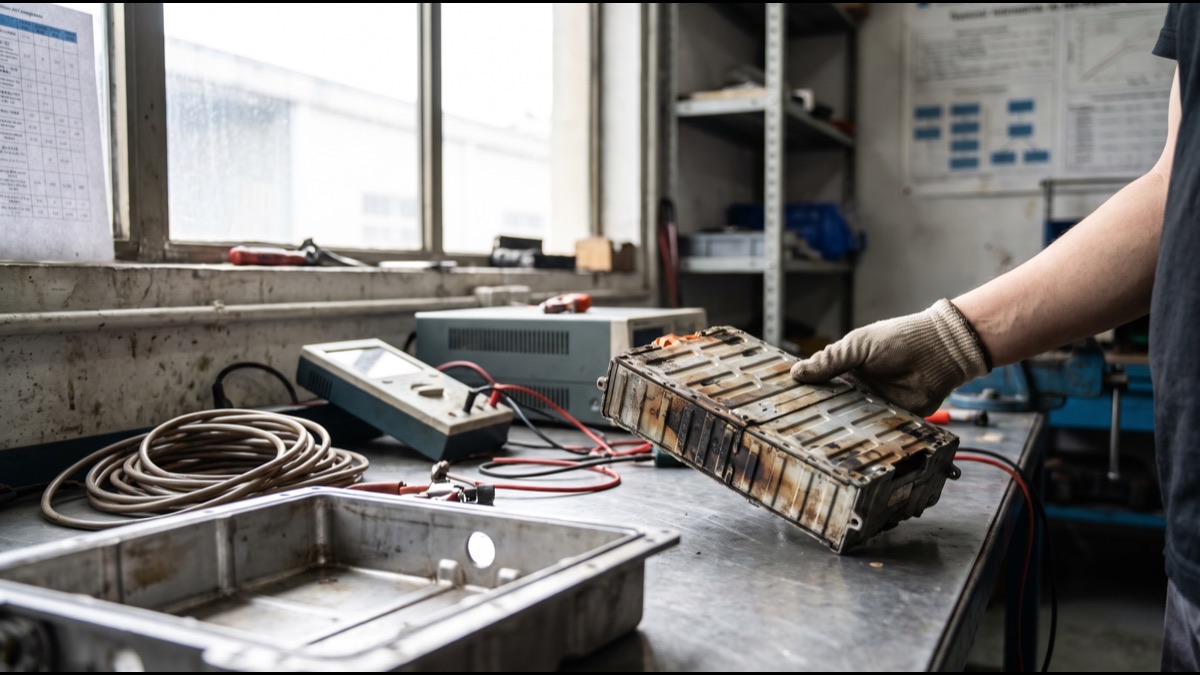
One of the most persistent questions surrounding electric vehicles is what actually happens to the battery over time. Unlike a traditional gas tank, which delivers roughly the same usable range consistently for the entire operational life of a car, a battery pack gradually loses some of its original capacity to hold charge, a process that understandably worries prospective buyers weighing the long-term cost and overall reliability of an EV against a traditional combustion vehicle they already understand quite well.
The underlying chemistry behind this gradual capacity loss is genuinely well understood by battery researchers, even if it still remains rather poorly understood by much of the general public, and the real-world data collected from millions of EVs now in active daily use paints a considerably more reassuring and less alarming picture than the more anxious corners of online conversation about the topic often suggest.
What Battery Degradation Actually Is at the Chemical Level
A lithium-ion battery, the type used in the overwhelming majority of modern electric vehicles, stores energy by moving lithium ions back and forth between two electrodes through a chemical process that is never perfectly reversible, meaning a small amount of usable capacity is inevitably lost with every single charge and discharge cycle a battery completes over its working life.
This gradual, cumulative loss of usable capacity is what battery engineers and researchers refer to as degradation, and it's a fundamental, unavoidable characteristic of the underlying lithium-ion chemistry itself rather than a defect, design flaw, or manufacturing mistake specific to any particular vehicle or battery pack.
Every lithium-ion battery in common daily use, including the one inside a typical smartphone or laptop, degrades gradually over time through this same basic underlying chemical process, meaning EV batteries are simply a much larger-scale, higher-stakes application of an already well-understood and extensively studied electrochemical phenomenon rather than some fundamentally new or mysterious concern.
The Two Main Mechanisms Driving Capacity Loss
Battery researchers generally distinguish between two broad categories of degradation: calendar aging, which occurs gradually over time regardless of how much or how little the battery is actually used, driven mainly by chemical side reactions that happen slowly within the battery even while it's sitting completely idle, and cycle aging, which occurs specifically as a direct result of the repeated charging and discharging that comes from actually driving and using the vehicle.
Calendar aging tends to accelerate meaningfully at higher storage temperatures and at higher states of charge, meaning a battery consistently stored fully charged in a hot climate will generally degrade somewhat faster through this specific mechanism than an identical battery stored at a more moderate charge level in a cooler climate, even if both vehicles are driven roughly the same number of total miles overall.
Cycle aging, by clear contrast, relates more directly and closely to total accumulated energy throughput over the battery's working life, meaning the cumulative amount of energy that has flowed into and back out of the battery over its lifetime, which is part of why total mileage driven and specific charging habits both meaningfully factor into a given battery's overall long-term degradation rate.
Why Fast Charging Affects Degradation More Than Slow Charging
Direct current fast charging delivers electrical energy into a battery pack considerably more quickly than a standard home charger does, and this significantly faster rate of energy transfer generates meaningfully more internal heat and places somewhat greater physical and chemical stress on the battery's internal structure than slower, more gradual charging generally does.
Repeated, frequent use of fast charging has been shown in multiple published studies to correlate with somewhat faster capacity degradation over time compared to relying primarily on slower overnight home charging, though the specific real-world magnitude of this particular effect varies considerably depending on the exact battery chemistry used, the vehicle's specific thermal management system design, and how frequently fast charging is actually used in practice.
Most modern EV manufacturers have specifically designed their battery thermal management systems to actively mitigate much of this fast-charging-related stress, and manufacturer guidance generally suggests that occasional or even fairly regular fast charging is unlikely to cause dramatic or unusually accelerated degradation for most typical everyday drivers under normal, expected usage patterns.
How Temperature Extremes Genuinely Affect Long-Term Battery Health
Both unusually high and unusually low ambient temperatures can meaningfully affect a battery's performance and its longer-term health, though the underlying mechanisms and practical consequences involved are genuinely quite different between these two temperature extremes and shouldn't be casually lumped together as a single generic concern.
Sustained high heat accelerates the chemical side reactions responsible for calendar aging specifically, which is why EVs that spend most of their operational life in consistently hot climates have generally shown somewhat faster measured capacity loss on average in published fleet data compared to otherwise broadly comparable vehicles operating in cooler, more temperate climates.
Cold temperatures, by meaningful contrast, primarily affect a battery's immediate short-term performance and available usable range rather than causing meaningfully faster permanent long-term degradation, since the underlying battery chemistry simply becomes measurably less efficient at delivering power in cold conditions, a genuinely temporary effect that reverses fully on its own as the battery gradually warms back up again to a normal operating temperature, rather than representing any kind of lasting, permanent capacity loss.
What Real-World Fleet Data Actually Shows
Large-scale data collected from substantial fleets of real-world EVs in active daily use, some involving many tens of thousands of individual vehicles tracked over a period of several years, has generally shown considerably slower average capacity loss than the more pessimistic and alarmist early projections that circulated widely when electric vehicles were still a comparatively new and less-understood technology.
Several of these large independent fleet studies have found that a meaningful number of EV battery packs retain the substantial majority of their original rated capacity even after well over 100,000 total miles of accumulated real-world driving, a considerably more reassuring real-world outcome than casual, unsubstantiated online conversation about dramatic EV battery failure often implies to prospective buyers.
This accumulated real-world fleet data has proven considerably more genuinely useful and reliable for understanding actual long-term degradation than laboratory testing alone, since laboratory conditions can't fully and perfectly replicate the enormous variety of real-world driving patterns, climates, and individual charging habits that meaningfully affect degradation in actual everyday practice.
How Manufacturer Warranties Reflect Their Own Confidence in the Technology
Most major EV manufacturers now offer battery-specific warranties covering a substantial number of years and total accumulated mileage, commonly guaranteeing that the battery pack will retain at least a specific defined minimum percentage of its original rated capacity throughout that entire specified warranty period, providing a genuinely useful concrete benchmark for how confident manufacturers themselves are in their own battery technology's actual real-world longevity.
These specific warranty terms have generally trended meaningfully more generous over time as manufacturers have accumulated considerably more real-world field data and correspondingly refined their battery chemistry, cell design, and thermal management systems, a trend that itself reflects growing manufacturer confidence in overall long-term battery durability as the underlying technology has matured.
The existence of these substantial, specific, and legally binding warranty commitments also provides genuinely meaningful practical financial protection for individual owners, since a battery pack that does degrade unusually faster than expected within the specified warranty period is generally eligible for repair or full replacement at little to no direct cost to the vehicle's owner.
What Actually Happens When a Battery Degrades Significantly Over Time
Contrary to a common public misconception, a degraded EV battery doesn't typically stop working entirely or suddenly fail all at once; instead, its total usable energy storage capacity gradually declines over time, which directly translates into a correspondingly and proportionally shorter total driving range on a full charge compared to when the vehicle was originally new.
A battery that has degraded down to, for example, roughly 90 percent of its original rated capacity will generally still function perfectly normally in every other practical respect, simply providing somewhat less total driving range per full charge than it did when new, a gradual and predictable change that most everyday owners experience as a slow, barely noticeable shift rather than any kind of sudden or dramatic loss of usable function.
Only in comparatively rare cases, generally involving an actual manufacturing defect, significant physical damage to the pack, or unusually severe environmental exposure well beyond normal expected conditions, does a battery pack typically experience a sudden, dramatic failure, a genuinely different and considerably less common phenomenon than the gradual, predictable capacity decline that constitutes ordinary, expected long-term battery aging.
How Battery Management Software Actively Helps Slow Degradation
Modern EVs rely on sophisticated onboard battery management software that actively and continuously monitors individual cell temperature, voltage, and overall state of charge, making constant small real-time adjustments specifically designed to keep the battery operating consistently within the general range of conditions known to minimize unnecessary long-term degradation.
This same battery management software commonly limits the maximum usable charge percentage a driver can actually access in day-to-day everyday use, deliberately reserving a small additional buffer of the pack's total physical capacity specifically to help meaningfully slow overall long-term degradation, even though this particular design choice modestly reduces the vehicle's immediately available maximum range on any single given full charge.
Software updates delivered wirelessly after a vehicle has already been sold and delivered to its owner have, in a number of documented cases, meaningfully improved battery management algorithms after initial widespread real-world deployment, illustrating how a modern EV's actual long-term battery health can continue improving somewhat even after the physical hardware itself has already left the factory.
Why Charging Habits Genuinely Matter for Long-Term Battery Life
Manufacturer guidance generally recommends that owners avoid routinely charging a battery to its absolute full 100 percent capacity for ordinary, everyday driving needs, and separately avoid consistently allowing the battery to sit at a very low, nearly depleted charge level for extended periods of time, since both of these specific charging patterns can meaningfully accelerate calendar aging somewhat compared to keeping the battery within a more moderate charge range.
Most manufacturers instead specifically recommend keeping a battery's typical everyday charge level somewhere within a moderate general range, commonly cited as roughly 20 to 80 percent of total capacity, reserving occasional full charges specifically for longer trips that genuinely require the vehicle's maximum available driving range on that particular occasion.
Following this kind of moderate charging guidance consistently over the vehicle's lifetime can meaningfully help slow overall long-term degradation, though it's worth genuinely noting that even owners who don't consistently follow this specific guidance still generally experience gradual, predictable degradation broadly within the expected normal range documented across published real-world fleet studies, rather than experiencing some kind of dramatically accelerated battery failure.
What Happens to Batteries at the True End of Their Vehicle Life
When an EV battery pack eventually degrades to the point where it can no longer reasonably meet a vehicle's original everyday performance and range requirements, it doesn't necessarily need to be discarded or scrapped entirely, since a battery in that specific condition frequently still retains meaningful usable capacity well suited to considerably less demanding stationary applications.
A growing and increasingly well-established second-life battery industry has emerged specifically to repurpose these retired EV battery packs for stationary energy storage applications, including large-scale grid-level storage and renewable-energy backup systems, applications where the somewhat reduced total capacity and less demanding rapid-discharge requirements compared to active vehicle use are considerably less of a genuine practical limitation.
Once a battery eventually reaches the true, final end of even this productive second-life stationary use, most of its constituent core raw materials, including lithium, cobalt, and nickel, can be recovered and genuinely recycled for reuse in the manufacturing of entirely new battery packs, a growing and rapidly maturing recycling process that meaningfully reduces the overall lifetime environmental footprint of the battery across its complete, full lifecycle from initial production through eventual retirement.
How Battery Degradation Compares to the Wear of a Traditional Engine
Owners accustomed to traditional gasoline vehicles are used to thinking about mechanical wear in terms of engine components, transmission parts, and other moving mechanical pieces that gradually wear down through repeated friction and physical stress, an intuitive mental framework that doesn't map cleanly onto how an EV battery pack actually ages over time.
An EV battery pack has no comparable moving mechanical parts subject to friction-based wear in the way a combustion engine does, meaning the specific aging process is fundamentally electrochemical rather than mechanical, a genuinely quite different kind of aging that many new EV owners initially find somewhat unfamiliar and harder to intuitively reason about compared to the mechanical wear patterns they already understand well from owning gas-powered vehicles.
This fundamental difference also helps explain why EV drivetrains overall tend to require considerably less routine mechanical maintenance than a comparable gasoline vehicle, since there is no engine oil to change, no transmission fluid to replace, and no exhaust system to maintain, even though the battery pack itself does still gradually age through its own separate, distinctly electrochemical process.
What Prospective Buyers Should Reasonably Take Away From All of This
For someone actively considering purchasing an electric vehicle, the most genuinely useful practical takeaway from the accumulated research and real-world fleet data is that battery degradation, while real and unavoidable, is generally gradual, predictable, and considerably less dramatic in practice than early, more speculative public conversation about the technology initially suggested.
Carefully checking a specific vehicle's battery warranty terms, carefully reviewing available independent long-term reliability and degradation data for that particular model where it exists, and understanding a manufacturer's specific recommended charging practices are all genuinely practical steps a prospective buyer can reasonably take to make a well-informed purchasing decision rather than relying primarily on anecdotal claims circulating in casual online conversation.
As battery chemistry, manufacturing quality, and real-world usage data all continue to accumulate and mature together across the wider EV industry, the overall picture for long-term battery reliability has continued trending in a genuinely more reassuring direction with each successive passing year, a trend most industry analysts expect to reasonably continue as the underlying technology keeps maturing further, gradually narrowing the gap between the anecdotal fears once common in early public conversation and the steadily accumulating, considerably more reassuring statistical reality documented across the industry today.
The real chemistry and accumulated real-world data behind EV battery degradation paints a considerably more measured and reassuring picture than the more anxious corners of popular conversation surrounding electric vehicles often suggest. Capacity loss is a genuine, fundamental, and largely unavoidable characteristic of lithium-ion battery chemistry itself, present in every lithium-ion device in common use today, driven by both calendar aging and cycle aging occurring simultaneously, but the actual real-world rate of that loss has proven considerably slower and more gradual across large vehicle fleets than early, more pessimistic projections originally suggested, and manufacturer warranties now provide meaningful concrete financial protection against any unusually accelerated degradation that does occasionally still occur. Understanding the underlying mechanisms driving degradation, including the meaningful roles played by ambient heat, frequent fast charging, and everyday charging habits over the course of ordinary vehicle ownership, helps clarify both what a prospective or current EV owner can reasonably do to help extend their own specific battery's useful working life and what genuinely remains largely outside of their direct personal control as an unavoidable, expected part of the battery's basic underlying chemistry. As battery chemistry, thermal management systems, and recycling processes all continue to steadily mature and improve together, the long-term practical picture for EV battery longevity is very likely to keep improving further still in the years ahead.
Sources
- Wikipedia — overview of lithium-ion battery chemistry and degradation mechanisms
- U.S. Department of Energy — research and data on electric vehicle battery performance and longevity
- Idaho National Laboratory — independent research on EV battery degradation and real-world fleet data
- Nature Energy — peer-reviewed research on lithium-ion battery aging mechanisms
- International Energy Agency — global data and analysis on electric vehicle adoption and battery technology
FAQ
Do EV batteries suddenly stop working after a certain number of years?
No — batteries gradually lose usable capacity over time rather than suddenly failing, and most retain the majority of their original capacity even after well over 100,000 miles of driving.
Does fast charging damage an EV battery?
Frequent fast charging correlates with somewhat faster degradation compared to slower home charging, but modern thermal management systems are designed to mitigate most of this effect for typical everyday use.
Does cold weather permanently damage an EV battery?
No — cold temperatures temporarily reduce available range and performance, but this effect reverses once the battery warms back up, unlike the permanent capacity loss from calendar and cycle aging.
What happens to EV batteries after they're removed from a vehicle?
Many are repurposed for stationary energy storage applications like grid-level backup systems, and their raw materials can eventually be recycled for use in new battery packs.
Do manufacturer warranties cover excessive battery degradation?
Yes — most manufacturers guarantee a minimum percentage of original capacity for a set number of years or miles, with repair or replacement covered if the battery degrades faster than that.
About the Author
We reference Wikipedia, U.S. Department of Energy, Idaho National Laboratory, Nature Energy, and International Energy Agency to explain the background and current understanding of this topic.
Loved This Article?
Share it on WhatsApp → Share it on WhatsApp
Get more guides in your inbox — Subscribe to our newsletter for weekly surprising stories from Egypt, Saudi Arabia, Dubai, and beyond.