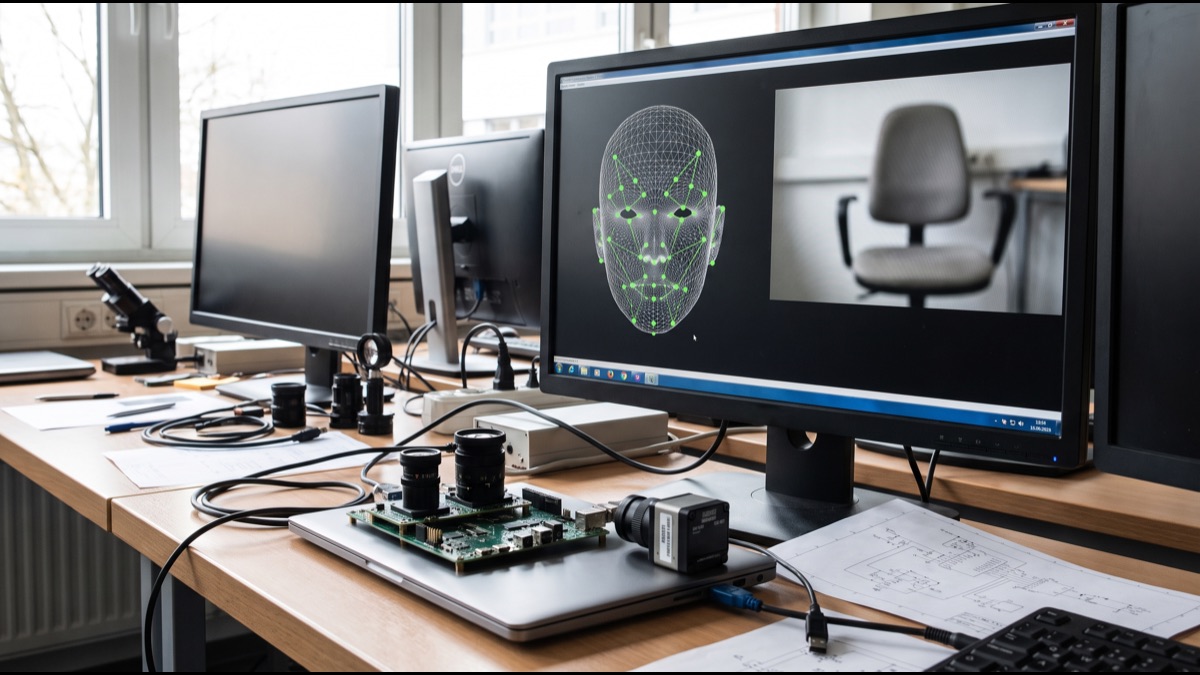
Facial recognition technology works by analyzing a face in an image or video and measuring distinctive features, such as the distance between the eyes or the shape of the jawline, converting those measurements into a unique numerical template called a faceprint.
That faceprint is then compared against a database of previously stored faceprints, using mathematical similarity scoring to determine whether the new face matches an existing record closely enough to count as a positive match.
Turning a Face Into a Numerical Template
Identification vs Verification
There's an important distinction between verification, confirming that a face matches one specific claimed identity, like unlocking your own phone, and identification, searching a large database to figure out who an unknown face belongs to, which raises significantly more privacy concerns.
Accuracy varies with factors like lighting, image angle, and the diversity of faces represented in a system's training data, and independent research has found that some facial recognition systems perform less accurately for certain demographic groups than others, which has driven ongoing scrutiny of the technology's fairness and regulation.
Sources
- Wikipedia — overview of facial recognition technology and its applications
- National Institute of Standards and Technology — independent testing and accuracy research on facial recognition systems
- Electronic Frontier Foundation — privacy-focused background on facial recognition concerns
FAQ
What is a faceprint?
It's a unique numerical template created by measuring distinctive facial features, used to compare and match faces mathematically rather than visually.
What's the difference between facial verification and identification?
Verification confirms a face matches one specific claimed identity, like unlocking your phone, while identification searches a large database to determine who an unknown face belongs to.
Does facial recognition accuracy vary by demographic group?
Independent research has found that some systems perform less accurately for certain demographic groups than others, driving ongoing scrutiny of the technology's fairness.
About the Author
We reference Wikipedia, National Institute of Standards and Technology, and Electronic Frontier Foundation to explain the background and current understanding of this topic.
Loved This Article?
Share it on WhatsApp → Share it on WhatsApp
Get more guides in your inbox — Subscribe to our newsletter for weekly surprising stories from Egypt, Saudi Arabia, Dubai, and beyond.