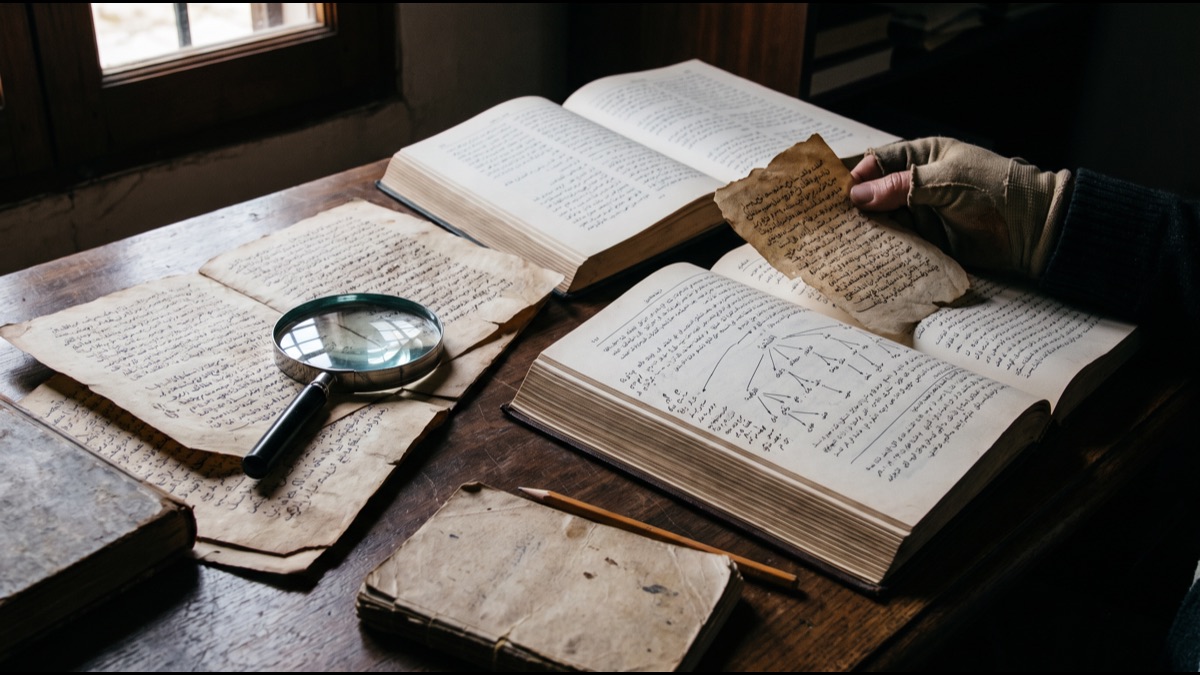
Every hadith in circulation makes an implicit claim: that these exact words, in this exact order, genuinely trace back through named individuals to the Prophet Muhammad himself. Millions of such reports survive from the early Islamic centuries, transmitted person to person for generations before being written down in the great collections, and by the time compilers like Bukhari and Muslim finished their work, they had each rejected far more reports than they accepted.
That filtering was not casual. It was the product of a rigorous, largely self-contained discipline of historical verification that predates modern source criticism by over a thousand years, built around tracing exactly who said what to whom, cross-checking those claims against everything else known about the people involved, and grading the resulting confidence on a formal scale. Understanding how that system actually works explains why Muslims distinguish so carefully between hadith collections, why some reports are trusted far more than others, and why the field remains an active scholarly discipline today.
What a Hadith Actually Is and Why Verification Matters
A hadith is a report describing something the Prophet Muhammad said, did, or silently approved of, transmitted originally by companions who witnessed it and passed down through successive generations of narrators until it was eventually recorded in writing. Hadiths function alongside the Quran as a source of Islamic teaching, filling in practical detail on worship, conduct, and law that the Quran states more generally.
Because hadiths carry real religious and legal weight, and because the gap between an event and its eventual written record could span a century or more, scholars recognised early on that not every report in circulation could be genuine. Political factions, sectarian disputes, and simple human error all created strong incentives and opportunities for false attribution, which made rigorous verification a practical necessity rather than an academic nicety.
What an Isnad Chain Actually Records
Every properly transmitted hadith is presented with two components: the isnad, a chain naming every individual who passed the report from one to the next back to its origin, and the matn, the actual text of what was said or done. A typical isnad reads as a list such as "narrated by X, from Y, from Z, who said the Prophet said," with each link representing a specific claimed act of transmission between two named people.
This structure turned hadith transmission into something scholars could actually investigate, because a named chain of claimed transmitters is a testable historical claim rather than an unverifiable assertion. If any individual in that chain could be shown never to have met the person they claimed to narrate from, or to have been an unreliable reporter, the entire report's credibility was affected.
How Scholars Actually Traced Each Narrator's Background
Verifying an isnad meant establishing, for every single narrator named in it, when and where they lived, who they were known to have studied with or met, and whether their documented lifespan genuinely overlapped with the person they claimed to have heard the report from. Scholars compiled enormous biographical dictionaries recording exactly this kind of detail for tens of thousands of individuals.
This biographical cross-referencing could disqualify a chain even when nothing was wrong with any individual narrator's honesty, simply because the claimed meeting was chronologically or geographically implausible. A narrator who died before another was even born obviously could not have transmitted anything to them directly, and such contradictions were treated as decisive.
Scholars also tracked which cities and regions each narrator travelled through and taught in, since a claimed transmission between two people who are never documented as having been in the same place at the same time raises the same kind of suspicion as a chronological impossibility. Some narrators are known to have travelled specifically to collect hadiths directly from distant teachers, and this travel history itself became a documented, checkable fact used in later verification.
What the Science of Narrators Actually Involves
The broader discipline built around this work is generally known as the science of narrators, and it involved scholars systematically collecting testimony about each transmitter's memory, honesty, religious conduct, and reputation for accuracy from people who had known them personally. A narrator praised by multiple independent contemporaries as precise and trustworthy carried far more weight than one about whom such testimony was thin or contradictory.
Crucially, this evaluation was not limited to obviously suspicious figures. Even narrators who were personally pious could be judged unreliable if they were known to have a poor memory, to narrate carelessly, or to have made verifiable errors elsewhere, since sincerity alone was never treated as sufficient grounds for trusting a transmission chain.
How Hadiths Get Graded Sahih, Hasan, or Da'if
Based on this narrator-by-narrator assessment combined with the continuity of the chain itself, scholars developed a formal grading system. A report graded sahih, meaning authentic, has an unbroken chain of narrators, each individually established as reliable and precise, with no contradiction to more authoritative reports. A report graded hasan is broadly similar but involves narrators whose reliability, while accepted, is considered somewhat less firmly established.
Reports graded da'if, or weak, contain some identifiable defect, whether a gap in the chain, a narrator with documented reliability problems, or a conflict with better-established reports, and are treated with corresponding caution in religious and legal reasoning. Below even that sits the category of fabricated reports, discussed further on, which scholars actively worked to identify and exclude entirely.
Why an Unbroken Chain Actually Matters
A chain is only as strong as its weakest and most uncertain link, and scholars paid particular attention to continuity, meaning clear evidence that each narrator genuinely received the report directly from the one before them rather than through an unstated intermediary. Gaps of this kind, where a narrator is suspected of never having actually met the person they claim to narrate from, downgrade a report regardless of how trustworthy every named individual might otherwise be.
This concern with continuity is precisely why scholars invested so heavily in biographical detail. Establishing that two people's documented lives genuinely overlapped in time and place was treated as a prerequisite for accepting a claimed direct transmission between them, not an afterthought.
How Scholars Cross-Checked Narrations Against Each Other
Beyond evaluating individual chains in isolation, scholars systematically compared different chains reporting the same or similar content, a practice that let them identify corroboration where multiple independent routes converged on the same substance, and detect suspicious anomalies where a narrator's version diverged unexpectedly from what more reliable routes reported.
A report transmitted through several genuinely independent chains, each meeting the standard of reliability on its own, was considered more firmly established than one resting on a single chain, however sound that single chain appeared, since independent corroboration reduced the chance that an undetected error in any one transmission line had gone unnoticed.
Scholars gave this kind of multiply-attested report its own technical classification, distinguishing it from reports resting on only a single narrator at some point in the chain, precisely because the number and independence of corroborating routes materially affected how confidently the report could be relied upon in religious and legal reasoning.
Why Bukhari and Muslim's Collections Carry Special Weight
Among the many hadith collections compiled in the ninth century, those of Muhammad al-Bukhari and Muslim ibn al-Hajjaj are widely regarded as the two most rigorously verified, earning them the designation Sahih Bukhari and Sahih Muslim respectively. Both compilers travelled extensively across the Islamic world specifically to interview narrators directly and verify chains at their source rather than relying on secondhand accounts.
Their reputation rests on the exceptionally strict criteria each applied before including a report, examining not only the individual narrators but the overall coherence of each chain, and each is understood to have rejected a substantially larger number of reports than they ultimately accepted into their final collections.
What Actually Disqualifies a Narrator
Several distinct categories of defect could disqualify a narrator from being relied upon. Documented lying, even on a single occasion unrelated to hadith transmission, was treated as effectively disqualifying, on the reasoning that a demonstrated willingness to fabricate in one context undermined confidence in a person's testimony generally.
Poor memory, inconsistency between different tellings of the same report over time, known confusion in old age, or a pattern of narrating from people they had verifiably never met, could all separately reduce or eliminate a narrator's standing, even absent any suggestion of dishonesty. Scholars distinguished carefully between moral unreliability and simple cognitive unreliability, since both mattered but for different reasons. Innovation in religious doctrine that contradicted established teaching, and known sectarian bias strong enough to plausibly distort a narrator's account, were treated as additional grounds for caution, evaluated on a sliding scale rather than as an automatic, blanket disqualification in every case.
How Fabricated Hadiths Were Actually Identified
Outright fabrication was a genuine and documented problem in early Islamic history, often motivated by political or sectarian agendas seeking religious legitimacy for a particular position. Scholars developed specific techniques to catch it, including checking whether a report's content contradicted clearly established Quranic teaching or better-attested hadiths, and scrutinising suspiciously convenient reports that happened to support one faction's specific claims.
Entire scholarly works were compiled cataloguing known fabricated reports specifically so later generations could recognise and avoid them, and some individuals who had confessed to inventing hadiths, generally for what they considered pious reasons such as encouraging worship, were documented by name precisely so their fabrications could be traced and excluded from genuine collections.
This active cataloguing of known fabricators meant that a suspicious report did not need to be re-evaluated from scratch each time it resurfaced; if its chain passed through a narrator already documented as a known fabricator, later scholars could reject it immediately on that basis alone, which made the accumulated biographical record increasingly valuable with each generation of scholarship added to it.
Why Text Criticism Also Matters, Not Just the Chain
A technically sound chain does not automatically guarantee an authentic report, which is why scholars also examined the matn, or text, on its own merits. A report was viewed with suspicion if its content contradicted the Quran, contradicted a more firmly established hadith, conflicted with well-documented historical fact, or made claims strikingly inconsistent with the Prophet's well-attested character and teaching elsewhere.
This dual scrutiny, examining both the chain of transmission and the substance of what was transmitted, meant authentication was never purely mechanical box-ticking on narrator biographies. A chain could look formally sound while the content it carried still raised legitimate scholarly concern, and vice versa.
How This Verification Work Continues Today
Hadith scholarship did not stop with the classical collections. Later scholars continued re-examining chains, occasionally revising earlier gradings as additional biographical evidence came to light, and modern researchers have digitised enormous biographical databases that let a chain be cross-checked against recorded narrator details far more quickly than was possible by hand.
Contemporary hadith scholars, working across universities and traditional religious institutions worldwide, continue to publish detailed gradings and academic analysis, and the methodology itself, systematic biographical verification combined with textual cross-checking, is increasingly cited by historians outside Islamic studies as an early and sophisticated model of source criticism.
Specialised software and searchable manuscript archives have also made it far easier to compare variant wordings of the same report across different collections, a task that classical scholars performed manually across handwritten copies scattered over enormous geographic distances, and this technological shift has generally reinforced rather than overturned the core classical gradings established centuries earlier.
What This System Means for Everyday Muslims
For most practising Muslims, the practical upshot is that not every report attributed to the Prophet circulating in books, sermons, or online carries equal weight, and the classical grading system exists precisely to communicate that difference. A hadith cited as sahih from Bukhari or Muslim rests on a documented verification process that a report of unclear or weak grading simply does not.
This is also why traditional Islamic education places such emphasis on citing sources properly rather than repeating reports informally, and why asking about a hadith's grading, rather than treating any attributed saying as automatically authoritative, is considered a basic feature of careful religious literacy rather than an act of doubt.
The isnad system that emerged in the early Islamic centuries represents one of history's more remarkable achievements in structured historical verification, built entirely without modern archival technology yet rigorous enough that its core findings have largely withstood the scrutiny of later scholars, including secular historians examining the same material with different assumptions. Its central insight, that a claim is only as strong as the documented, individually scrutinised chain of people vouching for it, remains recognisably the same standard applied in careful historical and journalistic verification today.
What makes the discipline genuinely distinctive is the sheer scale at which it operated, with biographical detail compiled on tens of thousands of individual narrators specifically to make this kind of chain-by-chain verification possible centuries after the fact. That infrastructure is why hadith scholarship remains an active, technical field rather than a closed historical curiosity, and why grading distinctions that can look pedantic from the outside carry real, carefully earned significance within it.
None of this means the process was infallible or that every scholar reached identical conclusions on every disputed report; disagreement between respected authorities over specific chains or specific narrators is well documented and openly discussed within the tradition itself, rather than papered over. What the system does provide is a transparent, examinable basis for that disagreement, since two scholars differing on a grading are typically differing over a specific, nameable point of narrator biography or chain continuity that can itself be investigated, rather than relying on unexplained personal judgment.
Sources
- Wikipedia — overview of hadith literature, transmission, and classification
- Wikipedia — overview of the traditional and academic study of hadith authentication
- Wikipedia — background on the compilation methodology of Sahih al-Bukhari
- Oxford Islamic Studies — academic reference on Islamic textual and legal scholarship
- Encyclopaedia Britannica — reference overview of hadith and its role in Islamic tradition
FAQ
What is the difference between the isnad and the matn?
The isnad is the chain of named narrators who transmitted a report, while the matn is the actual text or content of what was said or done — scholars evaluate both separately before accepting a hadith.
What does it mean when a hadith is graded sahih?
Sahih means the chain of narrators is unbroken and every individual in it has been independently established as reliable and precise, with the content not contradicting more authoritative reports.
Why are Bukhari and Muslim's collections considered especially reliable?
Both compilers travelled extensively to verify narrators directly at their source and applied unusually strict criteria, rejecting far more reports than they ultimately included.
Can a hadith with a sound chain still be rejected?
Yes — scholars also check the text itself against the Quran, better-established hadiths, and known history, so a formally sound chain does not automatically guarantee acceptance.
Is hadith authentication still practiced today?
Yes — scholars continue re-examining classical gradings, and modern digitised biographical databases now let researchers cross-check narrator chains far faster than was possible by hand.
About the Author
We reference Wikipedia, Oxford Islamic Studies, and Encyclopaedia Britannica to explain the background and current understanding of this topic.
Loved This Article?
Share it on WhatsApp → Share it on WhatsApp
Get more guides in your inbox — Subscribe to our newsletter for weekly surprising stories from Egypt, Saudi Arabia, Dubai, and beyond.