Your phone lands with you, opens its screen, and finds a signal within seconds, on a network it has never touched before, run by a company you have never signed a contract with. No app is downloaded, no manual configuration happens, and yet calls, texts, and data quietly start working as though nothing had changed. This near-instant handoff between two entirely separate companies, often in two entirely different countries, is one of modern telecommunication's most invisible achievements.
Understanding how it actually works explains why roaming can sometimes feel painfully slow to connect after landing, why bills for it have historically been so expensive, why calls occasionally drop the instant you cross a land border, and how a small chip or downloaded profile in your phone has quietly become the passport that makes all of it possible.
What Actually Happens the Moment You Land
The instant your phone powers on in a new country, it begins scanning available radio frequencies for network signals, exactly as it does at home, except now every signal it finds belongs to a foreign carrier it has no direct account with. Your phone reads a unique identifier broadcast by each nearby network and compares it against a list, stored on your SIM, of networks your home carrier has pre-arranged roaming access with.
Once a suitable network is found, your phone attempts to register with it, sending its identity information for verification. This is the exact moment the entire roaming system either works seamlessly or produces the frustrating spinning icon travelers know well, depending on how quickly that verification completes.
If your phone finds no pre-arranged network available, or if the strongest available signal belongs to a carrier with no relevant agreement, it will either connect to a weaker but eligible alternative or display no service at all, which is precisely why roaming coverage can vary noticeably even between neighboring countries.
Home Network Versus Visited Network
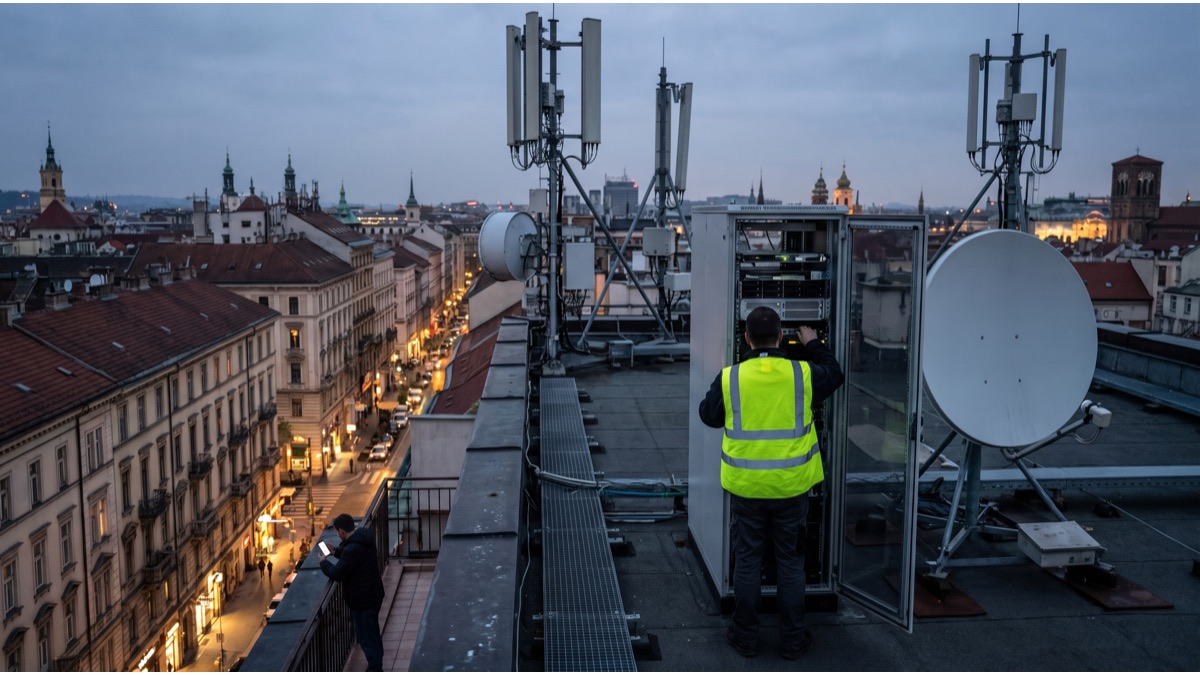
Two carriers are involved in every roaming interaction: your home network, the carrier you actually pay a monthly bill to and whose SIM sits in your phone, and the visited network, the local foreign carrier whose radio towers your phone is physically connecting to while you travel.
Critically, your phone number, account, and billing relationship never actually move to the visited network. Your identity remains registered with your home network's core systems at all times, and the visited network is essentially lending you temporary access to its local radio infrastructure, forwarding your calls, texts, and data back to your home network's systems for processing and billing.
This is why your phone number stays exactly the same no matter which country you are physically standing in, and why someone calling your regular number reaches you seamlessly whether you are at home or on the other side of the world, since the call is always routed through your home network first regardless of your physical location.
The Wholesale Roaming Agreement Behind Every Trip
None of this works automatically between any two carriers on Earth. Your home network must have a specific bilateral wholesale roaming agreement in place with a foreign carrier before your phone can ever connect to that carrier's network, an agreement that specifies exactly what services are supported and what wholesale rate one carrier charges the other for carrying your traffic.
These agreements are negotiated commercially between carriers, entirely separate from the retail roaming price you eventually see on your own bill, and a carrier without an agreement in a particular country simply will not appear as an option on your phone there, regardless of its actual signal strength or coverage quality in that location.
This explains why a phone plan that boasts roaming in dozens of countries is really describing dozens of individually negotiated bilateral relationships, not some universal standard that automatically connects any phone to any network anywhere, and why some remote or newly launched carriers may not yet have roaming relationships with major international operators at all.
How Your Phone Actually Chooses a Network
Your SIM card stores a prioritized list, configured by your home carrier, of preferred roaming partners in each country, and your phone's software attempts to connect to these in preference order whenever more than one eligible network is available at your location.
This preference list exists because home carriers frequently negotiate more favorable wholesale rates or better service quality with certain foreign partners than others, meaning the network your phone silently selects for you is often not simply whichever signal happens to be strongest, but whichever preferred partner is available and adequately reachable.
Travelers can sometimes manually override this automatic selection through their phone's network settings, choosing a specific visited network directly, though doing so does not change the underlying wholesale agreement or pricing your home carrier has arranged, since that agreement is fixed regardless of which specific network you manually select.
The Signaling System That Makes Roaming Possible
Behind the scenes, a global signaling infrastructure allows your home network and any visited network to exchange the information needed to authenticate you, authorize your access, and route your traffic correctly, historically built on a protocol called SS7 and increasingly supplemented by newer signaling systems as networks upgrade.
When you register on a visited network, that network sends a query back through this global signaling infrastructure to your home network, essentially asking to confirm your identity is genuine and your account is in good standing, and your home network responds with the authorization needed to let the visited network grant you service.
This entire exchange typically completes within seconds, hidden entirely from the user, and relies on a global interconnection layer, often described using the term IPX, that carries this signaling traffic securely and reliably between carriers located anywhere in the world, effectively acting as neutral connective tissue linking otherwise unrelated telecom companies.
How an Incoming Call Actually Finds You Abroad
When someone calls your regular number while you are traveling, that call first reaches your home network exactly as it always does, since callers have no way of knowing, or needing to know, which country you are physically in at that moment.
Your home network then checks its records to see which visited network you are currently registered on, information updated automatically every time you connect to a new network, and forwards the call onward to that specific visited network, which then completes the final leg of the connection to your physical handset.
This roundabout routing, sending a call to your home country first before redirecting it internationally to wherever you actually are, is precisely why incoming calls to a roaming phone have historically incurred charges for the caller's home network too, even though the person calling you may have no idea you have left the country at all.
Why Data Roaming Works Differently Than Voice
Mobile data roaming uses a somewhat different technical path than voice calls, typically routing your internet traffic back through your home network's core data infrastructure via a dedicated tunnel connection with the visited network, a design choice originally intended to preserve consistent security policies and billing regardless of which country you are physically using data in.
This routing choice has a genuine practical consequence: because your data traffic often travels back to your home country before reaching the wider internet, roaming data connections can sometimes feel noticeably slower than a local SIM would provide, even when the local visited network's radio signal itself is strong.
Some newer roaming architectures allow data traffic to break out locally in the visited country instead, avoiding that round-trip back home and improving speed, though this requires additional technical and commercial arrangements between carriers that are not yet universally deployed everywhere.
Why Roaming Has Traditionally Been Expensive
Every roamed call, text, or byte of data genuinely involves two separate commercial companies, each of which incurs real costs and expects to be compensated: the visited network for providing local radio access, and your home network for managing the international signaling, routing, and billing complexity involved.
Historically, this two-carrier cost structure, combined with limited competitive pressure in many international roaming corridors, produced retail roaming prices dramatically higher than domestic rates for functionally similar service, a pattern that persisted for years before regulatory intervention in some regions began meaningfully addressing it.
Carriers have also historically used roaming pricing as a genuine profit center rather than simply a cost pass-through, since travelers facing an unfamiliar network in an unfamiliar country have historically had limited practical ability to shop around for a better rate in the moment they actually need connectivity.
How Regional Roaming Agreements Changed the Picture
Some regions have negotiated collective regulatory frameworks specifically to address excessive roaming costs, the most well-known being the European Union's rules effectively eliminating additional roaming charges for its member states, allowing travelers to use their home plan's normal rates seamlessly across the entire bloc.
Other regions have pursued similar, if less comprehensive, cooperative arrangements, recognizing that reduced roaming friction genuinely benefits tourism, business travel, and regional economic integration, even though it requires carriers to accept lower wholesale margins on cross-border traffic than they might otherwise prefer.
Where no such regional framework exists, roaming costs and coverage quality still depend entirely on the specific bilateral agreements each individual carrier has separately negotiated, which is precisely why roaming experience and pricing can vary so dramatically depending on exactly which countries a traveler's itinerary includes.
What eSIM Technology Actually Changed
A traditional physical SIM card ties your phone to a single carrier's identity until it is physically removed and replaced, but an eSIM stores that same carrier identity digitally, allowing a phone to download and activate an entirely new operator profile without any physical card swap at all.
This has meaningfully changed practical roaming behavior for many travelers, who can now purchase and download a local eSIM profile in advance or immediately upon arrival, connecting to local rates directly rather than paying their home carrier's roaming markup, all while their original home SIM profile remains present and available in the background.
eSIM technology has not replaced traditional carrier roaming agreements entirely, since travelers still frequently want their original number reachable for calls and texts while also using a cheaper local data profile, but it has genuinely introduced meaningful price competition into a market that historically had very little of it from the traveler's perspective.
Why a Call Can Drop When You Cross a Border
An active call or data session generally cannot survive a handoff between two entirely separate visited networks operated by different companies in different countries, unlike moving between towers within a single carrier's own network, where specialized handoff protocols keep an active call connected seamlessly.
When a phone crosses an international border while a call is in progress, it must disconnect from the network of the country being left and complete an entirely fresh registration and authentication process with a network in the new country, a process that inherently cannot happen instantaneously enough to preserve the original connection.
This is a structural limitation of how separate carrier networks interconnect rather than a simple technical failure, and it explains why even travelers with excellent phones and strong signal on both sides of a border still reliably experience a dropped call at the exact moment of crossing.
Security and Fraud Concerns in Roaming
The global signaling infrastructure that makes roaming possible has also historically attracted security scrutiny, since vulnerabilities in older signaling protocols have in some documented cases been exploited to intercept calls or texts, or to track a phone's approximate location without the user's knowledge or consent.
Carriers and industry bodies have worked to harden these systems over time, introducing additional authentication and monitoring specifically aimed at detecting suspicious signaling traffic before it can be exploited, though the fundamentally interconnected, multi-party nature of global roaming infrastructure means it remains an area of ongoing security investment rather than a solved problem.
Roaming fraud, where a compromised or cloned identity generates usage charges billed back to an unsuspecting home network or customer, is a genuine and continuously monitored risk category for carriers, one reason wholesale roaming agreements typically include specific fraud-detection and dispute-resolution provisions alongside the basic technical and pricing terms.
Regional hubs with heavy inbound tourism and business travel, including major Gulf airports and cities, have become particularly active testing grounds for newer roaming technology, since carriers there have strong commercial incentive to make that first connection after landing as fast and reliable as possible for the large volume of international arrivals passing through every day.
The next time your phone quietly finds a signal within moments of landing somewhere entirely new, that near-instant handshake represents a negotiated commercial relationship, a global signaling handshake, and a genuinely elegant piece of engineering, all completing invisibly before you have even reached the arrivals hall.
Sources
- Wikipedia — overview of mobile roaming and wholesale agreements
- GSMA — global mobile industry standards and roaming interconnection documentation
- International Telecommunication Union — international telecommunications standards and signaling protocols
- European Commission Digital Strategy — EU roaming regulation and its market effects
- UAE Telecommunications and Digital Government Regulatory Authority — regional telecom roaming regulation
FAQ
Does my phone number actually change when I roam abroad?
No — your phone number and SIM identity stay the same; the visited network simply forwards traffic to and from your home network's core systems.
Why does my phone sometimes fail to connect right after landing?
The phone has to scan for and register with a new visited network, which can take a moment, especially if multiple local carriers have similar signal strength.
Why is roaming sometimes so expensive?
Two carriers with a wholesale agreement, not just your home carrier, are involved in every roamed call or byte of data, and both charge for the service.
What is an eSIM and how does it change roaming?
An eSIM lets a phone download a local operator's profile digitally, so travelers can get local-network rates without swapping a physical SIM card.
Can a call actually get dropped moving between countries?
Yes — an active call or data session generally cannot survive a handoff between two entirely separate visited networks in different countries, so it disconnects and must reconnect on the new network.
About the Author
We reference Wikipedia, GSMA, the International Telecommunication Union, the European Commission Digital Strategy, and the UAE Telecommunications and Digital Government Regulatory Authority to explain the background and current understanding of this topic.
Loved This Article?
Share it on WhatsApp → Share it on WhatsApp
Get more guides in your inbox — Subscribe to our newsletter for weekly surprising stories from Egypt, Saudi Arabia, Dubai, and beyond.