What Actually Happens During an Apnea Event
Loud, irregular snoring interrupted by silence and then a sudden gasp is often treated as a bedroom nuisance rather than a medical event. In obstructive sleep apnea, that silence is not restful — it is the sound of a person not breathing, sometimes dozens of times an hour, and each pause sets off a cascade of physiological stress that repeats itself night after night for years before most people are ever diagnosed.
An apnea event is formally defined as a pause in breathing lasting at least ten seconds, during which airflow drops to near zero even though the chest and abdomen may still be visibly trying to move. In the more common obstructive form, the effort to breathe continues but the airway is physically blocked, so no air actually gets through despite the body straining against a closed passage.
A person with moderate to severe sleep apnea can experience these events fifteen, thirty, or in extreme cases well over sixty times in a single hour, meaning the body may spend a meaningful fraction of every night's sleep in a repeating cycle of suffocation and recovery that the sleeper themselves is rarely consciously aware of.
Why the Airway Collapses in the First Place
During deep sleep, the muscles of the throat relax along with the rest of the body, including the muscles that normally hold the airway open. In most people this relaxation is harmless because the airway remains wide enough for air to pass freely, but in people with obstructive sleep apnea the airway is already narrower, whether from excess soft tissue, jaw structure, or enlarged tonsils.
When that narrowed airway meets fully relaxed throat muscles, the walls collapse inward and briefly seal shut, exactly the way a floppy plastic tube pinches closed under its own weight when nothing is holding it open. Gravity and body position matter too, which is why apnea events are frequently worse when a person sleeps flat on their back.
Excess weight around the neck and throat is one of the strongest risk factors because it adds physical mass pressing against an already-narrow airway, but sleep apnea also occurs in people who are not overweight at all, particularly when jaw recession, a naturally narrow airway, or enlarged tonsils are the primary cause.
What an Oxygen Desaturation Actually Does to the Body
Every time breathing stops, oxygen in the blood begins to fall, a measurable drop called an oxygen desaturation. In moderate cases blood oxygen might dip a few percentage points; in severe cases it can plunge dramatically low, briefly approaching levels associated with acute respiratory distress in other medical contexts.
The body treats this drop as an emergency. Chemoreceptors that monitor blood oxygen and carbon dioxide detect the imbalance and trigger a surge of stress hormones, primarily adrenaline, which raises heart rate and blood pressure sharply in an effort to force more oxygen to vital organs despite the blocked airway.
This is not a single unfortunate incident — it is a cycle that repeats every one to two minutes throughout the night in someone with severe apnea, meaning the cardiovascular system experiences dozens or hundreds of miniature emergency surges before morning, every single night, for years.
How the Brain Reacts to Repeated Micro-Arousals
Each apnea event typically ends with a brief arousal, a partial or full awakening lasting only a few seconds, just long enough for the brain to send a signal that tightens the throat muscles and reopens the airway. The person usually has no memory of this happening, but the brain has, in effect, been forced to interrupt sleep to save itself from suffocation.
These arousals fragment the structure of sleep itself, preventing the brain from spending adequate time in the deeper and REM stages of sleep that are believed to matter most for memory consolidation, emotional regulation, and physical recovery, even when total time in bed appears normal on paper.
The cumulative effect explains why people with untreated sleep apnea frequently report waking up feeling as though they never slept at all, despite spending a full eight hours in bed — the sleep they got was technically present but structurally shredded by dozens of forced interruptions.
Why Sleep Apnea Strains the Heart So Directly
The repeated combination of low oxygen and adrenaline surges places direct, measurable strain on the cardiovascular system. Blood pressure that should naturally dip during sleep instead spikes repeatedly, and over months and years this nightly pattern is strongly associated with the development of chronic daytime hypertension that can be difficult to control with standard medication alone.
The heart itself is forced to work harder against tighter blood vessels while simultaneously receiving less oxygen-rich blood during each event, a combination that cardiologists consider particularly damaging to heart muscle and blood vessel walls over an extended period of nightly repetition.
This is why sleep apnea is now treated as a genuine cardiovascular risk factor in its own right by many physicians, not merely an inconvenience, and why patients with difficult-to-control high blood pressure are increasingly screened for undiagnosed apnea as a possible underlying cause.
How Untreated Apnea Raises Stroke and Arrhythmia Risk
Beyond chronic hypertension, sleep apnea is associated with a meaningfully higher risk of atrial fibrillation, an irregular heart rhythm that itself raises the risk of stroke, creating a compounding relationship between the two conditions that researchers have documented across large population studies.
The mechanism is thought to involve both the direct oxygen deprivation reaching heart tissue and the repeated pressure changes inside the chest cavity that occur as a person strains to breathe against a blocked airway, both of which can alter the heart's electrical stability over time.
Stroke risk itself also rises independently, likely reflecting the combined effect of elevated blood pressure, irregular heart rhythm, and changes in blood clotting factors that have all been observed at higher rates in people with moderate to severe untreated obstructive sleep apnea.
Why Sleep Apnea Is Linked to Insulin Resistance
Sleep apnea does not only affect the heart and brain — it measurably disrupts how the body regulates blood sugar. The stress hormone surges triggered by each apnea event interfere with normal insulin signaling, and fragmented sleep more broadly is independently associated with reduced insulin sensitivity even in otherwise healthy people.
Studies of people with type 2 diabetes show a notably higher prevalence of undiagnosed sleep apnea compared to the general population, and the relationship appears to run in both directions, with poor sleep worsening blood sugar control and poor blood sugar control potentially worsening sleep quality.
This overlapping relationship is one reason some clinicians now screen diabetes patients for sleep apnea symptoms as a matter of routine, since treating the apnea can meaningfully improve blood sugar management in some patients alongside standard diabetes care.
How Central Sleep Apnea Differs From the Obstructive Kind
A much less common form, central sleep apnea, is not caused by a physically blocked airway at all. Instead, the brain itself temporarily fails to send the signal to breathe, so the chest and abdomen stop moving entirely during the pause, rather than straining uselessly against a closed passage as happens in obstructive apnea.
Central sleep apnea is often linked to underlying conditions affecting the brainstem's breathing control centre, including heart failure, stroke, or use of certain opioid medications, and it requires a different diagnostic and treatment approach than the far more common obstructive form.
Some patients experience a mixed pattern combining both types, which is one reason a proper sleep study rather than a symptom checklist is considered essential for accurate diagnosis and for choosing the correct treatment path.
Why Daytime Sleepiness Is More Dangerous Than It Sounds
The most visible daytime symptom of sleep apnea is excessive sleepiness, but its consequences extend well beyond feeling tired. People with untreated moderate to severe apnea show measurably slower reaction times and impaired concentration that in several studies rival the impairment seen in legally intoxicated drivers.
This translates into real-world risk: multiple traffic-safety studies have found a significantly higher rate of drowsy-driving collisions among people with undiagnosed or untreated sleep apnea compared to the general driving population, a risk that drops substantially once effective treatment begins.
Workplace accidents, reduced job performance, and mood changes including irritability and symptoms resembling depression are also commonly reported, reflecting the broader cognitive toll of years of fragmented, oxygen-starved sleep rather than a simple lack of hours in bed.
How Sleep Apnea Actually Gets Diagnosed
The definitive diagnostic tool is polysomnography, a sleep study that tracks breathing effort, airflow, blood oxygen, brain activity, and heart rhythm throughout the night, either in a dedicated sleep lab or increasingly through validated home testing devices for straightforward cases.
The key measurement produced is the apnea-hypopnea index, the average number of breathing pauses or significant reductions in airflow per hour of sleep, which clinicians use to classify severity as mild, moderate, or severe and to guide which treatment options are appropriate.
Because symptoms like snoring and fatigue are so common and easy to dismiss, many people are only diagnosed after a partner reports witnessing breathing pauses, or after a physician investigates stubborn high blood pressure or unexplained daytime exhaustion that other explanations fail to account for.
How CPAP Therapy Actually Interrupts the Cycle
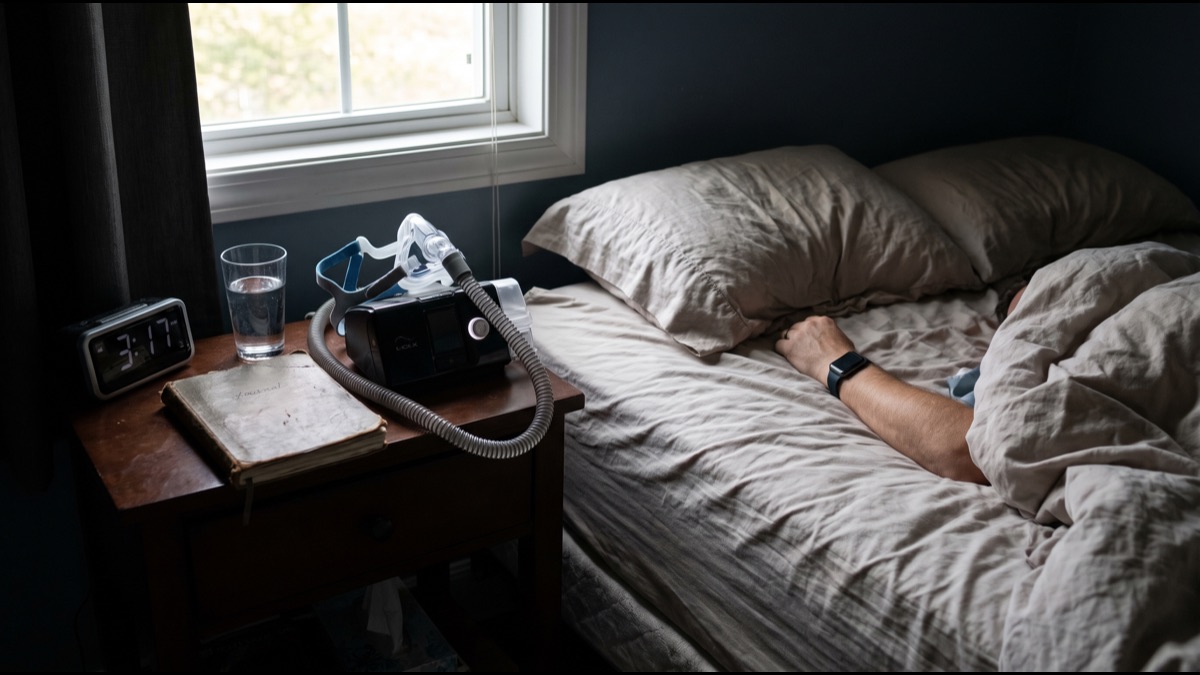
Continuous positive airway pressure, or CPAP, remains the most effective and most extensively studied treatment. The device delivers a steady stream of pressurized air through a mask worn during sleep, which acts as a pneumatic splint holding the airway open so it cannot collapse in the first place.
When used consistently, CPAP eliminates or dramatically reduces the number of apnea events per night, which in turn restores normal blood oxygen levels, eliminates the repeated stress-hormone surges, and allows the brain to progress through uninterrupted sleep cycles rather than being repeatedly jolted awake.
The main obstacle to CPAP's effectiveness is not the technology itself but consistent nightly use, since a mask that is uncomfortable or inconvenient is frequently abandoned, which is why newer, quieter, and more comfortable mask designs have become a genuine focus of ongoing device development.
What Other Treatments Actually Do and Do Not Fix
For people who cannot tolerate CPAP, custom-fitted oral appliances that gently reposition the jaw forward can hold the airway more open during sleep, and they are genuinely effective for many people with mild to moderate obstructive apnea, though generally less effective than CPAP for severe cases.
Positional therapy, which simply prevents a person from sleeping on their back, can meaningfully help people whose apnea is significantly worse in that position, while surgical options ranging from tonsil removal to more extensive airway reconstruction are reserved for specific anatomical causes that other treatments cannot address.
Weight loss frequently reduces apnea severity when excess tissue around the airway is a contributing factor, but it does not reliably cure the condition on its own, particularly when jaw structure or airway anatomy independently narrows the passage regardless of body weight.
Why So Many Cases Go Undiagnosed for Years
Sleep apnea is widely estimated to be substantially underdiagnosed, in part because the person experiencing it is asleep and therefore unaware of the breathing pauses themselves, relying entirely on a bed partner or, increasingly, a wearable device to first notice something is wrong.
Symptoms like fatigue, irritability, and difficulty concentrating are also easy to attribute to stress, poor diet, or simply getting older, delaying the connection to a specific, treatable breathing disorder, sometimes for a decade or more after symptoms first began interfering with daily functioning.
Public awareness campaigns and the growing availability of consumer sleep-tracking devices have started to close this gap somewhat, prompting more people to seek a formal sleep study after noticing irregular breathing patterns flagged by their own wearable technology.
What Treating Sleep Apnea Actually Changes Long Term
Effective treatment does more than improve how a person feels the next morning. Clinical follow-up studies show that consistent CPAP use is associated with meaningful reductions in blood pressure, improved blood sugar control, and lower rates of the cardiovascular complications most strongly linked to untreated apnea.
Cognitive symptoms including daytime sleepiness, concentration difficulty, and mood disturbance also tend to improve substantially once normal, uninterrupted sleep architecture is restored, often within weeks of starting effective therapy rather than requiring months of adjustment.
Understanding sleep apnea as a genuine, measurable strain on the heart, brain, and metabolism rather than simply a loud nighttime nuisance is what has pushed the condition from something joked about toward something taken seriously as a preventable driver of chronic disease, and recognising the pattern early is what makes that prevention possible.
Sources
- Wikipedia — overview of sleep apnea types, causes, and treatment
- National Heart, Lung, and Blood Institute (NIH) — clinical information on sleep apnea and cardiovascular risk
- World Health Organization — global data on sleep disorders and chronic disease risk factors
- American Academy of Sleep Medicine — clinical guidelines for diagnosis and treatment of sleep-disordered breathing
- U.S. Centers for Disease Control and Prevention — public health data on sleep health and drowsy driving risk
FAQ
Is snoring the same thing as sleep apnea?
No — snoring is just noisy airflow through a partially narrowed airway, while sleep apnea means the airway closes enough to actually stop breathing for ten seconds or more, followed by a drop in blood oxygen and a brief arousal from sleep.
Can sleep apnea genuinely damage the heart?
Yes — repeated oxygen drops and the surges in blood pressure that accompany each breathing pause are strongly linked to hypertension, irregular heart rhythms, and higher long-term cardiovascular risk if the condition goes untreated.
Does losing weight cure sleep apnea?
Weight loss often reduces the severity of obstructive sleep apnea because less soft tissue narrows the airway, but it does not always eliminate it entirely, especially when jaw or airway anatomy also plays a role.
How is sleep apnea actually diagnosed?
The standard method is a sleep study, either in a lab or at home, called polysomnography, which tracks breathing, oxygen levels, brain activity, and how often breathing pauses occur per hour of sleep.
Is a CPAP machine the only treatment?
No — CPAP is the most effective and most studied option, but oral mandibular devices, positional therapy, and in some cases surgery or weight loss can also reduce or resolve mild to moderate obstructive sleep apnea.
About the Author
We reference Wikipedia, the National Heart, Lung, and Blood Institute, the World Health Organization, the American Academy of Sleep Medicine, and the U.S. Centers for Disease Control and Prevention to explain the background and current understanding of this topic.
Loved This Article?
Share it on WhatsApp → Share it on WhatsApp
Get more guides in your inbox — Subscribe to our newsletter for weekly surprising stories from Egypt, Saudi Arabia, Dubai, and beyond.