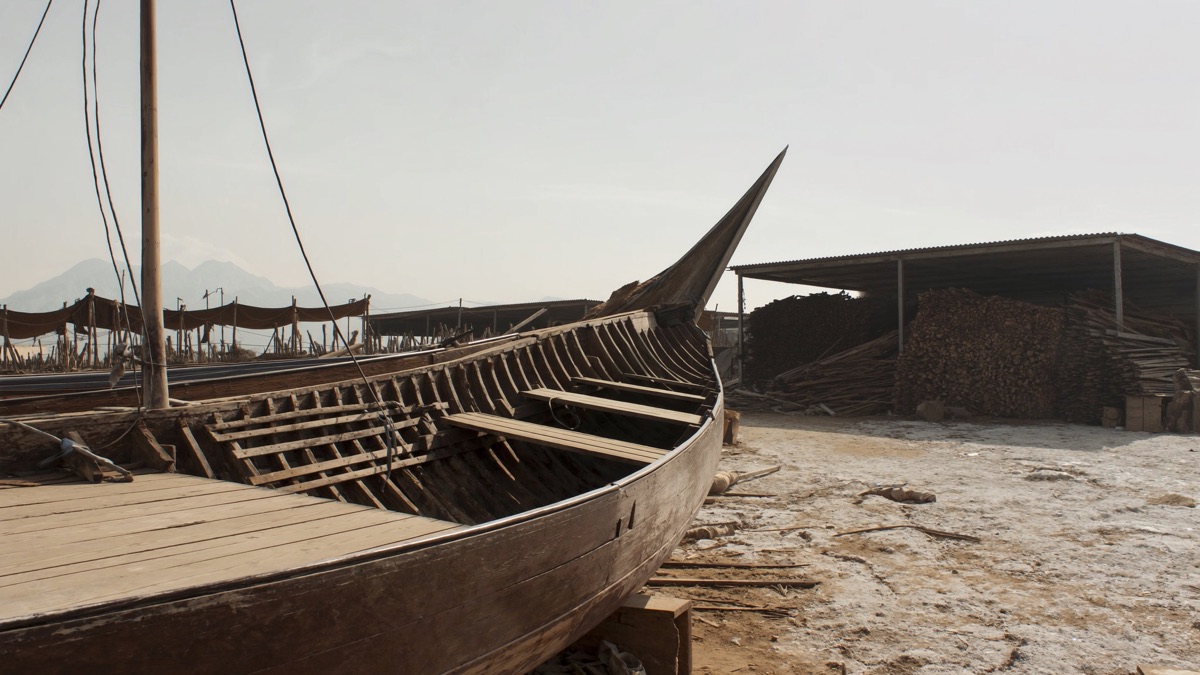
Traditional Gulf dhows were built almost entirely without written blueprints, relying instead on a master shipwright's memorized proportions and experience-based judgment, a knowledge system passed down through direct apprenticeship rather than formal engineering documentation. The oldest dhow-building traditions did not even use metal nails to join hull planks, instead stitching planks together with cord or, in later techniques, joining them with wooden pegs, methods specifically suited to the tools, materials, and long-distance trading conditions available in the pre-industrial Gulf and Indian Ocean world.
Understanding these traditional construction methods, and why they gradually gave way to different techniques over centuries, explains both the dhow's distinctive appearance and why it remains such a significant cultural symbol across the Gulf region today, even as most active dhows now serve tourism and ceremonial purposes rather than the long-distance trade they were originally built for.
Building Without Blueprints: A Memorized Craft
Master shipwrights, traditionally trained through years of hands-on apprenticeship under an experienced builder rather than formal schooling, carried a dhow's essential proportions and structural knowledge in memory and practiced skill rather than on paper.
This oral, apprenticeship-based knowledge transfer meant that regional variations in dhow design and construction technique developed and persisted distinctly across different Gulf ports and shipbuilding communities, each carrying its own specific inherited building tradition passed master to apprentice over generations.
The Stitched-Plank Technique of the Oldest Dhows
The earliest documented dhow-building tradition joined hull planks together not with nails but by literally stitching them, drilling holes along plank edges and lashing them together with cord made from coconut fiber, coir, a technique that produced a genuinely flexible hull structure.
This flexibility was not a structural weakness but an intentional feature for the specific sailing conditions dhows operated in, allowing the hull to flex slightly against wave impact rather than remaining rigidly stiff, which reduced stress concentration at any single structural joint.
Why Wooden Pegs Eventually Replaced Stitching
Over time, many dhow-building traditions transitioned from stitched construction to a technique using wooden pegs, called treenails, driven through drilled holes to join planks, a method offering different structural characteristics and generally considered more durable for larger vessels than cord stitching alone.
This shift reflects a genuine technical evolution in shipbuilding practice across generations, with different regions and specific dhow types adopting the treenail technique at different points, meaning stitched and pegged construction methods coexisted across the wider region for a considerable historical period rather than one technique abruptly replacing the other everywhere at once.
Selecting the Right Timber
Traditional dhow builders relied heavily on imported timber, particularly teak from India and parts of Southeast Asia, valued specifically for its natural resistance to rot and marine wood-boring organisms, since local Gulf timber sources were generally less suited to long-term saltwater exposure.
This dependence on imported timber meant dhow construction was directly tied into the same long-distance maritime trade networks the finished dhows themselves would go on to sail, a genuine interdependence between the shipbuilding industry and the broader trade economy it served.
The Distinctive Lateen Sail and Why It Suited Monsoon Sailing
Dhows are most visually distinguished by their lateen sail, a triangular sail rigged at an angle along a long yard, a design that allows a vessel to sail meaningfully closer into the wind than a simple square sail rig can manage.
This sailing capability mattered enormously for dhow trading routes across the Indian Ocean, which depended heavily on predictable seasonal monsoon wind patterns, since a lateen rig gave sailors more flexibility to work effectively with and against those specific seasonal wind conditions during the voyage.
The Distinctive Hull Shape and Its Trading Purpose
Traditional dhow hulls typically feature a sharply pointed bow, a broader midsection for cargo capacity, and a distinctively raised, often ornately decorated stern, a shape balancing efficient sailing performance against the practical need to carry substantial cargo across long ocean trading voyages.
Different dhow types, including the larger boom and the smaller sambuk, varied meaningfully in exact proportions and hull shape depending on their specific intended cargo capacity and trading route, meaning "dhow" genuinely describes a family of related vessel designs rather than one single standardized boat type.
How Caulking Kept the Hull Watertight
Gaps between hull planks were traditionally sealed using a caulking compound often made from a mixture of animal fat and lime, packed into the seams to prevent water intrusion, a maintenance process requiring periodic reapplication throughout a dhow's working life.
This caulking requirement meant dhow maintenance was a continuous, hands-on process rather than a one-time construction step, with experienced crews and shipwrights regularly inspecting and re-sealing seams, particularly after long voyages exposed the hull to extended saltwater stress.
Why Pearl Diving and Trade Both Depended on the Dhow
Beyond long-distance trade, dhows served as the primary vessel for the Gulf's historically significant pearl diving industry, carrying diving crews out to pearl banks for extended periods and requiring specific onboard space and provisions distinct from a purely cargo-focused trading dhow's layout.
This dual role, supporting both long-distance trade and the regional pearl industry, meant dhow design and construction had to accommodate genuinely different operational needs depending on a specific vessel's intended primary purpose.
Why Modern Materials Eventually Changed Construction
As motorized engines and modern materials like fiberglass became widely available through the twentieth century, dhow construction gradually shifted away from purely traditional wooden hull-building methods, with many contemporary vessels adopting motorized propulsion and modern hull materials while retaining the traditional dhow's distinctive overall silhouette.
This transition reflects a broader pattern common across traditional craft industries worldwide: functional modernization for practical operational reasons, while deliberately preserving visually and culturally significant design elements that carry genuine heritage value beyond pure function.
Why Dhow-Building Knowledge Is Now Actively Preserved
Because traditional dhow-building knowledge was historically transmitted almost entirely through direct apprenticeship rather than written documentation, and because commercial demand for traditionally built wooden dhows has declined sharply with modern shipping alternatives, several Gulf governments and cultural institutions now actively support dedicated dhow-building heritage programs specifically to prevent the traditional craft knowledge from disappearing entirely.
These preservation efforts generally combine documenting surviving master shipwrights' knowledge, formally training new apprentices in traditional techniques, and building ceremonial or heritage-purpose dhows specifically to keep the practical craft skill genuinely alive rather than existing only in historical record.
How Master Shipwrights Actually Read Timber Without Instruments
A master dhow builder, known regionally as an ustad, traditionally worked without formal blueprints or engineering calculations, relying instead on decades of accumulated experience to judge a given timber plank's suitability by eye, by the sound it made when struck, and by the way it flexed under hand pressure, a set of judgment calls that modern naval architects would today back up with material-science testing but that a skilled ustad performed reliably through pure trained intuition.
This meant the entire hull shape of a large trading dhow, sometimes exceeding twenty meters in length, existed only in the master builder's mind and in a set of proportional ratios passed down through his own apprenticeship, rather than on paper, which is why so much of this knowledge was genuinely at risk of vanishing once a generation of master builders retired without training enough successors.
Apprentices typically spent years in a subordinate role, first learning simple tasks like timber selection and basic tool maintenance, before being trusted with structurally significant work like keel-laying or plank-fitting, a slow progression that mirrored guild apprenticeship systems found in traditional shipbuilding cultures worldwide, from Mediterranean galley-builders to Southeast Asian junk builders.
The Different Dhow Types and What Each Was Actually Built For
"Dhow" is really an umbrella term covering several genuinely distinct hull designs, each optimized for a different specific purpose rather than one single universal boat shape, a distinction often lost on casual observers but well understood by anyone who actually worked the Gulf's traditional maritime trade.
The boom, among the largest traditional dhow types, was built specifically for long-distance ocean trading voyages, historically carrying goods between Gulf ports and destinations as far as East Africa and the Indian subcontinent, and needed a hull design prioritizing cargo capacity and open-ocean seaworthiness over speed or maneuverability in tight coastal waters.
The sambuk, smaller and generally faster than the boom, was more commonly used for coastal trading and fishing, its shallower draft and more maneuverable hull suited to navigating closer to shore and into shallower harbors that a large ocean-going boom simply could not safely enter.
The shu'ai, smaller still, was frequently the vessel of choice for pearl diving expeditions specifically, a role that demanded a hull capable of carrying a diving crew and their equipment while remaining maneuverable enough to reposition repeatedly over productive pearl beds throughout a single day's work, a genuinely different set of design priorities from either long-distance trading vessel.
Why the Gulf's Geography Actually Shaped Dhow Design
The specific hull and rigging choices that came to define the traditional Gulf dhow were not arbitrary aesthetic preferences, they were direct practical responses to the specific sailing conditions the Gulf and the wider Indian Ocean trading region actually presented, from monsoon wind patterns to the depth and character of regional harbors.
The predictable seasonal reversal of the Indian Ocean monsoon winds, blowing from the southwest for part of the year and the northeast for the rest, effectively created a natural round-trip sailing schedule for trading dhows making the long voyage to East Africa or India and back, and the lateen sail rig's efficiency sailing close to the wind was specifically what let dhow captains make productive use of this seasonal pattern rather than being stranded waiting for a following wind.
Shallow coastal waters and numerous coral reefs throughout much of the Gulf also favored a hull design with a relatively shallow draft compared to European deep-keeled sailing ships of the same era, a design choice that let dhows safely navigate closer to shore and into smaller harbors that would have grounded a deeper-hulled foreign vessel, reinforcing the dhow's practical advantage for the specific waters it was built to sail.
The Ceremonial Role Dhows Still Play in Gulf Culture Today
Beyond heritage-preservation programs, the traditional dhow retains a genuinely active ceremonial and competitive role in contemporary Gulf life, most visibly through organized dhow sailing races held in the UAE, Qatar, and elsewhere, events that draw large crowds and substantial prize money while keeping traditional sailing and boat-handling skills practically exercised rather than only theoretically documented.
National Day and other major cultural celebrations across the Gulf states frequently feature traditional dhow processions or displays, a deliberate public statement connecting the region's rapid modern development to its pre-oil maritime and trading heritage, and one reason government cultural authorities treat dhow-building knowledge as worth active state investment rather than leaving its preservation purely to private enthusiasts.
Several Gulf museums, including dedicated maritime heritage museums in the UAE and Kuwait, now display restored or newly built traditional dhows as centerpiece exhibits, often alongside demonstrations of the specific hand tools and techniques a traditional shipwright would have used, giving visitors a tangible physical connection to a craft tradition that would otherwise exist only in historical photographs and written accounts.
Tourism operators in several Gulf coastal cities also now offer traditional dhow cruises, typically aboard vessels built to the traditional hull design but fitted with modern engines and passenger amenities, a commercial adaptation that keeps the distinctive dhow silhouette visibly present on the water even as the underlying vessel serves a fundamentally different modern purpose from the trading and pearling voyages the design was originally built for.
Why the Dhow Remains a Recognized Regional Symbol
The dhow's silhouette appears widely across Gulf visual culture well beyond the water itself, from currency and postage stamps in several Gulf states to logos for national airlines, cultural institutions, and government bodies, a level of symbolic adoption that reflects genuine popular recognition of the dhow as a defining regional icon rather than a purely governmental branding choice imposed from above.
This continued symbolic prominence helps explain why dhow-building preservation efforts receive sustained public and institutional support even as the vessel's original commercial trading and pearling functions have almost entirely disappeared, the craft persists culturally because the dhow itself has become inseparable from how the Gulf region represents its own maritime identity to both residents and visitors.
Several Gulf airports, ports, and waterfront developments now incorporate large-scale dhow sculptures or architectural references into their public spaces, permanent physical reminders positioned specifically where large numbers of both residents and international visitors pass through daily, ensuring the vessel's silhouette stays visible even to people who never once step aboard a working example, a quiet but deliberate form of cultural continuity built directly into everyday urban infrastructure, rather than confined solely to museums.
Sources
- UNESCO — cultural heritage documentation on traditional dhow-building knowledge
- Wikipedia — overview of dhow types, construction methods, and sailing rig design
- National Museum of Qatar — exhibits and research on Gulf maritime and dhow-building heritage
FAQ
Did traditional dhow builders use written blueprints?
No; master shipwrights relied on memorized proportions and experience-based judgment passed down through direct apprenticeship rather than formal engineering documentation.
Did the oldest dhows use metal nails to join planks?
No; the earliest tradition stitched planks together with coconut-fiber cord, a technique later joined or replaced in many regions by wooden pegs called treenails.
Why does the lateen sail matter for dhow design?
Its triangular shape allows sailing meaningfully closer into the wind than a simple square sail, which was especially valuable for working with predictable Indian Ocean monsoon wind patterns.
Why did dhow builders rely on imported timber like teak?
Teak resists rot and marine wood-boring organisms better than most local Gulf timber, making it more suitable for long-term saltwater exposure.
Are all dhows the same size and shape?
No; different dhow types like the larger boom and smaller sambuk varied in proportions and hull shape depending on intended cargo capacity and trading route.
Is traditional dhow-building knowledge still being taught today?
Yes; several Gulf governments and cultural institutions actively support heritage programs training new apprentices in traditional techniques, since the knowledge was historically passed down only through direct apprenticeship.
About the Author
We reference Wikipedia and other authoritative sources to explain the background and current understanding of this topic.
Loved This Article?
Share it on WhatsApp → Share it on WhatsApp
Get more guides in your inbox — Subscribe to our newsletter for weekly surprising stories from Egypt, Saudi Arabia, Dubai, and beyond.