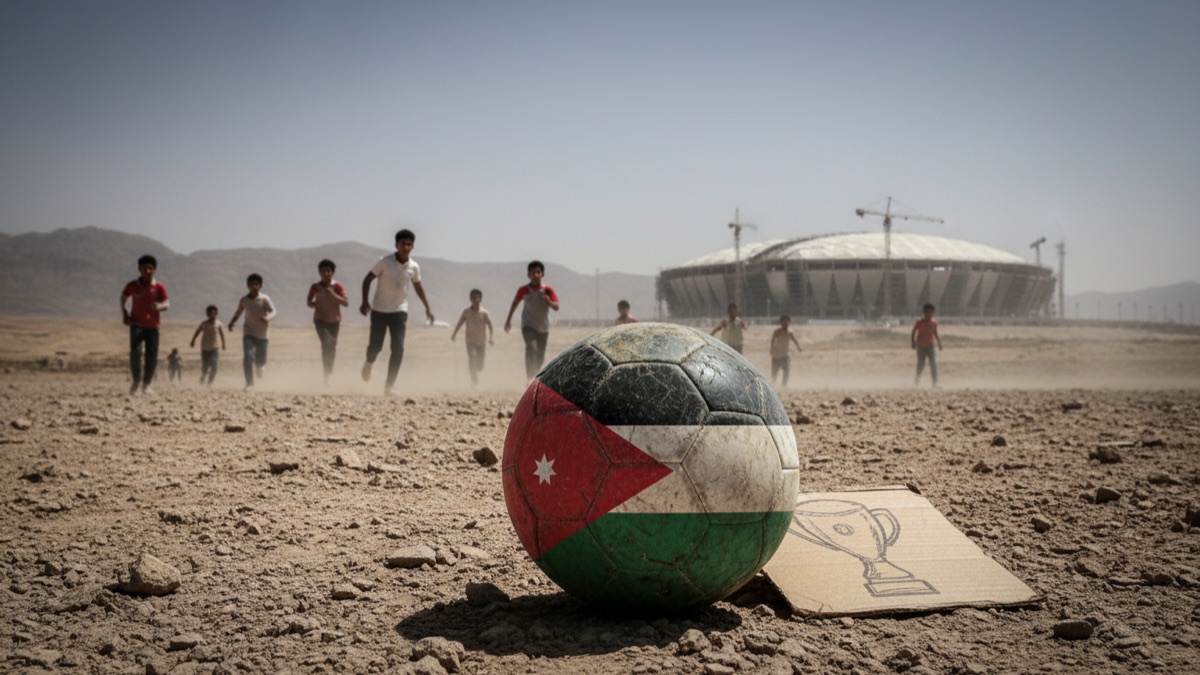
Jordan often thrive when external expectations are modest and internal belief is strong. That makes World Cup 2026 a fascinating stage for them. They are not burdened by the same global assumptions as some larger football nations, but they do carry a growing sense that they belong in serious international conversations. The 2023 Asian Cup run, where they reached the final before losing to Qatar, demonstrated that Jordan can compete with the continent's best and validated years of steady development in Jordanian football.
The key for Jordan is turning underdog status into strategic freedom. Teams like this can be dangerous when they stay organized, embrace pressure-free moments, and play with brave simplicity. The 2026 World Cup represents Jordan's first appearance on the global stage, and their qualification through the Asian confederation's expanding slot allocation reflects both their improvement and the growing opportunities for Asian teams in the expanded tournament format. How they handle the transition from Asian to global competition will be one of the tournament's most intriguing narratives.
Key Takeaways
- Jordan can benefit from entering matches with less external pressure.
- Tactical discipline will be their greatest asset.
- They must be efficient because chance volume may be limited.
- Emotional control can turn close games in their favor.
- Jordan's World Cup story is about legitimacy as much as results.
- The 2023 Asian Cup final run proved they can compete with elite Asian teams.
Context and Overview of Jordan's 2026 Position
Jordan's football growth has been built on persistence, smart organization, and the ability to maximize collective effort. At the World Cup level, that identity must become even sharper. There is little room for wasted possession or loose defensive phases. The 2023 Asian Cup demonstrated Jordan's capacity for tactical discipline and emotional resilience, qualities that will be essential against stronger opponents in North America.
Their best chance lies in keeping matches compact, trusting the collective, and avoiding emotional overreach. Jordan's qualification campaign was characterized by defensive solidity and efficient use of limited chances. They conceded fewer goals than many teams in their qualifying group and demonstrated the ability to grind out results against technically superior opponents. This approach must be refined for World Cup level, where the quality of opposition is significantly higher than in Asian qualifying.
Jordan's players will experience the World Cup for the first time as a nation, and the psychological challenge of performing on the global stage cannot be underestimated. The experience of the 2023 Asian Cup, played in front of large crowds and intense media scrutiny, provides valuable preparation. However, the World Cup represents a different order of magnitude, and Jordan must ensure that the occasion does not overwhelm their tactical clarity.
Historical Context: Jordan's Rise in Asian Football
Jordan's football history is relatively modest compared to some of their Arab counterparts. They have never previously qualified for a World Cup, and their continental achievements have been limited until recent years. However, the 2004 Asian Cup, where they reached the quarterfinals, marked an early indication of Jordan's potential. The team impressed with their tactical discipline and ability to compete with more established Asian football nations, though they ultimately fell short of the semifinals.
The 2019 Asian Cup saw Jordan reach the Round of 16, defeating Australia in the group stage in one of the tournament's biggest upsets. That victory demonstrated that Jordan could not only compete with but defeat the continent's elite. The team's defensive organization and counter-attacking efficiency were evident, even if they eventually lost to Vietnam in the knockout stage. The experience gained from that tournament informed the even more successful 2023 campaign.
The 2023 Asian Cup in Qatar represented Jordan's greatest football achievement. Reaching the final after defeating South Korea in the semifinals confirmed Jordan's status as one of Asia's emerging forces. Although they lost to Qatar in the final, the tournament demonstrated Jordan's tactical maturity, defensive resilience, and ability to perform under pressure. For a nation of Jordan's size and football history, this achievement was remarkable and provided the platform for their subsequent World Cup qualification.
Breakdown of Jordan's Most Important Qualities
Team Cohesion
Jordan often look strongest when the shape feels synchronized and responsibilities are clear. The team's collective understanding is their greatest asset. Players know their roles and trust their teammates to fulfill theirs, creating a defensive structure that is more difficult to break down than the sum of its individual parts. This cohesion is the product of years of work with a relatively stable squad.
Competitive Mindset
Underdog teams often need emotional stability more than flashy football. Jordan can offer that. The players have demonstrated in qualifying and the Asian Cup that they can remain focused and disciplined under pressure. Their ability to absorb the emotional weight of big matches without succumbing to anxiety or frustration is a significant advantage.
Efficient Attacking Moments
They may not create many chances, so their conversion rate becomes central. Jordan's attacking approach relies on creating high-quality opportunities from limited possession. Every chance must be taken seriously, and the forwards must maintain composure in the rare moments when they find themselves in goal-scoring positions. Clinical finishing is not a luxury but a necessity.
Set-Piece Relevance
In closely balanced games, dead-ball situations can become their best route. Jordan's set-piece routines are well-organized, and their aerial presence provides genuine goal threat. Against stronger opponents who may dominate open play, corners and free-kicks could represent Jordan's most significant opportunity to score. Defensive set pieces are equally important, requiring concentration and organization.
Tactical Analysis: Formation and Approach
Jordan typically operate in a 4-4-2 or 4-2-3-1 formation that prioritizes defensive organization. The back four is protected by a double pivot in midfield, with the wide players expected to contribute defensively. The full-backs are generally conservative, maintaining their positions to protect the defensive line rather than pushing forward to support attacks. This approach acknowledges Jordan's limitations in possession and focuses on denying opponents space in dangerous areas.
In attack, Jordan rely on quick transitions and direct play. The midfielders are encouraged to play forward passes early, catching opponents before they reorganize. The wide players provide the primary attacking threat, using their pace to stretch defenses and deliver crosses into the box. The two forwards, when playing a 4-4-2, work together to create space and hold up the ball, bringing midfielders into the attack. This direct approach is more effective than attempting to build slowly against elite opponents.
Set pieces represent a significant opportunity for Jordan. The team's aerial presence and well-organized routines can produce goals from dead-ball situations. In matches where open-play chances are limited, corners and free-kicks may provide the best route to scoring. Defensive set pieces are equally important, with the team needing to maintain concentration and organization during these high-pressure moments. The coaching staff have reportedly dedicated significant training time to set-piece preparation.
The psychological aspect of Jordan's approach is crucial. As underdogs, they must embrace their role without becoming defensive or passive. The team must maintain the belief that they can compete with and defeat stronger opponents, a mindset that was evident in their 2023 Asian Cup run. This balance between defensive discipline and attacking ambition is difficult to maintain but essential for tournament success.
Key Players to Watch
Musa Al-Taamari (Montpellier): Jordan's most talented player and the creative force of the team. The winger's dribbling ability, pace, and vision make him the player most likely to unlock organized defenses. Al-Taamari's performances in the 2023 Asian Cup demonstrated his capacity to perform under pressure, and his European experience provides valuable tactical understanding. If Jordan are to create goals against stronger opponents, Al-Taamari will likely be involved.
Yazan Al-Naimat (Al-Ahli): The forward provides the goal-scoring threat that Jordan need from limited opportunities. Al-Naimat's movement, finishing ability, and aerial presence make him a constant danger in the penalty area. His partnership with Al-Taamari is the most important attacking relationship in the squad, and their combination play could produce Jordan's best moments in the tournament.
Ihsan Haddad (Al-Wehdat): The defender provides leadership and organizational skills at the back. Haddad's ability to read the game, maintain defensive shape, and communicate with his teammates is crucial to Jordan's defensive success. As captain, his leadership extends beyond tactical organization to emotional management, helping the team maintain composure in difficult moments.
Nizar Al-Rashdan (Al-Faisaly): The midfielder anchors the team with his tackling, positioning, and distribution. Al-Rashdan's ability to break up opposition attacks and initiate counter-attacking moves makes him indispensable. His presence allows the more creative players to focus on attacking without excessive defensive responsibilities.
Yazan Al-Arab (Al-Wehdat): The center-back provides aerial presence and defensive leadership. His heading ability from set pieces offers an additional goal threat, while his organizational skills help maintain the compact defensive shape that defines Jordan's approach. Against physically imposing opponents, Al-Arab's strength and positioning will be essential.
Pros & Cons of Jordan's World Cup Route
Pros
- Lower external pressure than more established football nations
- Clear team-first identity with collective defensive organization
- Strong motivation and national pride from historic qualification
- Potential to make matches uncomfortable for favorites through discipline
- Proven ability to perform as underdogs in the 2023 Asian Cup
- Cohesive squad with established tactical understanding
Cons
- Limited margin for attacking waste with few goal-scoring opportunities
- Less room to recover after conceding first due to defensive approach
- May struggle if forced into long possession phases by opponents
- Depth can become an issue in physically demanding matches
- Inexperience at World Cup level could affect performance under pressure
- Over-reliance on Al-Taamari for creative inspiration
How To Evaluate Jordan's Chances
Check Defensive Distances
If the back line and midfield stay compact, Jordan are usually alive in the game. The vertical distance between defensive lines is the key indicator of Jordan's tactical organization. When these lines are close, the team is difficult to break down. When they stretch, space appears between the lines for opponents to exploit.
Notice Their Confidence on the Ball
Simple, clean possession is a good sign, even if they are not dominating. Jordan do not need to dominate the ball to be competitive, but they must be composed when they have it. Panicked clearances and rushed passes are warning signs that the team is feeling overwhelmed. Calm, purposeful passing, even in small quantities, indicates confidence and tactical clarity.
Watch Set-Piece Delivery
That can be a hidden source of value. Jordan's set-piece routines are well-rehearsed, and their delivery quality can be decisive in tight matches. Monitor whether they create chances from corners and free-kicks, and whether they maintain defensive organization during opponent set pieces. These moments can be the difference between a point and a defeat.
Judge Their Patience
Jordan are more likely to succeed when they resist chasing the game emotionally. If Jordan concede early, their natural instinct may be to push forward in search of an equalizer. However, abandoning their defensive structure to chase the game is precisely what stronger opponents want. The team's ability to maintain patience and stick to their game plan, even when losing, is a crucial test of maturity.
Assess Al-Taamari's Influence
Jordan's most talented player will be the focus of opponent attention. Watch how effectively he is marked and whether Jordan can create alternative attacking routes when he is neutralized. The team's ability to function as a collective when their star is tightly contained will determine their tactical flexibility.
FAQs
What is Jordan's main strength?
Collective discipline and a willingness to play for the team rather than individual headlines. Jordan's success is built on defensive organization, tactical cohesion, and the absence of ego-driven play. Every player understands their role and contributes to the collective effort.
Why could Jordan be tricky opponents?
Because organized underdogs can punish impatience from stronger teams. Jordan's defensive structure makes them difficult to break down, and their counter-attacking threat means that opponents who overcommit to attack risk being caught on the break. Many favorites have struggled against teams with Jordan's profile.
What makes their World Cup appearance significant?
It strengthens the case that Arab football depth is growing beyond the most established names. Jordan's qualification demonstrates that smaller Arab nations can develop competitive football programs through sustained investment, good coaching, and collective commitment. It is a victory for the principle that football success is not limited to traditional powers.
What would success look like?
Competitive displays, tactical maturity, and any result that proves they belong at this level. Jordan do not need to reach the knockout stage to make their tournament successful. Earning a point, running a favorite close, or demonstrating that they can compete tactically with the world's best would be genuine achievements for a first-time qualifier.
Who are Jordan's key players to watch in 2026?
Musa Al-Taamari, Yazan Al-Naimat, and Ihsan Haddad provide the blend of attacking creativity, goal-scoring instinct, and defensive leadership that defines Jordan's approach. These core players, supported by a cohesive collective, are the foundation of Jordan's World Cup hopes.
Related Resources
- Arab teams at World Cup 2026
- Iraq's prospects at World Cup 2026
- Qatar's route to World Cup 2026
- Jordan's rise in international football
- World Cup underdogs with strong defensive identity
- Arab teams outside the traditional spotlight
Conclusion
Jordan may not enter World Cup 2026 as one of the headlines, but that can work in their favor. If they stay disciplined, maximize limited chances, and keep matches emotionally balanced, they can turn underdog energy into something far more valuable: credibility, respect, and potentially results. The 2023 Asian Cup final proved that Jordan can compete with the continent's best; the World Cup offers an opportunity to demonstrate that they can do so on the global stage. Their first World Cup appearance is already a historic achievement, but the team will be motivated by more than participation. Jordan have demonstrated that they are a team of genuine quality, and their 2026 campaign could be the beginning of a new era in Jordanian football. If they maintain the tactical discipline and collective spirit that brought them to North America, the Chivalrous Ones could surprise the world.
Sources
This article was reviewed against current tournament context and official competition resources.