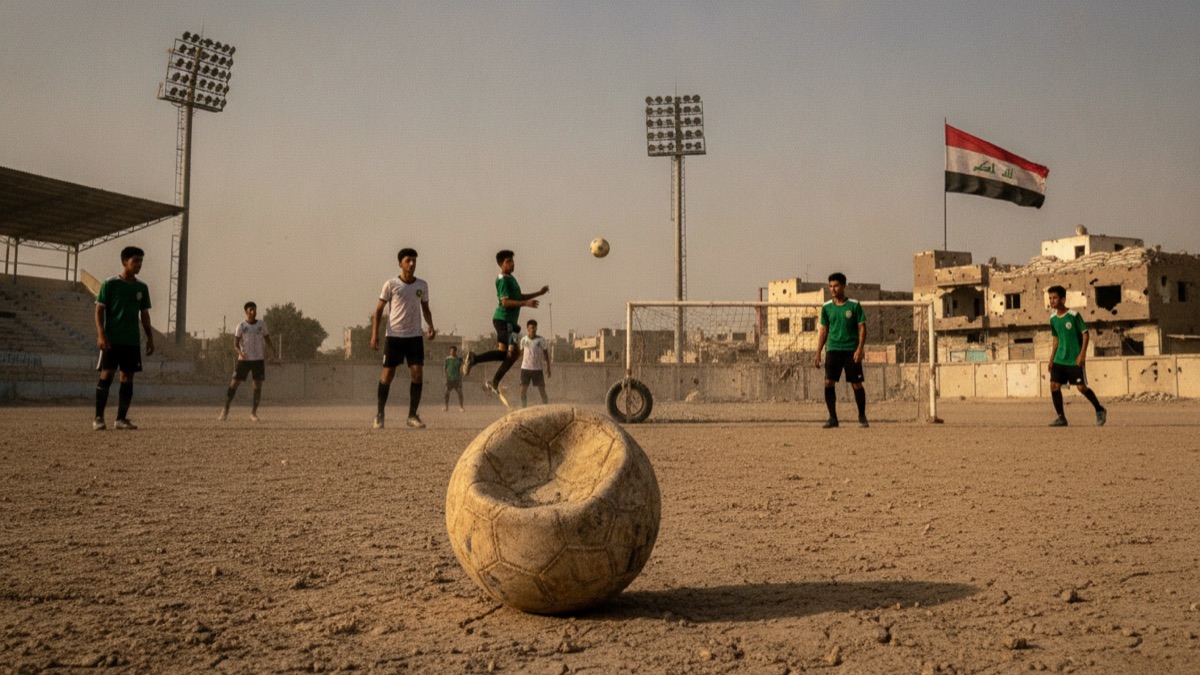
Iraq's presence at World Cup 2026 carries emotional meaning that goes well beyond tactics. The national team symbolizes resilience, pride, and the possibility of performing on the biggest stage despite structural obstacles and heavy external pressure. But symbolism alone does not win games. The Lions of Mesopotamia must translate their inspirational journey into tangible results on the pitch, combining the fighting spirit that defines their identity with the tactical discipline required for tournament success.
For Iraq to compete seriously, the team must play with bravery that is organized rather than reckless. That means knowing when to press, when to protect space, and how to make possession matter. Their qualification path through the Asian confederation was not straightforward, but the achievement of reaching North America represents a significant milestone for a nation whose football has been shaped by decades of adversity. The challenge now is to ensure that their World Cup appearance is remembered for competitive performances rather than merely ceremonial participation.
Key Takeaways
- Iraq's campaign carries huge emotional value in the Arab world.
- Defensive shape and mental composure are essential to staying competitive.
- The team must avoid confusing bravery with unnecessary risk.
- Efficient use of limited chances could define the tournament.
- Iraq can gain respect quickly with disciplined performances.
- The 2026 qualification represents a new chapter in Iraqi football history.
Context and Overview of Iraq's World Cup Story
Iraq arrive with a reputation for passion and unpredictability. In tournaments, those qualities must be organized. Teams that survive group phases usually understand their limits, manage space carefully, and make high-pressure moments simpler rather than more dramatic. Iraq's greatest historical successes have come when they embraced their underdog status with tactical intelligence, not merely emotional intensity. The 2007 Asian Cup triumph remains the template for what Iraqi football can achieve when preparation and passion align.
Iraq's best route forward is not imitation of stronger nations. It is clarity: compact defending, direct progressions, and emotional composure. The current squad features a blend of experienced veterans and emerging talents from the Iraqi diaspora, including players developed in European and Middle Eastern leagues. This diversity brings different perspectives and tactical understandings, but it also requires time to develop the cohesive understanding that tournament football demands. The coaching staff have emphasized a simple, repeatable game plan that every player can execute under pressure.
The qualification campaign revealed both Iraq's strengths and vulnerabilities. Defensive organization was generally solid, with the team conceding fewer goals than many Asian qualifiers. However, chance creation remained inconsistent, and the team sometimes struggled to maintain possession against technically superior opponents. The transition from qualifying football to World Cup level represents a significant jump in quality, and Iraq must be realistic about the challenges they face while remaining confident in their capacity to compete.
Historical Context: Iraq's Football Journey
Iraq's football history is inextricably linked to the nation's broader story. The golden generation of the 1980s, featuring players like Ahmed Radhi and Hussein Saeed, established Iraq as a competitive force in Asian football. Radhi's goal against Belgium in the 1986 World Cup qualifying campaign remains one of the most celebrated moments in Iraqi football history, even though the team ultimately failed to reach the tournament. The years of conflict that followed devastated Iraqi football infrastructure, making the achievements of subsequent generations even more remarkable.
The 2007 Asian Cup victory stands as one of international football's most extraordinary triumphs. Led by Brazilian coach Jorvan Vieira, Iraq defeated Saudi Arabia 1-0 in the final, with Younis Mahmoun scoring the decisive goal. The victory was achieved against a backdrop of national turmoil, with players from different ethnic and sectarian backgrounds uniting under the Iraqi flag. The emotional celebration, as captain Younis Mahmoun lifted the trophy, transcended sport and became a symbol of national unity. That triumph proved that Iraqi football could achieve the extraordinary when collective purpose replaced individual differences.
Since 2007, Iraq has experienced cycles of promise and disappointment. Qualification for the 2026 World Cup represents the culmination of years of steady improvement in Asian football. The team's participation in North America is not merely a sporting achievement but a statement of resilience. For a nation that has endured decades of conflict, displacement, and institutional challenges, reaching the World Cup demonstrates the enduring power of football to inspire and unite. The 2026 tournament offers Iraq the opportunity to write a new chapter in this remarkable story.
Breakdown of Iraq's Competitive Path
Compact Structure
Iraq are most stable when their lines stay connected and central spaces remain protected. Defensive organization is the foundation upon which any Iraqi success must be built. The team has historically performed best when operating as a cohesive unit, with every player understanding their defensive responsibilities. Against stronger opponents, a low block with quick counter-attacking outlets is the most realistic path to competitiveness.
Direct Threat
Fast, purposeful attacks often suit them better than slow, decorative possession. Iraq's technical players can combine quickly in the final third, but the team lacks the consistent quality to build slowly against elite defenses. Direct passing into the channels, utilizing the pace of their forwards, and early crosses from wide areas are more likely to produce chances than intricate passing sequences.
Mental Strength
This team often carries deep emotional energy. Turning that into concentration is the real test. The players understand the symbolic weight of their participation, and this can be either a motivating force or a debilitating burden. Managing emotions, maintaining focus for 90 minutes, and avoiding the red mist that has occasionally cost Iraqi teams in the past are essential tournament requirements.
Collective Work Rate
Without consistent collective effort, the margin for error becomes too small. Every player must contribute defensively, and the team must maintain its shape regardless of the scoreline. Iraq cannot afford passengers in tournament football. The work rate of the attacking players in pressing and tracking back is as important as the defensive line's organization.
Tactical Analysis: Formation and Approach
Iraq typically operate in a 4-2-3-1 or 4-5-1 formation that prioritizes defensive solidity. The defensive midfielders are the key to the team's structure, providing protection for the back four while attempting to launch counter-attacks. The full-backs are generally conservative, tucking in to form a defensive block rather than pushing high up the pitch. This approach acknowledges Iraq's limitations in possession and focuses on denying opponents space in dangerous areas.
In attack, Iraq look to transition quickly from defense to offense. The midfielders are encouraged to play forward passes early, catching opponents before they reorganize. The wide players provide the primary attacking threat, using their pace to stretch defenses and deliver crosses into the box. The central striker's role is to hold up the ball and bring runners into play, creating opportunities for midfielders arriving from deep.
Set pieces represent a significant opportunity for Iraq. The team's aerial presence and well-organized routines can produce goals from dead-ball situations. In matches where open-play chances are limited, corners and free-kicks may provide the best route to scoring. Defensive set pieces are equally important, with the team needing to maintain concentration and organization during these high-pressure moments.
The transition between defense and attack is where Iraq's matches will be decided. Against technically superior opponents, Iraq must be prepared to defend for long periods without conceding, while maintaining the belief that they can create chances when opportunities arise. The psychological challenge of this approach—staying focused and committed when the ball is rarely in the opponent's half—is significant but manageable with proper preparation and leadership.
Key Players to Watch
Ali Adnan (Retired/Legend): While Adnan has transitioned from active play, his legacy as one of Iraq's finest modern players endures. The current generation of Iraqi players grew up watching his performances, and his example of combining defensive responsibility with attacking threat from full-back remains influential. The current squad must replicate his commitment and quality.
Alaa Abbas (Al-Shorta): The forward provides the focal point for Iraq's attack. His hold-up play, aerial ability, and physical presence allow Iraq to play more directly than some technically superior opponents. Abbas's ability to win second balls and bring midfielders into the attack is crucial to the team's counter-attacking strategy.
Bashar Resan (Al-Quwa Al-Jawiya): The midfielder brings creativity and passing range to the center of the park. Resan's ability to find forward passes under pressure and his set-piece delivery make him one of Iraq's most important players. His experience in domestic and regional competition provides leadership in high-pressure moments.
Mohanad Ali (Al-Shorta): The young forward represents the next generation of Iraqi talent. His pace, movement, and finishing ability provide Iraq with a genuine goal threat from limited opportunities. Ali's development in the Iraqi league has been rapid, and his performances in the 2026 qualifiers suggested he could be a breakout star on the global stage.
Jalal Hassan (Al-Zawraa): The goalkeeper provides experience and shot-stopping ability. Hassan's command of the penalty area and organizational skills help maintain the defensive structure that is essential to Iraq's approach. In tournament football, a reliable goalkeeper is invaluable, and Hassan offers that stability.
Pros & Cons of Iraq's Tournament Profile
Pros
- Strong emotional commitment and collective identity
- Potential to frustrate favored opponents through defensive organization
- Dangerous in intense or chaotic moments where structure matters less
- Supporters understand the value of fighting for every phase
- Proven ability to perform as underdogs in high-stakes matches
- Historical precedent of achieving against expectations
Cons
- Defensive errors are punished quickly at World Cup level
- Sustained ball retention may be difficult against elite pressing teams
- Chasing matches can expose structural weaknesses
- Pressure may lead to rushed choices and disciplinary issues
- Limited squad depth compared to established football nations
- Emotional intensity can become a burden if not managed effectively
How To Judge Iraq Beyond the Scoreline
Look at Organization First
A narrow defeat with good structure can still be a sign of progress. Iraq should be judged primarily on whether they maintain their defensive shape and tactical discipline throughout matches. If they lose while remaining organized, the performance is valuable for future development. If they collapse tactically or emotionally, the result is secondary to the concerning performance.
Watch Transition Defense
How Iraq react after losing the ball is critical. The moments immediately following a turnover are when teams are most vulnerable, and Iraq must demonstrate their ability to recover quickly. If the midfielders and defenders retreat rapidly and regain their positions, Iraq's defensive structure is functioning. If gaps appear between the lines, opponents will exploit them ruthlessly.
Measure Their Final-Ball Quality
Even a few well-executed attacks can change their entire outlook. Iraq's attacking moments will be limited, so the quality of their final passes, crosses, and shots is crucial. A small number of high-quality chances is more valuable than numerous speculative efforts. If Iraq create genuine scoring opportunities from their limited possession, their attacking approach is working.
Notice Emotional Control After Setbacks
That often determines whether the performance stays competitive. If Iraq concede a goal or miss a significant chance, watch how they respond. Maintaining tactical discipline and composure after setbacks is the mark of a mature team. If frustration leads to rash tackles, abandoned defensive positions, or individualistic play, the emotional burden has become counterproductive.
Evaluate Set-Piece Execution
In matches where open-play chances are scarce, set pieces may be Iraq's most significant goal threat. Watch their delivery quality, movement in the box, and defensive organization during opponent set pieces. These moments can decide tight matches and provide Iraq with their best opportunity to score against stronger opponents.
FAQs
What is Iraq's biggest objective at World Cup 2026?
To compete with discipline, earn respect, and take real points where possible. Beyond results, Iraq's presence is symbolic, but the team must focus on tactical execution and competitive performances that demonstrate their right to be on the world stage.
What kind of football suits Iraq best?
Compact, direct, and emotionally controlled football. Iraq's strengths lie in defensive organization, collective effort, and quick transitions. Attempting to match technically superior opponents in possession is unlikely to succeed.
Why is Iraq's campaign so meaningful?
Because national-team football for Iraq carries strong symbolic and emotional importance. Decades of conflict have made football one of the few unifying forces in Iraqi society. The team's achievements represent hope and resilience for a nation that has endured extraordinary hardship.
Can Iraq surprise stronger teams?
Yes, especially if matches stay close and intense into the second half. Iraq's 2007 Asian Cup triumph demonstrated that underdogs with belief and organization can defeat favored opponents. Tournament football is unpredictable, and a single moment of quality or opponent complacency can change a match.
Who are Iraq's most important players in 2026?
Ali Adnan, Alaa Abbas, and Bashar Resan provide experience and quality, while the squad's collective identity is its greatest strength. No single player is irreplaceable; Iraq's success depends on the team's unity and commitment to the tactical plan.
Related Resources
- Arab teams at World Cup 2026
- Jordan's prospects at World Cup 2026
- Saudi Arabia's route to World Cup 2026
- Iraq's road to World Cup 2026
- Arab teams built on resilience and structure
- Why compact defending matters in short tournaments
Conclusion
Iraq do not need to be perfect to make an impression at World Cup 2026. They need discipline, clarity, and belief that does not become chaos. If they remain organized and seize key moments, their campaign can become one of the tournament's most respected Arab stories. The Lions of Mesopotamia carry the hopes of a nation that has overcome extraordinary challenges, and their presence in North America is already a victory. What remains is to demonstrate that Iraqi football belongs on the world stage, not merely as a symbol of resilience, but as a competitive force that can challenge the world's best. If they achieve that, their 2026 campaign will be remembered as one of the great stories in World Cup history.
Sources
This article was reviewed against current tournament context and official competition resources.