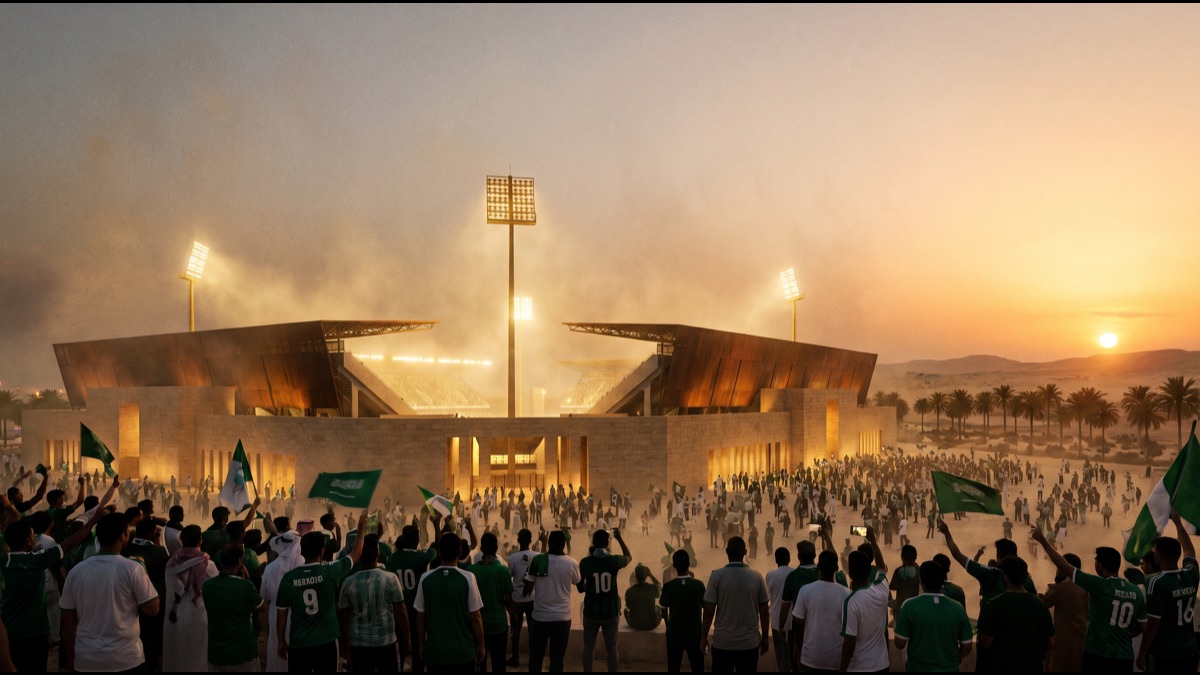
Algeria's football story is built on intensity, flair, and the belief that the team should compete with authority, not caution. At World Cup 2026, the Desert Foxes remain one of the Arab world's most fascinating sides because they combine talent with unpredictability. That makes them dangerous, but also difficult to forecast. The 2019 Africa Cup of Nations champions carry a continental pedigree that few Arab teams can match, yet their World Cup history has been one of sporadic appearances and unfulfilled potential.
When Algeria are sharp, they can overwhelm teams with movement, technical quality, and confidence. When they lose control, games become stretched and emotionally volatile. That tension defines their tournament ceiling. The 2026 qualification campaign showed flashes of both identities: dominant victories over weaker opponents and nervous, disjointed performances when expectations were highest. Algeria's challenge is to find the consistency that has often eluded their most talented generations.
Key Takeaways
- Algeria combine technical quality with emotional intensity.
- Their upside is high when attacking patterns click.
- Defensive control and game management remain key questions.
- Algeria are one of the Arab teams most capable of explosive performances.
- Their World Cup path depends on channeling energy rather than chasing chaos.
- The 2019 AFCON title proved their capacity for sustained excellence.
Context and Overview of Algeria's 2026 Outlook
Algeria are rarely a neutral team. Supporters either see huge potential or worry about inconsistency. Both views have merit. In tournament football, the most successful version of Algeria is usually the one that balances invention with discipline. The Desert Foxes have historically produced some of Africa's most technically gifted players, but translating individual brilliance into collective success has been a recurring challenge.
This is a team that can elevate the tempo quickly, but it must choose when to do so. Smart control, not permanent acceleration, is what separates contenders from nearly-teams. Algeria's coaching staff have emphasized the importance of game management, particularly in the second half of matches where their intensity has sometimes faded. The 2026 squad includes a blend of established European-based stars and emerging domestic talents, creating a dynamic that could either spark brilliance or produce instability.
The North African nation's football culture demands entertaining, attacking football. This expectation can create pressure on coaches to prioritize flair over structure. Algeria's most successful periods have come when they found a balance between these competing demands, using defensive organization as the foundation for attacking freedom. The 2026 tournament will test whether the current generation can maintain that equilibrium.
Historical Context: Algeria's Football Legacy
Algeria's football history is defined by moments of extraordinary drama and injustice. The 1982 World Cup in Spain produced one of the tournament's most controversial episodes when West Germany and Austria's mutually beneficial 1-0 result eliminated Algeria after they had defeated Chile 3-2. That injustice, which led to FIFA scheduling final group matches simultaneously in subsequent tournaments, remains a defining moment in Algerian football identity. The team that defeated West Germany 2-1 earlier in the tournament deserved far more than their early exit.
The 2019 Africa Cup of Nations victory in Egypt represented Algeria's greatest football achievement. Under coach Djamel Belmadi, the Desert Foxes combined defensive solidity with attacking flair, defeating Senegal in the final. Riyad Mahrez's tournament-winning performances established him as one of Africa's finest players. That victory ended a 29-year wait for a second continental title and raised expectations for the national team that have persisted since.
Algeria's World Cup appearances have been sporadic: 1982, 1986, 2010, 2014, and now 2026. The 2014 campaign in Brazil, featuring a battling performance against Germany in the Round of 16, showed Algeria's capacity to compete with elite European teams. Rais M'Bolhi's goalkeeping heroics in that match, which Germany won only after extra time, demonstrated that Algeria could match the world's best when their defensive organization was at its peak. The challenge has always been maintaining that level across multiple matches.
Breakdown of Algeria's Tournament Identity
Technical Skill
Algeria often possess attackers and midfielders comfortable in tight spaces and quick combinations. The technical education provided by French academies and the domestic league has produced players with exceptional ball control and passing ability. This technical foundation allows Algeria to play possession football against most opponents, though they must avoid becoming predictable.
Attacking Variety
They can threaten through individual dribbling, wide overloads, and quick interchanges near the box. Algeria's attacking approach is not dependent on a single route to goal. Mahrez's individual brilliance, combined with collective movement and overlapping full-backs, creates multiple threats that defenses must account for simultaneously.
Emotional Edge
That energy can drive the team forward, but it must be managed carefully in difficult phases. Algeria's players wear their national pride visibly, and this emotion can be both an asset and a liability. When channeled positively, it produces intense, committed performances. When frustration sets in, it can lead to indiscipline and rushed decisions.
Defensive Balance
When the back line and midfield disconnect, Algeria become vulnerable to direct attacks. The 2019 AFCON success was built on a defensive structure that complemented the attacking talent. When that structure breaks down, Algeria's open style can leave them exposed to counter-attacks, particularly against teams with fast transition players.
Tactical Analysis: Formation and Approach
Algeria typically set up in a 4-3-3 or 4-2-3-1 formation that emphasizes attacking width and midfield creativity. The full-backs are encouraged to push forward, creating overloads on the flanks that allow the wide forwards to cut inside. The midfield pivot is responsible for both defensive screening and initiating attacks, a demanding dual role that requires intelligent positioning.
In possession, Algeria look to circulate the ball quickly through the midfield triangle, using the technical quality of their central players to break lines. Mahrez's movement from the right wing into central areas creates dilemmas for defenders: follow him and leave the flank exposed, or stay positionally and allow him space to operate. This positional flexibility is Algeria's most distinctive tactical feature.
Defensively, Algeria prefer a high press when the situation allows, attempting to win the ball in advanced areas and create immediate goal-scoring opportunities. However, this aggressive approach requires precise coordination. When the press is broken, the space behind the defensive line can be exploited. Against teams with fast, technical attackers, Algeria may need to adopt a more conservative mid-block to protect their defensive vulnerabilities.
The transition phases are where Algeria's matches are often decided. Their ability to switch from defense to attack quickly, using the pace of their forwards and the passing range of their midfielders, is a genuine strength. However, the reverse transition—defending after losing possession in advanced areas—has historically been a weakness that stronger opponents have exploited.
Key Players to Watch
Riyad Mahrez (Al-Ahli): Algeria's most celebrated player and the creative heartbeat of the team. The former Manchester City winger's dribbling, vision, and ability to score from distance make him one of Africa's most dangerous attackers. Mahrez's set-piece delivery adds another dimension to Algeria's goal threat. His performance levels often determine Algeria's attacking output, and his leadership in the dressing room is equally important.
Youcef Atal (Adana Demirspor): The versatile full-back provides defensive cover and attacking support from the flank. Atal's pace and crossing ability make him a constant threat on the overlap, while his defensive recovery speed helps protect against counter-attacks. His ability to play on either flank adds tactical flexibility to the squad.
Ismaël Bennacer (Milan): The midfielder brings European elite-level experience and composure to the center of the park. Bennacer's ball-winning, passing range, and ability to control tempo make him the player who can link Algeria's defense and attack. When Bennacer plays well, Algeria's entire structure functions more effectively.
Rais M'Bolhi (Retired): While M'Bolhi has retired from international football, his legacy as Algeria's greatest tournament goalkeeper endures. The current goalkeeper must replicate his shot-stopping ability and command of the penalty area. Tournament success often depends on goalkeeping excellence, and Algeria's history in this position is a mixed one.
Islam Slimani (Corinthians): The veteran forward provides aerial presence, hold-up play, and goal-scoring instincts. Slimani's experience in European and international football makes him a valuable presence in high-pressure moments. His partnership with more mobile forwards creates a balanced attacking threat.
Pros & Cons of Algeria's World Cup Potential
Pros
- High technical ceiling with multiple players at elite European clubs
- Strong attacking imagination and variety in forward positions
- Powerful emotional identity that can produce extraordinary performances
- Capacity to swing momentum quickly through individual brilliance
- 2019 AFCON champions with proven tournament winning experience
- Experienced squad with multiple major tournament appearances
Cons
- Can become too open defensively, leaving space for counter-attacks
- Defensive transitions may be exposed against fast opponents
- Frustration can affect decision-making in difficult moments
- Consistency is harder to maintain across a whole tournament
- Over-reliance on Mahrez for creative inspiration
- Goalkeeping position has historically been a point of uncertainty
How To Watch Algeria More Closely
Examine Their Rest Defense
What happens behind the ball when Algeria attack tells you a lot about their true stability. If the defensive line and midfielders maintain their positions during attacking phases, Algeria are likely to be defensively secure. If they rush forward en masse, leaving gaps behind, the risk of counter-attacks increases significantly.
Observe Tempo Choice
Fast football is exciting, but the best Algeria displays usually include controlled phases too. When Algeria alternate between quick attacks and periods of possession, they are most difficult to defend against. Constant high-tempo play without variation can become predictable and exhausting.
Count Clean Chances, Not Just Pressure
Territory without quality can be misleading. Algeria often dominate possession statistics without creating clear-cut opportunities. The key metric is whether their pressure translates into genuine goal-scoring chances, not merely shots from distance or crosses into crowded areas.
Track Emotional Response to Setbacks
Their reaction to a goal conceded or a missed chance is often decisive. Algeria's best performances feature emotional resilience: the ability to absorb setbacks and maintain tactical discipline. When frustration leads to rash challenges or abandoned defensive responsibilities, the team's structure collapses.
Assess Midfield Control
The battle in central midfield often determines Algeria's success. When their midfielders dominate possession and dictate tempo, Algeria look like one of Africa's best teams. When opponents bypass the midfield through direct play or aggressive pressing, Algeria's attacking patterns are disrupted.
FAQs
Why are Algeria seen as such a dangerous team?
Because they can produce high-level attacking sequences and carry genuine individual quality. Players like Riyad Mahrez can decide matches against any opponent, and the team's collective technical ability is among the best in African football.
What is their biggest concern?
Game management, especially after momentum shifts. Algeria's emotional intensity can be both an asset and a liability. When matches turn against them, maintaining tactical discipline is a challenge that has historically cost them in crucial moments.
Are Algeria better when proactive?
Usually yes, but only when their structure behind the ball remains secure. Algeria's best performances combine attacking ambition with defensive responsibility. When they attack without protecting their defensive lines, they become vulnerable to the counter-attacks they usually aim to produce themselves.
What would define a strong tournament?
Sustained tactical discipline alongside the flair fans already expect. Algeria's 2019 AFCON victory demonstrated that they can combine both elements. Replicating that balance at World Cup level would represent genuine progress and could carry them into the knockout stages.
Which Algerian players are most crucial in 2026?
Riyad Mahrez, Youcef Atal, and Ismaël Bennacer provide the blend of attacking creativity, defensive versatility, and midfield control that defines Algeria's approach. The fitness and form of these core players will largely determine Algeria's tournament trajectory.
Related Resources
- Arab teams at World Cup 2026
- Morocco's tactical identity in major tournaments
- Tunisia's defensive approach at World Cup 2026
- Algeria's attacking identity at major tournaments
- Arab teams with the highest ceiling at World Cup 2026
- Why emotional control matters in short tournaments
Conclusion
Algeria remain one of the most watchable Arab teams because they can make matches feel alive. Their path at World Cup 2026 will depend on whether they combine talent with management, energy with patience, and belief with control. If they do, the Desert Foxes can be far more than entertaining—they can be genuinely competitive. The 2019 AFCON title proved their capacity for sustained excellence. The challenge now is to translate that continental success onto the global stage, where the margins are tighter and the pressure is greater. If Algeria find the right balance, they have the quality to surprise the world once again.
Sources
This article was reviewed against current tournament context and official competition resources.