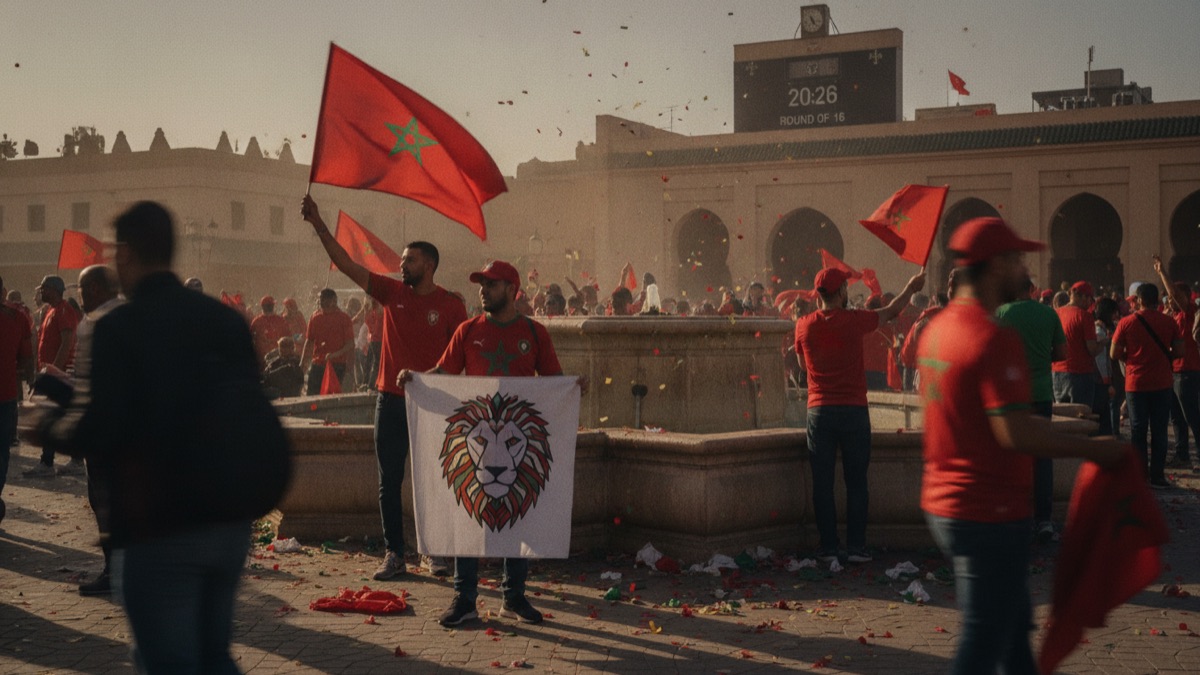
Morocco entered World Cup 2026 carrying far more than expectations. After proving on the global stage that disciplined defending, rapid transitions, and emotional unity can unsettle traditional powers, the Atlas Lions now face a different challenge: sustaining elite performance when the world is no longer surprised. For Arab fans, Morocco remain the standard-bearer of what regional football can look like when structure, talent, and confidence align.
This article explores why Morocco still matter, what makes them dangerous in tournament football, where the pressure points are, and how supporters should read their chances realistically rather than emotionally. With a FIFA ranking that has climbed into the top 15 following their historic semifinal run at Qatar 2022, Morocco enter this tournament as a genuine force rather than a romantic underdog.
Key Takeaways
- Morocco remain one of the most tactically mature Arab teams in World Cup 2026.
- Their defensive organization and wing play continue to define their identity.
- Squad depth and attacking efficiency will likely decide how far they go.
- Expectations are higher now, which changes how every result is judged.
- Morocco's campaign carries symbolic weight across Arab football.
- The 2022 semifinal run proved Arab teams can compete at the highest level.
Context and Overview of Morocco's 2026 Campaign
Morocco are no longer treated as a romantic outsider. They are now evaluated like a serious tournament side. That shift matters because opponents prepare differently, media pressure rises, and every tactical compromise becomes a bigger talking point. The Atlas Lions have spent the intervening years between Qatar 2022 and North America 2026 building on their success, qualifying comfortably through the African confederation and demonstrating consistency in friendlies against European and South American opposition.
The Atlas Lions still offer a strong mix of technical quality, European-based experience, and emotional intensity. Their best performances come when they control space, protect central zones, and attack with speed through wide areas. Under Walid Regragui's leadership, Morocco have developed a clear tactical identity that prioritizes collective discipline over individual flashiness, though they possess plenty of individual brilliance too.
The challenge for 2026 is whether Morocco can replicate their Qatar form on North American soil, where conditions, travel, and time zones differ significantly. Their preparation has included extensive warm-weather training and acclimatization camps, recognizing that tournament success often depends on off-field logistics as much as on-pitch performance.
Historical Context: From 1970 to Qatar 2022
Morocco's World Cup history stretches back to 1970, when they became the first African nation to win a group-stage match at the tournament. That 3-0 victory over Scotland in 1998 is often cited as a turning point, but the true transformation came at Qatar 2022. Becoming the first African and Arab nation to reach a World Cup semifinal, Morocco defeated Belgium, Spain, and Portugal before falling to defending champions France.
That run was built on defensive excellence: Morocco conceded only one goal in five matches before the semifinal, with Yassine Bounou producing a penalty shootout masterclass against Spain. The victory over Portugal in the quarterfinals, sealed by Youssef En-Nesyri's header, marked a watershed moment for African and Arab football. The images of Moroccan players celebrating with Palestinian flags resonated far beyond the sporting sphere, cementing their status as a team that carried regional hopes.
Historically, Morocco had struggled to convert continental dominance into global consistency. They won the Africa Cup of Nations in 1976 but experienced long periods of underachievement. The current generation, featuring players developed at academies like Mohammed VI Football Academy and honed in Europe's top leagues, represents a fundamentally different level of preparation and professionalism.
Breakdown of Morocco's World Cup Profile
Defensive Shape
Morocco's greatest strength remains collective discipline. They defend as a unit, stay compact, and force opponents into wide or low-value areas. The center-back pairing of Romain Saïss and Nayef Aguerd provided the foundation in 2022, and their successors have maintained similar standards. Morocco typically concede fewer than 0.8 goals per game in competitive fixtures, a statistic that places them among the most defensively solid teams in international football.
Transition Threat
When Morocco recover the ball cleanly, they can turn defense into attack quickly. Their most dangerous moments often come before opponents reset. The combination of Sofyan Amrabat's ball-winning and distribution, Hakim Ziyech's creative passing, and Achraf Hakimi's overlapping runs creates a multi-layered threat that few defenses handle comfortably.
Midfield Balance
A successful Morocco side needs midfielders who can both absorb pressure and progress play. If that balance disappears, the attack becomes isolated. The return of Amrabat to peak form, combined with the emergence of younger talents in the squad, gives Morocco options to control tempo against different types of opponents. Against possession-heavy teams, they can sit deep and counter; against more direct sides, they have the technical ability to build through the thirds.
Leadership and Belief
Tournament football is emotional. Morocco usually play with visible conviction, and that mentality can tilt close matches. The experience of Qatar 2022 means this squad has been through high-pressure knockout football before, a valuable asset that younger, more talented teams may lack. Coach Walid Regragui has maintained a squad culture that emphasizes humility and collective responsibility.
Tactical Analysis: Formation and Playing Style
Morocco typically operate in a 4-1-4-1 or 4-3-3 formation that can shift dynamically into a 4-5-1 when defending. The key tactical feature is their use of the defensive midfielder as a pivot point, allowing the full-backs to push high while maintaining central protection. Achraf Hakimi's runs from right-back create overloads on the flank, while the left side provides more conservative width.
In possession, Morocco look to circulate quickly through the midfield before finding Ziyech or another creative outlet in the half-spaces. Their attacking patterns often involve diagonal switches of play to exploit space behind opposing full-backs. Against deep-lying defenses, Morocco have worked on improving their central penetration, recognizing that the transition-based approach that worked against Spain may not be sufficient against all opponents.
Defensively, Morocco's pressing is selective rather than constant. They prefer to drop into a mid-block, compress central areas, and force opponents wide, where the pitch geometry favors the defense. Their backline maintains excellent vertical compactness, with the distance between defense and midfield rarely exceeding 10-12 meters. This structure makes them particularly difficult to break down through the middle.
Set pieces represent another area of strength. Morocco scored multiple goals from dead-ball situations in qualifying, using the aerial ability of players like En-Nesyri and Aguerd. Their delivery from wide areas, whether by Ziyech or Hakimi, provides consistent goal threat.
Key Players to Watch
Achraf Hakimi (Paris Saint-Germain): The right-back is arguably Morocco's most recognizable star and one of the best in his position globally. His pace, crossing ability, and defensive recovery make him a constant threat on the flank. Hakimi's partnership with Ziyech on the right side produces some of Morocco's most incisive attacking moments.
Sofyan Amrabat (Manchester United): The midfield enforcer provides the defensive screen that allows Morocco's attacking players freedom. His ability to win second balls, carry possession forward under pressure, and maintain tactical discipline makes him indispensable. When Amrabat plays at his peak, Morocco's entire structure functions more smoothly.
Yassine Bounou (Al-Hilal): The goalkeeper's heroics in Qatar 2022, including two penalty shootout saves against Spain, elevated him to national hero status. His shot-stopping, command of the area, and distribution from the back provide the defensive foundation upon which Morocco's entire system is built.
Hakim Ziyech (Galatasaray): The mercurial winger's left foot can unlock any defense. While his form fluctuates, his ability to deliver precise crosses, curl shots from distance, and create chances in tight spaces makes him the player most likely to produce a decisive moment in a close match.
Youssef En-Nesyri (Fenerbahçe): The target forward provides the aerial presence and hold-up play that allows Morocco to vary their attack. His header against Portugal in the 2022 quarterfinals demonstrated his ability to deliver in the most pressurized moments.
Pros & Cons of Morocco's Tournament Chances
Pros
- Strong defensive structure with proven tournament success
- Tactical maturity under pressure, demonstrated at Qatar 2022
- Genuine belief in knockout football based on recent experience
- Support from Arab and African audiences worldwide
- Capable of frustrating elite opponents through compact organization
- Multiple players competing at Champions League level
- Experienced coach with clear tactical philosophy
Cons
- Fine margins in finishing can hurt them against deep defenses
- Heavy expectations can tighten performances, especially in opening matches
- Injuries in key positions reduce balance quickly due to limited depth
- Opponents now prepare specifically for their defensive patterns
- Travel demands across North American venues may affect recovery
- Aging core of the 2022 squad may show signs of physical decline
How To Read Morocco's Chances Realistically
Watch the First 20 Minutes
If Morocco begin with calm possession and controlled pressing, that is usually a strong sign. Early jitters against opponents they are expected to beat could indicate that the weight of expectation is affecting performance.
Track Chance Quality, Not Just Possession
They do not need endless possession to dominate a match. What matters is whether they create clean transition chances. Against possession-heavy opponents, expect Morocco to have 40-45% of the ball but generate higher-quality opportunities.
Look at Bench Impact
Deep tournament runs often depend on substitutes. Morocco's ceiling rises if the bench changes tempo and energy. The ability to bring on fresh legs for Hakimi or Ziyech without losing tactical structure will be crucial in the latter stages.
Judge Emotional Control
Composure in tense phases is often the difference between a quarterfinal team and a semifinal team. Morocco's experience in Qatar should help, but every tournament brings new pressure points. How they respond to conceding first or to missed chances will reveal their mental state.
Check Set-Piece Threat
In tight knockout matches, dead-ball situations often decide outcomes. Morocco's delivery from wide areas and aerial presence in the box give them a genuine advantage that can compensate for lower possession percentages.
FAQs
Why do many Arab fans see Morocco as the region's flagship team?
Because they have combined strong results with a clear football identity, showing that Arab teams can compete strategically rather than just emotionally. The Qatar 2022 semifinal run proved that Arab football could reach the highest levels of global competition.
What is Morocco's biggest strength?
Their defensive cohesion and ability to spring forward quickly after turnovers. The collective defensive organization, built around a compact mid-block and rapid transition, is their signature feature.
What could stop a deep run?
Missed chances, fatigue, or losing midfield control against technically superior opponents. If Amrabat or Bounou are unavailable, the team's structure becomes significantly more vulnerable.
Are expectations helping or hurting Morocco?
Both. Higher belief raises standards, but it also creates pressure in every close match. The shift from being a surprise package to being a marked team changes how opponents approach them.
Who are Morocco's most important players in 2026?
Achraf Hakimi, Sofyan Amrabat, and Yassine Bounou form the backbone, with Hakim Ziyech providing creative spark in decisive moments. The fitness and form of these core players will largely determine Morocco's tournament trajectory.
Related Resources
- Arab teams to watch at World Cup 2026
- Egypt's prospects at World Cup 2026
- Algeria's tactical identity in major tournaments
- How knockout football rewards compact defensive systems
- FIFA World Cup 2026 match schedule and fixtures
Conclusion
Morocco still look like the Arab team most capable of combining discipline, talent, and tournament intelligence. Whether they go deep again will depend less on emotion and more on execution: chance conversion, squad freshness, and control in decisive moments. If those elements align, the Atlas Lions can once again shape the World Cup conversation. Their 2022 semifinal run changed the narrative around Arab football; a strong 2026 campaign would confirm that Moroccan football has reached a sustainable elite level.
Sources
This article was reviewed against current tournament context and official competition resources.