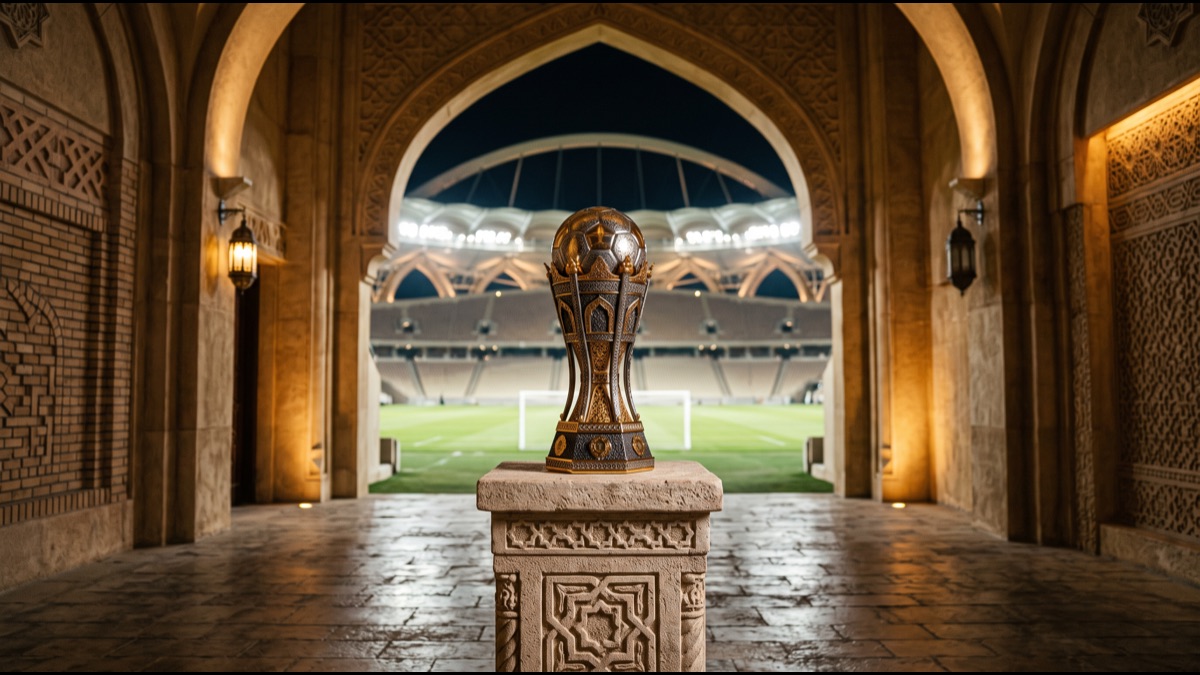
Every World Cup leaves more than results behind. It changes how nations are perceived, how young players dream, and how entire regions talk about football. For Arab teams at World Cup 2026, the stakes include legacy. This tournament could influence coaching priorities, youth ambition, federation planning, and the wider narrative around Arab football competence.
That is why the meaning of the tournament stretches beyond any single match.
Key Takeaways
- World Cup 2026 could shape the next phase of Arab football identity.
- Strong performances create impact far beyond one tournament cycle.
- Legacy is built through structure, belief, and visible competitiveness.
- Arab teams now have a chance to normalize global credibility.
- The long-term value of this World Cup may outlast the final standings.
Context and Overview of Football Legacy
Legacy is not only about trophies. It is about what a tournament proves. Can Arab teams defend well enough, think clearly enough, and compete bravely enough to change assumptions? Can they inspire the next generation with models that feel repeatable rather than mythical?
World Cup 2026 offers a major opportunity to answer yes. The North American setting, the expanded tournament format, and the momentum from Morocco's 2022 run all create conditions where Arab football can make a lasting impression.
Breakdown of What Could Change
Player Development
Young players across the Arab world study what works on the biggest stage. When they see compatriots competing credibly with the world's best, it changes their sense of what is possible. Morocco's 2022 run has already inspired a wave of young players across North Africa to pursue professional careers.
Coaching Standards
Successful tournament models often influence domestic football thinking. Walid Regragui's success with Morocco demonstrated that tactical intelligence and motivational skill matter more than reputation. This has encouraged federations across the region to prioritize coaching development and tactical education.
Regional Confidence
Credible performances strengthen belief across federations and fan bases. The Arab world is not a single football market, but success by one team lifts the profile of all. When Morocco reached the semifinal in 2022, it was celebrated from Baghdad to Casablanca as a collective achievement.
Global Perception
Consistent competitiveness changes how the football world talks about Arab teams. For decades, the narrative was one of underdogs and occasional upsets. Now the conversation is about genuine contenders. That shift in perception has commercial, political, and sporting implications.
Historical Context
To understand what 2026 could mean, it is worth looking at what came before.
Early World Cup Appearances
Egypt became the first Arab team to play in a World Cup in 1934, losing narrowly to Hungary. It would be 56 years before another Arab team qualified. The 1982 tournament saw Algeria's famous victory over West Germany and the tragic "Disgrace of Gijon" that denied them progression. These early experiences established a pattern of competitive performances but limited results.
The Saudi Breakthrough
Saudi Arabia's qualification for the 1994 World Cup and their run to the Round of 16 was a watershed moment. Saeed Al-Owairan's individual goal against Belgium remains one of the most celebrated in tournament history. It proved that Arab teams could not only compete but also produce moments of genuine brilliance on the world stage.
Morocco 2022: The Game-Changer
Morocco's 2022 semifinal run rewrote the narrative entirely. For the first time, an Arab team reached the last four, defeating Belgium, Spain, and Portugal along the way. The achievement was not a fluke; it was built on systematic defensive organization, collective belief, and tactical intelligence. It proved that Arab football could be elite, not just entertaining.
Lessons for 2026
The historical record shows that Arab football has been steadily improving. The gap between Arab teams and the world's elite has narrowed. What Morocco proved is that the gap can be closed entirely with the right combination of structure, talent, and belief. The challenge for 2026 is sustaining that level across multiple teams.
Arab Fan Culture
The emotional and cultural dimensions of Arab football are inseparable from the sport itself. Fan culture shapes the atmosphere, the expectations, and the legacy of every tournament.
Passion and Expectation
Arab football fans are among the most passionate in the world. Stadiums from Cairo to Riyadh to Casablanca generate atmospheres that rival any in Europe or South America. This passion translates to the World Cup, where Arab diaspora communities create vocal support that makes neutral venues feel like home grounds. The 2022 World Cup in Qatar saw unprecedented Arab fan engagement, and 2026 in North America is expected to continue that trend.
Identity and National Pride
For Arab nations, football is deeply tied to national identity. Success on the world stage is celebrated as a validation of the nation itself. This creates emotional investment that few other regions can match. When Morocco reached the semifinal in 2022, the celebrations extended far beyond sport into expressions of cultural and regional pride.
Social Media and Modern Fandom
The digital age has transformed how Arab fans engage with football. Social media platforms have created communities that transcend borders, with fans from different Arab countries supporting each other's teams. This interconnected fan culture amplifies the impact of every result and creates a shared narrative that strengthens regional football identity.
Impact on the Next Generation
The visibility of Arab success at World Cups directly influences youth participation. When young players see players who look like them, speak their language, and share their culture competing at the highest level, it validates their own dreams. The long-term legacy of 2026 will be measured not just in results but in the number of young players who choose football because of what they saw.
Pros & Cons of Legacy Pressure
Pros
- Raises ambition across the region
- Inspires youth pathways and investment
- Encourages tactical seriousness
- Builds long-term football confidence
Cons
- Legacy talk can create heavy short-term pressure
- One bad tournament may trigger unfair overreaction
- Symbolic expectations can burden players
- Progress is rarely linear
How To Think About Legacy Fairly
Look Beyond One Result
A single match does not define a football culture.
Value Repeatable Competitiveness
That is often more important than one upset.
Study the Team Identity
A clear model leaves a longer legacy than random moments.
Watch What Happens After the Tournament
Legacy becomes real when lessons turn into systems.
FAQs
Why is legacy such a big theme for Arab teams in 2026?
Because performances now shape how future generations, coaches, and federations imagine what is possible.
Does legacy require a semifinal run?
Not necessarily. It can also come from strong, repeatable, tactically credible performances.
Which Arab team is best placed to leave a legacy?
Morocco appear best positioned on paper, but several teams can contribute in different ways.
What makes a tournament legacy last?
When results, identity, and lessons all feed into long-term football growth.
How has Arab football history shaped 2026 expectations?
Morocco's 2022 semifinal run, combined with decades of African and Asian achievement, has created a new standard for what Arab teams can achieve.
How do Arab fans influence football legacy?
Arab fan culture provides passionate support that energizes players and creates memorable atmospheres, while also raising expectations for future performances.
Related Resources
- Arab teams most likely to go deep at World Cup 2026
- Why fans are watching differently this time
- Can an Arab team reach the semifinals again?
Conclusion
World Cup 2026 could become a defining chapter in Arab football legacy if the region's teams combine courage with structure and emotion with intelligence. Results will matter, but so will the impression left behind. The historical context shows a steady progression from occasional upsets to sustained competitiveness, and Morocco's 2022 run proved that the highest levels are within reach. If Arab teams compete with clarity and conviction, this tournament could reshape expectations for years to come. The fans will be watching, the world will be paying attention, and the legacy will be determined by what happens both on and off the pitch.
Sources
This article was reviewed against current tournament context and official competition resources.