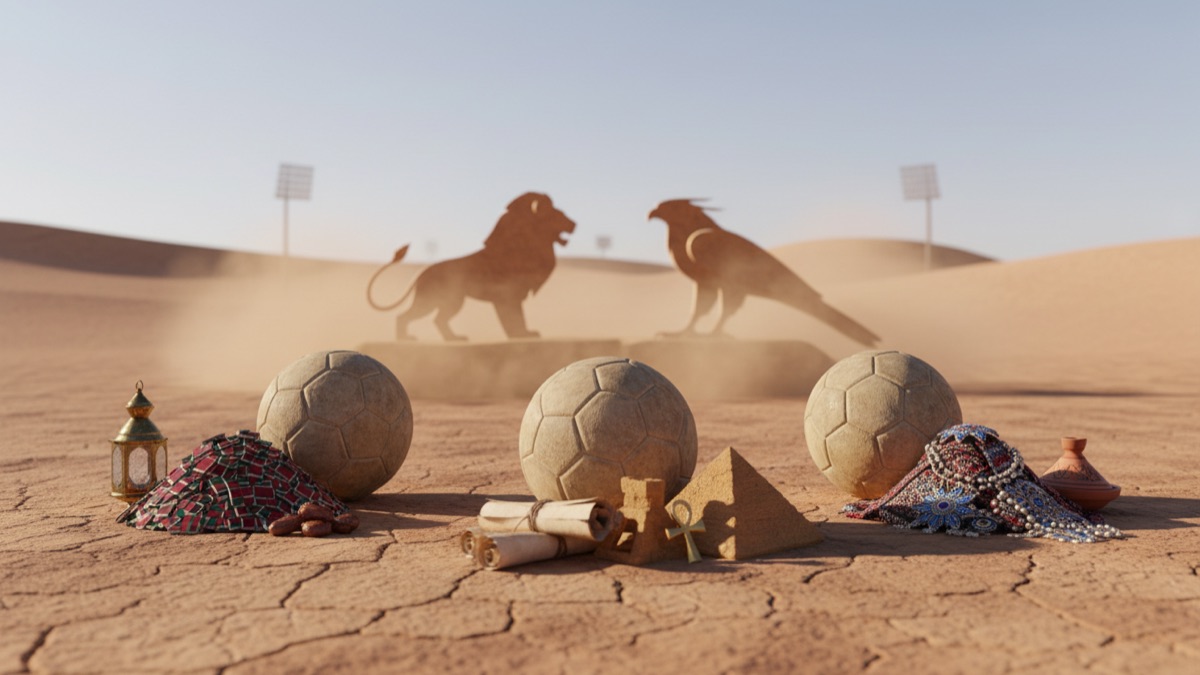
Morocco, Egypt, and Algeria enter World Cup 2026 as three of the most discussed Arab football powers, but they arrive with very different profiles. Morocco bring structure. Egypt bring historical weight and star power. Algeria bring creative volatility and attacking promise.
Comparing them properly means asking what kind of football survives tournaments, not just what looks impressive in highlights.
| Team | Best comparison point | Question to watch |
|---|---|---|
| Morocco | Recent defensive organisation and 2022 semifinal run | Can they repeat that structure under greater expectation? |
| Egypt | Historic tournament stature and individual quality | Can the team turn reputation into consistent control? |
| Algeria | Technical attacking upside and 2014/2019 precedent | Can they manage matches when the tempo drops? |
World Cup comparison checklist
- Check the latest FIFA ranking and confirmed qualification context before comparing form.
- Separate tournament history from current squad evidence.
- Compare defensive structure, midfield control, and bench depth—not only star names.
Key Takeaways
- Morocco look strongest in structure and tournament maturity.
- Egypt carry enormous symbolic and emotional weight.
- Algeria may have the highest volatility in both positive and negative directions.
- The most complete team is not always the most glamorous.
- Each team represents a different model of Arab football strength.
Context and Overview of the Comparison
These three teams are often grouped together because of reputation, support, and expectation. But their strengths are not identical. Morocco typically reduce risk well. Egypt can produce decisive moments through major talent and belief. Algeria can overwhelm games creatively when rhythm suits them.
The tournament setting favors repeatability, which is why structure deserves extra value.
Breakdown by Category
Morocco: The Balanced Power
Strong defensive platform, clear tactical identity, and emotional maturity. Morocco's 2022 semifinal run proved that Arab teams can compete at the highest level when organization and belief align. Under Walid Regragui, they have built a system that remains compact without becoming passive, and dangerous without becoming reckless.
Egypt: The Historic Giant
Massive support, strong individuals, and huge pressure on every result. Egypt have won the Africa Cup of Nations a record seven times, and their fan base expects deep tournament runs as a standard. The Pharaohs have reached three World Cup finals (1934, 1990, 2018) but have never advanced beyond the group stage.
Algeria: The Dynamic Threat
Technical flair, attacking imagination, and a higher-variance style. Algeria's 2019 Africa Cup of Nations triumph showed their peak potential, but their qualifying campaigns have sometimes lacked consistency. When they are at their best, they can beat any team on the continent.
What Separates Them
Morocco's consistency, Egypt's emotional weight, and Algeria's volatility define the comparison.
Key Players to Watch
Beyond the obvious star names, each squad contains players whose tournament performance could define their team's ceiling.
Morocco Standouts
Achraf Hakimi (Paris Saint-Germain, right-back) brings elite-level speed and crossing ability. His partnership with the central defensive unit has been central to Morocco's success. Yassine Bounou (Al-Hilal, goalkeeper) has been one of the most reliable shot-stoppers in international football, with a remarkable save percentage in major tournaments.
Egypt Standouts
Mohamed Salah (Liverpool, forward) remains the most recognizable Arab footballer globally. His Premier League record speaks for itself, but tournament football asks different questions of even the best players. Mohamed Elneny (Arsenal, midfielder) provides experience and positional discipline in the center of the pitch.
Algeria Standouts
Riyad Mahrez (Al-Ahli, forward) has shown at Manchester City and internationally that he can unlock defenses in tight spaces. Ismael Bennacer (AC Milan, midfielder) offers a different profile: a deep-lying playmaker who can control tempo and protect possession under pressure.
Historical Context
Understanding where each team comes from helps explain where they might go in 2026.
Morocco's Recent Breakthrough
Morocco's 2022 World Cup semifinal run was the deepest any Arab or African team has ever gone in the tournament. They defeated Belgium, Spain, and Portugal along the way, conceding only three goals in seven matches. That success has raised expectations but also provided a blueprint.
Egypt's World Cup Record
Egypt have qualified for the World Cup three times, but their record in the finals is mixed. The 2018 campaign was memorable for Mohamed Salah's return from injury but ended in group-stage elimination. The 1990 team earned a draw against the Netherlands and a narrow loss to England, showing that competitive performances are possible.
Algeria's Tournament Highs
Algeria have appeared in four World Cup finals, with their best performance coming in 2014 when they reached the Round of 16 and pushed Germany to extra time. The 2019 Africa Cup of Nations title confirmed their ability to win major tournaments when everything clicks.
Pros & Cons of Each Arab Giant
Pros
- Morocco: best balance
- Egypt: major-match aura
- Algeria: explosive upside
Cons
- Morocco: heavier expectations now
- Egypt: system dependence around stars
- Algeria: game-management concerns
How To Compare Them Fairly
Value Tournament Fit
Structure usually beats hype over multiple matches.
Look Beyond Reputation
Big names do not automatically mean better balance.
Track Midfield Control
That often reveals which team can repeat strong performances.
Examine Bench Impact
Deep runs need more than eleven starters.
FAQs
Which of the three looks most complete?
Morocco, because of tactical clarity and defensive strength.
Which carries the biggest pressure?
Egypt, due to historical expectation and emotional scale.
Which is hardest to predict?
Algeria, because their style can swing matches rapidly.
Could more than one make a strong run?
Yes, if each team leans into its strongest identity rather than forcing a different one.
What historical precedent shapes these teams?
Morocco's 2022 semifinal run, Egypt's consistent African dominance, and Algeria's 2019 Africa Cup of Nations title all shape expectations.
Who are the key players to watch?
Morocco's Achraf Hakimi, Egypt's Mohamed Salah, and Algeria's Riyad Mahrez are the headline names, though squad depth matters just as much.
Related Resources
- Morocco's World Cup 2026 outlook
- Egypt's midfield challenge
- Algeria's attacking potential in tournament football
Conclusion
Morocco, Egypt, and Algeria each represent a major pillar of Arab football at World Cup 2026, but they do so in different ways. Morocco offer balance, Egypt offer scale, and Algeria offer volatility. The team that travels furthest will likely be the one that turns identity into repeatable execution.
Sources
This article was reviewed against current tournament context and official competition resources. Sources accessed 25 July 2026.