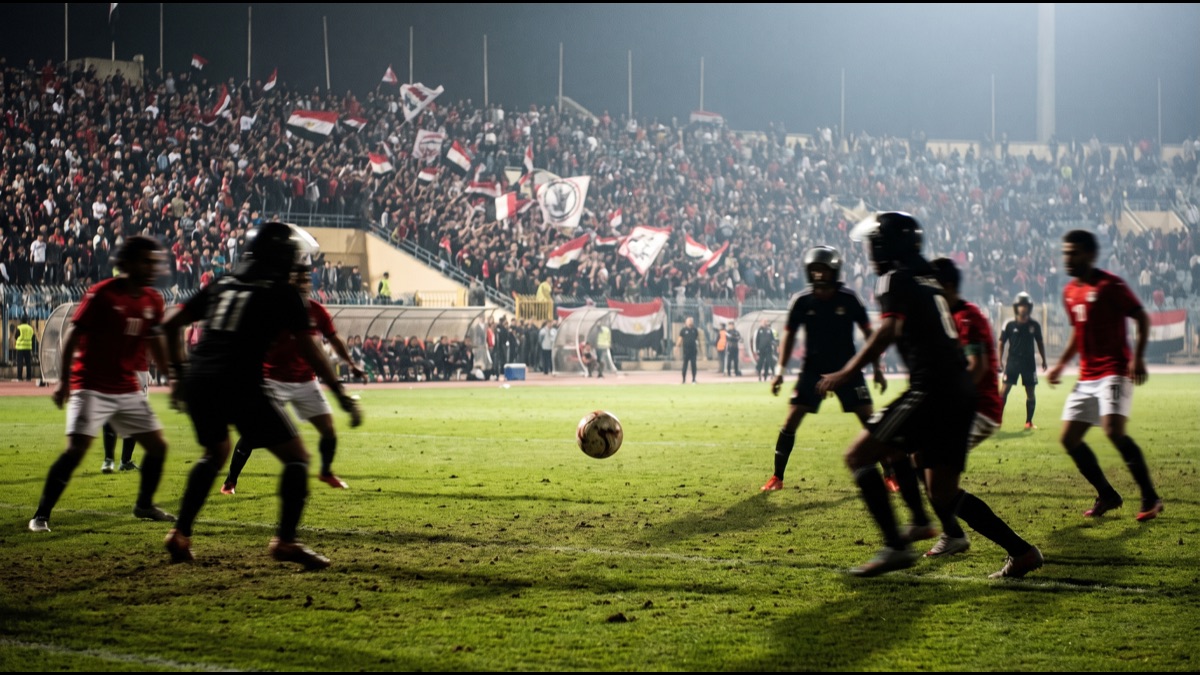
When people talk about Egypt, they often jump immediately to the attack. But World Cup 2026 may be decided by something less glamorous: midfield control. If Egypt's midfield can protect the defense, connect to the forwards, and resist pressure calmly, the entire campaign looks different.
In short, the Pharaohs' biggest question may sit in the center of the pitch.
Key Takeaways
- Egypt's midfield balance could define the whole tournament.
- The team needs both defensive protection and forward progression.
- Over-reliance on direct attacking solutions can make Egypt predictable.
- Midfield calm matters especially in tight group-stage matches.
- A functioning center can make Egypt look like a complete side.
Context and Overview of Egypt's Central Challenge
The World Cup punishes broken midfields quickly. When the central unit cannot hold shape or move the ball cleanly, stars become isolated and defenders face too many transitions. Egypt's path depends on avoiding that trap.
A good midfield does not need to dominate every game. It needs to keep Egypt connected. The 2018 World Cup showed what happens when that connection fails: Mohamed Salah was forced to drop deep to collect the ball, reducing his effectiveness in the final third. In 2026, Egypt must avoid repeating that pattern.
Breakdown of What Egypt Need in Midfield
Ball Recovery
The first job is preventing easy central progression from opponents. Egypt's midfield must act as a filter, forcing opponents wide and buying time for the back line to organize. When the midfield is bypassed, the defense faces one-on-one situations that are difficult to manage.
Press Resistance
Egypt need players who can receive under pressure and keep possession alive. Against elite opponents who press high, the ability to play through the midfield rather than over it is essential. If Egypt are forced to play long balls repeatedly, their attacking players become disconnected from the build-up.
Forward Supply
The midfield must create meaningful service, not just safe recycling. This is where Egypt's creativity matters. Finding Mohamed Salah and the other forwards between the lines, or delivering passes that allow them to run at defenses, separates functional midfield play from dominant midfield play.
Tempo Control
Knowing when to slow and when to accelerate is essential in tournament football. Egypt's midfield needs game intelligence: slowing down when ahead to protect leads, and accelerating when chasing to create chances. Mismanagement of tempo has cost Egypt in past tournaments.
Tactical Analysis
Egypt's midfield function depends heavily on their tactical setup and the roles assigned to individual players.
Formation and Shape
Egypt most commonly use a 4-2-3-1 or 4-3-3, with the double pivot providing defensive cover. The two holding midfielders act as a shield for the back four, while the attacking midfielder (often Trezeguet or Ramadan Sobhi) is responsible for connecting to the forward line. The full-backs provide width, allowing the wide forwards to drift inside.
Strengths
When the midfield functions, Egypt can transition quickly from defense to attack. The presence of physical midfielders who can win second balls and launch counters is a genuine asset. Against teams that leave space behind their defensive lines, Egypt's midfield can deliver the kind of vertical passes that Salah thrives on.
Weaknesses
Egypt's midfield can become too defensive, creating a disconnect between the back line and the forwards. The gap between the double pivot and the attacking players sometimes forces Salah to drop too deep. Against teams that press aggressively, Egypt's midfielders have sometimes struggled to find passing angles under pressure.
Playing Style
Egypt's natural tendency is toward counter-attacking football, but they have shown they can sustain possession against weaker opponents. The challenge is maintaining midfield balance against elite teams that dominate the ball. In those matches, Egypt need a midfield that can defend without losing the ability to launch quick attacks.
Key Players to Watch
The midfield is only as strong as the players who occupy it. Here are the individuals who will shape Egypt's central performance.
Mohamed Elneny
The Arsenal midfielder is Egypt's most experienced central player. His strengths are positional discipline, passing range, and leadership. Elneny is not a flashy player, but his reliability in protecting the defense and maintaining shape is essential. His experience in the Premier League gives him familiarity with high-intensity tournament football.
Ramadan Sobhi
The Pyramids FC midfielder is Egypt's most creative central player. His dribbling ability and vision allow him to carry the ball forward and unlock defenses. Sobhi's fitness and form will be crucial: when he is at his best, Egypt's midfield looks more dynamic and less predictable.
Ahmed Sayed Zizo
The Zamalek winger has become one of Egypt's most productive attacking players. While primarily a wide player, his movement into central areas and his combination play with the midfield give Egypt an additional creative dimension. Zizo's 2023-24 season showed he can score and create at a high level.
Emam Ashour
The Al-Ahly midfielder is a rising talent who provides energy and pressing ability in midfield. His work rate and willingness to cover ground make him a valuable asset in both defensive and attacking phases. Ashour's development has been rapid, and he could be a surprise contributor in 2026.
Mohamed Salah
While not a midfielder, Salah's positioning has a profound effect on Egypt's midfield structure. When he stays high and wide, the midfield has space to operate. When he drops deep, the midfield must push higher, creating gaps. Egypt's midfield performance is partly defined by how well they supply Salah in his optimal positions.
Pros & Cons of Egypt's Midfield Importance
Pros
- A strong midfield raises the whole team level
- Better control reduces defensive exposure
- It helps stars receive the ball in better areas
- It can calm emotionally charged matches
Cons
- If the midfield struggles, the whole system can unravel
- Opponents may target the center aggressively
- Lack of progression forces hopeful long balls
- Chasing the game can stretch the shape quickly
How To Analyze Egypt's Midfield in Real Time
Watch Second Balls
Winning loose central moments often decides control.
Study Passing Angles
Are midfielders offering real options, or hiding from pressure?
Observe Defensive Coverage
Do they protect the back line after attacks break down?
Notice the Rhythm of Attacks
Balanced midfield play usually creates more coherent final-third entries.
FAQs
Why is midfield so important for Egypt?
Because it connects every phase of play and determines whether the team looks balanced or stretched.
Can Egypt succeed without controlling the middle?
Only for short periods. Over a tournament, that is difficult.
What does a good Egypt midfield performance look like?
Compact defending, confident receiving, and smart forward progression.
Is this more important than star quality?
In tournament football, yes. Stars need a platform.
Which midfielders are most important for Egypt?
Mohamed Elneny provides experience and defensive stability, while Ramadan Sobhi and Ahmed Sayed Zizo offer creativity in transition.
What tactical setup suits Egypt's midfield best?
A 4-2-3-1 or 4-3-3 with a double pivot protects the defense and allows Mohamed Salah to receive the ball in advanced positions.
Related Resources
- Egypt at World Cup 2026 overview
- How midfield control shapes group-stage results
- Arab teams with the strongest tactical cores
Conclusion
Egypt's World Cup hopes may depend less on one iconic moment and more on repeated midfield decisions. If the center of the pitch works, the Pharaohs become more coherent, more dangerous, and more stable. That is why midfield may be the real story of their 2026 campaign. The talent is there, but the connection between defense and attack must be forged through disciplined, intelligent midfield play.
Sources
This article was reviewed against current tournament context and official competition resources.