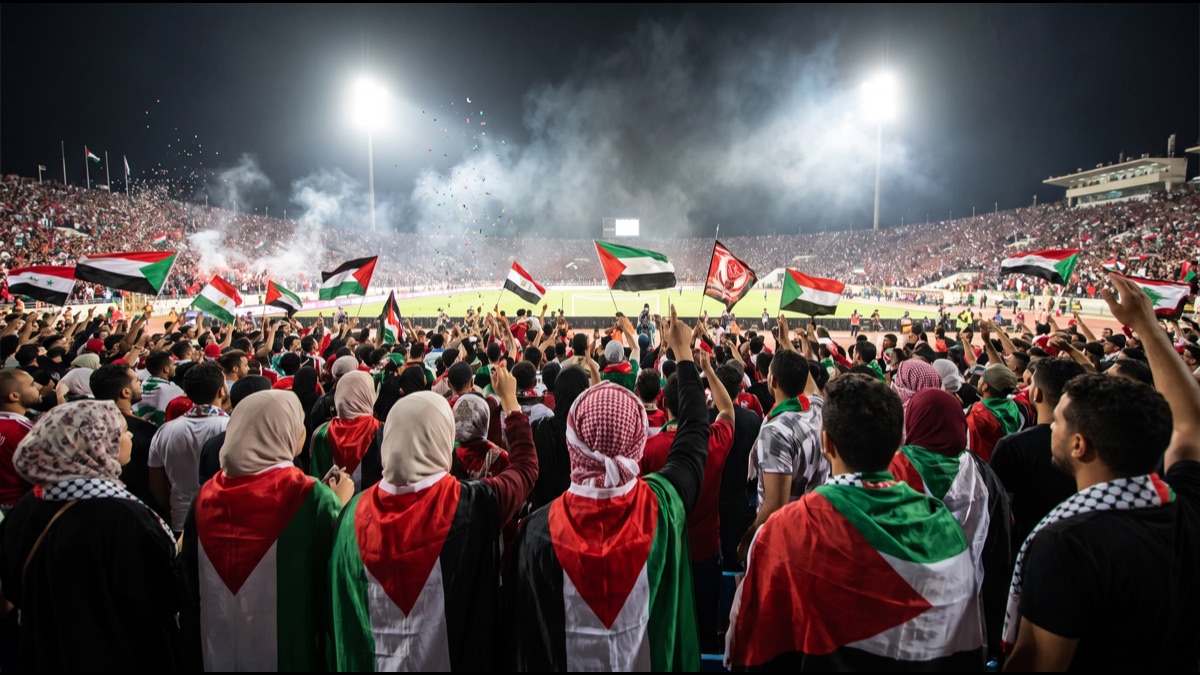
World Cup 2026 feels different for Arab fans. The emotional connection is still there, but the lens has changed. Supporters are not only hoping for one magical upset. They are increasingly evaluating shape, squad depth, tactical identity, and whether Arab teams can sustain performance over an entire tournament. The 2022 World Cup in Qatar, where Morocco reached the semifinal and Saudi Arabia defeated Argentina, has recalibrated what Arab fans believe is possible. No longer content with moral victories or competitive defeats, the Arab football audience now expects genuine competitiveness on the world stage.
That shift matters. It signals football growth not only on the pitch, but in how the region experiences the game. The Arab world has always been passionate about football, but the quality of that passion has evolved. Fans are more informed, more analytically demanding, and more aware of the tactical and structural factors that determine success. Social media, global broadcasting, and the increasing accessibility of European football have educated a generation of supporters who can discuss pressing triggers, defensive blocks, and transition phases with the fluency of professional analysts. This new sophistication is changing the relationship between Arab fans and their national teams.
Key Takeaways
- Arab fans are now judging teams with more tactical expectation.
- Recent successes changed what feels possible at World Cup level.
- Supporters want structure and sustainability, not just isolated moments.
- The conversation around Arab football is broader and more confident.
- World Cup 2026 is being watched through a more ambitious lens.
- Eight Arab teams qualified, reflecting growing regional football depth.
Context and Overview of the Changing Fan Perspective
The Arab football audience has always been passionate. What has changed is the standard of analysis. Supporters now ask whether a team can repeat a performance, rotate effectively, and survive tactical pressure. That reflects a maturing football culture shaped by more global exposure and higher expectations. The generation that grew up watching the 1990s and 2000s World Cups, where Arab teams were occasional participants and frequent early departures, has been replaced by a generation that witnessed Morocco's 2022 semifinal run and Saudi Arabia's Argentina victory. These experiences have fundamentally altered what Arab fans consider acceptable.
This new perspective can create pressure, but it also raises standards in a healthy way. Football federations across the Arab world are increasingly aware that their public demands more than effort and emotion. They demand tactical coherence, professional preparation, and competitive results. The Qatar World Cup, played on Arab soil, brought these issues into sharp focus. The proximity of the tournament meant that Arab fans could experience the World Cup directly, comparing their teams with the world's best in real time. The disappointment of Qatar's early exit and the triumph of Morocco's deep run provided contrasting lessons that have shaped expectations for 2026.
The North American setting of the 2026 tournament changes the fan experience in important ways. Unlike Qatar, where the Arab world was physically present and dominant in the stadiums, the 2026 World Cup will be watched primarily from afar, in homes, cafes, and public spaces across the Middle East and North Africa. The time zone differences, the cultural distance, and the absence of a regional host will test the commitment of Arab supporters. However, the global Arab diaspora, particularly in North America and Europe, will ensure that Arab teams are not without support. The Moroccan fans who filled stadiums across Qatar in 2022 have shown that Arab supporters can travel and create atmospheres that rival any in world football.
Breakdown of What Has Changed
More Belief
Deep tournament runs and major performances made ambition more realistic. Morocco's semifinal run in Qatar proved that an Arab team could compete at the highest level, and Saudi Arabia's Argentina victory demonstrated that upsets against elite teams were possible. These achievements have created a new belief among Arab fans that their teams can compete with the world's best, not merely participate and hope for a good showing. This belief is a double-edged sword: it creates higher expectations but also provides the confidence that can drive teams to exceed their limitations.
More Tactical Awareness
Fans increasingly discuss midfield balance, defensive shape, and pressing triggers. The Arab football discourse has become more sophisticated, with supporters analyzing formations, player positioning, and tactical adjustments with a level of detail that would have been unimaginable a generation ago. Social media platforms, football podcasts, and YouTube analysis channels have democratized tactical knowledge, creating a fan base that is as demanding as any in Europe or South America. This tactical awareness means that fans are no longer satisfied with vague explanations for poor performance; they demand specific, actionable analysis.
Less Satisfaction With Moral Victories
Competing well is appreciated, but results matter more now. The Arab football tradition has often celebrated brave defeats and competitive performances, valuing effort and commitment over outcomes. While these qualities remain important, the 2022 World Cup changed the calculus. Fans now want victories, advancement, and tangible progress. A narrow defeat against a stronger opponent is no longer automatically celebrated if it exposes tactical flaws or missed opportunities. The standard has shifted from "we competed well" to "we should have won."
Broader Regional Interest
Support often extends across Arab teams, especially when one side carries regional momentum. The Moroccan run in 2022 was celebrated not only by Moroccans but by Arabs across the region, who saw in the Atlas Lions a representation of regional pride and capability. This pan-Arab solidarity has been a feature of football support for decades, but it has intensified as Arab teams have become more competitive. The 2026 tournament, with a record eight Arab teams, will test this solidarity: will fans support all Arab teams, or will national rivalries and political tensions divide the regional audience? The answer will reveal much about the evolving nature of Arab identity in football.
Fan Culture Across the Arab World
The Arab world is not a monolithic football culture. Each nation brings its own traditions, chants, and rituals to tournament support. Moroccan fans, with their red flags, rhythmic drumming, and choreographed stadium displays, have become the most visible Arab fan culture at global tournaments. Their presence in Qatar 2022 transformed stadiums into carnival-like atmospheres, and their support for the Palestinian cause during celebrations added a political dimension to their football identity. Egyptian fans bring a different energy, rooted in the intense domestic rivalries of Cairo and Alexandria, with a vocal, passionate support that can turn neutral venues into home atmospheres. The Pharaohs' massive domestic following means that their World Cup matches are watched by millions, creating a national event that transcends sport.
Saudi Arabian supporters have grown in confidence and visibility. The Green Falcons' traditional support has been supplemented by a new generation of fans inspired by the Pro League's transformation and the national team's improved competitiveness. The Argentina victory in Qatar produced scenes of national celebration that demonstrated the deep emotional connection between Saudi fans and their team. Algerian and Tunisian fans bring North African passion and Mediterranean intensity, with a football culture that values flair and individual expression as much as collective success. Their support is often vocal and colorful, reflecting the vibrant football traditions of the Maghreb.
Jordan and Iraq, less established in World Cup football, bring different but equally compelling fan cultures. Jordanian support has grown rapidly following the 2023 Asian Cup run, with a younger, more digitally connected fan base that has embraced social media as a platform for football expression. Iraqi fans carry the emotional weight of a nation that has used football as a rare source of unity and pride. Their support is marked by a deep, almost spiritual connection to the national team, which represents something far greater than sport. The 2026 tournament will be the first time that all these diverse fan cultures are present simultaneously at a World Cup, creating a regional tapestry of support that is unprecedented in its diversity and intensity.
Arab Football Legacy and Global Identity
Arab football's identity at the World Cup has been shaped by a series of defining moments that have become part of the region's collective memory. Tunisia's 1978 victory over Mexico, the first by an African team at a World Cup, established that Arab teams could compete on equal terms with established football nations. Saudi Arabia's Saeed Al-Owairan's solo goal against Belgium in 1994, a run from inside his own half that rivaled Diego Maradona's famous effort, demonstrated that Arab players could produce moments of individual genius. Algeria's 1982 campaign, though ending in controversial elimination, proved that Arab teams could defeat European giants. Morocco's 2022 semifinal run brought these threads together, showing that Arab football could achieve sustained excellence at the highest level.
The legacy of these moments is not merely historical; it is psychological. Each generation of Arab fans carries the memory of these achievements, and each new tournament is measured against them. The 2026 World Cup is therefore not simply a sporting event but a continuation of a narrative that has unfolded over decades. For older fans, the tournament offers an opportunity to see if the achievements of 2022 can be replicated or exceeded. For younger fans, who may not remember the disappointments of earlier generations, 2026 is a chance to establish their own benchmarks of what Arab football can achieve.
The global identity of Arab football has also evolved. The image of Arab fans and teams has shifted from exotic outsiders to genuine competitors. Morocco's 2022 run, in particular, challenged stereotypes about Arab and African football, demonstrating that success could be built on tactical sophistication, defensive organization, and collective intelligence rather than individual flair or physical strength. The global football media's coverage of Arab teams has become more nuanced, acknowledging the tactical and strategic dimensions of their success. For Arab fans, this recognition is important: it validates their football culture and demonstrates that their teams can be respected for their intelligence as much as their passion.
Pros & Cons of This New Fan Mindset
Pros
- Higher standards that push teams and federations toward better preparation
- More informed football conversations that raise the quality of public discourse
- Greater pressure for teams to improve structurally and tactically
- Stronger regional engagement with the World Cup and global football generally
- Increased accountability for coaches, players, and football administrators
- Growing recognition of Arab football as a legitimate global force
Cons
- Expectations can escalate quickly, creating unrealistic pressure on teams
- Emotional reactions remain intense after setbacks, potentially damaging morale
- Tactical criticism can become harsh without context, particularly on social media
- Teams may feel burdened by symbolic expectations that extend beyond sport
- Regional political tensions can complicate pan-Arab support for multiple teams
- Disappointment may be more acute if high expectations are not met
How To Understand the Shift
Compare the Questions Fans Ask Now
They are more strategic and less purely emotional. Where fans once asked "will our team fight hard?" they now ask "can our team maintain defensive shape against a high press?" This shift reflects a broader understanding of what determines success in modern football. The questions reveal a fan base that has moved beyond romanticism and toward analytical realism, while still retaining the emotional commitment that defines football support.
Notice Cross-Arab Support
One team's progress often becomes a regional story. Morocco's 2022 run was celebrated across the Arab world, not only in Morocco. This pan-Arab solidarity reflects a shared identity that transcends national borders. However, it is not automatic: historical rivalries, political tensions, and competitive jealousies can complicate regional support. The 2026 tournament will reveal whether the solidarity of 2022 was a momentary phenomenon or a lasting shift in how Arab fans relate to each other's teams.
Watch How Results Are Discussed
Performance quality is now judged alongside the scoreline. A victory that exposes tactical flaws or relies on individual luck may be treated with less enthusiasm than a disciplined defeat against a stronger opponent. Fans are increasingly capable of distinguishing between results and performances, and they value the latter as an indicator of sustainable progress. This analytical maturity is one of the most significant changes in Arab football culture.
Recognize the Confidence Increase
Fans increasingly believe Arab teams can belong, not just participate. The 2022 World Cup changed the psychological baseline for Arab football. Where fans once hoped for competitive performances and occasional upsets, they now expect genuine competitiveness. This confidence is a powerful force: it can drive teams to exceed their limitations, but it can also create pressure that hinders performance. Managing this confidence—channeling it into support rather than suffocating expectation—is a challenge for both fans and teams.
Observe Digital Football Culture
The Arab football discourse has been transformed by digital platforms. Twitter, Instagram, TikTok, and YouTube have created spaces for fan expression that bypass traditional media. Memes, tactical analysis videos, and fan-generated content have become part of the tournament experience. This digital culture is often more immediate, more emotional, and more critical than traditional media coverage. It can amplify both the highs and lows of tournament football, creating a volatile environment that players and coaches must navigate.
FAQs
Why does World Cup 2026 feel different for Arab fans?
Because expectations are higher and belief is more grounded in real tournament evidence. The achievements of Morocco and Saudi Arabia in 2022 proved that Arab teams can compete at the highest level, and fans now expect that competitiveness rather than hoping for it. The record number of Arab teams in 2026 also creates a sense of regional momentum.
Are fans less emotional now?
No. They are still emotional, but often more analytically demanding as well. The passion remains intense, but it is increasingly informed by tactical understanding and realistic assessment. Fans can celebrate victories with genuine joy while simultaneously critiquing the team's performance, a duality that reflects their growing sophistication.
Is this good for Arab football?
Yes. Higher expectations can push teams and federations toward better standards. The pressure from fans for tactical improvement, professional preparation, and competitive results is a healthy force that can drive development. However, expectations must remain realistic: not every team can reach the semifinal, and the expanded tournament format means that different measures of success apply to different teams.
What is the biggest change?
Supporters increasingly want repeatable competitiveness, not just historic moments. The 2022 World Cup produced extraordinary moments, but fans now want to see Arab teams consistently compete at that level. The question is no longer whether an Arab team can produce a single great performance, but whether the region can establish itself as a regular source of competitive teams.
Which Arab fan bases are most visible at World Cup 2026?
Morocco's supporters have become the most visible global fan base, followed by Egypt, Saudi Arabia, and Algeria, each bringing distinctive cultural traditions to tournament venues. The Moroccan fans' red flags, rhythmic drumming, and choreographed displays have become iconic, while Egyptian and Saudi supporters bring intensity and vocal passion that transforms stadium atmospheres. The smaller but committed fan bases of Jordan and Iraq add to the regional tapestry of support.
Related Resources
- Arab teams at World Cup 2026
- Morocco's prospects at World Cup 2026
- Egypt's route to World Cup 2026
- Saudi Arabia's prospects at World Cup 2026
- Can an Arab team reach the semifinals again?
- How fan expectations shape tournament narratives
Conclusion
Arab fans are watching World Cup 2026 with more confidence, more tactical awareness, and more demanding expectations. That shift reflects genuine growth in regional football culture. The dream is still emotional, but the analysis is sharper now, and that changes everything. The eight Arab teams in North America carry not only their own national hopes but the weight of a region that has waited decades for sustained global competitiveness. Morocco's 2022 semifinal run proved that the dream was achievable; 2026 is the opportunity to demonstrate that it was not a miracle but a beginning. For Arab fans, this tournament is not merely about entertainment or escapism. It is about identity, pride, and the confirmation that their football culture belongs on the world stage. The supporters will bring their drums, their flags, their chants, and their unwavering commitment to stadiums across North America. Whether their teams succeed or fall short, the fans will be there, demanding excellence, celebrating effort, and proving that Arab football is not merely a participant in the global game but a vital, passionate, and increasingly competitive force within it. The analysis has changed, the expectations have grown, but the love of the game remains as powerful as ever. That is the true legacy of Arab football's evolving relationship with the World Cup.
Sources
This article was reviewed against current tournament context and official competition resources.