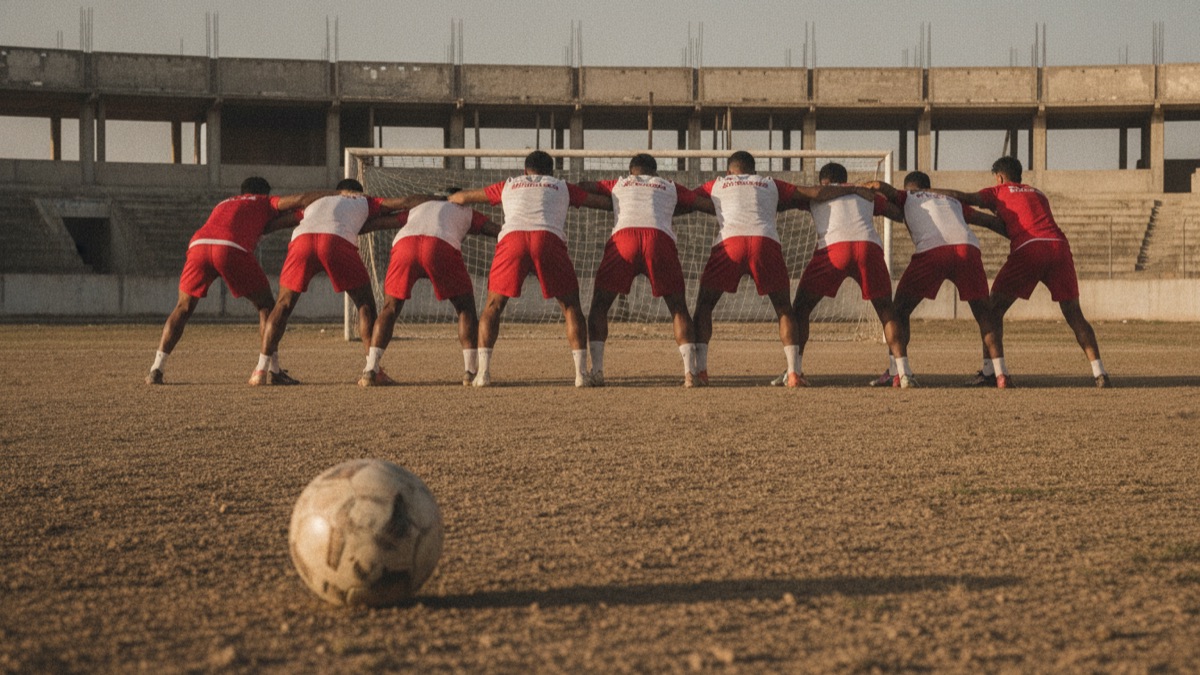
Tunisia often enter major tournaments with a familiar reputation: organized, determined, and difficult to break down. At World Cup 2026, that identity still matters, but the challenge is turning resilience into points. Competing well is one thing. Converting discipline into results is another. The Carthage Eagles have established themselves as Africa's most consistent tournament performers, yet their World Cup record remains one of near-misses and valiant defeats rather than breakthrough victories.
For Tunisian supporters, the central question is whether the team can keep its defensive steel while finding enough ambition in possession to avoid playing permanently on the margins. Tunisia's football tradition has been built on tactical intelligence and collective effort, qualities that have produced memorable performances even when victories have been elusive. The 2026 tournament offers another opportunity to prove that defensive organization can be a foundation for success, not merely a consolation prize.
Key Takeaways
- Tunisia's structure and work rate remain major strengths.
- Their problem is often not competitiveness, but attacking output.
- Small details in set pieces and transitions can shape their tournament.
- Tunisia thrive when matches stay compact and tense.
- World Cup success depends on taking limited opportunities.
- The Carthage Eagles carry one of Africa's most consistent tournament records.
Context and Overview of Tunisia's 2026 Identity
Tunisia are rarely easy opponents. Their discipline, effort, and willingness to suffer without collapsing make them a credible tournament side. But against strong opposition, defensive resistance alone is not enough. The North African nation has produced players of genuine quality, from the 1970s generation through to the current crop, but the challenge has always been converting defensive solidity into goal-scoring threat.
To progress, Tunisia need moments of clarity in possession. They do not need to dominate games, but they do need to threaten them. The 2026 qualification campaign showed familiar patterns: Tunisia were defensively sound throughout their group, conceding few goals, but their goal-scoring record was modest compared to other African qualifiers. This pattern has defined Tunisian football for decades.
The coaching staff have worked on adding more attacking variety without compromising defensive integrity. The addition of European-based players with technical quality has raised the offensive ceiling, but the team remains fundamentally cautious. Tunisia's challenge is finding the right balance between their natural defensive instincts and the attacking ambition required to win matches at World Cup level.
Historical Context: Tunisia's World Cup Journey
Tunisia hold the distinction of being the first African team to win a World Cup match, defeating Mexico 3-1 in Argentina 1978. That historic victory, featuring goals from Ali Kaabi, Néjib Ghommidh, and Mokhtar Dhouieb, marked a watershed moment for African football. Yet Tunisia's subsequent World Cup history has been a story of valiant efforts rather than sustained success. They have qualified for multiple tournaments but rarely progressed beyond the group stage.
The 2022 World Cup in Qatar encapsulated Tunisia's tournament identity. A narrow 1-0 defeat to Denmark, a 1-0 victory over France in their final group match (though France rested key players), and a 1-0 defeat to Australia left them on the margins of qualification. The Australia match, in particular, highlighted Tunisia's dilemma: they dominated possession but could not convert territorial advantage into goals. Wahbi Khazri's retirement from international football after the tournament marked the end of an era, and the 2026 squad must find new attacking solutions.
Tunisia have qualified for six World Cup tournaments, a record that demonstrates their consistency in African football. However, only in 1978 did they secure a victory until the 2022 France result. The Carthage Eagles have reached the Africa Cup of Nations final on two occasions, most recently losing to Algeria in 2021. That continental consistency is the foundation upon which Tunisia's 2026 hopes must be built.
Breakdown of Tunisia's Core Strengths
Defensive Compactness
Tunisia's shape often keeps them alive in matches longer than talent comparisons might predict. Their defensive organization is among the best in African football, with a well-drilled backline and disciplined midfield screening. The team typically concedes fewer goals than most African qualifiers, and their ability to frustrate opponents is a genuine asset.
Physical Commitment
They usually compete hard in duels and second balls, which matters in tense group-stage football. Tunisia's physical preparation is generally excellent, and their players are capable of maintaining high intensity throughout matches. This commitment can unsettle technically superior opponents who are not prepared for the physical contest.
Set-Piece Potential
Tight games often swing on dead-ball quality, and Tunisia can use that route effectively. Their delivery from wide areas and aerial presence at corners provide genuine goal threat. In matches where open-play chances are limited, Tunisia's set-piece organization can be decisive.
Controlled Risk
Their strongest matches tend to come when they choose their attacking moments carefully. Tunisia are not at their best when forced to chase games or take risks early. Their most effective performances typically involve patience, waiting for the right moment to commit numbers forward, and maintaining defensive shape until clear opportunities emerge.
Tactical Analysis: Formation and Playing Style
Tunisia typically operate in a 4-3-3 or 4-2-3-1 formation that prioritizes defensive solidity. The back four is protected by a defensive midfielder or double pivot, while the attacking players are expected to contribute defensively. Full-backs are generally conservative, tucking in to form a defensive block rather than pushing high up the pitch.
In possession, Tunisia look to build through the midfield, using the technical quality of their central players to progress the ball. However, they are equally comfortable playing direct, utilizing the physical presence of their forwards to hold up play and bring runners into the game. The tactical approach is often dictated by the opponent: against stronger teams, Tunisia drop deeper and look for counter-attacking opportunities; against more evenly matched opponents, they attempt to control possession.
Defensively, Tunisia's hallmark is the low block. They compress space between the lines, making it difficult for opponents to find passing lanes through the midfield. The defensive line maintains a deep position, reducing the space in behind for pacey attackers to exploit. While this approach limits their own attacking threat, it makes them extremely difficult to break down. The challenge is transitioning from this defensive posture into attack quickly enough to catch opponents before they reorganize.
Counter-attacking speed is an area where Tunisia have improved. The inclusion of faster, more direct players in the squad has added a dimension that was previously lacking. The coaching staff have worked on rehearsed counter-attacking patterns, recognizing that Tunisia's best chance of scoring against stronger opponents often comes in the moments immediately after winning possession.
Key Players to Watch
Youssef Msakni (Al-Arabi): The veteran attacker remains Tunisia's creative hub despite his advancing years. His dribbling ability, close control, and vision make him the player most likely to unlock organized defenses. Msakni's experience in multiple World Cup and AFCON tournaments provides leadership that is invaluable in high-pressure situations. His ability to operate between the lines and create chances from limited possession is central to Tunisia's attacking hopes.
Wahbi Khazri (Retired): While Khazri has retired from international football, his influence on the current generation remains significant. The players who learned alongside him in Qatar 2022 carry forward his example of attacking bravery and technical confidence. Tunisia's new generation must replicate his willingness to take risks in possession.
Dylan Bronn (Salernitana): The center-back provides defensive leadership and aerial presence. His organizational skills help maintain the compact defensive shape that defines Tunisia's approach. Bronn's ability to read the game and intercept passes is crucial to the team's defensive success, while his heading ability from set pieces offers an additional goal threat.
Ellyes Skhiri (Eintracht Frankfurt): The defensive midfielder anchors the team with his tackling, positioning, and distribution. Skhiri's ability to break up opposition attacks and initiate counter-attacking moves makes him indispensable. His presence allows the more creative players to focus on attacking without excessive defensive responsibilities.
Issam Jebali (Umm Salal): The forward provides pace and direct running that can stretch defenses. Jebali's movement off the ball and ability to run in behind defensive lines offers Tunisia an alternative to their more possession-based approach. His link-up play with Msakni is a key attacking relationship.
Pros & Cons of Tunisia's Approach
Pros
- Strong tournament discipline and defensive organization
- Hard-working defensive unit that maintains shape throughout matches
- Effective in scrappy or physical matches where quality is neutralized
- Usually mentally resilient under pressure and difficult to break down
- Experienced squad with multiple tournament appearances
- Excellent set-piece organization providing goal threat from dead balls
Cons
- Can struggle to create open-play chances against deep defenses
- Falling behind early changes the game model dramatically and exposes weaknesses
- Technical limitations may show against elite pressing teams
- Margins for error are very small due to limited goal-scoring capacity
- Over-reliance on veteran players who may lack pace for counter-attacking
- Difficulty in breaking down opponents who sit deep and defend in numbers
How To Understand Tunisia's Match Pattern
Ask Whether the Match Is Still Close at Halftime
That usually favors Tunisia. Their defensive approach is most effective over 90 minutes when they are not chasing the game. If they can maintain a level scoreline into the second half, their organization and physical fitness often give them an advantage in the final stages.
Watch the First Goal
If Tunisia concede first, their task becomes much harder because they must open up. Their defensive structure is designed to protect a lead or maintain a draw, not to chase matches. When forced to take risks, they become vulnerable to the counter-attacks they usually excel at preventing.
Track Set-Piece Threat
One quality delivery can change everything in a low-scoring game. Tunisia's set-piece routines are well-rehearsed, and their aerial presence from corners and free-kicks is a genuine source of goals. Against opponents who dominate open play, set pieces may represent Tunisia's best chance of scoring.
Notice Ball Retention Under Pressure
Even short calm spells on the ball can be a major positive indicator. If Tunisia can circulate possession for extended periods without losing the ball, it suggests they are matching their opponents technically and are not merely defending. These spells of possession often precede their best attacking moments.
Evaluate Counter-Attacking Threat
Tunisia's most dangerous moments typically come immediately after winning the ball. Watch for the speed of their transitions and the quality of their passing in the first few seconds after recovering possession. When these transitions are sharp, Tunisia can be genuinely threatening despite their defensive reputation.
FAQs
What is Tunisia's biggest strength?
Defensive structure and a willingness to compete for every phase. Their collective defensive organization and tactical discipline make them difficult opponents for any team.
Why do Tunisia matches often feel tight?
Because their system is designed to reduce space and keep scores low. The coaching philosophy prioritizes defensive solidity over attacking ambition, which naturally produces tight, tense contests.
What do they need to improve most?
Chance creation and attacking confidence in controlled moments. Tunisia must find ways to generate more goal-scoring opportunities without compromising their defensive foundation.
Can Tunisia still surprise bigger teams?
Yes, especially when they make matches physical, compact, and emotionally intense. Tunisia's ability to frustrate technically superior opponents and capitalize on set-piece situations makes them dangerous in one-off matches.
Who are Tunisia's key players to watch?
Youssef Msakni, Wahbi Khazri, and Dylan Bronn provide the experience and quality that can define Tunisia's tournament. The emerging generation must complement these veterans with energy and attacking unpredictability.
Related Resources
- Arab teams at World Cup 2026
- Morocco's defensive structure at World Cup 2026
- Algeria's tactical approach in major tournaments
- Tunisia's defensive model explained
- Arab teams most suited to knockout football
- Why set pieces matter so much at the World Cup
Conclusion
Tunisia remain one of the toughest Arab teams to play against because they rarely give opponents comfort. But World Cup 2026 will ask for more than grit alone. If Tunisia can pair defensive discipline with sharper attacking execution, they can turn stubborn performances into meaningful results. The Carthage Eagles have the experience and organization to frustrate elite opponents; what they need is the belief and quality to convert that frustration into victory. If they find that balance, Tunisia could finally translate their defensive excellence into the tournament success their supporters have long awaited.
Sources
This article was reviewed against current tournament context and official competition resources.