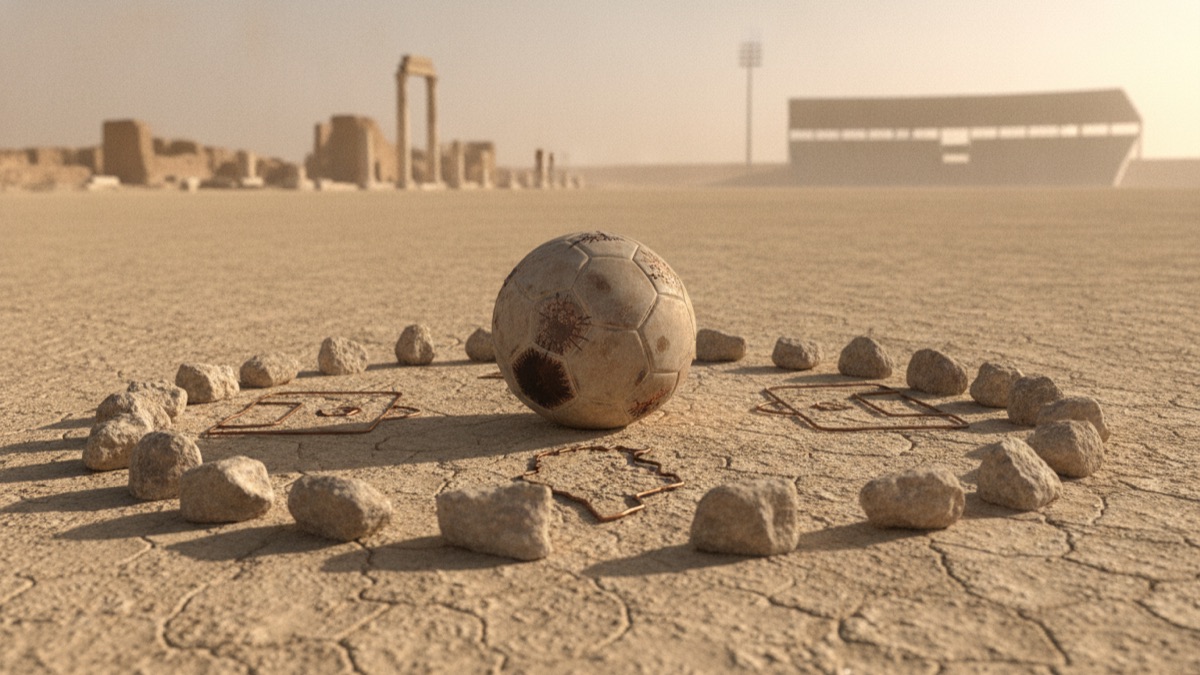
Tunisia have long understood one basic truth of tournament football: staying alive matters. In difficult World Cup groups, teams do not always need immediate brilliance. Sometimes they need patience, shape, and the ability to carry tension deep into the match.
That is where Tunisia often excel. Their challenge in 2026 is making survival a platform rather than an end point.
Key Takeaways
- Tunisia are specialists in compact, difficult matches.
- Their discipline helps them stay competitive against stronger teams.
- The next step is turning survival into proactive threat.
- Set pieces and selective attacks are central to their model.
- Low-margin football can be a real strategy, not a limitation.
Context and Overview of Tunisia's Tournament Method
Not every World Cup team can dominate matches. Tunisia's identity is built around reducing risk, limiting space, and waiting for moments they can actually control. That can frustrate opponents and keep belief alive.
But survival without threat has limits. Tunisia need better attacking timing to turn competitiveness into points.
Breakdown of Their Survival Model
Compact Lines
Tunisia often keep central areas crowded and difficult to penetrate. Their defensive block typically sits relatively deep, forcing opponents to break them down through patient build-up rather than quick transitions. This approach has served them well in recent Africa Cup of Nations campaigns and in their 2022 World Cup group.
Physical Commitment
They make matches demanding and uncomfortable. Tunisia's squad is known for its athleticism and willingness to engage in duels across the pitch. This physical approach disrupts the rhythm of technically superior opponents and forces them into unfamiliar territory.
Limited But Valuable Attacks
Their best opportunities often come from carefully chosen moments. Rather than trying to dominate possession, Tunisia look for specific triggers: turnovers in midfield, set pieces, and moments when opponents overcommit. Their goal against France in the 2022 World Cup came from exactly this kind of selective aggression.
Set-Piece Leverage
Dead-ball execution can rescue or decide tight games. Tunisia have historically been well-organized from corners and free kicks, using their physical presence to create chances in a low-possession environment.
Tactical Analysis
Tunisia's tactical setup is built on a clear defensive hierarchy and a no-nonsense approach to transition.
Formation and Shape
Tunisia most commonly operate in a 4-3-3 or 4-1-4-1 formation, with the central midfielders sitting compact and the wide forwards tracking back to support the full-backs. This creates a 4-5-1 defensive block that is difficult to play through centrally. The key is the distance between the lines: Tunisia keep their defensive and midfield units close, reducing the space for opponents to operate between them.
Strengths
Central compactness, organized set-piece defense, and the ability to maintain concentration for long periods. Their physical conditioning allows them to sustain their defensive intensity late into matches, which is critical in tournament settings where goal difference and late goals often decide group positions.
Weaknesses
Limited ball progression from deep, reliance on a small number of creative players, and difficulty breaking down teams that defend equally deep. When Tunisia fall behind, they can struggle to shift gears and create sustained pressure.
Playing Style
Tunisia are comfortable without the ball. Their defensive transitions are well-drilled, and they rarely overcommit in attack. The trade-off is that they generate fewer chances than more expansive teams, meaning their finishing has to be efficient when opportunities do arise.
Key Players to Watch
Individual quality matters even in a team built on collective structure.
Ellyes Skhiri
The Eintracht Frankfurt midfielder is Tunisia's primary defensive screen. His positioning and ability to read danger allow the more creative players to operate with some protection behind them. Skhiri's presence is essential to the compactness that defines Tunisia's approach.
Youssef Msakni
At 34, Msakni remains the team's most experienced creative outlet. His ability to carry the ball forward and pick passes in tight spaces gives Tunisia a rare attacking dimension. When he is fit and involved, Tunisia look more dangerous in transition.
Dylan Bronn
The central defender is a key organizer in the back line. His aerial presence and communication help maintain the shape that Tunisia depend on. Bronn's ability to win duels and distribute calmly under pressure is vital.
Montassar Talbi
Now playing at FC Lorient, Talbi has developed into one of Tunisia's most reliable defenders. His reading of the game and ability to cover spaces behind the full-backs adds security to a unit that values coordination over individual brilliance.
Pros & Cons of This Approach
Pros
- Strong defensive reliability
- Useful in difficult groups
- Keeps games emotionally tense for opponents
- Can produce surprise results in close contests
Cons
- Harder to recover after conceding
- Limited chance volume increases pressure on finishing
- Negative optics may hide real tactical value
- Sustained pressure can still break the system late
How To Understand Tunisia Properly
Don't Confuse Low Possession With Poor Performance
Tunisia can still execute the intended plan well.
Track Shot Quality
A few strong chances are worth more than many harmless touches.
Watch the Last 30 Minutes
Their fitness and concentration become crucial here.
Observe Set-Piece Design
It may be their most important attacking tool.
FAQs
Why do Tunisia often keep games close?
Because their structure is built to reduce opponent comfort and control central danger.
What is their biggest limitation?
Creating enough open-play threat.
Is cautious football a weakness?
Not necessarily. In tournaments, caution can be strategic.
What would improve Tunisia most?
More efficient attacking support once they recover the ball.
What formation does Tunisia typically use?
Tunisia often deploy a compact 4-3-3 or 4-1-4-1, prioritizing central protection and disciplined wide coverage.
Which players are central to Tunisia's defensive model?
Ellyes Skhiri provides midfield screening, while Dylan Bronn and Yassine Meriah organize the back line.
Related Resources
- Tunisia at World Cup 2026 overview
- How compact teams steal points in group stages
- Arab teams built for low-scoring matches
Conclusion
Tunisia's art is survival, but World Cup 2026 asks whether survival can become momentum. If they can add sharper attacking execution to their disciplined foundation, they can do more than stay alive. They can become one of the toughest Arab teams to eliminate.
Sources
This article was reviewed against current tournament context and official competition resources.