Introduction
Vitamins and minerals are both classified as micronutrients — needed in small amounts but essential for the body to function — yet they are fundamentally different types of substances.
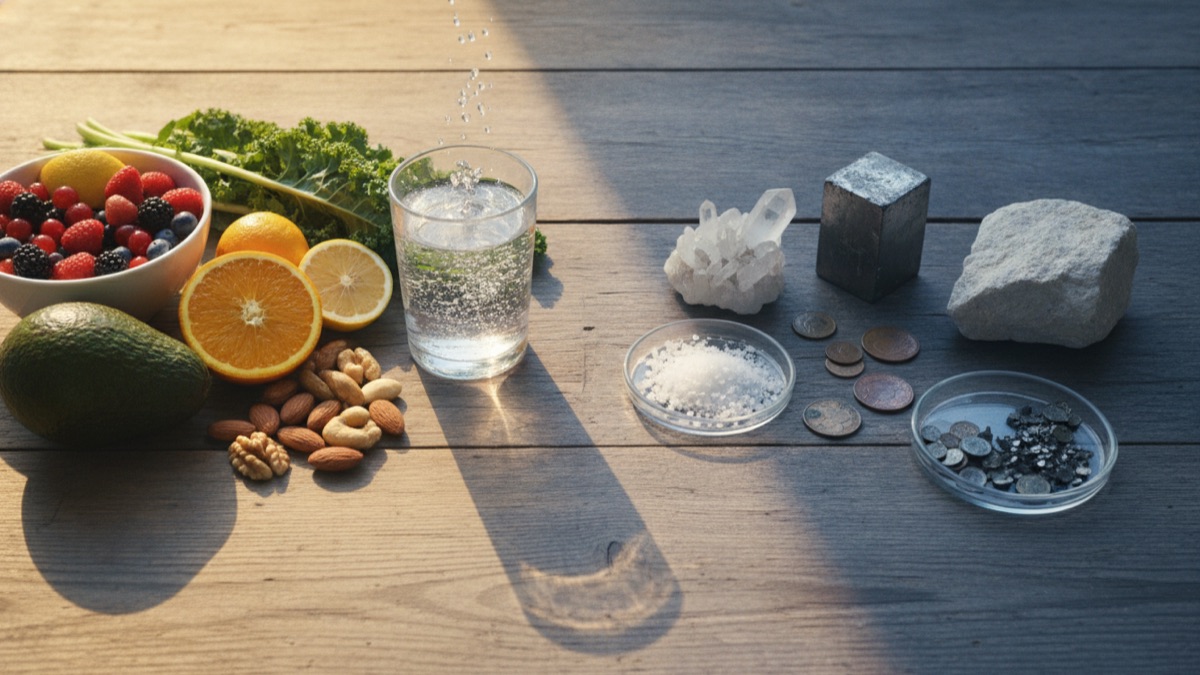
Vitamins are organic compounds, meaning they contain carbon and are produced by living things (plants, animals, or the body itself in small amounts), while minerals are inorganic elements that originate in soil and water.
The Key Differences
Because vitamins are organic, they can be broken down by heat, air, or acid during cooking and storage, while minerals are chemically stable and cannot be destroyed by cooking, though they can leach into cooking water.
Vitamins are further split into fat-soluble (A, D, E, K, stored in body fat) and water-soluble (B vitamins and vitamin C, which the body cannot store and needs regularly), while minerals like calcium, iron, and potassium are absorbed and used in their elemental form.
Do You Need Both?
Yes — vitamins and minerals play complementary but distinct roles: vitamins are heavily involved in metabolism and immune function, while minerals are essential for bone structure, nerve signaling, and fluid balance.
A varied diet with fruits, vegetables, whole grains, and protein sources typically covers both categories without needing supplements, which health authorities generally recommend reserving for diagnosed deficiencies or specific medical needs.
Sources
- Harvard T.H. Chan School of Public Health — nutrition science overview of vitamins and minerals
- NIH Office of Dietary Supplements — reference data on specific vitamins and minerals
- Mayo Clinic — clinical guidance on getting enough of both
FAQ
What is the main chemical difference between vitamins and minerals?
Vitamins are organic compounds that contain carbon and can be broken down by heat or light, while minerals are inorganic elements that are chemically stable and cannot be destroyed by cooking.
Which vitamins can the body store?
The fat-soluble vitamins A, D, E, and K can be stored in body fat, while water-soluble vitamins like vitamin C and the B vitamins are not stored and need to be replenished regularly through diet.
Can you get enough vitamins and minerals from food alone?
For most healthy people, yes — a varied diet covers both categories, and health authorities generally recommend supplements only for diagnosed deficiencies or specific medical circumstances.
About the Author
We reference Harvard's T.H. Chan School of Public Health and the NIH Office of Dietary Supplements and Mayo Clinic to explain the background and current understanding of this topic.
Loved This Article?
Share it on WhatsApp → Share on WhatsApp
Get more guides in your inbox — Subscribe to our newsletter for weekly surprising stories from Egypt, Saudi Arabia, Dubai, and beyond.