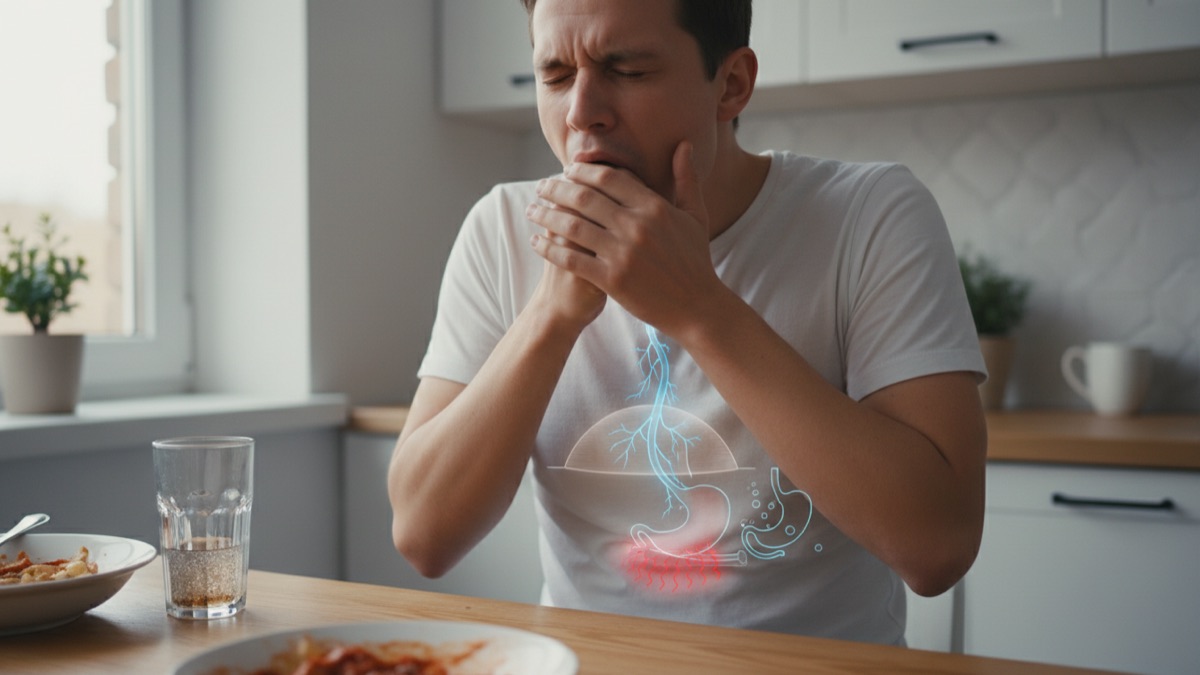
Hiccups happen when the diaphragm, the large muscle beneath the lungs that controls breathing, contracts suddenly and involuntarily, causing a quick intake of air that makes the vocal cords snap shut and produce the familiar 'hic' sound.
Common triggers include eating too quickly, swallowing air, carbonated drinks, sudden temperature changes, alcohol, and spicy food, all of which can irritate the diaphragm or the nerves controlling it.
An Involuntary Spasm, Not a Voluntary Reflex
Why They Usually Stop on Their Own
The nerves involved, mainly the phrenic and vagus nerves, run a long path between the brain and the diaphragm, which is part of why so many unrelated things, from stress to a full stomach, can trigger a hiccup episode.
Most hiccup bouts resolve on their own within minutes without any intervention, though home remedies like holding your breath or drinking water aim to interrupt the nerve signal, and hiccups lasting more than 48 hours are uncommon enough to be worth a medical evaluation.
Sources
- Wikipedia — overview of hiccups and their physiological cause
- Cleveland Clinic — clinical explanation of hiccup causes and remedies
- Mayo Clinic — patient-facing overview of hiccups and when to see a doctor
FAQ
Are hiccups a voluntary reflex?
No — they're an involuntary spasm of the diaphragm, triggered by irritation of the nerves that control it rather than something you consciously start.
Do home remedies for hiccups actually work?
Many popular remedies, like holding your breath or drinking water, aim to interrupt the nerve signal causing the spasm, though results vary from person to person.
When should hiccups be checked by a doctor?
Hiccups lasting longer than 48 hours, or that interfere with eating, sleeping, or breathing, are uncommon and generally worth a medical evaluation.
About the Author
We reference Wikipedia, Cleveland Clinic, and Mayo Clinic to explain the background and current understanding of this topic.
Loved This Article?
Share it on WhatsApp → Share it on WhatsApp
Get more guides in your inbox — Subscribe to our newsletter for weekly surprising stories from Egypt, Saudi Arabia, Dubai, and beyond.