Table of Contents
Overview
A digital twin is a continuously updated virtual model of a physical object, process, or system, connected to its real-world counterpart through sensor data so the digital version reflects the current state of the physical one, not just a static design drawing. The concept has existed in specialized manufacturing and aerospace contexts for years, but cheaper sensors, better simulation software, and AI-assisted modeling have expanded its use into cities, healthcare, and everyday infrastructure.
This guide explains what makes a digital twin different from a regular 3D model or simulation, where the concept is genuinely proving useful, and where the term is sometimes used more loosely than its strict definition suggests.
How a Digital Twin Differs from a Regular 3D Model
A static 3D model or CAD drawing represents how something was designed or how it looked at one point in time; it does not update itself. A digital twin, by contrast, stays connected to its physical counterpart through a continuous stream of sensor data — temperature, vibration, location, usage patterns — so the virtual model's state changes as the real object's condition changes.
This live connection is what allows a digital twin to be used for more than visualization: because it reflects current real-world state, it can be used to run simulations, test hypothetical changes, or predict problems before they occur in the physical original.
Digital Twins in Manufacturing
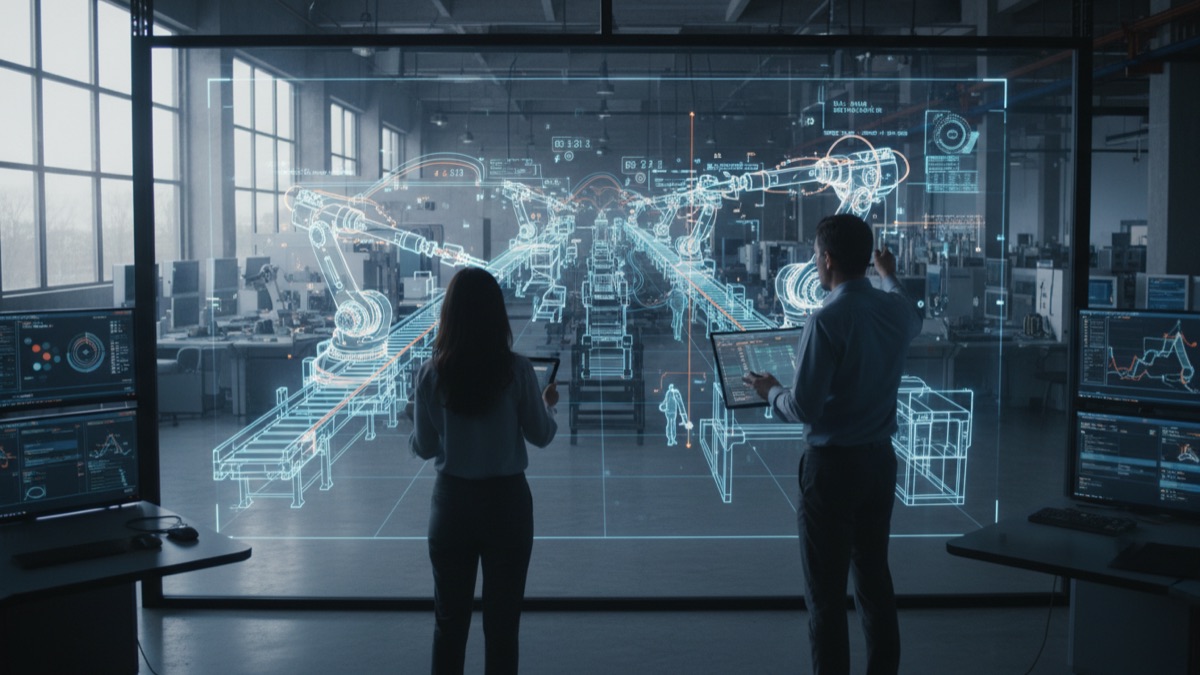
Manufacturing remains the most mature application area for digital twins, where a virtual model of a production line or individual machine can be used to simulate how a proposed change — a new part, a different production schedule, a maintenance adjustment — would affect output before that change is made on the real factory floor. This reduces the cost and risk of trial-and-error testing directly on expensive physical equipment.
Digital twins of individual machines are also used for predictive maintenance: by continuously comparing a machine's real-time sensor data against expected patterns, the system can flag unusual wear or performance changes that suggest a part is likely to fail soon, allowing repairs to be scheduled proactively rather than after a breakdown.
City and Infrastructure Digital Twins
Several cities have built digital twins of their transportation networks, utility grids, or broader urban infrastructure, combining data from traffic sensors, utility meters, and geographic information systems into a unified virtual model. Planners use these models to simulate the effects of proposed changes, such as a new road, a shifted bus route, or a change to water infrastructure, before committing to a costly real-world construction project.
These city-scale digital twins are generally less complete and more variable in quality than manufacturing twins, since urban systems are larger, messier, and harder to fully instrument with sensors than a controlled factory environment.
Digital Twins in Healthcare
In healthcare, the term digital twin is used at two different scales. At the equipment and facility level, hospitals apply the same manufacturing-style concept to medical equipment and building systems, monitoring and predicting maintenance needs. At a more experimental level, researchers are exploring 'patient digital twins' — models that combine a person's medical data, genetics, and other health information to simulate how they might respond to a particular treatment.
Patient-level digital twins remain considerably earlier-stage and more limited than the manufacturing use case, given the complexity of human biology and the strict validation required before any such tool could inform real clinical decisions, so this application should be understood as promising research rather than routine clinical practice today.
Limits and Loose Use of the Term
Because 'digital twin' has become a popular marketing term, it is sometimes applied loosely to systems that are really just a detailed 3D model or a one-time simulation without a genuine live data connection to a physical counterpart. A useful check when evaluating a digital twin claim is to ask whether the model actually updates from real-world sensor data on an ongoing basis, or whether it was built once and left static, since only the former matches the concept's real definition and value.
Sources
These sources were selected from official documentation and reputable technology explainers. Always check the original pages because AI and computing products change quickly.
Frequently Asked Questions
What is the difference between a digital twin and a 3D model?
A static 3D model represents a design at one point in time and does not update. A digital twin stays connected to its physical counterpart through ongoing sensor data, so its state changes as the real object's condition changes.
How are digital twins used in manufacturing?
Manufacturers use digital twins to simulate proposed production changes before making them on the real factory floor, and to run predictive maintenance by comparing live sensor data against expected patterns to flag likely equipment failures early.
Are patient digital twins used in hospitals today?
Patient-level digital twins remain largely experimental research rather than routine clinical practice, given the complexity of human biology and the strict validation required before such tools could inform real treatment decisions.
How do you know if something is a real digital twin?
A genuine digital twin updates continuously from real-world sensor data reflecting its physical counterpart's current state. If a model was built once and left static without an ongoing data connection, it does not match the strict definition, even if marketed as one.
What data do digital twins use?
Digital twins typically combine sensor data such as temperature, vibration, location, and usage patterns from the physical system, feeding continuously into the virtual model so it reflects real-time conditions rather than a fixed snapshot.
About the Author
The doyouknow.app Editorial Team writes bilingual explainers that make technology and everyday services easier to understand, with attention to primary sources and the limits of fast-changing information.
Loved This Article?
Share on WhatsApp · Subscribe to our newsletter