What Dhikr Means
Dhikr, an Arabic word meaning "remembrance" or "mention," refers to the practice of remembering and invoking God, typically through repeating specific phrases, prayers, or names of God, either silently or aloud.
It is considered a form of worship in its own right and is described in Islamic teachings as something that can be practiced at almost any time, not limited to formal prayer sessions.
Common Forms of Dhikr
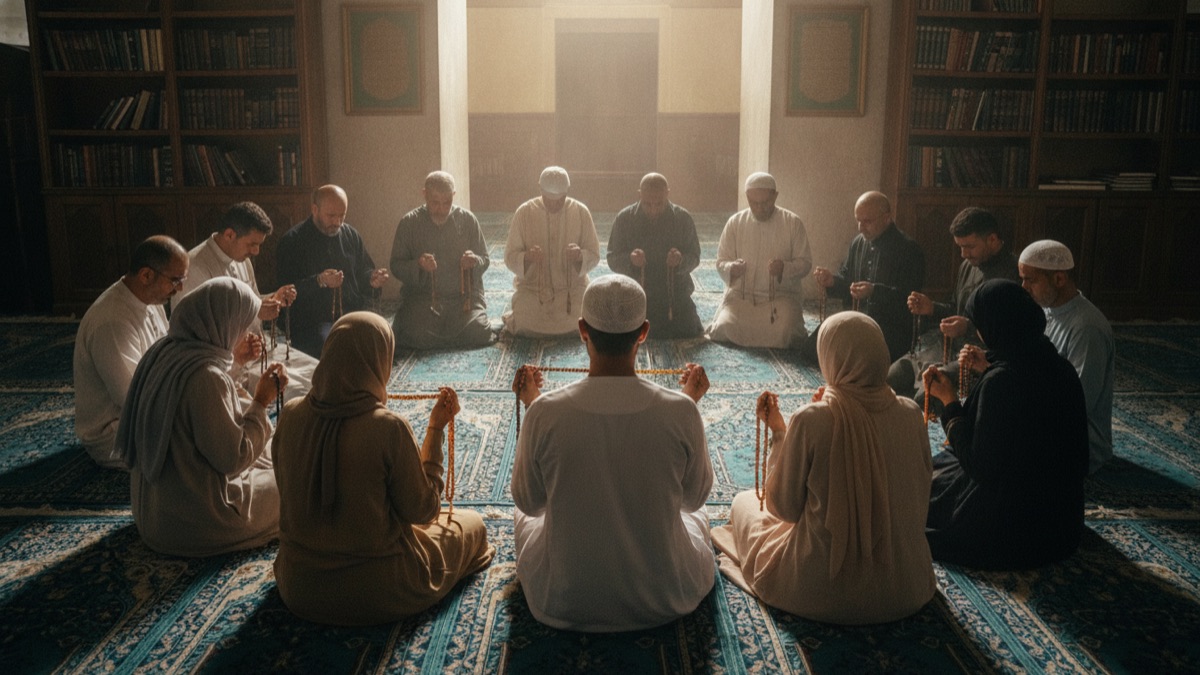
Common phrases used in dhikr include short expressions of praise, gratitude, and glorification of God, often repeated a set number of times, sometimes counted using prayer beads known as a tasbih.
Dhikr can also take the form of reciting portions of the Quran, reflecting on God's attributes, or offering supplications, giving it a range of expressions beyond simple repetition.
A Practice Woven Into Daily Life
Beyond formal prayer, many Muslims incorporate dhikr into daily routines, such as before eating, when leaving the house, or during moments of difficulty, reflecting the idea that remembrance of God is meant to be a continuous state rather than an isolated ritual.
Islamic teachings emphasize that dhikr is intended to bring inner peace and mindfulness, connecting routine daily actions to a broader sense of spiritual awareness.
Sources
- Sunnah.com — hadith collections referencing common dhikr phrases
- Encyclopaedia Britannica — an academic overview of dhikr in Islamic practice
- IslamQA — scholarly guidance on forms and etiquette of dhikr
FAQ
What does the word dhikr mean?
It is an Arabic word meaning "remembrance" or "mention," referring to the practice of remembering and invoking God.
Is dhikr limited to formal prayer?
No, it can be practiced at almost any time and is often woven into daily routines like eating or leaving the house.
What is a tasbih used for?
A tasbih is a set of prayer beads sometimes used to count repetitions of dhikr phrases.
About the Author
We reference Sunnah.com, Encyclopaedia Britannica, IslamQA to explain the background and current understanding of this topic.
Loved This Article?
Share it on WhatsApp → Share it on WhatsApp
Get more guides in your inbox — Subscribe to our newsletter for weekly surprising stories from Egypt, Saudi Arabia, Dubai, and beyond.