What Is Jummah and Why Friday Matters
For Muslims, Friday is the week's most significant day, and the Friday prayer (Jummah) is its centerpiece. Once a week, the ordinary midday prayer is replaced by a congregational prayer preceded by a sermon, and the Quran instructs believers to leave trade and hurry to the remembrance of God when the call is made (Surah Al-Jumu'ah 62:9). Mosques fill, work pauses, and the community resets.
This guide explains how Jummah works in practice: the structure of the khutbah and the two rak'ahs, who is obliged to attend, the etiquette that maximizes the day's reward, and how the UAE's working week is arranged so employees can attend. Whether you are new to the prayer or new to the Emirates, the essentials below will help you plan every Friday with confidence.
How the Friday Prayer Works: Khutbah and Two Rak'ahs
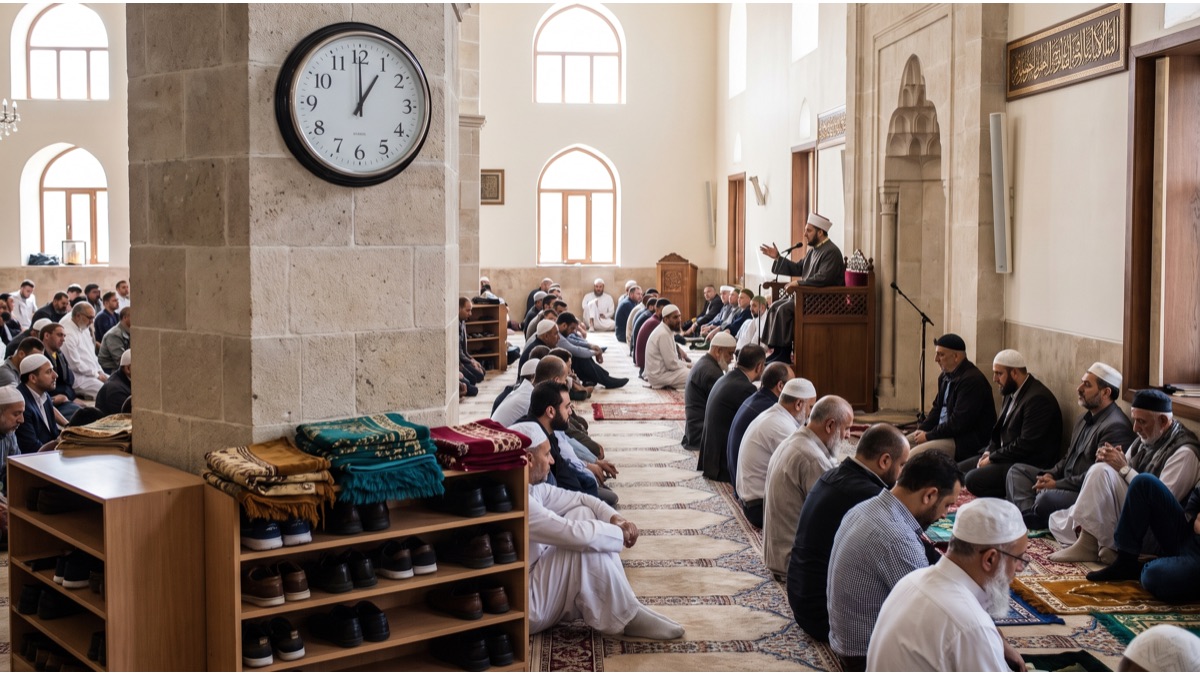
Jummah replaces the four-rak'ah Dhuhr prayer with two congregational rak'ahs, but the prayer itself is only half of the event. The khutbah — a sermon delivered by the imam from the minbar — comes first and is a condition of the prayer's validity. It is traditionally delivered in two parts with a brief pause between them, combining praise of God, reminders of faith, Quranic verses, and supplications for the community.
The sequence is fixed: the adhan is called, worshippers pray voluntary sunnah prayers individually, the imam ascends the minbar and delivers the khutbah, the iqamah is called, and the congregation prays two rak'ahs aloud behind the imam. Once the imam begins the sermon, talking is prohibited — scholars hold that even telling someone else to be quiet compromises your Friday reward, so latecomers slip in silently and sit.
Missed the congregation? If you join while the imam is seated between the two khutbahs or during the prayer, you complete two rak'ahs as Jummah. If the congregation has finished entirely, you pray the regular four-rak'ah Dhuhr instead. Timing is therefore not a formality: the whole obligation lives inside the Dhuhr window on Friday.
It is worth noting that the khutbah in most Arab-world mosques is delivered in Arabic, with translations of its meaning offered in some larger mosques via screens or apps. In the UAE, Awqaf unifies the khutbah topic weekly, so worshippers hear the same subject in every mosque across the country — a tradition residents from other countries will recognise in different forms.
Etiquette and Sunnah Practices of Friday
Friday has its own rituals of preparation. A full bath (ghusl), clean or best clothes, and — for men — perfume are recommended before leaving home. The Prophet Muhammad ﷺ taught that those who arrive earliest earn the greatest reward, with the angels recording arrivals at the mosque door until the imam begins. Walking calmly rather than rushing, and praying the two-rak'ah greeting of the mosque (tahiyyat al-masjid) before sitting, are part of the tradition.
Two practices define the day beyond the prayer itself: reciting Surah Al-Kahf, and sending abundant blessings upon the Prophet ﷺ. Many worshippers also treat Friday as a day of dua, charity, and family connection. None of these are conditions of Jummah's validity, but together they form the etiquette that generations of scholars have encouraged.
One more habit worth reviving: switching the phone off before the imam rises. Notifications during the khutbah pull attention exactly where the day asks for stillness. Many worshippers also give a small sadaqah on Friday, linking the week's best day to generosity.
Common Jummah Scenarios, Answered Briefly
Travelers face a common question: does Jummah apply on the road? Fiqh rules exempt the traveler who meets the shar'i definition of travel, but anyone who attends a mosque's Friday prayer while away performs it validly and it replaces Dhuhr. Business travelers in the Gulf often plan Friday around airport and hotel mosques; both routinely host congregational Friday prayers.
Working Muslims sometimes cannot reach a mosque in time. Where attendance is genuinely impossible — shift work, safety-critical roles, travel delays — scholars direct the person to pray Dhuhr instead, without sin, because obligation falls with inability. The key is intention and effort: arranging the earliest possible departure, asking the employer in advance, and knowing which nearby mosque starts earliest.
For women, Jummah is a valid and rewarded choice rather than a duty. Mosques across the UAE provide dedicated spaces for women at Friday prayer, and the same etiquette applies: arrive early, listen to the khutbah, and pray the two rak'ahs with the congregation.
Friday Prayer and Working Hours in the UAE
The UAE redesigned its working week around Friday prayer. Since January 2022, the federal government has worked a half-day on Friday, with Saturday and Sunday forming the weekend — a schedule adopted across the public sector and, in practice, by most schools. The change aligned the work calendar with Jummah instead of competing with it.
In the private sector, working hours are set by the UAE labor law framework and company policy. Employers commonly shift Friday hours, release staff in time for prayer, or treat Friday as a remote or shortened day, but arrangements vary by company and industry. If your schedule collides with Jummah, raise it with your employer — most UAE workplaces are accustomed to accommodating the prayer, and the law's flexible framework usually makes it workable.
For the prayer time itself, Friday prayer in the UAE falls around midday, with the khutbah start varying by mosque and season. Check your local mosque or the official prayer-times channels of the General Authority of Islamic Affairs and Endowments (Awqaf), which also publishes the weekly khutbah theme nationwide.
Friday also shapes the UAE's public rhythm: government services, banks and many offices close early, and popular mosques fill well before the adhan. New residents quickly learn the Friday pattern — lighter morning traffic, busy mosque car parks around midday, and a slower afternoon across much of the country.
Sources
- Awqaf UAE — General Authority of Islamic Affairs and Endowments — official khutbah topics, prayer guidance and mosque services
- UAE Government Portal — Private Sector Employment — working hours, rest days and the labor framework
- Muslim World League — global Islamic guidance and educational resources
- Islam Q&A — referenced fiqh answers on Friday prayer rulings
FAQ
Who is obliged to attend Friday prayer?
Jummah is obligatory for adult Muslim men who are resident, healthy, and able to attend safely. It is not obligatory for women, children, the sick, or travelers, though anyone who attends receives the full reward and the prayer counts in place of Dhuhr.
What time is Jummah in the UAE?
Friday prayer is held in the Dhuhr window around midday. The exact khutbah start varies by mosque and season, so check your local mosque or Awqaf's prayer-time channels rather than relying on a fixed clock time.
What should I do if I arrive late?
Enter quietly and sit — do not greet others or pray sunnah once the khutbah has begun. If you catch any part of the two rak'ahs with the imam, complete them as Jummah; if the prayer has ended, pray Dhuhr as four rak'ahs.
Is Friday a working day in the UAE?
The public sector works a half-day on Friday, with Saturday and Sunday as the weekend. Private-sector schedules vary by company, but most employers arrange Friday so staff can attend the prayer.
Can travelers and women attend Jummah?
Yes. Attendance is valid and rewarded for anyone, and it replaces Dhuhr for those who join. It simply is not obligatory for women or for travelers who meet the fiqh definition of travel.
About the Author
doyouknow.app Editorial Team — We write clear, sourced explainers on Islamic practice and culture for readers in the Gulf and beyond, in plain language that respects both scholarship and everyday life.
Loved This Article?
Share it on WhatsApp → Share on WhatsApp
Get more Islamic knowledge in your inbox — Subscribe to our newsletter for weekly explainers on faith, culture, and life in the region.