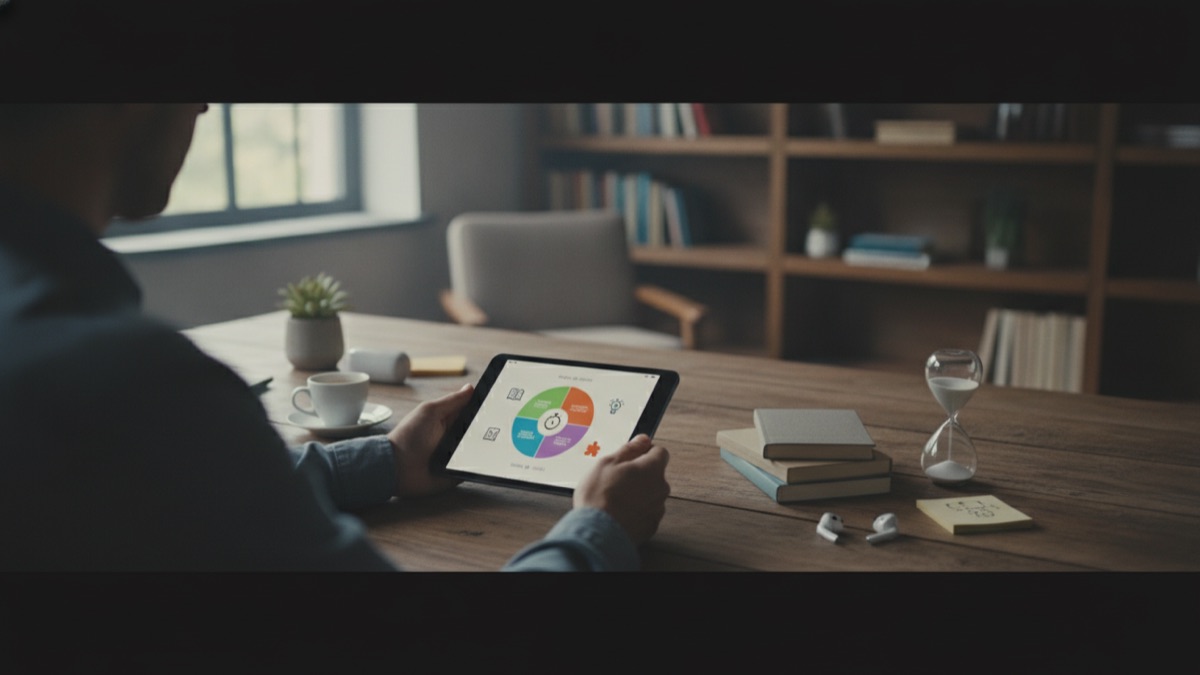
Microlearning is a teaching approach that breaks content into short, tightly focused units, often just a few minutes long, each aimed at a single skill or concept rather than covering broad ground in one long session.
It is widely used in corporate training and mobile learning apps because short units fit into small pockets of time, like a commute or a break, and are easier to revisit repeatedly than a full-length course module.
Learning in Short, Focused Bursts
Where It Works Best
The approach pairs naturally with spaced repetition, since short units are easy to review again days or weeks later, reinforcing material through repeated brief exposure rather than one long study session.
Critics note that microlearning suits well-defined, discrete skills better than topics that require sustained, deep reasoning across a long block of material, so many training programs combine short microlearning units with longer-form content for the material that truly needs it.
Sources
FAQ
How long is a typical microlearning unit?
Most microlearning units run from about two to ten minutes, focused on a single skill or concept rather than an extended topic.
Is microlearning effective for all subjects?
It works especially well for discrete, well-defined skills, but subjects requiring sustained deep reasoning across a large body of material often still need longer-form study.
How is microlearning different from spaced repetition?
Microlearning is about the length and focus of each learning unit, while spaced repetition is about the timing of review sessions; the two are often combined but are not the same thing.
About the Author
We reference Association for Talent Development, Edutopia, British Council to explain the background and current understanding of this topic.
Loved This Article?
Share it on WhatsApp → Share it on WhatsApp
Get more guides in your inbox — Subscribe to our newsletter for weekly surprising stories from Egypt, Saudi Arabia, Dubai, and beyond.