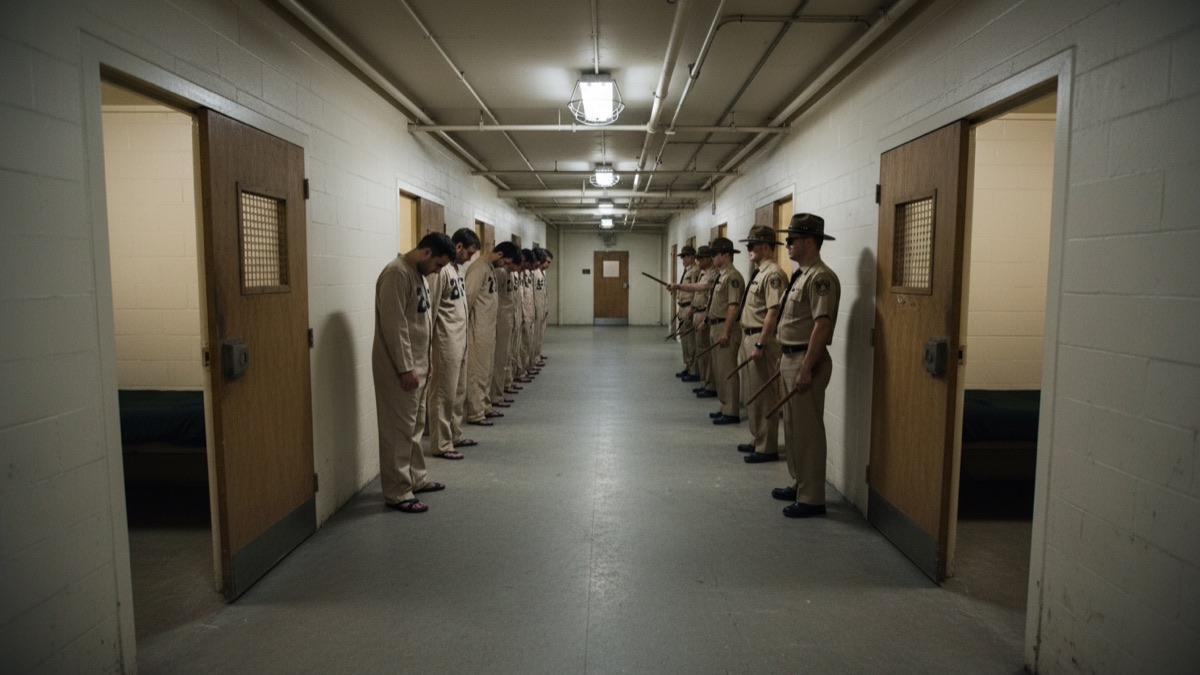
A Simulated Prison at Stanford
The Stanford Prison Experiment was conducted in 1971 by psychologist Philip Zimbardo, who set up a mock prison in the basement of a Stanford University building and randomly assigned student volunteers to roles as either "guards" or "prisoners."
The study was originally planned to run for two weeks, examining how the assigned roles and institutional environment might influence participant behavior, independent of individual personality differences.
Why It Was Stopped Early
The experiment was ended after just six days when guards began exhibiting increasingly abusive behavior toward prisoners, and several prisoners showed signs of significant psychological distress, prompting Zimbardo, who was also acting as the prison "superintendent," to halt the study.
The rapid escalation was widely cited afterward as evidence that situational and institutional roles can strongly influence behavior, sometimes described using the phrase "the power of the situation" over individual disposition.
Later Criticism and Reassessment
In subsequent decades, researchers and journalists raised significant concerns about the study's methodology, including evidence that some guards were coached toward more aggressive behavior and that the setup fell short of a controlled scientific experiment.
While the study remains widely referenced in discussions of authority and role behavior, many psychologists now treat its specific findings with considerable caution due to these documented methodological problems.
Sources
- American Psychological Association — background on the study's methodology and later criticism
- Encyclopaedia Britannica — an academic overview of the Stanford Prison Experiment
- Simply Psychology — accessible explainers on the study's design and criticism
FAQ
Who conducted the Stanford Prison Experiment?
Psychologist Philip Zimbardo conducted the study in 1971 at Stanford University.
Why was the experiment stopped early?
It was ended after six days, well short of the planned two weeks, due to abusive guard behavior and significant distress among prisoner participants.
Is the study still considered scientifically reliable?
Many psychologists now view its specific findings with caution, following later evidence of methodological and ethical problems.
About the Author
We reference the APA, Encyclopaedia Britannica, Simply Psychology to explain the background and current understanding of this topic.
Loved This Article?
Share it on WhatsApp → Share it on WhatsApp
Get more guides in your inbox — Subscribe to our newsletter for weekly surprising stories from Egypt, Saudi Arabia, Dubai, and beyond.