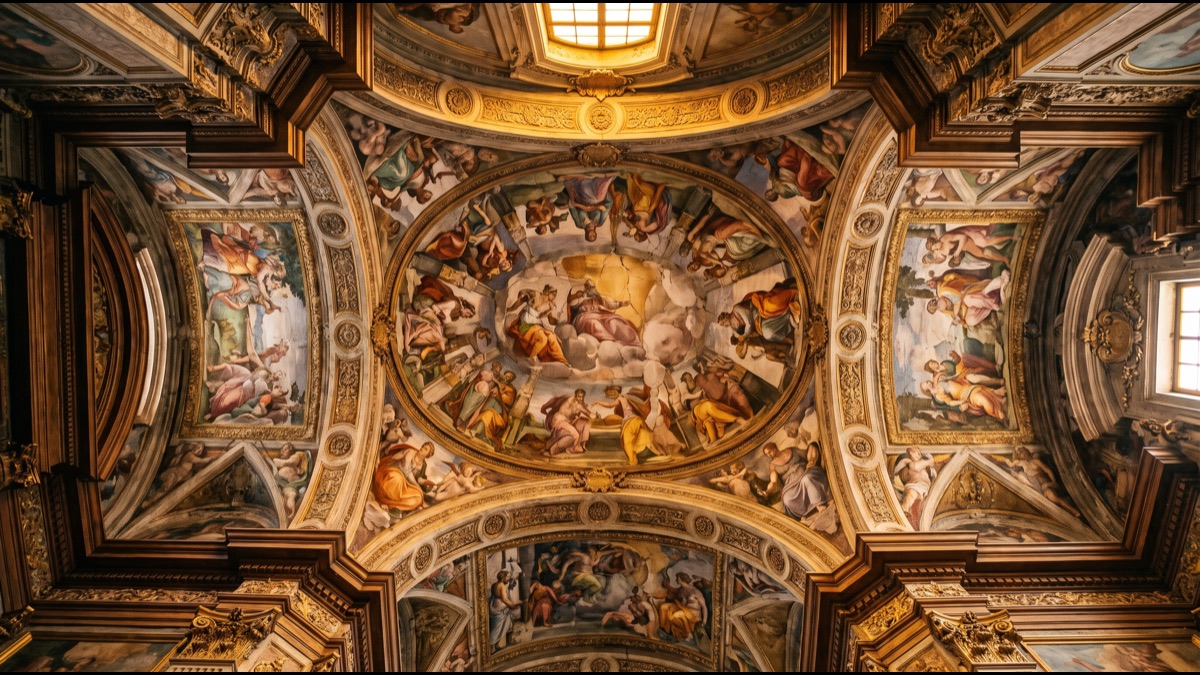
Fresco is a wall-painting technique where pigment, mixed only with water, is applied directly onto a thin layer of wet lime plaster. As the plaster dries and carbonates over the following hours, it chemically binds the pigment into the wall itself, rather than leaving it sitting on the surface as a coat of paint would.
That chemistry is what gives true fresco, called buon fresco, its extraordinary durability — pigment becomes literally part of the wall rather than a layer on top of it, which is why frescoes from ancient Rome and Pompeii have survived roughly two thousand years, even after being buried by volcanic ash.
Painting Into Wet Plaster Before It Dries
From Roman Villas to the Sistine Ceiling
That same chemistry is also what makes fresco unforgiving. A patch of plaster, called a giornata or 'day's work,' stays workable for only about six to ten hours before it hardens, so an artist has to plan the composition in advance and paint each section decisively, since mistakes generally cannot be corrected without chiseling out the plaster and starting that patch over from scratch.
Michelangelo worked this way across the Sistine Chapel ceiling between 1508 and 1512, standing on scaffolding for years to complete roughly 480 giornate, each one a race against drying plaster. Fresco fell out of common use after the Renaissance as oil paint offered artists more time to revise, but its technical demands are exactly what still make surviving fresco cycles so admired today.
Sources
- Wikipedia — overview of fresco technique and its history
- The Met — Metropolitan Museum of Art's history of fresco painting
- Vatican Museums — reference on the Sistine Chapel ceiling and its fresco technique
FAQ
What does "buon fresco" mean?
It means 'true fresco' in Italian, referring to pigment applied to wet plaster so it chemically bonds into the wall, as opposed to 'fresco secco,' where paint is applied to already-dried plaster and simply sits on the surface.
Why is fresco so hard to correct once painted?
Because the pigment bonds into the plaster as it dries, a mistake usually cannot be painted over — the artist has to chip out that section of hardened plaster entirely and start it again with a fresh, wet patch.
How long did the Sistine Chapel ceiling take to paint?
Michelangelo worked on it for about four years, from 1508 to 1512, completing the vast ceiling across roughly 480 individual giornate, or single days of wet plaster.
About the Author
We reference Wikipedia, The Met, and Vatican Museums to explain the background and current understanding of this topic.
Loved This Article?
Share it on WhatsApp → Share it on WhatsApp
Get more guides in your inbox — Subscribe to our newsletter for weekly surprising stories from Egypt, Saudi Arabia, Dubai, and beyond.