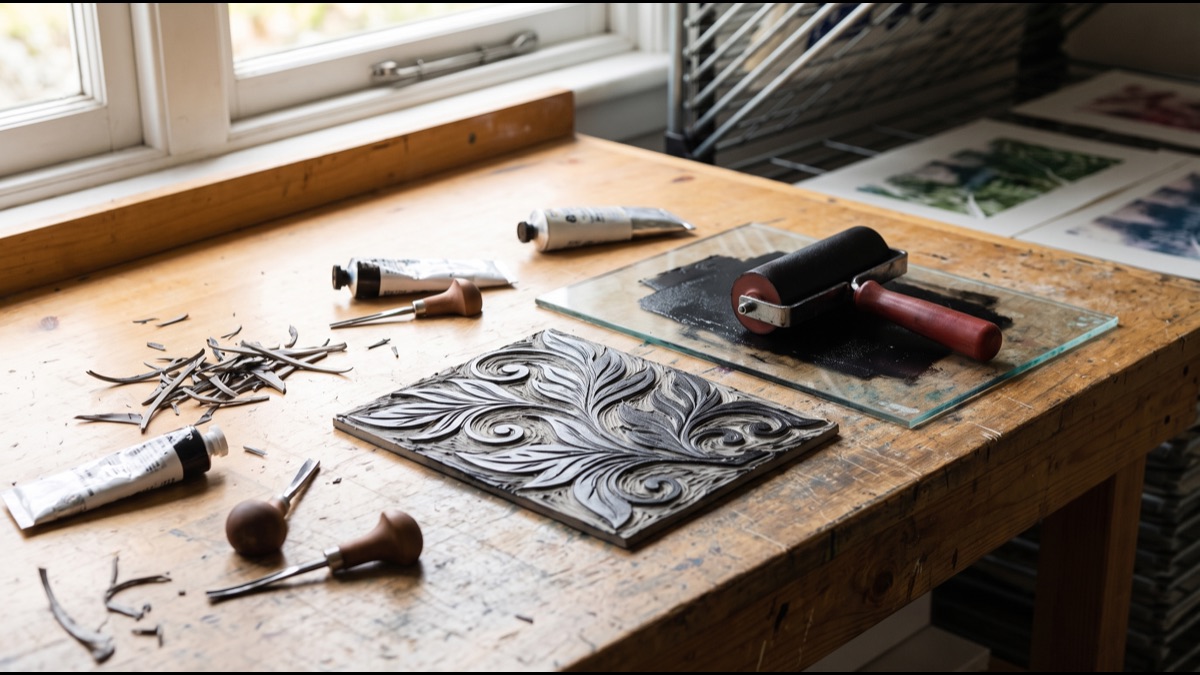
Linocut is a relief printmaking technique in which an artist carves a design into a sheet of linoleum, inks the raised, uncarved surface, and presses it onto paper or fabric to transfer the image, similar in principle to woodblock printing but using a softer material.
The technique emerged in the early 20th century, taking advantage of linoleum, originally developed as a practical flooring material, because its relatively soft, uniform surface was significantly easier to carve than wood, requiring less specialized skill and physical effort.
Born From a Flooring Material
From Early Adoption to Matisse and Picasso
German Expressionist artists were among the earliest to adopt linocut seriously as a fine art medium, and the technique gained further prominence when Pablo Picasso began producing significant linocut work in the mid-20th century, developing new multi-color printing methods using a single carved block.
Because linoleum is cheaper, more widely available, and easier to carve than traditional wood blocks, linocut became especially popular in art education and among artists without access to more specialized printmaking equipment, a practical accessibility that helped the technique spread widely.
Sources
- Wikipedia — overview of linocut printmaking history and technique
- The Metropolitan Museum of Art — background on printmaking techniques including linocut
- Tate — explainer on linocut and its use by major 20th-century artists
FAQ
What material is carved to create a linocut print?
Linoleum, originally developed as a practical flooring material, is carved with a design and then inked for printing.
Why did linoleum become popular for printmaking?
Its relatively soft, uniform surface was significantly easier to carve than wood, requiring less specialized skill and physical effort.
Which famous artist helped popularize linocut in the 20th century?
Pablo Picasso produced significant linocut work in the mid-20th century, developing new multi-color printing methods using a single carved block.
About the Author
We reference Wikipedia, The Metropolitan Museum of Art, and Tate to explain the background and current understanding of this topic.
Loved This Article?
Share it on WhatsApp → Share it on WhatsApp
Get more guides in your inbox — Subscribe to our newsletter for weekly surprising stories from Egypt, Saudi Arabia, Dubai, and beyond.