Introduction
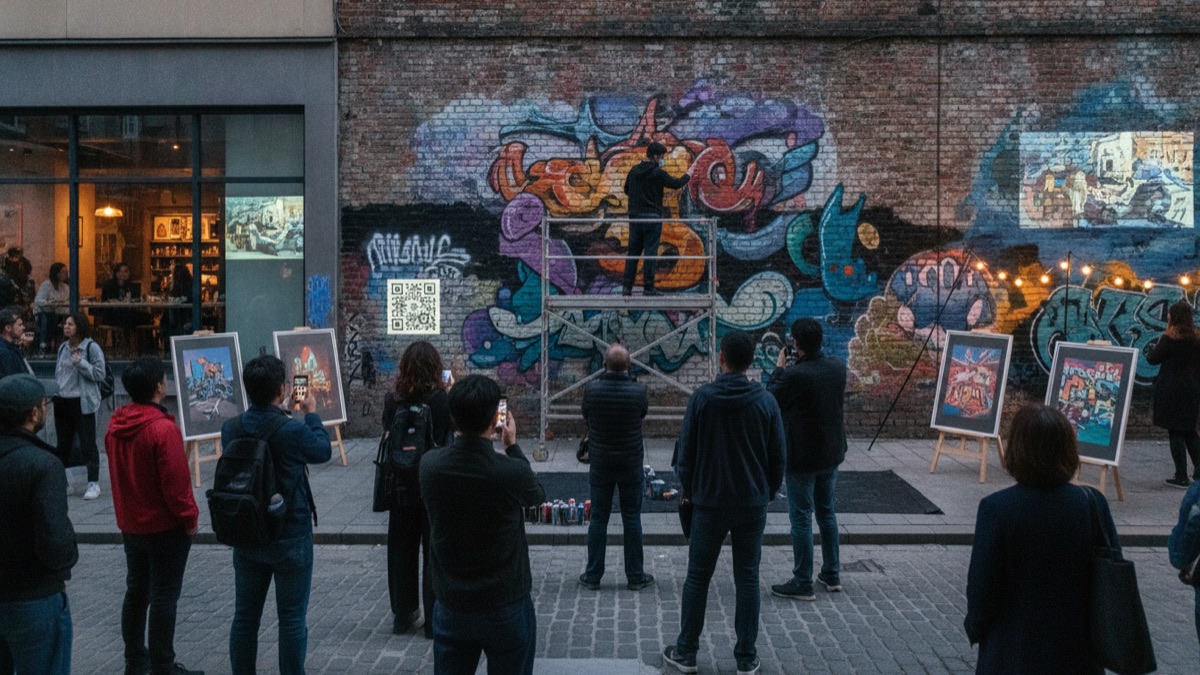
Street art refers to visual art created in public spaces, typically without official permission, encompassing a wide range of techniques including spray-painted murals, stencil work, wheatpaste posters, stickers, and increasingly elaborate large-scale installations, distinguished from traditional public art commissions by its typically unauthorized, artist-initiated nature.
The form's trajectory from a marginalized, often criminalized subculture to a genuinely mainstream and commercially significant art category represents one of the more remarkable shifts in art world legitimacy over the past half-century, involving specific artists, institutional decisions, and market forces that gradually transformed public perception.
From Graffiti Culture to Recognized Art Form
Street art's direct roots trace to the graffiti culture that emerged in New York City and Philadelphia in the late 1960s and 1970s, initially centered on 'tagging,' writers marking subway cars and walls with stylized signatures, which gradually evolved into more elaborate, artistically ambitious pieces as competing writers sought to distinguish their work through increasingly sophisticated visual style.
Throughout the 1970s and 80s, graffiti remained widely viewed by city authorities and much of the general public as vandalism and a marker of urban decay, leading to aggressive anti-graffiti policing and cleanup campaigns in many major cities, even as the underlying artistic techniques and community continued developing increasingly sophisticated approaches largely outside formal recognition.
Key Figures Who Bridged Street and Gallery Art
Artists including Jean-Michel Basquiat and Keith Haring, who began creating unauthorized public work in New York during the late 1970s and early 1980s, proved pivotal in demonstrating that street-originated visual styles could translate into gallery-exhibited, critically respected, and commercially successful fine art, helping open initial pathways between street art's public, unauthorized origins and the traditional gallery and museum art establishment.
British artist Banksy, whose true identity remains publicly unconfirmed despite decades of speculation, became arguably street art's most globally recognized figure beginning in the early 2000s, combining distinctive stencil technique with pointed social and political commentary, and his works have since sold at major auction houses for millions of dollars, including a widely publicized 2018 incident where a Banksy piece partially self-shredded immediately after selling at Sotheby's for over $1 million, itself becoming a notable commentary on the art market.
How Museums and Institutions Embraced Street Art
Major museums and galleries increasingly began formally exhibiting and collecting street art beginning in the 1990s and 2000s, including significant dedicated exhibitions at institutions like the Tate Modern in London and the Museum of Contemporary Art in Los Angeles, decisions that substantially legitimized the form within the traditional art establishment while also generating genuine debate about whether formal institutional embrace fundamentally compromised street art's originally anti-establishment, unauthorized character.
Cities worldwide have also increasingly commissioned officially sanctioned murals and street art installations, transforming what began as illegal, unauthorized activity into a recognized urban design and tourism strategy in many locations, with dedicated street art districts and organized mural festivals now common features of urban cultural planning globally.
Ongoing Tensions Around Street Art's Commercialization
Street art's mainstream acceptance and substantial commercial value have generated genuine, ongoing debate within the art community: some argue that formal gallery and museum recognition, along with high auction prices, has fundamentally compromised the form's original anti-establishment spirit and unauthorized, democratically accessible public character, while others view this evolution as a natural and legitimate artistic maturation process comparable to how other historically marginalized art forms eventually gained mainstream recognition.
This tension is particularly notable given street art's original context: work created illegally in public space, without property owner permission and often explicitly critiquing established power structures, now sometimes sells for enormous sums to wealthy private collectors, a genuine irony frequently acknowledged and sometimes deliberately addressed by street artists themselves, including Banksy's own self-shredding artwork stunt.
Sources
- Tate — Museum reference on street art history, techniques, and institutional recognition
- Museum of Contemporary Art, Los Angeles — Reference on major street art museum exhibitions and institutional acceptance
- Christie's — Auction house reference on street art market valuation and notable sales
FAQ
What is the difference between street art and graffiti?
Street art is a broader category encompassing spray-painted murals, stencils, wheatpaste posters, and installations, while graffiti more specifically refers to the original tagging and lettering-based tradition it evolved from, though the terms overlap significantly.
Which artists helped bridge street art and the traditional gallery world?
Jean-Michel Basquiat and Keith Haring, who began as unauthorized street artists in late 1970s and early 1980s New York, proved pivotal in demonstrating street-originated styles could translate into gallery-exhibited, commercially successful fine art.
Who is Banksy?
Banksy is a British street artist whose true identity remains publicly unconfirmed, known for distinctive stencil technique combined with social and political commentary, whose works have sold at major auction houses for millions of dollars.
When did museums start exhibiting street art?
Major museums and galleries increasingly began formally exhibiting and collecting street art starting in the 1990s and 2000s, including significant exhibitions at institutions like Tate Modern and the Museum of Contemporary Art in Los Angeles.
Why is street art's commercial success controversial?
Some argue formal gallery recognition and high auction prices have compromised the form's original anti-establishment, unauthorized character, since work once illegally created critiquing power structures now sometimes sells for enormous sums to wealthy collectors.
About the Author
doyouknow.app Editorial Team — We reference major museum institutions and auction house records to trace street art's evolution into a mainstream, commercially significant art form.
Loved This Article?
Share it on WhatsApp → Share on WhatsApp
Get more guides in your inbox — Subscribe to our newsletter for weekly surprising stories from Egypt, Saudi Arabia, Dubai, and beyond.