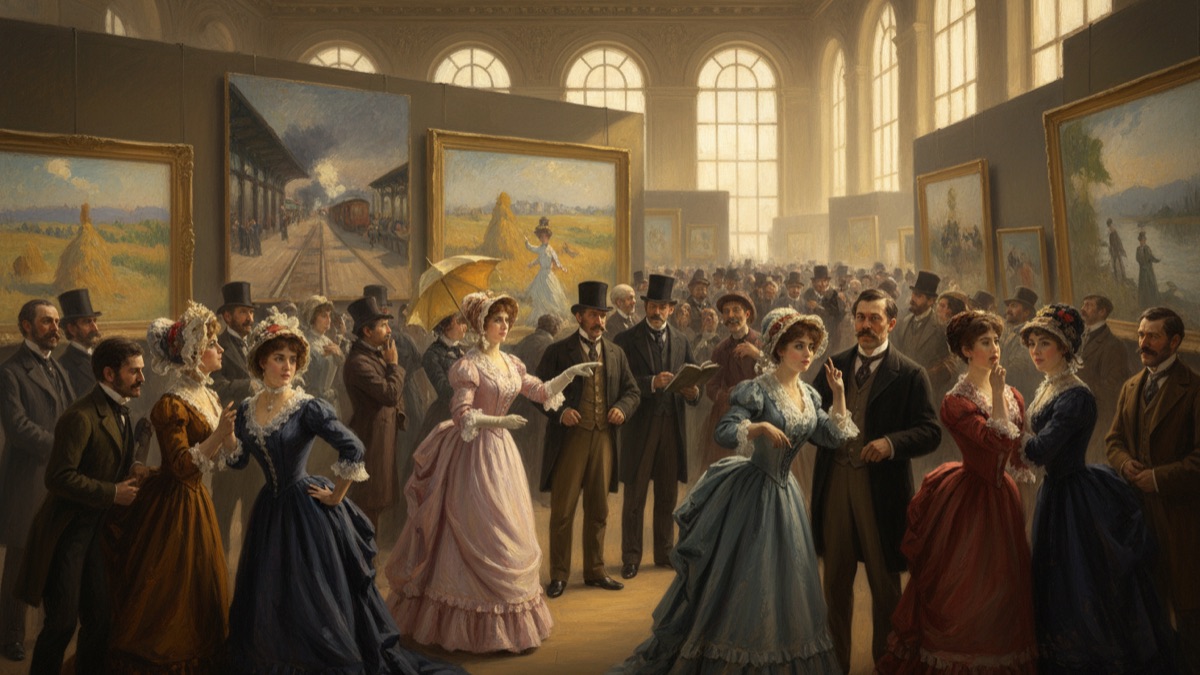
Introduction
Impressionism, now among the most beloved and commercially valuable art movements in history, with paintings by artists like Claude Monet and Pierre-Auguste Renoir regularly selling for tens of millions of dollars, was initially met with harsh ridicule and rejection by the official French art establishment when it first emerged in the 1870s.
The movement's name itself originated as an insult: art critic Louis Leroy coined the term 'Impressionism' in a mocking 1874 review of Monet's painting Impression, Sunrise, intending it as a dismissive jab suggesting the work was merely a rough, unfinished 'impression' rather than a properly completed painting.
What Actually Defines Impressionist Painting
Impressionist painters shared several distinctive techniques: visible, loose brushstrokes rather than smooth, blended surfaces; painting outdoors directly from observation (a practice called en plein air) rather than working exclusively from sketches in a studio; and a focus on capturing fleeting effects of natural light, atmosphere, and movement at a specific moment, rather than idealized, carefully composed historical or mythological scenes.
This emphasis on capturing a momentary visual 'impression' rather than precise, photographic detail was a deliberate artistic choice reflecting the Impressionists' interest in how light and color actually appear to the human eye in real time, rather than an inability to paint with technical precision, as some early critics wrongly assumed.
Why the French Art Establishment Rejected It
In 19th-century France, the official Paris Salon, controlled by the conservative French Academy of Fine Arts, served as the primary and most prestigious venue for exhibiting and selling new art, and the Salon's jury consistently rejected Impressionist works submitted for exhibition, considering their loose brushwork, unconventional subject matter (everyday scenes rather than historical or mythological themes), and apparent lack of 'finish' to be technically incompetent and artistically unserious.
Rejected Impressionist artists, unable to exhibit through the official Salon system, organized their own independent exhibitions instead, holding the first in 1874, the very show that prompted Leroy's mocking review; this act of organizing outside official institutional channels was itself a significant act of artistic rebellion against the rigid academic art system of the time.
A Radical Shift in Subject Matter
Beyond technique, Impressionists also broke sharply from the academic tradition's preference for grand historical, religious, and mythological subjects, instead depicting scenes of ordinary contemporary life: train stations, cafés, dance halls, city streets, and casual leisure activities, considered a genuinely radical and, to some conservative critics, inappropriately mundane subject choice for serious fine art at the time.
This focus on everyday modern life reflected broader social changes in industrializing 19th-century France, including growing urban middle-class leisure culture, and represented a deliberate artistic statement that contemporary, ordinary experience was just as worthy of serious artistic attention as classical mythology or grand historical events.
How Impressionism Eventually Won Acceptance
Despite fierce initial critical rejection, Impressionism gradually gained critical and commercial acceptance over subsequent decades, aided significantly by supportive art dealers, particularly Paul Durand-Ruel, who purchased Impressionist works and promoted them internationally, including through important early exhibitions in the United States that helped build American collector interest well before French institutions fully embraced the movement.
By the early 20th century, Impressionism had become broadly accepted as a major, legitimate art movement, directly influencing subsequent movements like Post-Impressionism and paving the way for the even more radical artistic experimentation that would define much of 20th-century modern art, a remarkable reversal from its status as scandalous and technically deficient just decades earlier.
Sources
- The Metropolitan Museum of Art — Curatorial essay on Impressionism's history, techniques, and reception
- Musée d'Orsay — Major collection and reference institution for Impressionist art history
- Encyclopaedia Britannica — Overview of Impressionism's origins, techniques, and critical reception
FAQ
Where did the name 'Impressionism' come from?
Art critic Louis Leroy coined the term in a mocking 1874 review of Claude Monet's painting Impression, Sunrise, intending it as an insult suggesting the work was merely an unfinished sketch rather than a proper painting.
What techniques define Impressionist painting?
Impressionist painters used visible, loose brushstrokes, painted outdoors directly from observation (en plein air), and focused on capturing fleeting effects of natural light and atmosphere at a specific moment.
Why did the official Paris Salon reject Impressionist paintings?
The conservative Salon jury considered Impressionists' loose brushwork, everyday subject matter, and apparent lack of finish to be technically incompetent and artistically unserious compared to traditional academic painting standards.
What kind of subjects did Impressionists paint that was considered radical?
Impressionists depicted ordinary contemporary life, including train stations, cafés, and city streets, breaking from the academic tradition's preference for grand historical, religious, and mythological subjects.
How did Impressionism eventually gain acceptance?
Supportive art dealers, particularly Paul Durand-Ruel, purchased and promoted Impressionist works internationally, including through early US exhibitions, helping the movement gain broad critical and commercial acceptance by the early 20th century.
About the Author
doyouknow.app Editorial Team — We reference major museum curatorial sources and art history scholarship to explain Impressionism's techniques and controversial reception.
Loved This Article?
Share it on WhatsApp → Share on WhatsApp
Get more guides in your inbox — Subscribe to our newsletter for weekly surprising stories from Egypt, Saudi Arabia, Dubai, and beyond.