Introduction
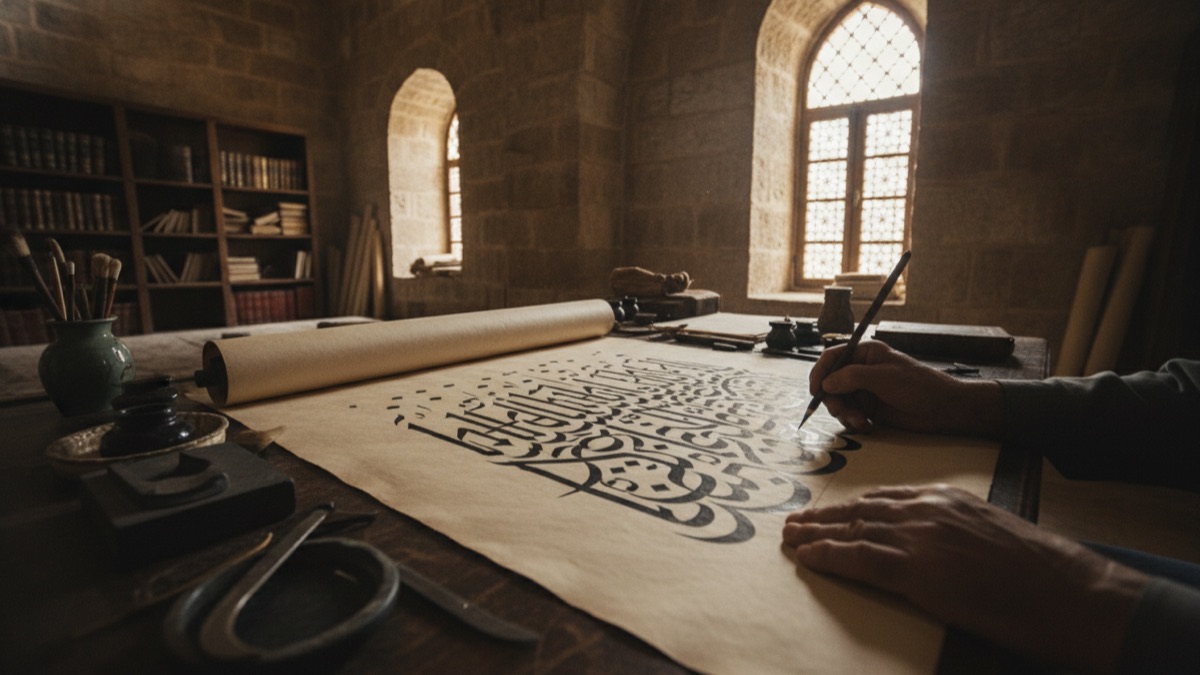
Across Islamic civilization, from illuminated Qur'an manuscripts to towering mosque inscriptions, calligraphy — the art of beautiful, expressive handwriting — occupies a uniquely elevated status, often considered the most prestigious and spiritually significant of all Islamic visual art forms, ranked historically above painting and sculpture.
This prestige stems directly from calligraphy's core function: transmitting the words of the Qur'an, believed by Muslims to be the literal word of God, meaning the physical act of writing sacred text carried deep religious weight far beyond ordinary decorative writing.
Why Calligraphy Became So Central
Islamic religious tradition generally discouraged figural representation in religious contexts, particularly depictions that might encourage idol worship, which redirected significant artistic energy toward calligraphy, geometric pattern, and arabesque (stylized vegetal) design as the primary vehicles for religious and decorative expression instead.
Because the Qur'an was, and remains, central to Islamic religious and intellectual life, and because early Islamic civilization placed enormous cultural value on the written word and scholarship generally, master calligraphers historically achieved a level of social prestige and patronage comparable to celebrated painters in other artistic traditions.
Major Calligraphic Scripts
Islamic calligraphy developed several distinct formal scripts over the centuries, each with specific proportional rules and characteristic uses. Kufic, one of the earliest scripts, is angular and geometric, commonly used in early Qur'an manuscripts and architectural inscriptions. Naskh, more rounded and legible, became the standard script for everyday writing and printed Arabic text, including most modern Qur'an editions.
Thuluth, an elegant, elaborately curved script, became especially prized for monumental architectural inscriptions and decorative headings, while Diwani, a highly ornate cursive script developed in the Ottoman chancery, was historically used for official court documents, prized for both its beauty and the difficulty of forging it.
Calligraphy in Architecture and Everyday Objects
Calligraphic inscriptions became a defining feature of Islamic architecture, wrapping around mosque domes, minarets, and mihrabs (prayer niches), often combining Qur'anic verses with geometric and floral ornamentation into unified decorative programs, seen prominently in monuments like the Alhambra in Spain, Cairo's mosques, and the Blue Mosque in Istanbul.
Beyond monumental architecture, calligraphy extended into everyday and luxury objects — ceramics, textiles, metalwork, coins, and manuscripts — demonstrating that the art form was not confined to religious contexts alone but permeated the broader visual and material culture of Islamic societies across centuries and regions.
Calligraphy's Enduring Legacy Today
Master calligraphers historically trained for years under established teachers through a formal apprenticeship system, and traditional calligraphy training and certification (ijazah) continues in various forms today, particularly in Turkey, where the Ottoman calligraphic tradition remains especially strong and actively taught.
Contemporary artists across the Muslim world and diaspora have also developed a movement often called 'calligraphic modernism' or 'hurufiyya,' blending traditional Arabic script with modern abstract art techniques, demonstrating that this centuries-old art form continues to evolve rather than existing purely as a historical relic confined to museums.
Sources
- The Metropolitan Museum of Art — Curatorial essay on the history and scripts of Islamic calligraphy
- Encyclopaedia Britannica — Overview of Islamic art history including calligraphy's central role
- Victoria and Albert Museum — Collections and reference material on Islamic calligraphic scripts and objects
FAQ
Why is calligraphy considered the most important Islamic art form?
Calligraphy's prestige stems from its core function of transmitting the words of the Qur'an, believed by Muslims to be the literal word of God, giving the physical act of writing sacred text deep religious significance.
What are the major Islamic calligraphic scripts?
Major scripts include Kufic (angular, used in early manuscripts), Naskh (rounded, used for everyday and printed text), Thuluth (elaborate, used for monumental inscriptions), and Diwani (highly ornate, used in Ottoman court documents).
Why did Islamic art favor calligraphy over figural representation?
Islamic religious tradition generally discouraged figural representation in religious contexts, particularly depictions that might encourage idol worship, redirecting artistic energy toward calligraphy, geometric pattern, and arabesque design.
Where is calligraphy used beyond religious manuscripts?
Calligraphic inscriptions appear throughout Islamic architecture, including mosque domes and minarets, as well as everyday and luxury objects like ceramics, textiles, metalwork, and coins.
Is Islamic calligraphy still practiced today?
Yes. Traditional calligraphy training and certification continues today, particularly in Turkey, and contemporary artists have developed a movement blending traditional Arabic script with modern abstract art techniques.
About the Author
doyouknow.app Editorial Team — We reference major museum curatorial sources to explain the history, scripts, and enduring significance of Islamic calligraphy.
Loved This Article?
Share it on WhatsApp → Share on WhatsApp
Get more guides in your inbox — Subscribe to our newsletter for weekly surprising stories from Egypt, Saudi Arabia, Dubai, and beyond.