Introduction
Today, photographs by artists like Ansel Adams or Cindy Sherman hang in major museums and sell for substantial sums at auction, but for decades after photography's invention in the 1830s, the medium faced widespread skepticism about whether it could genuinely qualify as fine art at all, rather than merely a mechanical, technical process for documenting reality.
The debate centered on a fundamental question that took nearly a century to resolve through the work of dedicated advocates and evolving artistic philosophy: could a medium that mechanically captures reality through a lens and chemical process involve the same creative vision, skill, and artistic intent traditionally associated with painting or sculpture?
Why Early Critics Doubted Photography's Artistic Status
When photography emerged in the 1830s and 1840s, critics and the traditional art establishment generally viewed it as a purely mechanical, scientific process, valuable for accurate documentation and record-keeping but fundamentally different from the interpretive, creative skill involved in drawing or painting, where an artist's hand directly and selectively shapes every mark on the canvas.
This skepticism was reinforced by photography's early primary uses — portraiture, documentation, scientific and journalistic recording — which emphasized accurate reproduction of reality over the imaginative composition and interpretation traditionally valued in painting, reinforcing the perception of photography as a technical trade rather than a creative art form.
Pictorialism: The First Major Push for Recognition
In the late 19th and early 20th centuries, a movement called Pictorialism emerged specifically to argue for photography's artistic legitimacy, with photographers deliberately manipulating their images through soft focus, special printing techniques, and staged, painterly compositions to make photographs resemble paintings more closely, hoping this visual similarity to already-accepted art forms would help establish photography's own artistic credibility.
Photographer and gallery owner Alfred Stieglitz became one of Pictorialism's most influential advocates in the United States, founding the Photo-Secession movement in 1902 and establishing the influential '291' gallery in New York, which actively promoted photography alongside modern painting and sculpture, deliberately positioning photographic works as equally serious art.
The Shift Toward 'Straight Photography'
By the 1920s and 1930s, many photographers, including Stieglitz himself, moved away from Pictorialism's painting-imitation approach toward a movement often called 'straight photography,' arguing that photography's artistic value came precisely from its unique medium-specific qualities — sharp focus, precise tonal range, the camera's distinctive way of seeing — rather than from imitating painting's visual characteristics.
Photographers like Ansel Adams and Edward Weston, associated with the influential Group f/64 collective formed in 1932, championed this approach, arguing that photography should be celebrated as its own distinct art form with its own specific creative possibilities, rather than needing to resemble painting to earn artistic legitimacy, a philosophical shift that proved highly influential for photography's eventual full acceptance.
Photography's Formal Entry Into Major Museums
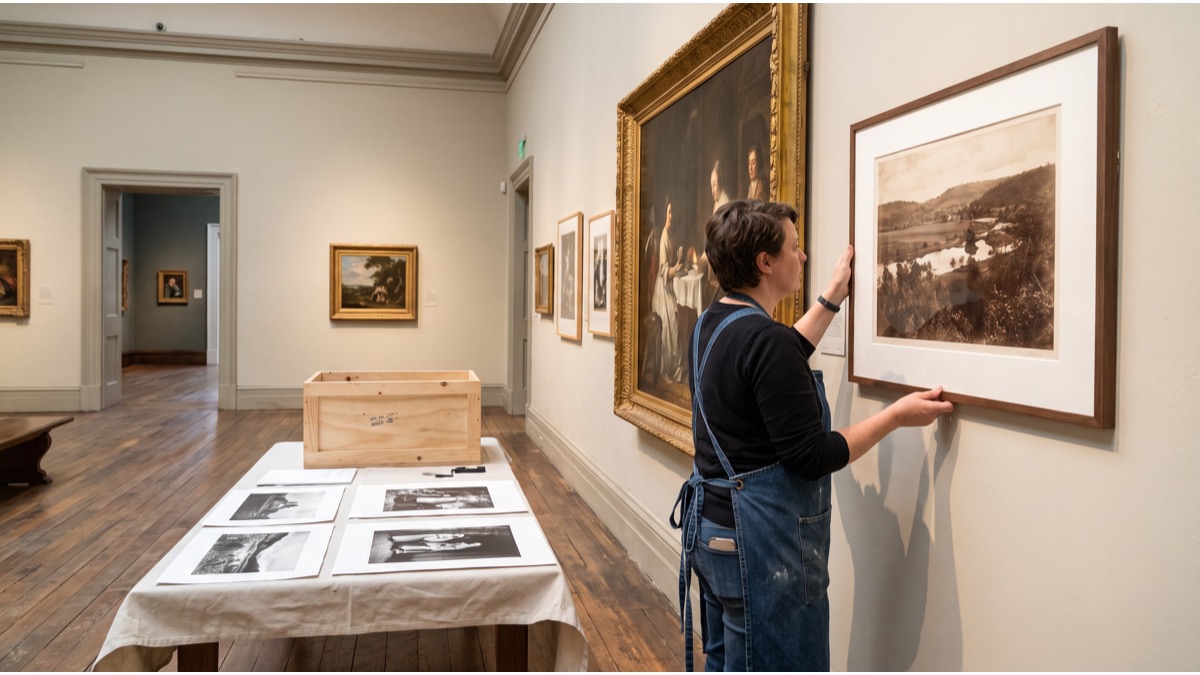
A significant institutional milestone came in 1940, when New York's Museum of Modern Art established a dedicated photography department, one of the first major art museums to formally recognize photography as a fine art medium worthy of its own dedicated curatorial department, collection, and exhibition program, a decision that substantially legitimized photography's status within the broader art establishment.
Curator John Szarkowski, who led MoMA's photography department from 1962 to 1991, proved particularly influential in shaping how photography was understood and evaluated as art during this period, championing photographers who pushed the medium's artistic boundaries and helping solidify photography's now widely accepted place alongside painting and sculpture in major museum collections worldwide.
Photography's Fully Established Status Today
Today, photography is unambiguously accepted as a legitimate fine art form, with dedicated photography departments and collections at virtually every major art museum worldwide, dedicated photography auctions at major houses like Christie's and Sotheby's, and photographic works by artists like Andreas Gursky and Cindy Sherman selling for multi-million-dollar sums, figures unimaginable to photography's early advocates fighting for basic artistic recognition.
This full acceptance reflects a broader shift in how the art world defines artistic legitimacy, moving away from strict adherence to traditional media like painting and sculpture toward evaluating artistic merit based on creative vision, conceptual intent, and technical mastery within whatever medium an artist chooses to work in, a framework that has since also helped legitimize other historically marginalized media like video art and digital art.
Sources
- The Museum of Modern Art — History of MoMA's photography department and its role in establishing photography as fine art
- The Metropolitan Museum of Art — Curatorial reference on Pictorialism and photography's artistic development
- The J. Paul Getty Museum — Reference collection and scholarship on the history of photography as an art form
FAQ
Why did early critics doubt photography could be considered fine art?
Critics viewed photography as a purely mechanical, scientific process fundamentally different from the interpretive, creative skill involved in painting, where an artist's hand directly shapes every mark, reinforced by photography's early documentary uses.
What was Pictorialism and why did photographers adopt it?
Pictorialism was a movement where photographers deliberately manipulated images through soft focus and painterly composition to resemble paintings, hoping this visual similarity would help establish photography's artistic legitimacy.
What is 'straight photography' and how did it differ from Pictorialism?
Straight photography argued that photography's artistic value came from its unique medium-specific qualities, like sharp focus and precise tonal range, rather than from imitating painting, championed by photographers like Ansel Adams and Edward Weston.
When did major museums formally recognize photography as fine art?
A significant milestone came in 1940, when New York's Museum of Modern Art established a dedicated photography department, one of the first major museums to formally recognize photography as a fine art medium.
Is photography considered fully legitimate fine art today?
Yes. Photography now has dedicated departments at virtually every major art museum, dedicated auctions at major houses, and works by photographers like Andreas Gursky selling for multi-million-dollar sums.
About the Author
doyouknow.app Editorial Team — We reference major museum institutional history and art scholarship to trace photography's path to recognition as fine art.
Loved This Article?
Share it on WhatsApp → Share on WhatsApp
Get more guides in your inbox — Subscribe to our newsletter for weekly surprising stories from Egypt, Saudi Arabia, Dubai, and beyond.