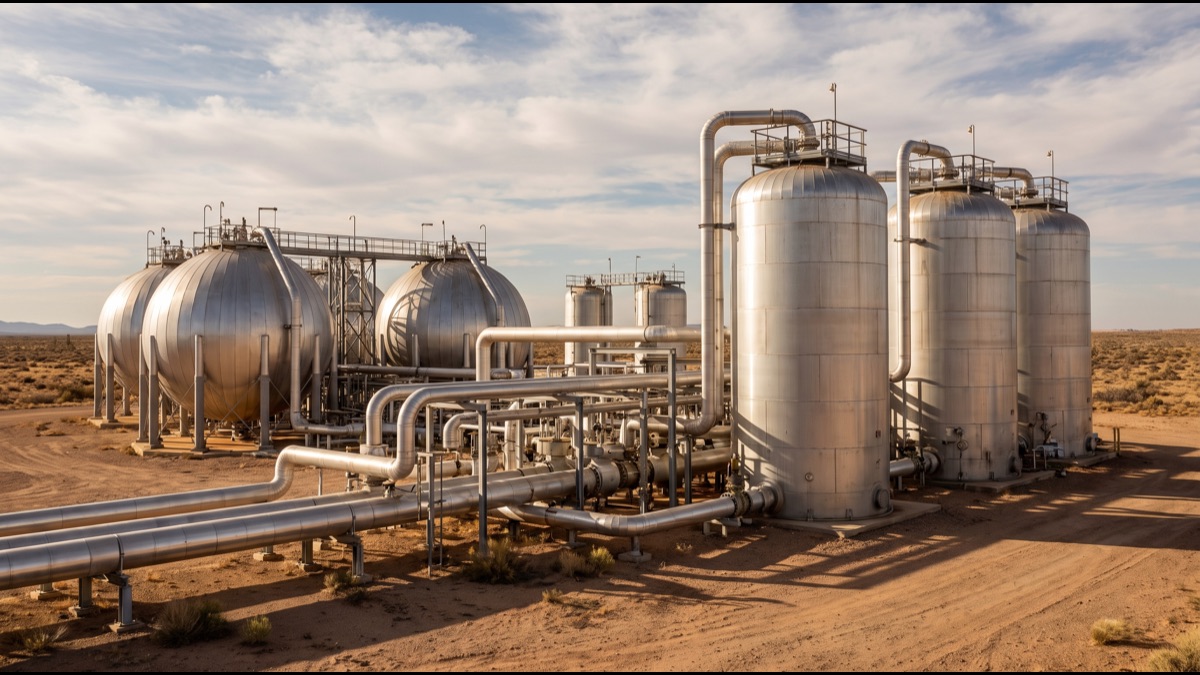
Abu Dhabi has spent the past several years quietly assembling one of the most ambitious hydrogen production and export programs in the Gulf, betting that a fuel most people associate with rockets and chemistry class could become a genuine pillar of the emirate's post-oil energy strategy. The bet rests on two distinct production pathways, green hydrogen made from renewable electricity and water, and blue hydrogen made from natural gas with its carbon emissions captured, both of which Abu Dhabi's state-owned energy companies are pursuing simultaneously rather than picking a single winner. Understanding how these projects actually produce hydrogen, why the emirate is chasing export markets rather than only domestic use, and where the genuine technical and cost hurdles still sit explains both the scale of the ambition and how far it still has to travel before hydrogen becomes a meaningful export commodity alongside oil and gas.
Why Abu Dhabi Is Betting on Hydrogen
Abu Dhabi's economy has been built for decades on exporting oil and natural gas, and as global energy markets increasingly price in the long-term decline of fossil fuel demand tied to decarbonization commitments, the emirate has looked for an energy commodity it can export that fits into a lower-carbon global economy.
Hydrogen is attractive specifically because it can serve many of the same industrial roles fossil fuels currently serve, including fueling heavy shipping, powering steel and cement production, and storing renewable energy, while producing water rather than carbon dioxide when it is ultimately burned or used in a fuel cell.
Abu Dhabi's existing expertise in large-scale energy production, export logistics, and international energy trading relationships gives it a genuine structural advantage in pursuing hydrogen exports compared to countries starting this industry from scratch, since much of the underlying infrastructure knowledge transfers directly from decades of oil and gas experience.
Green Hydrogen: Splitting Water With Renewable Electricity
Green hydrogen is produced through electrolysis, a process that uses electricity to split water molecules into hydrogen and oxygen, and it earns the "green" label specifically when that electricity comes from renewable sources like solar or wind power rather than fossil fuel generation.
Because the UAE has invested heavily in utility-scale solar power in recent years, discussed elsewhere on this site, Abu Dhabi has a genuinely favorable starting position for green hydrogen production, since abundant, increasingly low-cost solar electricity is the single biggest cost driver in making green hydrogen economically viable.
Green hydrogen is currently the more expensive of the two pathways to produce at scale, but it carries the strongest long-term decarbonization credentials, since a fully renewable-powered production chain generates essentially no direct carbon emissions during the hydrogen production process itself.
Blue Hydrogen: Natural Gas Plus Carbon Capture
Blue hydrogen is produced from natural gas through a chemical process called steam methane reforming, which separates hydrogen from the gas while producing carbon dioxide as a byproduct, a process that becomes "blue" specifically when that carbon dioxide is captured and stored rather than released into the atmosphere.
Abu Dhabi's blue hydrogen strategy leans heavily on its existing natural gas production infrastructure and its growing investment in carbon capture and storage technology, allowing the emirate to produce hydrogen at generally lower cost than green hydrogen while still substantially reducing the carbon footprint compared to unabated natural gas processing.
Critics of blue hydrogen point out that carbon capture technology, while improving, does not capture 100 percent of emissions in practice, meaning blue hydrogen is best understood as a lower-carbon transitional pathway rather than a fully zero-emission solution, a distinction Abu Dhabi's own officials have generally acknowledged in public statements about the technology's role.
Masdar's Role at the Center of the Strategy
Masdar, Abu Dhabi's state-owned renewable and clean energy company, sits at the center of the emirate's hydrogen strategy, leading or co-leading most major green hydrogen production and export initiatives announced by the UAE to date.
Masdar has pursued a strategy of forming joint ventures and partnerships with international energy companies and investors on specific hydrogen projects, spreading both the technical expertise requirement and the substantial capital cost across multiple partners rather than developing every project entirely in-house.
Masdar's broader renewable energy portfolio, including large-scale solar projects across the UAE and international markets, gives the company both direct operational experience with the renewable electricity generation that green hydrogen depends on and existing relationships with the international energy buyers Abu Dhabi hopes to eventually sell hydrogen to.
How Electrolysis Actually Works Inside a Hydrogen Plant
Inside a green hydrogen production facility, an electrolyzer uses direct electrical current, typically supplied from a connected solar or wind facility, to break the chemical bonds holding water molecules together, separating hydrogen gas at one electrode and oxygen gas at the other.
Modern industrial-scale electrolyzers use one of several underlying technologies, including alkaline electrolysis and proton exchange membrane electrolysis, each with different tradeoffs around cost, efficiency, and how well the system handles the variable power output typical of solar and wind generation.
The hydrogen gas produced by electrolysis must then be compressed, purified, and either stored, piped to an industrial user, or converted into a more easily transportable derivative like ammonia, meaning the electrolyzer itself is only the first stage of a considerably longer production and logistics chain.
Why Solar Power Makes Abu Dhabi's Green Hydrogen Case Stronger
Abu Dhabi benefits from exceptionally high solar irradiance and a large amount of available desert land suitable for utility-scale solar installations, two factors that directly lower the cost of the renewable electricity that green hydrogen production fundamentally depends on.
Large UAE solar projects, including facilities developed with some of the lowest recorded solar electricity generation costs globally at the time of their commissioning, give Abu Dhabi's green hydrogen projects access to unusually cheap renewable power inputs compared to many other countries pursuing similar hydrogen strategies.
This solar cost advantage does not eliminate green hydrogen's overall cost premium relative to blue hydrogen, since electrolyzer equipment costs and water desalination requirements in a desert environment remain significant expenses, but it meaningfully narrows the gap compared to countries without comparably cheap solar generation available.
ADNOC's Role in Blue Hydrogen and Carbon Capture
The Abu Dhabi National Oil Company, ADNOC, leads much of the emirate's blue hydrogen and carbon capture activity, drawing on its existing natural gas production infrastructure and decades of experience managing large-scale industrial gas processing operations.
ADNOC has invested in expanding carbon capture, utilization, and storage capacity specifically to support blue hydrogen production and broader industrial decarbonization goals, positioning the technology as a bridge that allows continued natural gas monetization while reducing the associated carbon footprint.
The company has also pursued partnerships with international energy majors and investors on specific blue hydrogen and carbon capture projects, a pattern consistent with Masdar's approach on the green hydrogen side, reflecting a broader UAE strategy of sharing technical risk and capital cost across international partnerships rather than developing the full hydrogen value chain alone.
Turning Hydrogen Into Ammonia for Export
Pure hydrogen gas is difficult and expensive to transport over long distances by ship, since it requires either extremely low cryogenic temperatures or very high pressure to keep it in a manageable volume, which is why most of Abu Dhabi's export-oriented hydrogen is converted into ammonia before shipping.
Ammonia, produced by combining hydrogen with nitrogen extracted from the air, is considerably easier and cheaper to liquefy, store, and transport using shipping infrastructure that already exists for the global fertilizer industry, giving Abu Dhabi's hydrogen exports a more commercially practical pathway to international buyers.
Once ammonia reaches its destination market, it can either be used directly as an industrial feedstock or fuel, or converted back into pure hydrogen through a process called cracking, though that conversion step adds cost and energy loss that project economics must account for.
The UAE's Early Export Shipments So Far
The UAE has completed a series of early demonstration shipments of hydrogen derivatives, primarily ammonia produced using both green and blue hydrogen pathways, to buyers in markets including parts of Europe and Asia, intended to prove the commercial and logistical viability of the export chain rather than represent large-scale sustained volume.
These pilot shipments matter less for their actual cargo size and more as proof-of-concept demonstrations, establishing the shipping routes, contractual frameworks, and buyer relationships that Abu Dhabi hopes will scale into much larger, sustained commercial export volumes over the coming years.
Industry analysts have generally described the current phase of Gulf hydrogen exports as still developmental, with most announced large-scale production capacity representing future project pipelines rather than operational, currently shipping volumes, a distinction worth keeping in mind when evaluating headline hydrogen production capacity figures.
Who Is Actually Buying Gulf Hydrogen
Early and prospective buyers of Abu Dhabi's hydrogen and ammonia exports include utility companies, industrial manufacturers, and shipping fuel suppliers in markets like Germany, Japan, and South Korea, countries that have limited domestic renewable energy potential relative to their industrial energy demand and have set explicit national hydrogen import strategies.
These buyer countries generally see imported hydrogen and its derivatives as a necessary complement to their own domestic renewable energy build-out, since their geography and population density constrain how much renewable electricity they can realistically generate at home compared to their industrial and heating energy needs.
Long-term offtake agreements, contracts where a buyer commits in advance to purchasing a set volume of future production, have become an important tool for Gulf hydrogen developers seeking to secure the financing needed to build large-scale production facilities before that capacity actually exists.
The Cost Gap Between Green and Blue Hydrogen
Green hydrogen currently costs meaningfully more to produce per kilogram than blue hydrogen in most cost analyses, driven primarily by the capital cost of electrolyzer equipment and the cost of the renewable electricity input, even accounting for the UAE's relatively cheap solar power.
Blue hydrogen's cost advantage depends heavily on natural gas prices and the cost of carbon capture infrastructure, meaning its relative economics can shift depending on global gas markets and whether carbon pricing policies in buyer countries increasingly favor genuinely low-carbon green hydrogen over blue hydrogen's partial emissions reduction.
Industry cost projections generally expect green hydrogen production costs to decline meaningfully over the coming decade as electrolyzer manufacturing scales and renewable electricity costs continue falling, potentially narrowing or closing the current cost gap with blue hydrogen, though the timeline for this remains genuinely uncertain and debated among energy analysts.
How Hydrogen Fits Into UAE Energy Diversification
The UAE's broader energy strategy explicitly frames hydrogen as one pillar within a wider diversification effort that also includes nuclear power, expanded solar capacity, and continued natural gas production, rather than viewing hydrogen as a wholesale replacement for the country's existing energy mix.
Domestically, hydrogen is also being explored for applications including heavy industrial processes, transportation fuel for buses and trucks, and as a form of long-duration energy storage that can complement the variable output of solar power, though these domestic use cases remain smaller in scale than the emirate's export ambitions.
Government-set targets for hydrogen production capacity, announced as part of the UAE's broader national hydrogen strategy, aim to position the country among the leading global hydrogen producers and exporters over the coming decades, a target that will depend heavily on both domestic project execution and sustained international demand actually materializing at the scale currently projected.
The Technical and Economic Hurdles Still Unresolved
Large-scale electrolyzer manufacturing capacity remains a genuine global bottleneck, with current worldwide production capability falling well short of the volumes that would be needed to meet the combined green hydrogen ambitions announced by countries and companies globally, Abu Dhabi included.
Freshwater availability for electrolysis, while less discussed than electricity cost, is a real consideration in a desert environment, meaning Abu Dhabi's green hydrogen projects generally depend on desalinated water, adding an additional processing step and cost that hydrogen projects in water-abundant regions do not face to the same degree.
International hydrogen demand itself remains somewhat uncertain, since it depends on buyer countries' own decarbonization policy timelines, the pace of competing clean technology development, and whether carbon pricing mechanisms evolve in ways that make imported hydrogen genuinely cost-competitive against continuing to use fossil fuels in the applications hydrogen is meant to replace.
How This Compares to Saudi Arabia's Hydrogen Ambitions
Saudi Arabia has pursued a broadly parallel hydrogen strategy, most visibly through the large-scale green hydrogen facility being developed as part of the NEOM giga-project, discussed in more detail elsewhere on this site, which is intended to become one of the world's largest single green hydrogen production sites.
Both Gulf states are pursuing similar underlying logic, using abundant land and strong solar resources to produce green hydrogen at globally competitive cost, but Abu Dhabi has moved somewhat further along on integrating both green and blue hydrogen pathways simultaneously, while Saudi Arabia's most prominent project has focused primarily on the green pathway specifically.
The two countries are, in a genuine sense, direct competitors for the same limited pool of international hydrogen buyers and offtake agreements, meaning the relative pace and cost-competitiveness of each country's projects will meaningfully shape how the emerging Gulf hydrogen export market ultimately divides between them.
Where Abu Dhabi's Hydrogen Program Goes Next
Additional final investment decisions on larger-scale hydrogen production facilities are expected over the coming years as current pilot and demonstration projects prove out both the technology and the commercial offtake relationships needed to justify billions of dollars in further capital investment.
Continued cost declines in electrolyzer manufacturing and renewable electricity, alongside expanding carbon capture capacity for the blue hydrogen pathway, are both widely expected to improve the economics of Abu Dhabi's hydrogen program over the next five to ten years, though the exact pace remains genuinely uncertain.
The most realistic near-term trajectory involves steady, incremental scale-up rather than a single dramatic leap, with Abu Dhabi gradually converting demonstration-scale shipments into sustained commercial export contracts as buyer demand, production capacity, and cost competitiveness all mature roughly in parallel over the coming decade.
Abu Dhabi's hydrogen strategy is best understood as a genuine, technically serious attempt to extend the emirate's decades of energy export expertise into a fuel expected to matter more as the world decarbonizes, not a speculative side project. By pursuing green hydrogen through abundant, increasingly cheap solar power and blue hydrogen through existing natural gas and growing carbon capture infrastructure simultaneously, Masdar and ADNOC are hedging across both major production pathways rather than betting entirely on one. The technology and cost gaps that remain, from electrolyzer manufacturing bottlenecks to genuinely uncertain international demand timelines, mean Abu Dhabi's hydrogen ambitions remain a multi-decade bet rather than an already-arrived reality, but the underlying infrastructure and strategic logic are considerably further along than casual observers often assume.
Sources
- Masdar — Official reporting on Abu Dhabi's green hydrogen and renewable energy projects.
- ADNOC — Information on blue hydrogen, carbon capture, and natural gas infrastructure in Abu Dhabi.
- International Energy Agency — Global hydrogen market analysis and production cost data.
- The Official Portal of the UAE Government — National hydrogen strategy and energy diversification policy.
FAQ
What is the difference between green hydrogen and blue hydrogen?
Green hydrogen is produced by splitting water using electricity from renewable sources like solar or wind, while blue hydrogen is produced from natural gas with the resulting carbon dioxide captured and stored rather than released into the atmosphere.
Is Abu Dhabi's hydrogen actually zero-emission?
Green hydrogen produced using renewable electricity is close to zero-emission at the point of production, while blue hydrogen still generates emissions during natural gas processing, though carbon capture is intended to remove a large share of those emissions before they reach the atmosphere.
Who is actually building Abu Dhabi's hydrogen projects?
Masdar, Abu Dhabi's state-owned clean energy company, leads most major hydrogen initiatives, frequently in partnership with ADNOC for blue hydrogen and carbon capture infrastructure, along with international energy companies and investors on specific projects.
Does the UAE actually export hydrogen yet?
The UAE has shipped early pilot cargoes of hydrogen derivatives, including ammonia, to international buyers as demonstration shipments, but large-scale, sustained commercial export volumes are still in early stages relative to the UAE's stated long-term export ambitions.
Why does the UAE want to become a hydrogen exporter?
The UAE is applying the same energy-export expertise and infrastructure it built around oil and gas to a fuel expected to see rising global demand as countries decarbonize heavy industry and shipping, positioning hydrogen as a strategic pillar of economic diversification beyond oil.
About the Author
We reference Masdar, ADNOC, the International Energy Agency, and the official UAE government portal to explain the background and current understanding of this topic.
Loved This Article?
Share it on WhatsApp → Share it on WhatsApp
Get more guides in your inbox — Subscribe to our newsletter for weekly surprising stories from Egypt, Saudi Arabia, Dubai, and beyond.