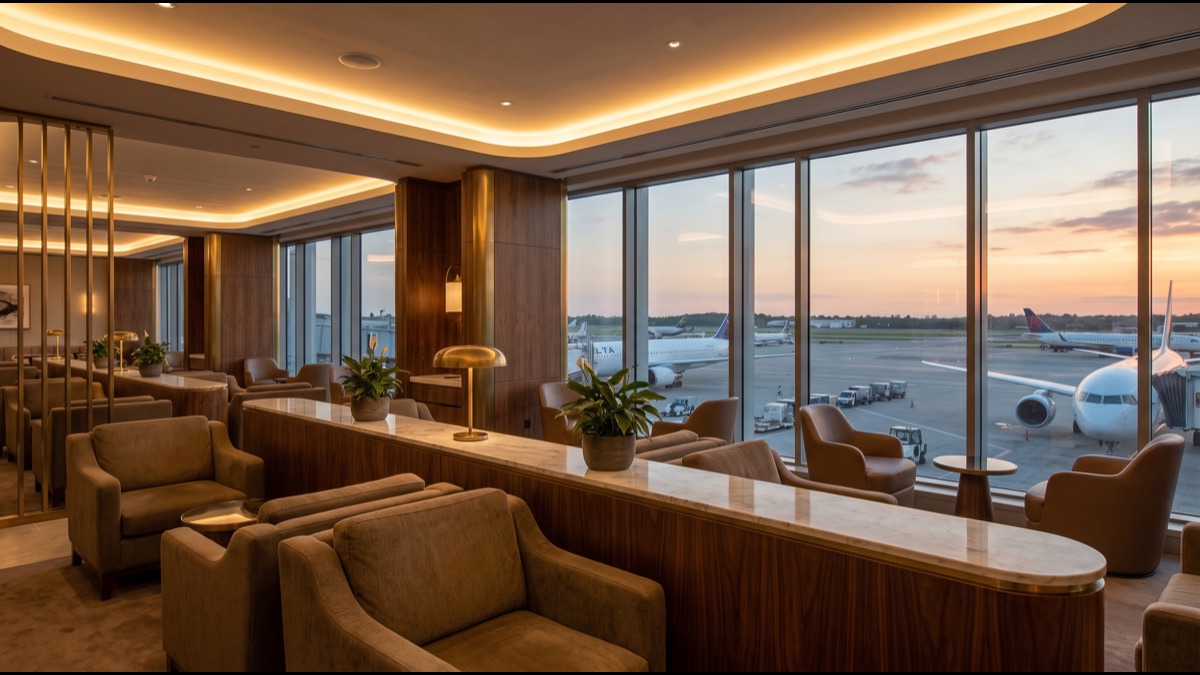
The gate agent scanning your boarding pass or membership card at an airport lounge entrance is making a decision, in a matter of seconds, that actually depends on a surprisingly layered system of airline loyalty tiers, credit card partnership agreements, paid day-pass sales, and a hard physical capacity limit the lounge cannot legally or safely exceed. What looks like a simple velvet-rope check is actually the visible endpoint of several overlapping access programs the lounge operator has to reconcile in real time.
Understanding how lounge access actually gets decided, from the specific loyalty tier thresholds airlines set to the economics of why lounges sell day passes to non-members at all, reveals a genuinely interesting example of a hospitality business built around managing scarce physical space against multiple, often overlapping customer entitlement programs simultaneously.
It also explains why Gulf hub airports in particular have invested so heavily in some of the largest, most elaborate lounges in the world, and why a seemingly simple "are you allowed in" check at the door actually requires the lounge operator's system to verify entitlement against several different possible qualifying criteria at once.
A Decision Made in Under Ten Seconds
The staff member checking entry at a lounge door typically has to verify a passenger's eligibility against multiple possible qualifying pathways, elite airline status, a specific premium credit card, a paid day pass, or a business or first class ticket, often within the space of a brief boarding-pass or membership-card scan that must not meaningfully slow the flow of passengers arriving before a flight.
This rapid verification is generally handled through integrated software systems that check a scanned card or boarding pass against several eligibility databases simultaneously, letting staff make an accurate access decision quickly without needing to manually cross-reference multiple separate membership lists themselves.
Why Lounges Exist as a Business in the First Place
Airport lounges generate revenue and value through multiple channels simultaneously: airlines pay lounge operators directly for access rights extended to their premium passengers and elite frequent flyers, credit card companies pay for access extended to their premium cardholders as a loyalty perk, and lounges sell day passes directly to travelers willing to pay for one-time access.
This multi-revenue-stream business model is precisely why a single lounge can simultaneously serve airline elite members, credit card holders from several different card programs, and walk-up paying customers, all under one roof, since each of these groups represents a genuinely separate commercial relationship and revenue source for the lounge operator.
How Airline Status Tiers Actually Grant Access
Airlines typically extend lounge access as a benefit tied to specific elite frequent-flyer status tiers, business or first class ticket purchases, or specific long-haul international itineraries, with the exact qualifying criteria varying considerably between airlines and even between different lounges the same airline operates in different cities.
This tiered access structure functions as a genuine, tangible loyalty program incentive, giving travelers a concrete reason to concentrate their flying with one specific airline to reach and maintain the elite status tier required for reliable lounge access, rather than spreading bookings across multiple competing airlines based purely on price.
What Credit Card Lounge Partnerships Actually Involve
Premium travel credit cards increasingly include lounge access as a headline benefit, achieved through formal commercial partnership agreements between the card issuer and either a specific airline's lounge network or a broader independent lounge network operating across many airports and airlines simultaneously.
These partnership agreements typically involve the card issuer paying the lounge network a fee structure based on expected or actual cardholder visit volume, a cost the card issuer factors into the card's annual fee, meaning lounge access marketed as a free perk is actually a benefit the cardholder has already paid for indirectly through that annual membership cost.
Why Paid Day Passes Exist Alongside Free Access
Lounges sell single-visit day passes directly to travelers who do not qualify through airline status, credit card membership, or premium ticket class, a revenue stream that lets the lounge monetize available capacity beyond what its various complimentary-access member groups actually use on any given day.
This paid-access option also serves an important capacity-management function, since selling day passes flexibly, sometimes with pricing that adjusts based on how busy the lounge already is, gives the operator a lever to manage total occupancy dynamically rather than relying purely on the more fixed, less flexible flow of complimentary-access members arriving throughout the day.
How Capacity Limits Actually Get Enforced
Every lounge operates under a maximum occupancy limit set by fire safety and building regulations, similar to any other enclosed public space, meaning staff at the entrance genuinely have to track real-time occupancy and can legally refuse entry to otherwise qualified guests once the space reaches its safe capacity limit.
Modern lounge management systems often use electronic counting tied to entry and exit scanning specifically to track real-time occupancy accurately, giving staff reliable data to make consistent, defensible entry decisions during peak periods rather than relying purely on a visual, subjective assessment of how crowded the space currently looks.
What Happens When a Lounge Reaches Capacity
When a lounge reaches its safe occupancy limit, staff typically implement a one-out-one-in policy, allowing new guests to enter only as existing occupants depart, a queuing approach that can create genuinely long waits during extremely busy periods at major hub airports during peak travel seasons.
Some airlines and lounge networks have responded to this recurring capacity strain by building additional overflow lounges at their busiest hub airports specifically to redistribute demand, or by implementing stricter, more selective access criteria during predictably peak periods to keep the primary lounge experience from becoming overcrowded for paying premium members.
Why Some Lounges Restrict Guests More Than Others
Higher-tier premium lounges, sometimes marketed under first-class or invitation-only branding, frequently apply considerably stricter access criteria than standard business-class lounges, limiting entry to only the highest elite status tiers or specific premium ticket classes precisely to maintain a genuinely lower-density, more exclusive experience for a smaller qualifying guest population.
This tiered lounge structure, multiple different lounge levels within the same airport each with different qualifying criteria, reflects a deliberate market segmentation strategy, letting airlines and lounge operators charge different implicit price points, bundled into different ticket classes and loyalty tiers, for meaningfully different levels of space, service, and exclusivity.
How Independent Lounge Networks Differ From Airline-Owned Ones
Independent lounge networks operating across many airports and partnering with multiple airlines and credit card programs simultaneously, rather than being owned and operated by a single specific airline, have grown significantly as a way to offer lounge access to travelers whose specific airline does not operate its own lounge at every airport they pass through.
These independent networks generally operate under a more standardized, broadly accessible qualifying-criteria model compared to a single airline's own branded lounges, since their commercial model depends on serving cardholders and travelers across many different partner relationships rather than being built around reinforcing one specific airline's own loyalty program exclusively.
Why Gulf Hub Airports Built Some of the World's Largest Lounges
Major Gulf carriers operating extensive long-haul hub-and-spoke networks through Dubai, Abu Dhabi, and Doha have invested heavily in some of the largest and most elaborate airline lounges anywhere in the world, reflecting both the large volume of premium and elite-tier transit passengers connecting through these hubs and genuine competitive positioning around premium travel experience.
This investment reflects a broader strategic pattern among Gulf carriers of competing heavily on the premium end of long-haul travel specifically, where lounge quality and space genuinely factor into how business and first class travelers choose between competing airlines and hub routings for long international connections.
How Lounge Access Rules Vary by Cabin Class and Route
Many airlines extend lounge access differently depending on the specific route and cabin class booked, sometimes granting international business class passengers lounge access while restricting equivalent domestic business class tickets, reflecting how airlines calibrate this benefit specifically around routes and passenger segments where lounge access most meaningfully influences booking decisions.
This route-and-class-specific variation means lounge access is not a simple universal perk tied purely to ticket class alone, but a more finely tuned benefit airlines adjust based on where they believe the lounge access benefit most effectively influences competitive booking choices among premium travelers.
What Data Lounges Actually Collect at the Door
Lounge entry systems typically log which specific member or program each guest entered under, visit frequency, and timing patterns, data airlines and lounge operators use to understand actual utilization patterns, forecast capacity needs at specific hub airports, and inform decisions about expanding or restructuring access criteria over time.
This data collection also supports the underlying commercial relationships behind lounge partnerships, since credit card issuers and partner airlines generally want visibility into how frequently their specific cardholders or elite members actually use the lounge access benefit they are paying for, informing future partnership negotiation and pricing.
Why Food and Beverage Offerings Vary So Much Between Lounges
Lounge catering budgets and offerings, ranging from simple self-service snacks and drinks to full sit-down dining with dedicated chefs, are calibrated directly against the specific access tier and expected guest volume of a given lounge, since a higher-exclusivity lounge serving fewer guests can justify a considerably more elaborate catering budget per visitor than a high-volume standard lounge processing hundreds of guests during a single busy period.
This calibration explains why premium invitation-only lounges frequently feature significantly more elaborate dining options than a standard business-class lounge at the same airport, since the economics of serving genuinely restaurant-quality food only make sense when guest volume and per-visit revenue support that higher catering cost structure.
Airlines also use lounge dining quality as a competitive marketing point specifically for premium cabin passengers, treating an elevated lounge food and beverage experience as part of the broader premium travel package that helps justify business and first class fare premiums to travelers comparing options across competing carriers.
How Lounge Design Reflects the Same Access Economics
Lounge interior design, seating density, availability of private workspaces or sleeping areas, and shower facility provision are all calibrated against the same expected guest volume and access-tier economics that shape catering decisions, meaning a lounge's physical layout is rarely a purely aesthetic choice made independently of its underlying access and revenue model.
Higher-exclusivity lounges serving fewer guests can allocate considerably more physical space per visitor, including private sleeping pods, dedicated shower suites, and quiet workspaces, while high-volume standard lounges necessarily prioritize efficient seating capacity over these more space-intensive premium amenities.
This design-economics relationship is why frequent premium travelers can often predict a lounge's general quality level and crowding tendency simply from knowing its specific access tier and typical hub traffic volume, even before actually visiting a specific lounge for the first time.
Why the Business Model Depends on Most Members Not Showing Up
Much like many subscription-based and loyalty benefit businesses, the lounge access economic model depends partly on the reality that most eligible members do not use their lounge access privilege on every single eligible flight, meaning lounges are generally designed and priced around expected average utilization rather than a scenario where every qualifying passenger shows up simultaneously.
This utilization assumption is precisely why lounges occasionally do become genuinely overcrowded during unusually high-demand periods, holidays, weather disruptions causing widespread flight delays, or major events driving unusually high volumes of eligible premium travelers through a specific hub at the same time, moments when the underlying average-utilization assumption the whole system depends on temporarily breaks down.
Airlines and lounge operators actively track this utilization rate as a core operational metric, using historical visit data to forecast expected demand for upcoming seasonal peaks and adjust staffing, food and beverage ordering, and even temporary access restrictions well in advance rather than reacting only once a specific lounge is already visibly overwhelmed on a given day.
This same statistical logic underlies why airlines and card issuers can profitably extend lounge access to enormous numbers of eligible members without every lounge collapsing under impossible demand every single day, a business model dynamic genuinely similar to how gym memberships or all-you-can-fly subscription passes remain viable specifically because most eligible users never fully exercise their theoretical maximum usage rights simultaneously.
Understanding this underlying arithmetic also explains why lounge operators watch membership growth and card partnership expansion carefully, since adding a large new batch of eligible members without corresponding capacity expansion can gradually push actual utilization rates high enough to erode the pleasant, uncrowded experience the lounge access benefit was originally designed to deliver.
Why Travelers Increasingly Compare Lounge Access Before Booking
As lounge quality and access rules have become more publicly documented and reviewed online, some travelers now factor a specific airline's or credit card's lounge network quality directly into their booking and card-application decisions, treating lounge access as a genuine, comparable travel benefit rather than an afterthought discovered only after a purchase has already been made.
This growing consumer awareness has pushed airlines and card issuers to market their specific lounge networks more explicitly and competitively, publishing detailed lounge directories, photos, and amenity lists the way hotel chains market their properties, treating lounge quality as a genuine competitive differentiator rather than a minor, rarely discussed loyalty perk.
That shift toward treating lounge access as a headline, actively compared travel benefit rather than a background perk is part of why investment in lounge quality and capacity has accelerated across the industry in recent years, with airlines and card issuers responding directly to travelers who now research and compare this specific benefit carefully before committing to a booking or card application decision.
In the end, the lounge itself is a precise reflection of this entire layered equation: limited physical space, several overlapping entitlement programs, and average-utilization math, all converging at one single door where one staff member decides, in a matter of seconds, who gets to enter and who has to wait.
Sources
- Wikipedia — overview of airport lounge access models and industry structure
- International Air Transport Association — industry data on premium travel services and airline loyalty programs
- Emirates — background on a major Gulf hub carrier’s lounge network and access tiers
- Priority Pass — background on independent lounge network access models
FAQ
How does lounge staff verify eligibility so quickly at the door?
Integrated software systems check a scanned boarding pass or membership card against several eligibility databases simultaneously, letting staff confirm airline status, credit card partnership, or a paid day pass within seconds rather than manually cross-referencing separate lists.
Is lounge access actually a free perk on premium credit cards?
Not entirely — card issuers pay the lounge network a fee based on cardholder visit volume, a cost factored into the card’s annual fee, so the access is a benefit the cardholder has already paid for indirectly.
Can a lounge legally refuse entry to an otherwise qualified guest?
Yes — every lounge operates under a fire-safety occupancy limit, so staff can and do refuse entry once the space reaches capacity, typically implementing a one-out-one-in policy until enough occupants depart.
Why do some premium lounges have stricter entry rules than others?
Higher-tier lounges deliberately apply stricter criteria to maintain a lower-density, more exclusive experience, reflecting a market segmentation strategy where different lounge tiers offer meaningfully different levels of space and service.
Why did Gulf airlines build such large lounges at their hub airports?
It reflects both the large volume of premium and elite-tier transit passengers connecting through hubs like Dubai and Doha, and genuine competitive positioning where lounge quality influences how travelers choose between competing airlines for long international connections.
About the Author
We reference Wikipedia and other authoritative sources to explain the background and current understanding of this topic.
Loved This Article?
Share it on WhatsApp → Share it on WhatsApp
Get more guides in your inbox — Subscribe to our newsletter for weekly surprising stories from Egypt, Saudi Arabia, Dubai, and beyond.