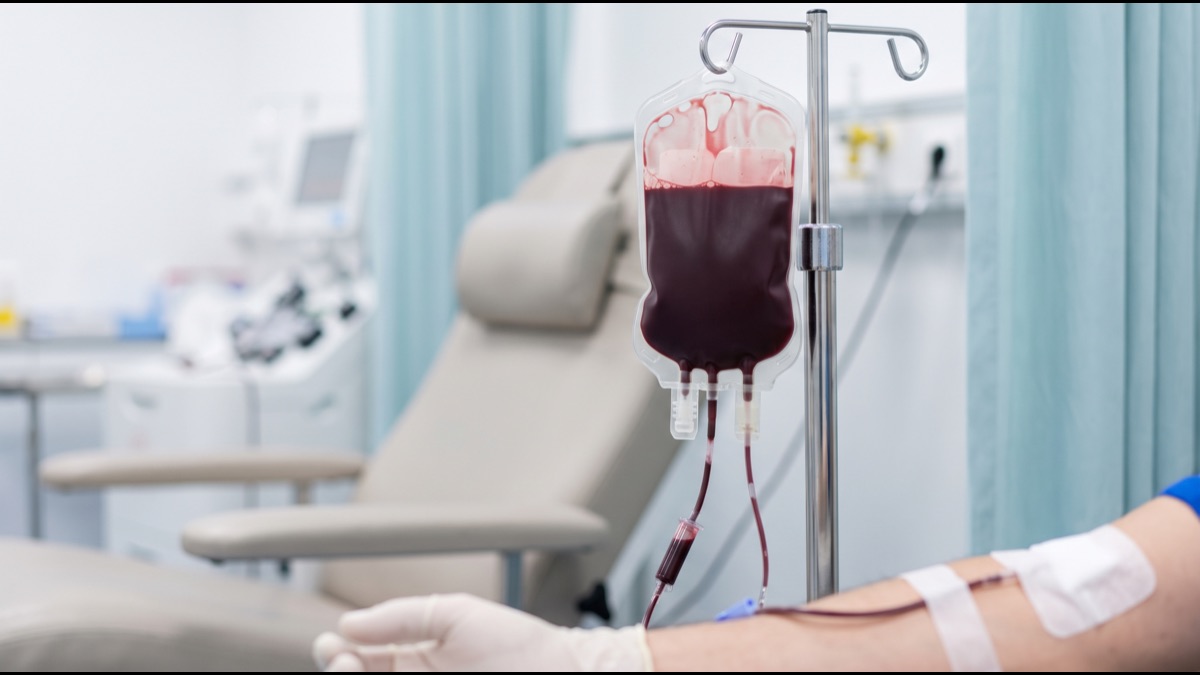
Blood is one of the few medical necessities that still cannot be manufactured, which means every transfusion performed anywhere in the world traces back to a person who sat in a chair and gave some. Decades of research into synthetic substitutes have produced nothing that works well enough for routine use.
What happens between that chair and a patient is considerably more involved than most donors realise. The donated unit is separated into components with different uses and different lifespans, tested extensively, matched carefully, and moved through a supply chain built around the awkward fact that blood expires within weeks. Understanding that chain explains most of what otherwise seems arbitrary about donation.
Why Blood Still Cannot Be Manufactured
Blood performs several tasks simultaneously, carrying oxygen, fighting infection, forming clots, and transporting nutrients and signalling molecules throughout the body.
Attempts to build substitutes have generally targeted only oxygen transport, and even that narrow goal has proved difficult, with several candidates failing in trials due to unacceptable side effects.
Laboratory-grown red cells have been produced and given to volunteers in small studies, but the cost and scale remain far from what routine clinical use would require, leaving donation as the only practical source.
What Actually Gets Taken
A standard whole blood donation collects roughly a pint, or around 450 to 500 millilitres, which represents approximately a tenth of an adult's total blood volume.
The body replaces the fluid portion within a day or so through normal drinking and fluid regulation, which is why donors are told to drink extra water before and after.
Red blood cells take considerably longer, generally several weeks to a couple of months, because the body must manufacture new cells rather than simply redistribute existing fluid, which sets the interval between donations.
Why Donation Intervals Exist
Most systems require a gap of around eight to twelve weeks between whole blood donations, a limit set by iron recovery rather than by blood volume, which returns much faster.
Each donation removes a meaningful quantity of iron, and rebuilding stores takes considerably longer than replacing cells, which is why frequent donors can develop iron deficiency without anaemia appearing on standard tests.
Several blood services have responded by monitoring donor iron directly or recommending supplements, reflecting a shift toward treating donor health as a long-term concern rather than checking only fitness on the day.
How Blood Is Separated Into Components
Whole blood is rarely transfused as collected. Instead the unit is spun in a centrifuge, which separates it by density into red cells, plasma, and platelets.
This separation means one donation can serve multiple patients with different needs, which is a substantial efficiency gain given how scarce the supply is relative to demand.
It also matters clinically, because most patients need one component rather than all of them, and giving whole blood would deliver unnecessary volume along with the part actually required.
What Red Cells Are Used For
Red cells carry oxygen and are the component most people picture when they think of transfusion, used for surgical blood loss, trauma, and severe anaemia.
They are stored refrigerated and typically last around six weeks, which is long enough for meaningful inventory management but short enough that supply must be continuously replenished.
Demand for red cells has actually declined in some countries as surgical technique improved and as evidence accumulated that restrictive transfusion thresholds produce outcomes as good as liberal ones.
What Plasma Does
Plasma is the liquid portion carrying clotting factors, antibodies, and proteins, and it can be frozen, which gives it a shelf life measured in months or years rather than weeks.
It is transfused directly for bleeding disorders and massive haemorrhage, but a large proportion is instead sent for fractionation, where specific proteins are extracted and manufactured into medicines.
These plasma-derived products treat conditions including immune deficiencies and haemophilia, and demand for them has grown steadily, which is why plasma-specific donation programmes exist separately from whole blood.
Why Platelets Are the Hardest Component
Platelets form clots and are essential for patients whose bone marrow is suppressed, particularly those undergoing chemotherapy, who may need repeated transfusions over months.
They present the sharpest logistical problem because they last only about five to seven days and must be stored at room temperature with continuous gentle agitation rather than refrigerated.
Room temperature storage also creates a bacterial contamination risk that refrigeration would suppress, which is why platelet units receive additional testing that red cells do not.
How Apheresis Differs
Apheresis donation runs blood through a machine that extracts one component and returns the rest to the donor, allowing collection of a much larger quantity of that single component.
A platelet apheresis donation can yield the equivalent of several whole blood donations worth of platelets, which is why most platelet supply now comes from apheresis rather than from separated whole blood.
Because red cells are returned, apheresis donors can give considerably more frequently than whole blood donors, though the process takes substantially longer, often well over an hour.
Why Blood Types Matter
Red cells carry surface markers that the immune system recognises, and transfusing incompatible cells triggers an immune reaction that can be rapidly fatal.
The main system divides blood into four groups based on the presence or absence of two markers, and a second system determines whether a person is positive or negative for another marker.
This produces eight common combinations, though dozens of additional blood group systems exist and occasionally matter for patients who receive many transfusions and develop antibodies to rarer markers.
What Universal Donor Actually Means
One blood type lacks the markers that trigger the most dangerous reactions, meaning its red cells can be given to patients of any type, which is why it is used when there is no time to determine a patient's type.
This makes that type disproportionately valuable in emergency medicine, and blood services actively recruit those donors, since the supply constrains how many unmatched emergency transfusions can be performed.
The relationship inverts for plasma, where a different type serves as the universal donor, because plasma contains antibodies rather than the markers, and compatibility runs in the opposite direction.
How Donated Blood Is Tested
Every unit is tested for blood group and for a panel of transmissible infections, with the exact panel varying by country according to local disease prevalence.
Modern testing includes nucleic acid amplification, which detects viral genetic material directly rather than waiting for the donor's antibody response, substantially shortening the window in which a recent infection could go undetected.
This layered approach has made transfusion-transmitted infection extremely rare in systems with robust testing, though it cannot reach zero, which is why donor screening questions remain part of the process.
Why Screening Questions Exist
Donors answer questions about travel, medical history, medications, and behaviour, which serve two distinct purposes that are frequently conflated by donors who find them intrusive.
The first purpose protects recipients by identifying risks that testing cannot reliably catch, particularly very recent infections and conditions for which no routine test exists.
The second protects donors themselves, since some conditions make donation unsafe for the person giving, and this half of the screening is rarely explained clearly enough for donors to recognise it.
How Eligibility Rules Have Changed
Many donor exclusions were originally written as broad population-level categories, which was a reasonable response when testing was insufficient to detect recent infections reliably.
As testing improved, several countries revised these rules toward individual risk assessment, asking all donors the same behavioural questions rather than excluding entire groups.
The shift was driven by evidence that individualised screening maintains safety while expanding the eligible pool, which matters given persistent supply pressure in most national systems.
Why Blood Expires
Stored red cells deteriorate gradually in what is generally called the storage lesion, involving changes in shape, flexibility, and oxygen-releasing capacity.
These changes mean older units, while still usable, are less effective than fresh ones, and the expiry date represents the point beyond which quality is no longer considered acceptable.
Research comparing outcomes from fresher versus older blood has generally found little difference within the approved storage window, which supports current limits rather than suggesting they should be shortened.
How Supply Is Managed
Blood services face a continuous balancing problem, since holding too little risks shortages during emergencies while holding too much means units expire unused.
Inventory is managed across regional networks that move units between hospitals based on demand, allowing a unit approaching expiry at one facility to be used at a busier one.
Demand is more predictable than it appears, with scheduled surgery producing steady baseline need, while trauma creates unpredictable spikes that the buffer inventory exists to absorb.
Why Shortages Follow Predictable Patterns
Donation reliably falls during holiday periods and severe weather, precisely when road traffic injuries and other emergencies may increase, producing a recurring seasonal squeeze.
Summer creates a similar problem in countries where a substantial share of collection happens at schools and universities, which close for months at a time.
Blood services plan around these patterns with targeted campaigns, but the short shelf life means they cannot simply stockpile in advance, which is the structural constraint behind most appeals.
What Happens During a Mass Casualty Event
After a major incident, blood used in the first hours comes entirely from existing inventory, because testing and processing mean a donation given that day cannot reach a patient for at least a day or two.
This is why blood services frequently ask people to donate in the following weeks rather than immediately, since the immediate surge depletes stock that then needs rebuilding.
The pattern is counterintuitive and contributes to a recurring problem where donation spikes after publicised events, overwhelming collection capacity, then falls below baseline afterwards.
Why Paid Donation Is Contested
Most countries rely on unpaid voluntary donation for whole blood, following guidance that voluntary systems produce safer supply because donors have no incentive to conceal risk factors.
Plasma is treated differently in several countries, where compensated donation is permitted and supplies a large share of the global raw material for plasma-derived medicines.
This creates an uncomfortable dependence, since countries that prohibit payment domestically frequently import plasma products originating from compensated donors elsewhere, a tension that is rarely discussed openly.
How Autologous Donation Works
Patients scheduled for certain operations can sometimes donate their own blood in advance for use during surgery, which eliminates compatibility and transmission concerns entirely.
The practice has declined considerably as transfusion safety improved and as evidence showed that pre-donation leaves some patients anaemic going into surgery, increasing rather than reducing transfusion likelihood.
It remains useful in specific cases, particularly for patients with rare blood types or antibodies that make finding compatible donor units genuinely difficult.
Why Rare Blood Types Create Special Problems
A small number of people have blood lacking markers that nearly everyone else carries, which means they can only receive blood from similarly rare donors.
International registries track these individuals, and frozen units are maintained in specialist banks, since freezing extends storage to years and makes stockpiling feasible for rare types.
Because blood group frequencies vary substantially between populations, patients from ethnic minorities frequently face longer searches, which is a recognised equity issue driving targeted recruitment.
How Patient Blood Management Changed Demand
Hospitals have adopted programmes aimed at reducing transfusion need through treating anaemia before surgery, minimising surgical blood loss, and applying stricter transfusion thresholds.
These measures reduced red cell use substantially in many systems without worsening outcomes, reflecting accumulated evidence that transfusion carries real risks and had been used more liberally than necessary.
The result is that supply pressure in wealthy countries reflects a genuinely reduced but still irreplaceable baseline, while many lower-income countries face shortages of an entirely different magnitude.
What Global Access Looks Like
Access to safe blood varies enormously, with collection rates in high-income countries many times those in low-income ones, where supply frequently depends on family members donating for a specific patient.
Replacement donation of this kind is associated with worse safety outcomes, since relatives under pressure may be less forthcoming about risk factors than voluntary donors would be.
Testing capacity is also unevenly distributed, meaning the residual risk of transfusion-transmitted infection remains substantially higher in parts of the world where the need for transfusion is greatest.
Why Leukoreduction Became Standard
Most blood services now filter white blood cells out of donated units, a step called leukoreduction that removes cells serving no purpose for the recipient.
Those cells cause a substantial share of transfusion reactions, including fever, and they carry certain viruses that remain inside them rather than circulating freely in the plasma.
Universal filtering added cost but reduced complications enough that most high-income systems adopted it for all units rather than reserving it for patients considered at particular risk.
Why Donor Reactions Happen
A minority of donors experience faintness, which results from a nervous system response to the procedure rather than from the volume removed, and is more common in first-time and younger donors.
Blood services reduce these reactions through hydration, salt intake before donation, and simple muscle-tensing techniques that maintain blood pressure during the process.
This matters beyond comfort, because donors who have a bad first experience are considerably less likely to return, and retention of existing donors is more efficient than continually recruiting new ones.
What This Means for Supply
The entire system rests on a small fraction of eligible people donating regularly, with most countries reporting that only a few percent of the eligible population gives in any given year.
Because components expire, the supply cannot be secured by a one-time surge in donation, and depends instead on a steady flow that matches consumption week by week.
This is the practical reason blood services emphasise repeat donation over first-time recruitment, since a reliable returning donor contributes far more over time than a single motivated gift.
Blood remains one of the few medical necessities that cannot be manufactured. Decades of work on substitutes has produced nothing suitable for routine use, and laboratory-grown red cells remain far from the cost and scale clinical practice would require. Every transfusion still traces back to a donor. What happens next explains most of what seems arbitrary about the process. The unit is separated into red cells, plasma and platelets, each with different uses and lifespans — six weeks refrigerated, months or years frozen, and barely a week at room temperature for platelets. Donation intervals are set by iron recovery rather than blood volume. Screening questions protect donors as well as recipients, a purpose rarely explained clearly enough. The short shelf life is the constraint behind nearly everything else. Blood used in the hours after a major incident comes entirely from existing stock, which is why services ask people to donate in the following weeks rather than the same day. Supply cannot be stockpiled in advance or secured by a one-time surge. It depends on a steady flow matching consumption week by week — which is why a returning donor matters more than a single motivated one.
Sources
- Wikipedia — overview of donation practice, components, and history
- World Health Organization — global blood safety and availability data
- American Red Cross — donation procedures, eligibility, and component information
- NHS Blood and Transplant — donor screening policy and blood supply management
- National Institutes of Health — research on storage lesion and transfusion thresholds
FAQ
Why do I have to wait weeks between donations?
The limit is set by iron recovery rather than blood volume. Fluid returns within a day and red cells within weeks, but rebuilding iron stores takes considerably longer.
How long does donated blood last?
Red cells last around six weeks refrigerated, platelets only about five to seven days at room temperature, and plasma months or years when frozen.
Does one donation help one patient?
Usually more. The unit is separated by centrifuge into red cells, plasma and platelets, which can go to different patients with different needs.
Why can't blood be made artificially?
Substitutes have mostly targeted oxygen transport alone and several failed in trials. Lab-grown red cells exist but remain far from the cost and scale routine use would need.
Should I donate immediately after a disaster?
Blood used in the first hours comes from existing stock, since testing takes a day or two. Services usually prefer donations in the weeks that follow, to rebuild depleted inventory.
About the Author
We reference Wikipedia, World Health Organization, American Red Cross, NHS Blood and Transplant, and National Institutes of Health to explain the background and current understanding of this topic.
Loved This Article?
Share it on WhatsApp → Share it on WhatsApp
Get more guides in your inbox — Subscribe to our newsletter for weekly surprising stories from Egypt, Saudi Arabia, Dubai, and beyond.