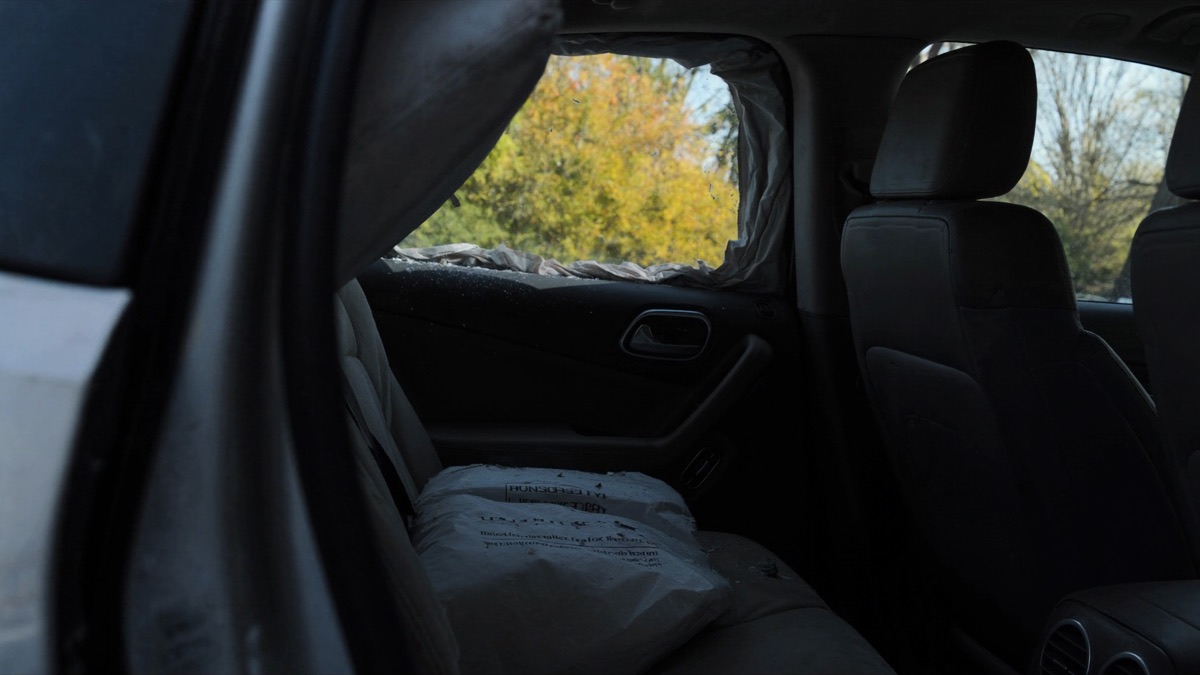
A car's safety star rating is genuinely not the result of a single simple crash; it is a composite score built carefully from multiple separate, standardized test scenarios, each one specifically designed to replicate a specific, statistically common way real people are actually injured or killed in real-world road accidents today. Frontal impacts, side impacts, pole impacts, and pedestrian-protection tests each measure a genuinely different aspect of a vehicle's structural and safety-system performance, and a vehicle's final overall rating is generally weighted across all of these categories rather than determined by its single best or single worst result.
Understanding how these individual tests combine into one overall rating explains why two cars with the same star rating can still perform very differently in a specific real-world crash type, and why safety organizations keep revising their testing protocols as vehicle design and injury data continue to evolve. The organizations that run these programs are typically independent of vehicle manufacturers, funded instead through government mandate, insurance industry backing, or a combination of both, specifically so the resulting ratings carry genuine credibility with consumers rather than reflecting any manufacturer's own marketing claims about a vehicle's safety.
Crash Test Dummies Are Instrumented Research Tools
Modern crash test dummies are packed with dozens of sensors measuring force, acceleration, and deformation at the head, neck, chest, pelvis, and limbs, translating a physical impact into precise numerical data that engineers can compare directly against established human injury thresholds. That data is captured at extraordinarily high sampling rates, since a crash unfolds and resolves within roughly a tenth of a second, meaning any sensor too slow to record change at that pace would simply miss the peak forces the entire test exists to measure.
Different dummy models represent different body types, including adult male and female proportions and child-sized dummies, specifically because injury risk and biomechanics genuinely differ across body size, meaning a single generic dummy could not accurately represent risk across an entire population. A single high-fidelity dummy can cost several hundred thousand dollars and must itself be periodically recalibrated against a known reference standard, since sensor drift over hundreds of test impacts would otherwise quietly corrupt the very injury data the entire rating system depends on. Engineers also run tests with dummies seated in multiple positions and with varying seatbelt pretensioner settings, because real occupants are rarely sitting in the single idealized posture a basic test would otherwise assume.
The Frontal Offset Test and Why It Is Not a Head-On Crash
Rather than simply testing a full-width head-on collision directly, most frontal safety tests instead use an offset impact, striking only a portion of the vehicle's front end against a barrier, because real-world frontal crashes overwhelmingly involve partial overlap rather than a perfectly centered, full-width impact.
This offset design deliberately concentrates crash force onto a smaller structural area of the vehicle, which is actually a harder structural challenge than a full-width impact in some respects, testing whether the car's frame can manage that concentrated force without collapsing the passenger compartment. Two related offset variants exist specifically to probe different failure modes: a moderate-overlap version tests the vehicle's main structural rails, while a small-overlap version strikes just outside those rails entirely, a configuration that exposed serious structural weaknesses in many vehicles that had already earned top scores on the moderate-overlap version alone. Introducing the small-overlap test forced a genuine industry-wide redesign of front-end structures, since a frame optimized only for the older test could still allow the passenger compartment to collapse when force bypassed the main rails.
Side-Impact Testing and the Deformable Barrier
Side-impact tests specifically use a moving deformable barrier carefully built to mimic the front-end stiffness of another oncoming vehicle, striking the test car's side at a set speed and angle, since side impacts inherently offer far less structural crumple zone to absorb force than a frontal impact does.
Because occupants sit so close to the point of impact in a side collision, side-curtain airbags and reinforced door and pillar structures play an outsized role in this specific test's results compared with frontal testing, where the crumple zone itself does more of the protective work. Many testing programs have progressively increased the mass and impact speed of the deformable barrier over successive protocol updates, mirroring the trend toward heavier SUVs and pickup trucks on real roads, since a barrier calibrated to an older, lighter vehicle fleet would understate the force a modern side impact actually delivers. High-strength steel and boron-alloy reinforcements running through the door sills, B-pillar, and roof rail are now standard responses to this specific test category, precisely because that structure has to resist intrusion into the occupant space with almost no crumple zone available to absorb the blow first.
The Pole Test: A Uniquely Severe Scenario
The pole impact test deliberately propels the vehicle sideways directly into a narrow, rigid pole, deliberately simulating a scenario like striking a tree or utility pole, a crash type that concentrates enormous force onto an extremely small area of the vehicle's structure.
This narrow contact area makes the pole test one of the most demanding standardized crash scenarios for a vehicle's side structure and curtain airbag system specifically, since there is essentially no surrounding structure to help distribute or absorb the impact force. Because the pole itself is far narrower than a typical vehicle's side profile, the impact energy funnels directly through whatever structure happens to be at exactly that height and location, which is why pole-test performance can vary meaningfully even between vehicles that perform similarly on the broader deformable-barrier side test. Some rating programs run the pole test at an angle rather than a perfect right angle specifically to better match how real single-vehicle pole and tree strikes tend to occur on actual roads.
Pedestrian Protection Is Now a Core Rating Category
Modern rating systems increasingly test how a vehicle's front end, including the hood, bumper, and windshield area, would affect a pedestrian struck at typical urban speeds, using impactor devices calibrated to mimic the head and legs of an adult or child pedestrian.
This category exists specifically because pedestrian fatalities represent a substantial share of overall road deaths in many countries, and vehicle front-end design genuinely affects pedestrian injury severity independent of how well the vehicle protects its own occupants. The rise of taller SUV and pickup front ends has made this category increasingly important, since a higher, flatter front profile tends to strike a pedestrian's torso or head directly rather than the legs first, a genuinely more dangerous impact pattern that hood-height and bumper-design requirements now specifically try to address. Many modern vehicles also incorporate pop-up hood mechanisms or external airbags that deploy on pedestrian impact, creating additional cushioning space between the rigid engine components and the hood's outer surface in the critical fraction of a second after a pedestrian strike is detected.
How Structural Design and Crumple Zones Actually Work
Modern vehicle frames are deliberately engineered with crumple zones, sections designed to progressively deform and absorb crash energy, specifically so that less of that force transfers directly into the rigid passenger compartment where occupants sit.
This is a genuinely counterintuitive engineering principle for many consumers: a car front end that crumples dramatically in a crash test photo is often performing exactly as intended, absorbing energy that would otherwise reach the occupants, rather than indicating a structurally weak vehicle. The passenger compartment itself, by contrast, is deliberately engineered as a rigid, high-strength "safety cell" that is specifically designed to resist deforming at all, using a different structural philosophy from the crumple zones surrounding it. Reading a crash test's structural results correctly means looking at how much the safety cell itself held its shape and how much space remained around the dummy's head and chest, rather than judging severity purely from how dramatically the vehicle's exterior appears damaged in photographs.
Why Electronic Safety Systems Now Factor Into Ratings
Beyond pure crash-structure performance, modern rating systems increasingly credit vehicles for active safety technology like automatic emergency braking, lane-keeping assistance, and blind-spot monitoring, since these systems can prevent a crash from happening at all rather than only mitigating injury once one occurs.
This shift reflects a genuine evolution in safety philosophy across the industry: from purely reactive crash-survival engineering toward a combined approach that also credits a vehicle's ability to help a driver avoid the crash entirely. Some rating programs now require a minimum suite of these active systems, such as automatic emergency braking that also works reliably at night or in detecting pedestrians and cyclists, before a vehicle can even qualify for the program's highest overall award, regardless of how well it performs in the pure crash-structure categories. This dual emphasis means a genuinely well-engineered vehicle today has to succeed at two related but distinct challenges: surviving a crash that does happen, and actively working to prevent that crash from happening in the first place.
Why Ratings From Different Countries Are Not Always Comparable
Different regions run their own independent testing programs, such as separate European, American, and other national or regional rating bodies, and while their general methods are similar, differences in exact test speeds, barrier types, and scoring weight given to each category mean a five-star rating from one program does not automatically guarantee an equivalent rating from another. Some programs also weight active-safety technology and pedestrian protection much more heavily in their overall score than others, so two vehicles that perform almost identically in raw structural crash-test data can still end up with visibly different overall star counts once each program's own specific scoring formula is applied.
This is why safety researchers generally advise comparing vehicles only within the same rating program's results, rather than assuming a five-star rating earned under one country's specific test protocol translates directly to another country's different standard. A vehicle sold under different trim levels or regional specifications in different markets can also carry genuinely different structural reinforcement or safety-equipment packages despite sharing the same model name, which means a rating earned by one regional version of a car does not necessarily apply to a differently equipped version of the ostensibly same model sold elsewhere. Buyers cross-shopping between markets are generally advised to confirm the exact market and specification a published rating actually covers rather than assuming the badge alone guarantees an identical vehicle underneath.
What a Star Rating Does Not Tell You
A star rating reflects performance in a specific, standardized set of test scenarios and does not capture every real-world crash type, meaning a vehicle can score extremely well overall while still having a particular structural or safety-system weakness in a crash configuration the standard tests do not specifically evaluate.
Consumer safety advocates generally recommend reading the detailed category-by-category breakdown behind an overall star rating rather than relying on the single overall number alone, since that breakdown reveals meaningfully more about a vehicle's specific strengths and weaknesses. Vehicle size and weight also meaningfully affect real-world outcomes in ways a same-category star rating does not directly capture, since physics genuinely favors a heavier vehicle in a collision between two differently sized cars even when both individually earn top ratings within their own weight class. A five-star rating therefore tells you how well a vehicle protects its occupants relative to its own test scenarios, not necessarily how it would fare specifically against a much larger or much smaller vehicle in a real mismatched collision.
Why Testing Protocols Keep Getting Updated
Crash test organizations regularly revise their protocols, adding new test types, updating dummy technology, and raising minimum performance thresholds, specifically in response to ongoing real-world injury data showing which crash scenarios and injury patterns remain most common and most severe.
This continuous protocol evolution is precisely why an older vehicle model's star rating earned years ago should not be assumed directly comparable to a rating a newer model earns today under an updated, generally more demanding test standard. Some rating organizations periodically re-score their historical databases as protocols change, but many do not retroactively re-test older vehicles under a new standard at all, which means a genuinely fair comparison across model years requires checking the specific protocol version each rating was actually earned under rather than assuming star counts alone are directly equivalent across time.
Sources
- Insurance Institute for Highway Safety — crash test methodology and vehicle safety ratings
- National Highway Traffic Safety Administration — official US New Car Assessment Program testing standards
- Wikipedia — overview of crash test types and dummy technology
FAQ
Is a car's star rating based on just one crash test?
No; it is a composite score built from several separate standardized tests, including frontal offset, side impact, pole impact, and pedestrian-protection scenarios, each measuring a different injury risk.
Why does a car's front end crumple so dramatically in crash tests?
Crumple zones are deliberately engineered to absorb crash energy progressively, reducing how much force transfers into the passenger compartment, so visible crumpling often shows the design working correctly.
Why is the pole impact test considered especially severe?
It concentrates enormous force onto a very small area of the vehicle's side structure with almost no surrounding structure to help absorb the impact, making it one of the most demanding standardized tests.
Do active safety features like automatic braking affect a car's overall rating?
Increasingly yes; modern rating systems credit technology that can prevent a crash entirely, not only structural performance measured after a crash occurs.
Can I compare star ratings from different countries directly?
Not reliably; different testing programs use different exact speeds, barriers, and scoring weights, so safety researchers recommend comparing vehicles only within the same rating program.
Does a five-star rating mean a car is safe in every possible crash type?
No; the rating reflects performance in a specific standardized set of scenarios and does not capture every real-world crash configuration, so reading the detailed category breakdown gives a fuller picture.
About the Author
We reference Wikipedia and other authoritative sources to explain the background and current understanding of this topic. Our editorial team cross-checks vehicle safety claims against official rating-program publications and engineering research before publishing, since crash test methodology is a genuine life-safety subject where an imprecise summary can meaningfully mislead a reader shopping for a safer vehicle.
Loved This Article?
Share it on WhatsApp → Share it on WhatsApp
Get more guides in your inbox — Subscribe to our newsletter for weekly surprising stories from Egypt, Saudi Arabia, Dubai, and beyond.