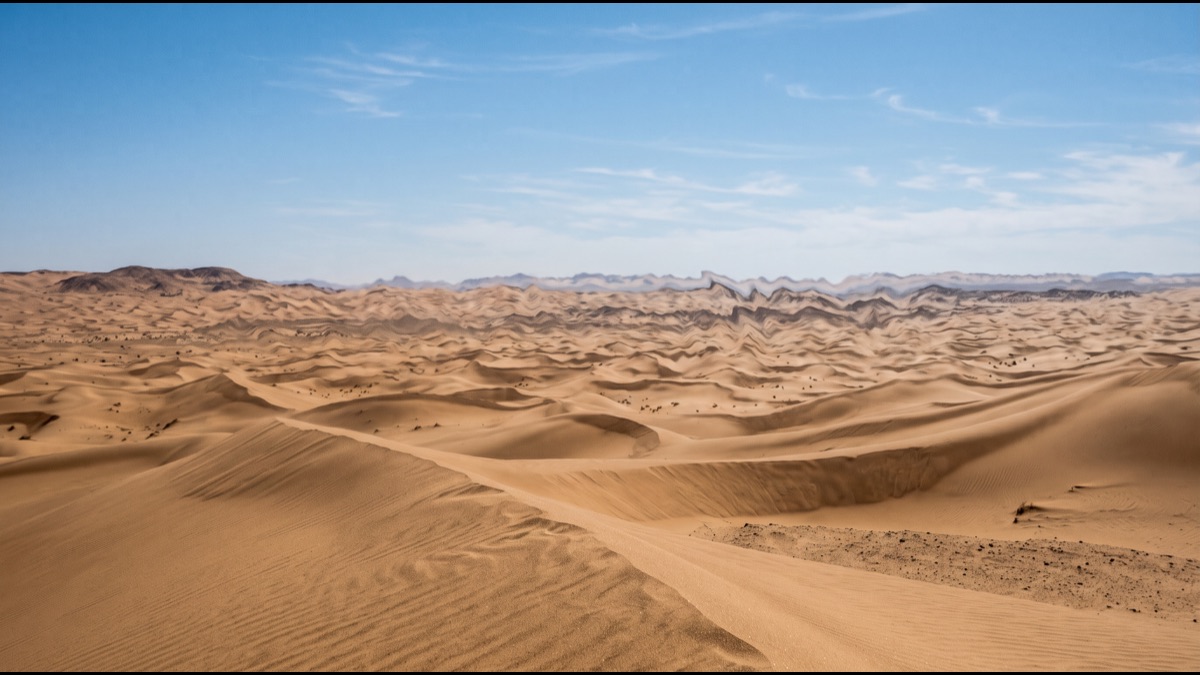
The shimmering "water" that appears to pool on a hot desert road or a distant dune is not a hallucination, a trick of dehydration, or a figment of imagination. It is a genuinely real, physically measurable optical phenomenon produced by light bending as it passes through layers of air at different temperatures and densities, an effect so consistent and predictable that it can be captured on camera, calculated mathematically, and reproduced reliably under the right conditions.
Understanding how a mirage actually forms, from the basic physics of light refraction to why the illusion always seems to retreat exactly as fast as you approach it, reveals one of the more elegant examples of ordinary physics producing an effect that looks, to the untrained eye, almost supernatural.
It also explains why deserts in particular, including much of the Arabian Peninsula, produce such vivid and frequently photographed examples of the phenomenon, and why the same basic physics shows up in far colder environments too, just producing a very different-looking version of the same underlying effect.
A Trick of Light, Not a Trick of the Mind
The word mirage often carries a connotation of hallucination or delusion in everyday language, but the actual optical phenomenon is entirely physical, produced by real light rays bending predictably as they travel through air of varying density, meaning a camera, a physical measuring instrument, or a second observer standing beside you will see and record the exact same effect you do.
This physical reality is precisely why mirages can be reliably photographed and have been studied scientifically for centuries, unlike a genuine hallucination or perceptual illusion generated entirely within an individual observer's brain rather than by an external, physically measurable light phenomenon anyone in the right position could observe.
Why Light Bends When It Passes Through Air of Different Densities
Light travels at very slightly different speeds through air of different densities, and whenever a beam of light passes at an angle from one density of air into another, it bends slightly at that boundary, a phenomenon called refraction that is the same basic physical principle responsible for a straw appearing to bend where it enters a glass of water.
In ordinary air with a fairly uniform temperature from ground level upward, this bending effect is negligible and essentially unnoticeable, but when temperature, and therefore air density, changes sharply and continuously over a short vertical distance near the ground, the cumulative bending effect becomes strong enough to produce a genuinely visible optical distortion.
How Heat Creates the Density Gradient a Mirage Needs
On a hot desert surface, or any strongly sun-heated surface like asphalt, the air in direct contact with the ground becomes considerably hotter, and therefore less dense, than the air just a short distance higher up, creating a steep vertical temperature and density gradient concentrated in a thin layer immediately above the ground.
This steep gradient is precisely the condition required for a strong mirage effect, since light rays traveling nearly parallel to the ground get bent upward as they pass through this rapidly changing density layer, eventually curving enough to reach an observer's eye from an angle that makes the light appear to be coming from the ground itself rather than from the actual object or sky it originated from.
Why the "Water" Always Appears Near the Horizon
What an observer actually perceives as shimmering water on a hot road or desert surface is, in physical reality, a refracted image of the sky itself, bent upward into the observer's line of sight by the hot air layer near the ground, and since the sky appears at a low angle near the horizon, the refracted image naturally appears to sit right at ground level in exactly the spot where genuine standing water would logically appear.
This is precisely why the illusion so convincingly resembles a wet or reflective surface: the brain, accustomed to interpreting a bright, sky-colored patch appearing at ground level near the horizon as a reflection off water, automatically and almost unavoidably interprets the refracted sky image the same way, even when the conscious mind knows perfectly well no water could possibly be there.
The Difference Between an Inferior and a Superior Mirage
The desert road mirage described above is technically called an inferior mirage, meaning the illusory image appears below the object's actual position, specifically because it forms when air near the ground is hotter, and therefore less dense, than the air above it, the exact temperature arrangement present over a sun-baked desert surface.
This naming convention exists specifically to distinguish it from the less common but equally real superior mirage, where the illusory image appears above the object's actual position instead, a distinction based purely on the specific temperature gradient present rather than on any difference in the underlying refraction physics involved.
Why Superior Mirages Happen Over Cold Surfaces Instead
A superior mirage forms under the opposite temperature arrangement, when a layer of unusually cold, dense air sits close to the ground or water surface with warmer air above it, a condition common over cold ocean water or polar ice, causing light to bend downward instead of upward and often producing dramatic effects like distant ships or coastlines appearing to float above the horizon or stretch vertically.
This temperature-dependent distinction between inferior and superior mirages is why desert environments overwhelmingly produce the "water on the road" version of the effect, while polar and cold-ocean environments more commonly produce the dramatically different floating-object version, both driven by the exact same underlying refraction physics applied to opposite temperature gradients.
How a Camera Can Photograph a Mirage
Because a mirage is produced by real, physically bent light rays rather than any neurological or perceptual process happening only inside an observer's brain, a camera positioned at the same viewing angle as a human observer captures the identical refracted image, which is precisely why countless genuine photographs of desert road mirages exist and look convincingly similar to what the human eye perceives directly.
This photographability is one of the clearest pieces of evidence that a mirage is a real external optical phenomenon rather than a subjective perceptual trick, since a true hallucination generated entirely within one individual's visual cortex could never be captured by an external recording device the way a mirage reliably can be.
Why the Illusion Disappears as You Get Closer
As an observer moves toward an apparent mirage, the specific geometric angle between the observer's eye, the hot air layer, and the patch of ground producing the refracted sky image continuously shifts, meaning the illusion effectively retreats and eventually vanishes entirely as the viewing geometry required to produce it at that specific location changes.
This continuous retreat is why a mirage can never actually be reached no matter how far or fast an observer travels toward it, a frustrating property that has been noted and written about across cultures for centuries, since the specific viewing geometry that created the illusion in the first place simply cannot be maintained while approaching the apparent location.
What Fata Morgana Actually Adds to the Basic Effect
A more elaborate and visually striking form of superior mirage, called a Fata Morgana, occurs when multiple distinct atmospheric layers with different temperatures stack on top of each other, each bending light slightly differently, producing complex, often dramatically distorted and multiplied images of distant objects rather than the simpler single-layer bending of an ordinary mirage.
Fata Morgana effects have historically been documented producing startling illusions including apparent floating cities, towering cliffs, or ships stretched into impossible vertical shapes, phenomena that likely contributed significantly to historical sailor and traveler legends about phantom landmasses and ghost ships appearing on the horizon before vanishing entirely.
Why Deserts Are Not the Only Place Mirages Form
Any surface capable of producing a sufficiently steep near-ground temperature gradient can generate a mirage, which is why the effect appears reliably over hot asphalt roads, airport runways on sunny days, and even indoor settings with strong localized heat sources, not exclusively over natural desert sand as popular imagination often assumes.
This broader occurrence is precisely why anyone who has driven on a hot highway on a sunny day has almost certainly seen an inferior mirage themselves, whether or not they specifically associated the shimmering road-surface effect with the same underlying physics responsible for the classic desert oasis mirage of popular imagination and folklore.
How Ancient Travelers Interpreted the Same Phenomenon
Long before the underlying optical physics was formally understood and mathematically described, travelers crossing deserts across many different historical cultures documented experiences with the phenomenon, generally interpreting the shimmering apparent water as a genuine, if cruel and misleading, natural feature of the desert landscape rather than as light bending through temperature-stratified air.
This shared historical experience across otherwise unconnected cultures and eras is itself informative, since it demonstrates that the mirage effect is a consistent, universal physical phenomenon rather than a culturally specific belief or a modern scientific curiosity invented after the fact to explain away old folklore.
What Modern Physics Actually Measures About the Effect
Contemporary atmospheric physicists can precisely calculate the exact refraction angle produced by a given near-ground temperature gradient, model how a specific mirage's apparent size and position would shift under changing conditions, and even use mirage-like refraction measurements as an indirect method for studying near-surface atmospheric temperature profiles in certain research contexts.
This precise mathematical treatment transforms what once seemed a mysterious desert phenomenon into a genuinely well-understood, quantifiable branch of atmospheric optics, one taught in introductory physics courses specifically because it demonstrates refraction principles through an example most students have likely already observed personally without understanding the underlying cause.
Why Mirages Can Distort More Than Just Reflections
Beyond producing the appearance of reflective water, strong refraction layers can also visibly distort, stretch, compress, or invert the apparent shape of genuinely distant real objects, including vehicles, buildings, or other travelers on the horizon, an effect sometimes called looming or towering depending on the specific direction of distortion produced.
This broader distortion capability is why mirage-related visual effects extend well beyond the simple false-water illusion most people associate with the term, encompassing a genuinely wide family of refraction-driven visual distortions all produced by the same underlying physical mechanism applied to different specific atmospheric conditions and viewing geometries.
How Pilots and Sailors Learned to Account for Refraction
Because atmospheric refraction can distort the apparent position of the horizon, distant landmarks, and even celestial bodies used for navigation, pilots and sailors historically had to learn to account for predictable refraction effects when using visual navigation and celestial observation techniques, treating the phenomenon as a genuine practical navigation consideration rather than merely a curious visual novelty.
Modern navigation increasingly relies on satellite positioning that sidesteps this issue entirely, but the historical necessity of understanding and correcting for atmospheric refraction in celestial navigation represents one of the more practically consequential applications of the same basic physics responsible for the desert road mirage most people encounter far more casually.
Why the Gulf's Climate Produces Such Vivid Examples
The combination of intense direct sunlight, extremely hot exposed ground surfaces, and often very flat, unobstructed desert and highway terrain across the UAE, Saudi Arabia, and neighboring countries creates near-ideal conditions for producing strong, visually striking inferior mirages, particularly during the hottest parts of the day in summer months.
This regional climate reality is why residents and visitors across the Gulf frequently encounter particularly vivid, easily photographed examples of the phenomenon on desert highways, a genuinely everyday encounter with a piece of physics that elsewhere in the world might be considered a comparatively rare or noteworthy sight.
What a Mirage Reveals About How We Trust Our Eyes
The mirage effect offers a genuinely instructive lesson about the limits of visual perception: the brain interprets raw visual information using learned pattern-recognition shortcuts, in this case associating a bright, sky-colored patch near the horizon with reflective water, shortcuts that generally serve us well but can be reliably fooled by specific, predictable optical conditions.
This is precisely why understanding the underlying physics does not actually make the visual illusion disappear when you encounter one yourself, since the brain's automatic pattern-recognition process operates independently of conscious, learned knowledge about refraction, meaning even a physicist who fully understands mirage formation will still perceive the same convincing shimmering water effect while driving across a hot desert highway.
How Simulated Mirages Are Used in Science Education
Physics educators frequently recreate simplified mirage effects using controlled heat sources and glass tanks with layered fluids of different densities, giving students a hands-on demonstration of refraction principles without needing to wait for the right natural desert or highway conditions to occur, a teaching approach that makes an abstract optics concept immediately visible and memorable.
These classroom demonstrations reinforce a broader point about how the mirage phenomenon connects abstract wave optics theory to an everyday visual experience nearly every student has already had, making it one of the more effective bridges between textbook physics and lived personal observation available to science teachers.
Why Photographers Chase the Perfect Mirage Shot
Landscape and travel photographers specifically seek out conditions likely to produce strong, visually compelling mirage effects, timing shoots for the hottest parts of the day and choosing long, flat stretches of road or desert that maximize the refraction layer's visible length, treating the phenomenon as a genuine creative subject rather than simply an incidental visual curiosity encountered by chance.
This deliberate pursuit has produced some of the most widely shared and recognizable desert photography from the Gulf region specifically, images that circulate well beyond scientific or educational contexts purely because the visual effect itself is striking enough to function as compelling travel and landscape photography in its own right.
Why Understanding the Physics Does Not Ruin the Experience
Knowing precisely why a mirage forms, the specific temperature gradient, the refraction angle, the geometric retreat that keeps it perpetually out of reach, does not diminish how genuinely striking the effect looks in person, and if anything adds a layer of appreciation for how ordinary physical principles can produce something that looks, at first glance, almost magical.
That combination, a phenomenon simple enough to explain with basic high school physics yet visually convincing enough to have generated centuries of folklore, legend, and genuine navigational confusion, is what makes the desert mirage one of the more quietly remarkable everyday examples of physics operating in plain sight, whether or not anyone watching happens to know exactly why.
Sources
- Wikipedia — overview of mirage optical physics, types, and historical accounts
- National Oceanic and Atmospheric Administration — background on atmospheric refraction and optical phenomena
- UK Met Office — explanation of superior and inferior mirage formation conditions
- Atmospheric Optics — detailed technical resource on refraction-based atmospheric phenomena
FAQ
Is a desert mirage a hallucination caused by heat or dehydration?
No — a mirage is a genuinely real optical phenomenon caused by light bending through air of different densities, which is why it can be photographed by a camera and seen identically by multiple observers rather than being a subjective mental effect.
Why does the shimmering water always seem to move away as you approach?
The specific viewing angle between your eye, the hot air layer, and the ground that produces the refracted sky image continuously shifts as you move, so the geometry required to see the illusion at that spot simply cannot be maintained while approaching it.
What is the difference between an inferior and a superior mirage?
An inferior mirage, the common desert road effect, appears below the real object because ground-level air is hotter than the air above it, while a superior mirage appears above the object because a cold air layer sits near the surface instead.
Can mirages happen anywhere besides deserts?
Yes — any surface producing a steep near-ground temperature gradient can create one, including hot asphalt roads and airport runways, which is why the effect is common on ordinary highways on sunny days, not just over desert sand.
Why do sailors and pilots need to understand atmospheric refraction?
Refraction can distort the apparent position of the horizon and celestial bodies used in navigation, so historically pilots and sailors had to learn to correct for predictable refraction effects when using visual and celestial navigation techniques.
About the Author
We reference Wikipedia and other authoritative sources to explain the background and current understanding of this topic.
Loved This Article?
Share it on WhatsApp → Share it on WhatsApp
Get more guides in your inbox — Subscribe to our newsletter for weekly surprising stories from Egypt, Saudi Arabia, Dubai, and beyond.