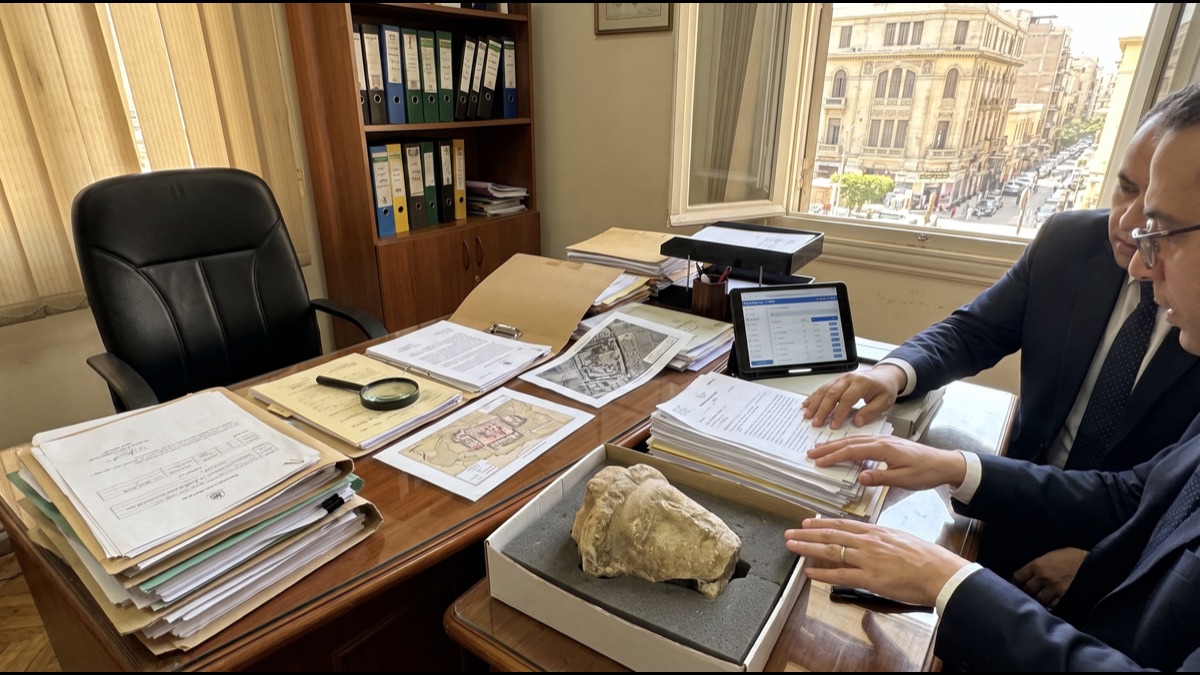
Egypt has formally requested the return of thousands of artifacts currently held in museums and private collections abroad, ranging from a single fragment to entire monuments. Understanding how these claims actually function, rather than simply reading headlines about a single famous dispute, requires looking at the legal, diplomatic, and institutional machinery operating quietly behind each case.
Repatriation is neither automatic nor guaranteed by any single international law, which is precisely why some claims succeed relatively quickly while others remain unresolved for generations, and why the outcome so often depends on factors well beyond the strength of the historical argument alone.
Why Egypt's Antiquities Became a Global Legal Battleground
Large numbers of Egyptian antiquities left the country during the nineteenth and early twentieth centuries, a period when excavation permits, partage agreements dividing finds between foreign missions and the Egyptian state, and outright removal without documented consent were all common practice under conditions modern Egyptian authorities now consider deeply unequal.
Many of these objects entered major Western museum collections through purchases, gifts, or division agreements that were technically legal under the rules of their time, which is exactly what makes present-day claims complicated: Egypt is frequently arguing that historically legal transfers were nonetheless illegitimate, rather than alleging straightforward theft under current law.
That distinction matters enormously in practice, because it shapes which legal tools are actually available and why moral and diplomatic pressure, rather than court orders, has become the primary lever Egypt and similar source countries actually use.
What Actually Counts as a Repatriation Claim
A formal repatriation claim generally requires Egyptian authorities to identify a specific object, establish where and when it left the country, and present documentary or archaeological evidence supporting the position that its removal violated either the law in force at the time or a subsequent international agreement Egypt considers applicable.
Claims range enormously in scale, from a single smuggled artifact seized at a border crossing and returned relatively quickly through law enforcement cooperation, to century-old museum centerpieces where ownership has never been seriously contested by the holding institution despite Egypt's request.
Egypt's Ministry of Tourism and Antiquities, along with specialized recovery units, actively tracks looted or disputed items appearing at auction houses, in private sales, and in museum catalogues, treating this monitoring as an essential first step that precedes any formal claim.
The Legal Foundations Egypt Relies On
Domestic Egyptian antiquities law, dating back to the early twentieth century and repeatedly strengthened since, asserts state ownership over antiquities discovered on Egyptian soil, a legal foundation Egypt cites even when arguing about objects removed decades before the specific law in question was enacted.
Beyond domestic law, Egypt relies heavily on international instruments, particularly the 1970 UNESCO Convention on the Means of Prohibiting and Preventing the Illicit Import, Export and Transfer of Ownership of Cultural Property, though that convention's protections generally apply only to transfers occurring after it took effect in each signatory country.
This creates a genuine legal gap for the oldest and most famous disputed objects, which left Egypt long before any relevant treaty existed, forcing Egypt to build its case for these specific items primarily on historical and ethical argument rather than treaty enforcement.
Why the Rosetta Stone Case Is So Often Cited
The Rosetta Stone, discovered in 1799 and taken to Britain following the defeat of French forces in Egypt, sits in the British Museum and has become the most widely recognized symbol of Egyptian repatriation demands precisely because its removal predates every relevant modern legal framework by well over a century.
Egyptian officials have repeatedly and publicly requested its return, framing the request explicitly in terms of colonial-era removal under conditions of military occupation rather than ordinary archaeological practice, a framing intended to strengthen the ethical case given the absence of a directly applicable legal one.
The British Museum has consistently declined outright return while sometimes discussing loan arrangements, a pattern repeated across several other prominent disputes and one that illustrates how institutional reluctance, not the absence of a compelling historical argument, is frequently the real obstacle.
How the Nefertiti Bust Dispute Illustrates the Problem
The painted bust of Nefertiti, excavated by a German-led mission in 1912 and now displayed in Berlin, has been the subject of a formal Egyptian return request for decades, with Egypt disputing the legality of the original division of finds between the German excavators and Egyptian authorities.
Germany has maintained that the object left Egypt through a legally documented partage arrangement, and this direct disagreement over the facts of a single nineteen-twelve transaction, rather than any dispute over current ownership law, is precisely why the case has never been resolved through litigation.
The dispute has instead played out almost entirely through public statements, museum exhibitions, and periodic diplomatic exchanges, a pattern that recurs across most major disputed Egyptian antiquities and reflects the practical absence of any court with binding authority over both parties.
What UNESCO's 1970 Convention Actually Changed
Before 1970, no widely adopted international framework specifically addressed the illicit trade in cultural property, leaving individual countries to rely entirely on their own domestic law and whatever bilateral goodwill existed with the country holding a disputed object.
The 1970 convention established a shared international norm against illicit import and export of cultural property and created mechanisms for cooperation between signatory states, giving countries such as Egypt a genuine legal foundation for claims involving objects removed after their own country and the holding country had both ratified it.
Its non-retroactive nature remains its most significant practical limitation, since it offers no direct legal tool for the far larger number of disputed objects that left source countries during the colonial and early modern periods, before the convention or anything resembling it existed.
Why Museums Resist Returning Artifacts
Major museums holding contested Egyptian antiquities generally cite a mix of legal ownership under the law applicable at acquisition, concern about setting a precedent that could trigger a wave of further claims against other objects in their collections, and a stated belief in the educational value of maintaining encyclopedic collections accessible to global audiences.
Institutions also frequently argue that returning a small number of high-profile objects would do little to address the vastly larger universe of looted material still circulating through less scrupulous private markets, framing headline repatriation demands as a comparatively minor piece of the broader illicit antiquities problem.
Critics counter that this argument, while not factually wrong about the scale of illicit trafficking, functions conveniently to justify inaction on the specific, well-documented, high-value objects that source countries are actually asking for by name.
Insurance and conservation costs also enter museum calculations more than public statements usually acknowledge. A returned object often becomes the receiving institution's sole responsibility for long-term climate control, security, and restoration, and some Western curators have quietly argued that Egypt's own conservation infrastructure, while substantially improved since the opening of major new facilities in Cairo and Giza, historically lagged behind what large encyclopedic museums could offer, an argument Egyptian officials reject as outdated and, at times, as a thinly veiled justification for retention rather than a genuine technical concern.
How Provenance Research Actually Works
Provenance research reconstructs an object's documented chain of ownership from the moment of excavation or discovery through every subsequent sale, gift, or transfer, relying on excavation records, shipping manifests, sale catalogues, museum accession files, and correspondence between the individuals and institutions involved.
For objects excavated under documented, government-approved missions, provenance can often be established with genuine precision, while for objects that surfaced later through the antiquities market with no recorded excavation history, researchers frequently hit a permanent evidentiary wall precisely where illicit activity is often suspected to have occurred.
Egyptian authorities increasingly conduct or commission their own independent provenance research rather than relying solely on documentation provided by the holding institution, a shift that has occasionally uncovered inconsistencies strengthening Egypt's position in specific negotiations.
What Egypt's Antiquities Authorities Do Differently Now
Egypt has professionalized its repatriation effort considerably over the past two decades, moving from largely ad hoc individual requests toward a more systematic approach that combines legal action, diplomatic engagement, international media campaigns, and closer cooperation with law enforcement and customs agencies in destination countries.
Dedicated recovery units within the antiquities ministry now actively monitor auction house catalogues and online listings for suspected looted material, frequently intervening before a sale completes rather than pursuing recovery only after an object has already changed hands and become harder to trace.
Egypt has also pursued closer bilateral agreements with several countries specifically covering import restrictions on Egyptian cultural property, giving customs authorities in those countries a clearer legal basis to seize undocumented items at the border rather than relying entirely on after-the-fact Egyptian claims.
Why Some Claims Succeed While Others Stall for Decades
Claims involving objects with clear evidence of recent illegal excavation or export, particularly items looted amid the instability following the 2011 uprising, have generally moved fastest, since holding institutions and law enforcement agencies face comparatively little legal ambiguity and often prefer prompt, reputation-protecting return over prolonged dispute.
Claims involving objects removed a century or more ago under agreements considered legal at the time move far more slowly, since they require the holding institution to accept an essentially ethical rather than strictly legal argument, a decision that ultimately rests on institutional will rather than any external enforcement mechanism.
Diplomatic relationships between Egypt and the country holding a given object also visibly influence pace, with claims sometimes accelerating around unrelated high-level diplomatic engagements or major cultural exchange initiatives that create incentive for a symbolically valuable gesture.
How the Grand Egyptian Museum Changed the Diplomatic Calculus
The opening of the Grand Egyptian Museum near the Giza pyramids gave Egypt a genuinely new argument in repatriation discussions, since Egypt can now credibly point to world-class, purpose-built conservation and display facilities that directly counter the long-standing argument that disputed objects are safer or better cared for abroad.
Several foreign institutions have used the museum's opening as an occasion for voluntary returns or long-term loans timed to coincide with its high international visibility, treating the moment as an opportunity for a well-publicized gesture of goodwill rather than a response to any new legal obligation.
Egyptian officials have explicitly framed the museum as evidence undermining the conservation argument specifically, a rhetorical shift that appears to have had genuine practical effect on at least some negotiations that had previously stalled for years.
What Actually Happens When an Object Is Returned
A successful repatriation typically culminates in a formal handover ceremony, frequently attended by ambassadors and senior antiquities officials from both countries, followed by conservation assessment, cataloguing, and a decision about whether the object will be displayed at the Grand Egyptian Museum, another major national museum, or a regional site closer to its original excavation location.
Returned objects are increasingly displayed with prominent documentation of their recovery story, a curatorial choice that transforms the return itself into part of the object's public narrative rather than quietly reabsorbing it into an existing permanent collection without further comment.
Some returns include structured cooperation agreements between Egypt and the returning institution covering future loans, joint research, or continued conservation collaboration, softening what might otherwise be an entirely one-directional and potentially adversarial transaction into an ongoing institutional relationship.
Why Illicit Trafficking Complicates Legitimate Claims
The market for looted antiquities remains active and sophisticated, frequently laundering objects through a sequence of private sales and forged or incomplete documentation specifically designed to obscure an illegal excavation or export at the true origin of the chain.
This ongoing illicit trade complicates legitimate diplomatic claims by creating genuine ambiguity around individual objects, since a holding institution can sometimes plausibly claim ignorance of an item's true origin, even when independent researchers suspect the documentation supporting its acquisition was fabricated after the fact.
Egypt has increasingly worked with international law enforcement bodies including INTERPOL and the World Customs Organization specifically to address this trafficking dimension, recognizing that reducing the illicit supply is a necessary complement to pursuing high-profile individual claims through diplomatic channels.
What the Future of Repatriation Looks Like
Broader shifts in museum practice, including growing institutional willingness across Europe to reassess colonial-era acquisitions in categories well beyond Egyptian material, suggest the diplomatic climate for these claims is becoming somewhat more favorable than it was even a decade ago.
Egypt is likely to keep pursuing a dual-track strategy, using publicized diplomatic pressure and voluntary institutional cooperation for the oldest, most legally ambiguous disputes, while relying on stronger tools including bilateral import restrictions, customs cooperation, and international law enforcement for more recently looted material with clearer legal standing.
No single ruling or treaty is likely to resolve every outstanding claim at once, and the pattern established over recent decades, gradual case-by-case progress driven by a genuinely uneven mix of legal argument, diplomatic pressure, and institutional willingness, appears set to continue rather than give way to any sweeping single resolution.
For museums holding contested items, the calculus has genuinely shifted over the past two decades from treating repatriation requests as rare and exceptional to budgeting for them as a routine part of collections management, which has in turn made voluntary, negotiated returns considerably more common than they were a generation ago even without new binding law forcing the outcome.
Sources
- Wikipedia — overview of cultural property repatriation and major disputes
- UNESCO — text and status of the 1970 Convention on cultural property
- Egyptian Ministry of Tourism and Antiquities — official statements on repatriation efforts
- INTERPOL — international cooperation on stolen cultural property and trafficking
- British Museum — institutional position on contested holdings including the Rosetta Stone
FAQ
Has Egypt formally requested the return of the Rosetta Stone?
Yes — Egyptian officials have repeatedly made public and formal requests for the Rosetta Stone's return from the British Museum, though the museum has not agreed to a permanent transfer.
Does international law require museums to return contested antiquities?
No single binding international law compels this; the 1970 UNESCO Convention applies mainly to transfers after it took effect, leaving many older disputes to rest on diplomatic and ethical rather than strictly legal grounds.
Why did Germany not return the Nefertiti bust?
Germany maintains the object left Egypt through a legally documented 1912 partage agreement dividing excavation finds, a position Egypt disputes, and the disagreement has never been resolved through binding arbitration.
How did the Grand Egyptian Museum affect repatriation talks?
It gave Egypt a concrete, world-class conservation and display facility that undercuts the argument that disputed objects are better cared for abroad, prompting several voluntary returns timed around its opening.
What happens to antiquities after they are successfully returned to Egypt?
They typically undergo conservation assessment and cataloguing before being displayed at the Grand Egyptian Museum, another national museum, or a site near their original excavation location, often with documentation of their recovery story.
About the Author
We reference Wikipedia, UNESCO, Egyptian Ministry of Tourism and Antiquities, INTERPOL, and British Museum to explain the background and current understanding of this topic.
Loved This Article?
Share it on WhatsApp → Share it on WhatsApp
Get more guides in your inbox — Subscribe to our newsletter for weekly surprising stories from Egypt, Saudi Arabia, Dubai, and beyond.