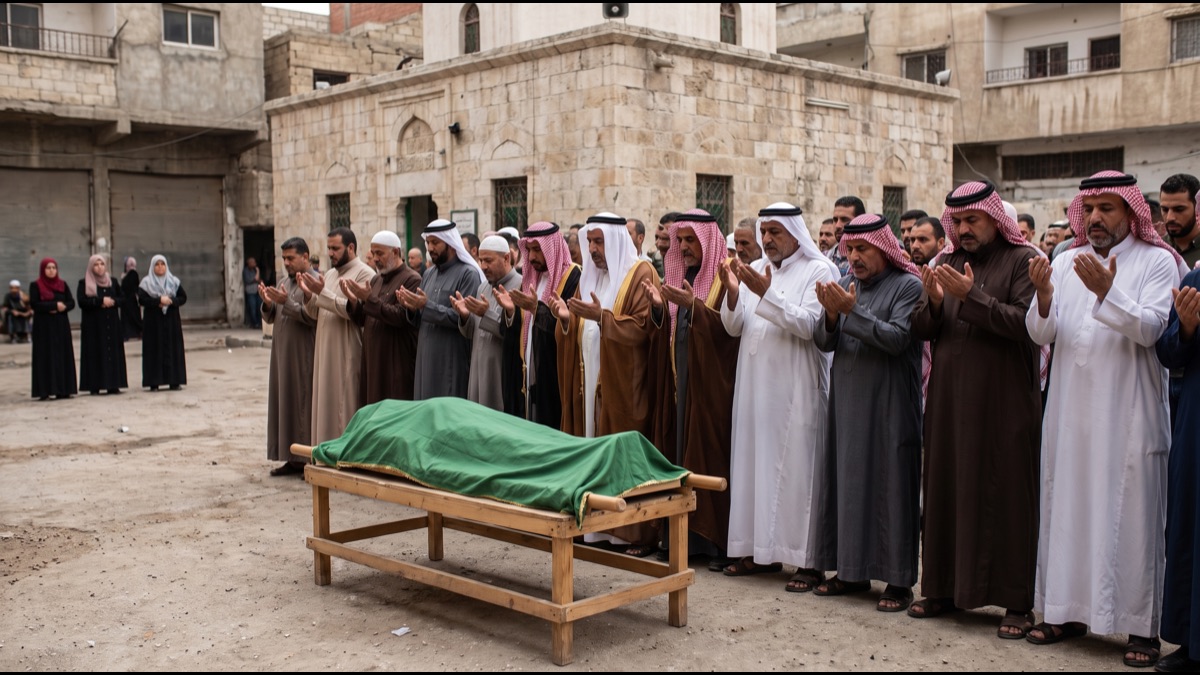
When a Muslim dies, Islamic tradition sets in motion one of the most standardised and fast-moving rite sequences found in any major religion. Within a period generally measured in hours rather than days, the body is washed, wrapped in a simple shroud, prayed over by the community, and buried, a sequence governed by detailed jurisprudence developed over fourteen centuries and still followed with remarkable consistency across vastly different cultures and countries today.
The rites are collectively referred to using the Arabic term Janazah, which can describe either the funeral procession itself or the deceased body being carried to burial, and understanding how each stage works reveals a system deliberately designed around speed, simplicity, and the equal treatment of every deceased person regardless of their wealth or status in life.
Why Islamic Burial Happens So Quickly
Prophetic tradition instructs Muslims not to delay the burial of their dead, and the general practice across nearly all Islamic legal schools is to complete burial within twenty-four hours of death wherever practically possible, a stark contrast to funeral customs in many other traditions that may involve an extended viewing period of several days or longer before burial finally takes place.
This urgency is explained in classical sources partly as a matter of dignity toward the deceased, whose body is considered to deserve prompt and respectful handling rather than prolonged display, and partly as a practical matter, since burial customs developed in climates where delayed burial posed genuine difficulties well before modern embalming and refrigeration existed.
How the Body Is Washed (Ghusl)
The first formal rite is a ritual washing called ghusl, performed by individuals of the same sex as the deceased wherever possible, usually close family members or designated community members experienced in the process, with a spouse permitted to wash their deceased partner regardless of sex under most schools of jurisprudence.
The washing follows a specific sequence resembling the ablution performed before prayer, beginning with private areas, then moving through a structured sequence covering the entire body, typically performed an odd number of times, commonly three, with clean water and sometimes scented substances such as camphor added toward the final washing, all performed with deliberate modesty and gentleness.
How the Body Is Shrouded (Kafan)
Following washing, the body is wrapped in a simple shroud called the kafan, traditionally plain white cloth without pockets, ornamentation, or specific tailoring, a deliberate departure from ordinary clothing intended to strip away any visual marker of wealth or social status from the deceased at the moment of burial.
Men are traditionally shrouded in three layers of cloth and women in five, covering the body completely, with the shrouding performed carefully and, according to widespread teaching, ideally using cloth that is clean and unblemished but not extravagant, reflecting the broader emphasis throughout the rites on modesty rather than display.
How the Funeral Prayer (Salat al-Janazah) Works
The funeral prayer, known as Salat al-Janazah, is performed communally, typically outside the regular prayer hall or in an open area, with the shrouded body placed in front of the congregation and the imam standing level with the deceased's midsection, a position distinct from the imam's usual placement ahead of worshippers in daily prayer.
Worshippers stand in rows behind the imam as in ordinary congregational prayer, and the prayer itself consists of a sequence of four takbirs, the phrase declaring God's greatness, interspersed with specific supplications including a recitation from the Quran's opening chapter and prayers specifically requesting mercy and forgiveness for the deceased.
Why the Prayer Has No Bowing or Prostration
Unlike the five daily prayers, the funeral prayer contains no bowing or prostration, consisting entirely of the congregation standing while reciting the takbirs and associated supplications, a structural distinction scholars generally explain as reflecting the prayer's specific purpose as a collective supplication for the deceased rather than an act of individual worship in the ordinary sense.
The absence of these physical movements also makes the prayer considerably shorter than a standard prayer, consistent with the broader emphasis on completing the funeral process without unnecessary delay, while still ensuring the deceased receives the full community supplication considered their right under Islamic teaching.
How the Procession to the Grave Is Conducted
Following the funeral prayer, the body is carried to the burial site, traditionally by hand wherever the distance and local custom allow, with multiple people taking turns carrying the bier as an act considered to carry spiritual merit, though modern practice in most cities now involves transport by vehicle for all or part of the journey.
Prophetic tradition encourages walking briskly rather than slowly during the procession, and various narrations describe the recommended etiquette of accompanying a funeral, including standing as a mark of respect when a funeral procession passes, a custom observed to varying degrees across different Muslim communities today.
How the Burial Itself Takes Place
At the graveside, the shrouded body is lowered into the grave, ideally by close male relatives, and positioned lying on its right side facing the qibla, the direction of the Kaaba in Mecca, the same direction Muslims face during the five daily prayers, reinforcing the connection between the deceased's final orientation and their lifelong practice of prayer.
Those present typically recite specific supplications as earth is returned to the grave, and it is considered praiseworthy for mourners to participate directly in this act rather than leaving it entirely to gravediggers, reflecting the broader emphasis throughout the rites on direct communal involvement rather than delegation to specialists.
Why Coffins Are Traditionally Avoided
Classical Islamic practice places the shrouded body directly into the earth without a coffin, allowing direct contact between the body and the soil, a practice rooted in both the goal of simplicity and specific prophetic guidance, though this varies considerably today depending on local law, with many countries in Europe and elsewhere legally requiring a simple coffin regardless of religious preference.
Where a coffin is legally required, Islamic guidance generally accepts the simplest permissible option while still observing the shrouding and positioning requirements as closely as local regulation allows, an example of how the tradition's jurisprudence has historically accommodated genuine legal constraint without abandoning its underlying principles.
What Islamic Teaching Says About Grief and Mourning
Islamic teaching explicitly permits grief and weeping for the deceased, distinguishing this clearly from excessive lamentation or expressions of despair considered to contradict acceptance of divine decree, a distinction narrated in accounts of the Prophet himself weeping at the death of his own son while still affirming trust in God's wisdom.
Practices considered discouraged or prohibited in mainstream teaching include loud wailing, tearing clothing, and certain other dramatic expressions of grief associated with pre-Islamic Arabian mourning customs, reflecting an underlying emphasis on dignified, composed grieving rather than a prohibition on emotional expression itself.
How Mourning Periods Differ by Relationship
General mourning for a deceased relative or community member is limited under most schools of Islamic law to three days, after which normal life and dress are expected to resume, a relatively short formal period compared with mourning customs in some other traditions, again reflecting the broader emphasis on measured rather than prolonged displays of grief.
A significant exception applies to widows, who observe a formal mourning period known as iddah lasting four months and ten days following a husband's death, during which specific restrictions apply regarding remarriage, relocation, and the wearing of adornment, a period rooted directly in Quranic legislation rather than general custom.
What Happens When Death Occurs Away From a Muslim Community
When a Muslim dies in a location without an established Muslim community or Islamic burial ground nearby, contemporary scholarship and practice generally focus on fulfilling as many elements of the traditional process as circumstances allow, including washing and shrouding performed by any available Muslims, with burial arranged at the nearest appropriate cemetery.
Many countries with smaller Muslim populations have developed dedicated Islamic burial sections within general cemeteries specifically to accommodate qibla-facing burial and other requirements, reflecting decades of community organising around ensuring these rites remain accessible even in regions where Muslims form a small minority.
How Modern Regulation Interacts With Traditional Practice
Contemporary health regulations, cemetery licensing requirements, and, in some jurisdictions, mandatory embalming or delay periods before burial can create tension with the traditional preference for rapid, simple burial, prompting ongoing dialogue between Muslim community organisations, religious authorities, and local governments in many countries.
Islamic legal scholarship has generally responded to these tensions pragmatically, treating genuine legal necessity as grounds for accommodation rather than prohibition, while community advocacy in numerous countries has succeeded in securing formal exemptions or streamlined processes that allow burial to proceed close to the traditional timeframe wherever possible.
Why the Rites Emphasise Simplicity and Equality
A recurring theme across every stage of the Janazah rites is the deliberate levelling of distinctions between individuals in death, expressed through the plain, unadorned shroud, the absence of elaborate coffins or markers in the most traditional practice, and the communal nature of the funeral prayer performed identically regardless of who is being buried.
This emphasis is frequently explained in Islamic teaching as a physical enactment of the belief that ultimate worth is measured by faith and conduct rather than worldly status, a principle scholars consistently connect to broader Islamic teachings on humility and the transient nature of earthly distinction.
How Different Schools of Jurisprudence Vary on Details
While the broad structure of the Janazah rites is shared across all major Sunni and Shia schools of jurisprudence, specific details differ, including the precise wording of certain supplications, minor variations in the recommended number of shroud layers, and differing opinions on secondary questions such as whether raising hands during each takbir is required or merely recommended.
These variations are generally treated within Islamic scholarship as legitimate differences of interpretation rather than doctrinal disputes, reflecting the same broader pattern of permitted jurisprudential diversity found across many areas of Islamic ritual practice, and a Muslim from one school attending a funeral prayer led according to another school's conventions is not considered to have performed the rite incorrectly, nor is the validity of the prayer itself called into question by such minor procedural differences.
How Charitable Giving Is Connected to a Death
It is a widespread and strongly encouraged practice for family members to give charity, sadaqah, on behalf of a deceased relative in the days and weeks following death, based on teaching that ongoing charitable acts performed in a deceased person's name can continue to benefit them spiritually after death in a way few other actions can.
This practice, often called sadaqah jariyah when it takes an ongoing form such as funding a well, a school, or a religious text distributed to others, has historically motivated substantial charitable endowments across the Muslim world, and many contemporary Muslim charitable organisations explicitly market donation options structured specifically around this tradition of giving in memory of someone who has died, often allowing donors to dedicate a specific project directly to the deceased by name.
How Grave Markers and Visitation Are Treated
Mainstream Islamic teaching generally discourages elaborate grave markers, monuments, or structures built over graves, favouring simple, low markers sufficient only to identify the location of a burial, a position rooted in prophetic guidance and reflecting the same underlying principle of equality and humility that shapes the shroud and the absence of a coffin in the most traditional forms of the practice.
Visiting graves is nonetheless widely encouraged as a means of remembering death, reflecting on mortality, and offering supplications for the deceased, and many Muslim communities observe periodic customs of visiting family graves, particularly around religious holidays, though practices around grave visitation vary considerably between regions and have at times been a point of theological debate regarding the line between permissible remembrance and impermissible veneration of the dead.
Taken together, the sequence of washing, shrouding, communal prayer, and simple burial reflects a deliberately compact system built around speed, dignity, and equal treatment, one that has remained remarkably consistent in its core structure across fourteen centuries and across Muslim communities on every continent, even as the specific logistics of carrying it out have adapted considerably to local law and circumstance.
For many Muslim families, the familiarity and consistency of these rites, performed in broadly the same sequence whether in a village mosque or a major international city, provides a source of structure and continuity during one of life's most difficult moments, reinforcing a sense of connection to a shared practice observed by Muslim communities across the world. That consistency also means that a Muslim travelling far from home, or living as part of a small minority community, can generally expect the essential elements of the process, from the washing to the qibla-facing burial, to be recognisable and available wherever they are, a form of continuity that many describe as one of the more quietly reassuring aspects of the tradition.
Sources
- Wikipedia — overview of Islamic funeral rites and their variations
- Encyclopaedia Britannica — background on Islamic burial law and practice
- Oxford Islamic Studies — scholarly reference on Islamic jurisprudence regarding death and burial
- World Health Organization — guidance on burial practices and public health
FAQ
Why are Islamic burials usually so quick?
Prophetic tradition strongly encourages burial as soon as practically possible after death, generally within 24 hours, out of respect for the deceased and to avoid unnecessary delay.
Who is required to perform the funeral prayer?
The funeral prayer is a communal obligation, meaning if enough members of the community perform it the obligation is fulfilled for everyone, though individuals are still encouraged to attend.
Are coffins used in Islamic burial?
Traditional Islamic practice places the shrouded body directly into the earth without a coffin wherever local law permits, though some countries require a simple coffin for burial.
How is the body positioned in the grave?
The body is placed on its right side facing the direction of the Kaaba in Mecca, the qibla, the same direction Muslims face in daily prayer.
How long is mourning observed in Islam?
General mourning is limited to three days for most relatives, while a widow observes a formal mourning period of four months and ten days under Islamic law.
About the Author
We reference Wikipedia, Encyclopaedia Britannica, Oxford Islamic Studies, and the World Health Organization to explain the background and current understanding of this topic.
Loved This Article?
Share it on WhatsApp → Share it on WhatsApp
Get more guides in your inbox — Subscribe to our newsletter for weekly surprising stories from Egypt, Saudi Arabia, Dubai, and beyond.